1. What Does JDM Mean? Origins and History
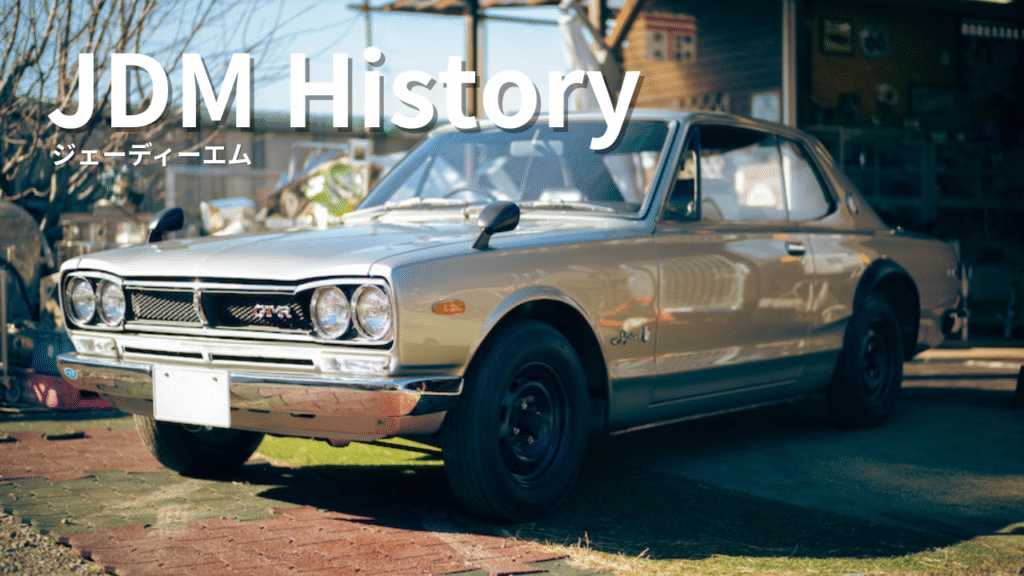
JDM stands for Japanese Domestic Market, referring to cars manufactured for sale exclusively in Japan.
Unlike export versions, JDM cars were tuned to suit Japan’s road conditions, emission laws, and driver preferences.
In the 1990s and early 2000s, Japanese automakers entered a golden age of engineering excellence.
Their cars were lighter, faster, and more reliable than many Western rivals—capturing global attention and inspiring generations.
This era was later immortalized by pop culture, especially Initial D, Wangan Midnight, and the Fast & Furious franchise.
2. Why the World Fell in Love with JDM cars
The appeal of JDM cars goes far beyond performance.
They represent precision, craftsmanship, and limitless tuning potential a combination uniquely Japanese.
- Highly durable and responsive turbo engines (RB26, 2JZ, B16, etc.)
- Lightweight chassis and perfect weight balance
- Endless modification possibilities
- Reliable engineering and timeless aesthetics
Today, many JDM icons have become collector’s treasures, with prices skyrocketing worldwide.
The “golden era” of the 1990s continues to define car culture across continents.
3. Iconic JDM Cars — As Seen in The Fast & Furious Series
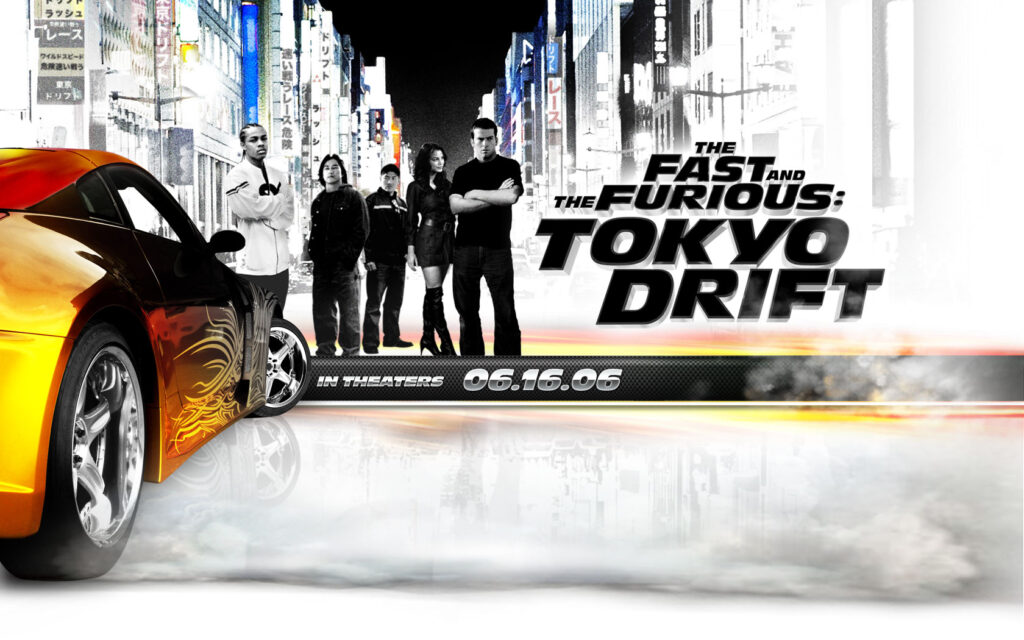
The Fast & Furious movies introduced millions of fans to the beauty and spirit of Japanese cars.
From the legendary Skyline GT-R to the Toyota Supra, these machines became global symbols of freedom and speed.
Below is a comprehensive list of every major Japanese car featured in the series, including driver, appearance, scene, and key characteristics.
Nissan
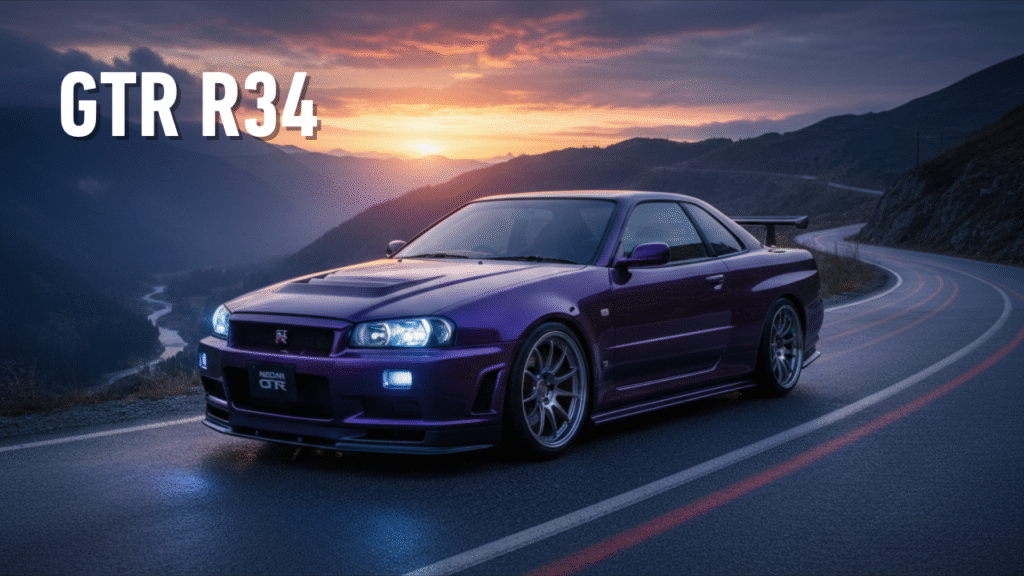
Skyline GT-R R34 (Brian O’Conner)
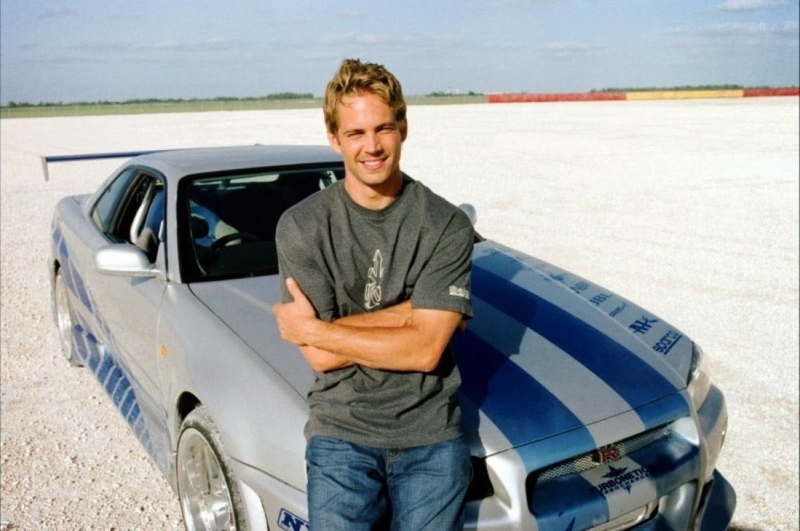
- Appearance: 2 Fast 2 Furious / Fast & Furious 6
- Scene: Miami street race; later during the London mission
Produced between 1999 and 2002, the Nissan Skyline GT-R R34 is often regarded as the ultimate evolution of the JDM sports car. Under the hood lies the legendary RB26DETT 2.6-liter twin-turbo inline-six engine, officially rated at around 280 PS (276–280 hp) at 6,800 rpm and 392 Nm of torque at 4,400 rpm—though in reality, many tuned versions easily exceeded these figures.
It features the ATTESA E-TS Pro electronically controlled all-wheel-drive system, which intelligently distributes power between the front and rear wheels for exceptional traction and handling during high-speed runs and cornering.
The iconic blue R34, as driven by Brian O’Conner, became a global symbol of JDM power and precision. Its blend of raw performance and advanced technology made it one of the most unforgettable cars in the Fast & Furious saga.
Silvia S15 (Sean Boswell)
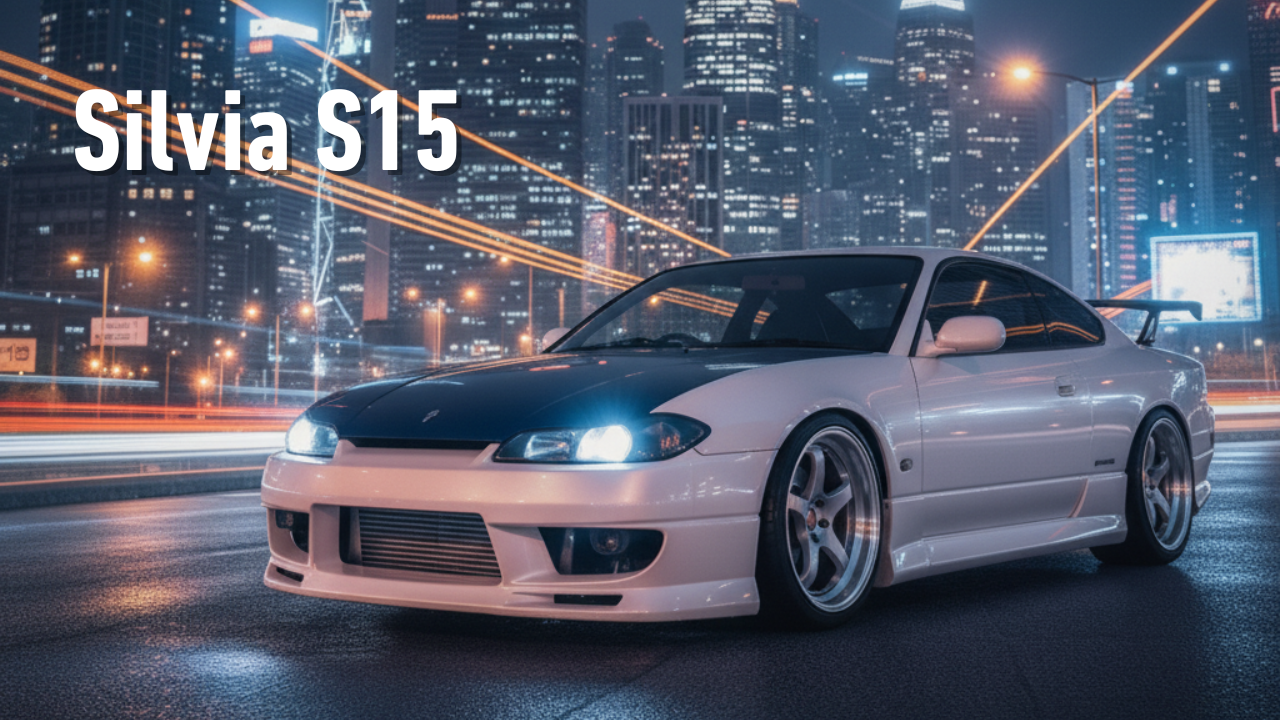
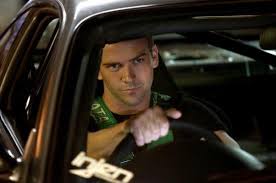
- Appearance: Tokyo Drift
- Scene: Sean’s first drift training session.
The Nissan Silvia S15, produced from January 1999 to around August 2002, represents the seventh and final generation of the Silvia lineup. It adopted a front-engine, rear-wheel-drive (FR) layout and was celebrated as a lightweight sports coupe ideally suited for drifting.
The turbocharged Spec-R version was equipped with the SR20DET 2.0-liter inline-four turbocharged engine, delivering approximately 250 PS at 6,400 rpm and 28.0 kgf·m (about 276 Nm) of torque at 4,800 rpm. The naturally aspirated Spec-S variant used the SR20DE engine, producing around 165 PS at 6,400 rpm.
In addition to its FR configuration and lightweight body, the S15 featured a stiffer chassis and optimized dimensions returning to the compact “5-number” size class which enhanced its handling precision, especially during lateral movements such as drifting.
In the film, the Silvia S15 was chosen as Sean’s training car for learning the fundamentals of drifting, emphasizing its balance, responsiveness, and ease of control. The combination of a lightweight frame and a high-revving turbo engine allowed stable, controllable slides making it truly the ideal machine for mastering the art of drift driving.
350Z (Takashi “DK”)
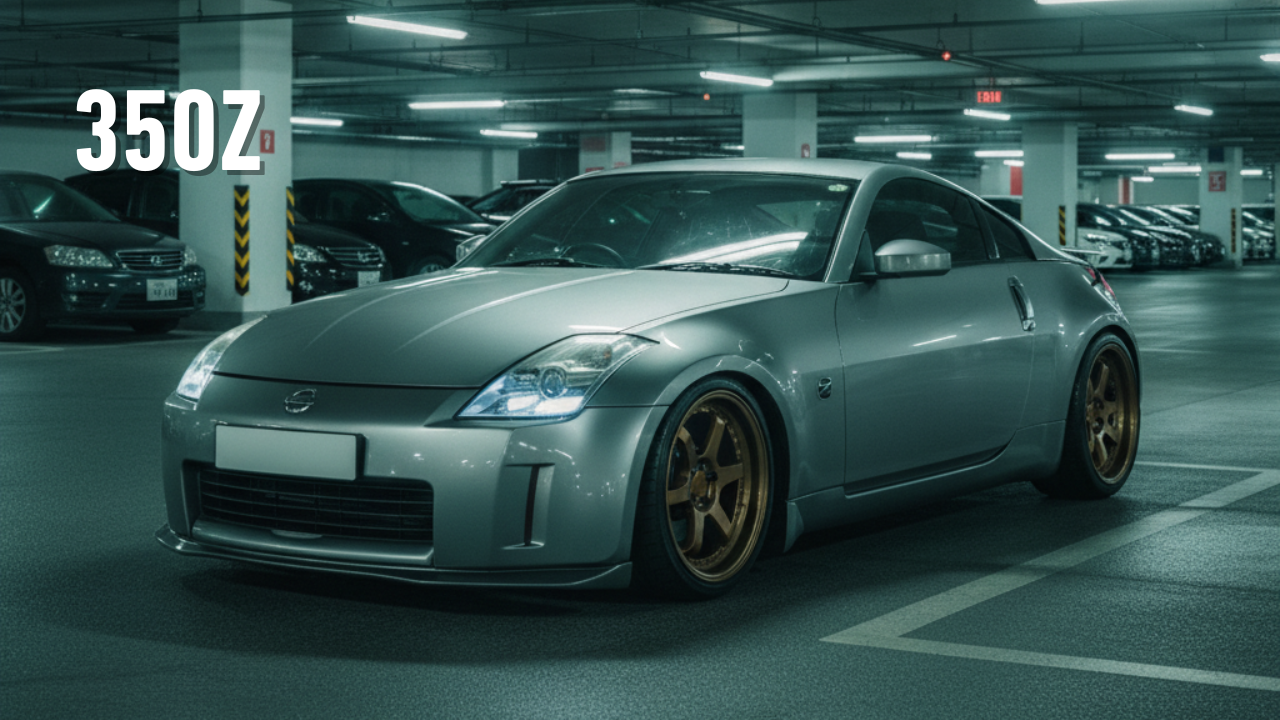
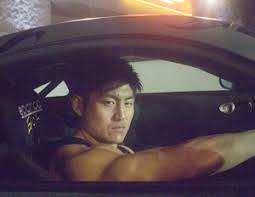
- Appearance: Tokyo Drift
- Scene: Parking garage and mountain drift duels.
- Features: 3.5L V6 powerplant with Veilside body kit. The aggressive stance and torque made it the villain’s signature car.
The Nissan 350Z (known in Japan as the Fairlady Z Z33) was first released in July 2002, powered by the 3.5-liter V6 VQ35DE engine. The early Japanese-spec models produced approximately 280 PS, with a front-to-rear weight balance of about 53:47, providing excellent stability for high-performance driving.
In January 2007, the model underwent a significant update, receiving the VQ35HR engine, officially rated at 313 PS at 6,800 rpm and 36.5 kg·m (around 358 Nm) of torque at 4,800 rpm, according to Nissan’s specifications.
For the movie version, the car was extensively modified with a VeilSide body kit and other aerodynamic components, giving it the menacing, aggressive look befitting the villain’s car. Combined with the torque-rich V6 powerplant and rear-wheel-drive dynamics, the 350Z delivered stunning drift sequences in both the parking garage and the mountain race scenes.
The fusion of a lightweight body, high-output V6 engine, and FR layout made Takashi “DK”’s 350Z the definitive symbol of the antagonist a car that embodied both power and style in the Tokyo Drift universe.
GT-R R35 (Dominic Toretto / Han Lue)
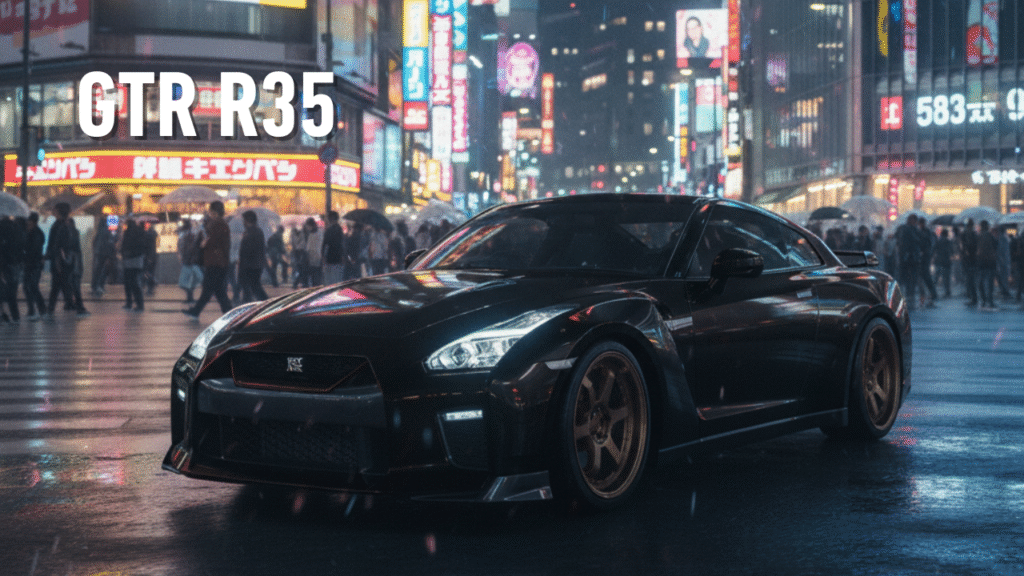

- Appearance: Fast 7 / F9
- Scene: Driven by Dom in LA and by Han in Tokyo.
- Features: 3.8L twin-turbo V6 with all-wheel drive. A modern evolution of Japan’s supercar killer.
The R35-generation Nissan GT-R, which debuted in 2007, is equipped with the specially developed VR38DETT 3.8-liter twin-turbocharged V6 engine and an advanced full-time all-wheel-drive (AWD) system. In the 2017 “Premium Edition” model, official figures list an output of 570 PS at 6,800 rpm and a maximum torque of 65.0 kgf·m (637 Nm) between 3,300–5,800 rpm.
Combining immense power with superb traction and aerodynamically refined design, the GT-R earned its reputation as Japan’s “supercar killer.” In the films, the car’s explosive torque and precision AWD system deliver breathtaking performance during both city chases and high-speed sequences.
As portrayed through the characters of Dominic Toretto and Han Lue, the GT-R R35 stands as a true symbol of modern Japanese supercar engineering, captivating audiences worldwide with its striking balance of power, control, and innovation.
Silvia S14 (Letty Ortiz)
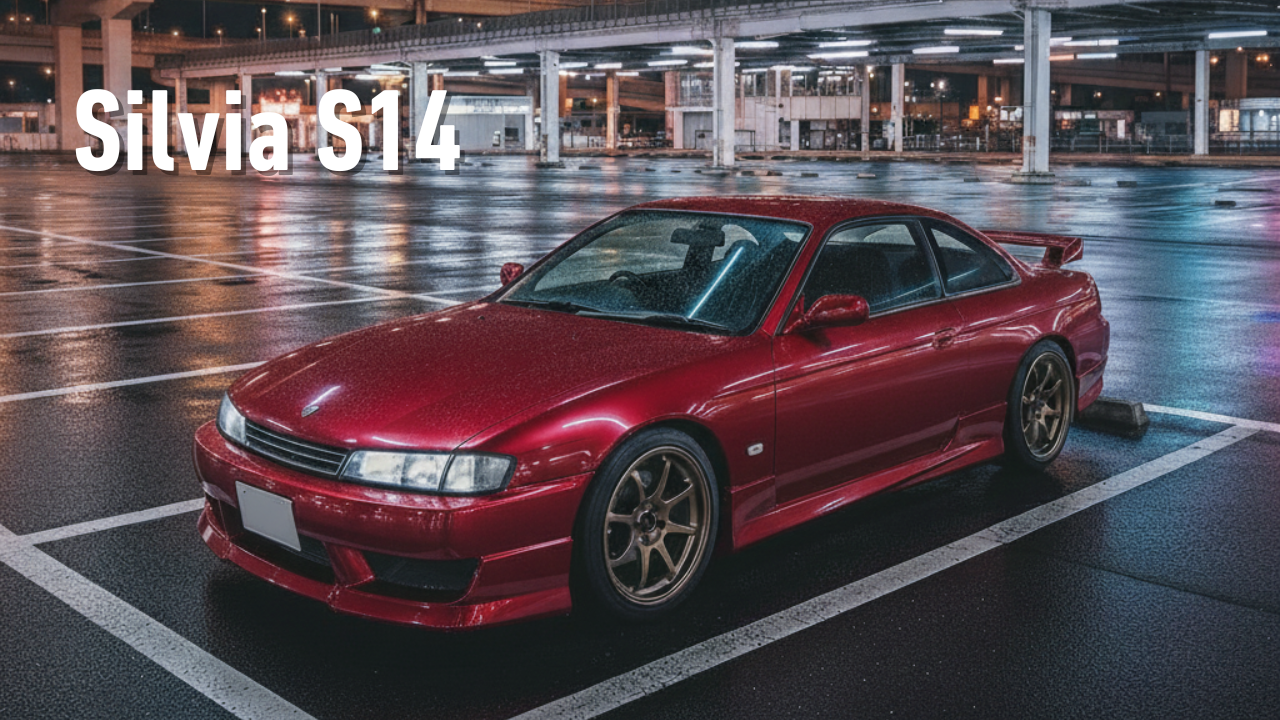
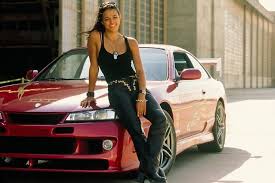
- Appearance: The Fast and the Furious
- Scene: Letty’s pink-and-black street racing car.
- Features: Sleek and muscular design; popular among female tuners for its style and precision.
The Nissan Silvia S14, produced from 1993 to 1999, featured the 2.0-liter SR20 engine series available in both naturally aspirated and turbocharged versions. Depending on the trim, output ranged from around 160 to 220 horsepower, with the turbocharged variant delivering up to 220 hp.
Chassis rigidity was significantly improved over the previous generation, with reports indicating a 200% increase in bending stiffness and a 150% increase in torsional rigidity, greatly enhancing the car’s fundamental performance for sporty driving.
With its rear-wheel-drive (FR) layout and agile handling, the Silvia S14 became highly popular as both a drift platform and a base for custom builds especially among female tuners who valued its sleek style and precise control.
In the film, Letty’s pink-and-black S14 embodies this combination of style and function, standing out as a street racing machine that blends bold aesthetics with true performance spirit.
370Z (Gisele Yashar)
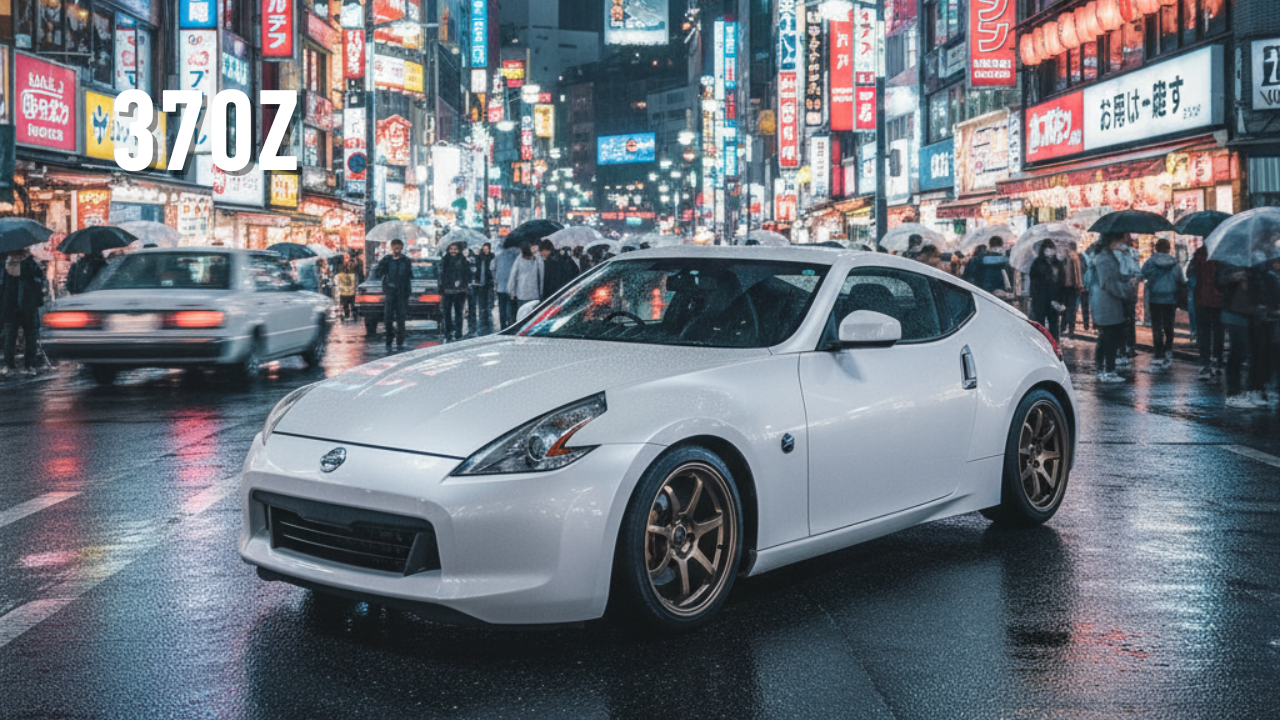
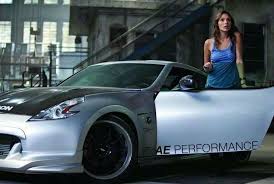
- Appearance: Fast Five
- Scene: Used during the Rio heist.
- Features: 3.7L engine with refined handling and power. Represents Nissan’s new-generation Z spirit.
Known in Japan as the Fairlady Z (Z34), the Nissan 370Z is powered by a 3.7-liter V6 naturally aspirated engine (VQ37VHR), producing 336 PS (247 kW) at 7,000 rpm and 365 Nm (37.2 kgf·m) of torque at 5,200 rpm. The car features a rear-wheel-drive (FR) layout and a lightweight body structure, embodying the “next-generation Z spirit” that defines Nissan’s modern performance lineup.
In the film, Gisele’s 370Z plays a pivotal role during the high-stakes Rio heist, showcasing its refined handling, sharp responsiveness, and strong acceleration. Combining elegant styling with raw performance, the 370Z stands out as a symbol of Nissan’s evolving Z legacy and represents the perfect blend of style, control, and power.
Toyota
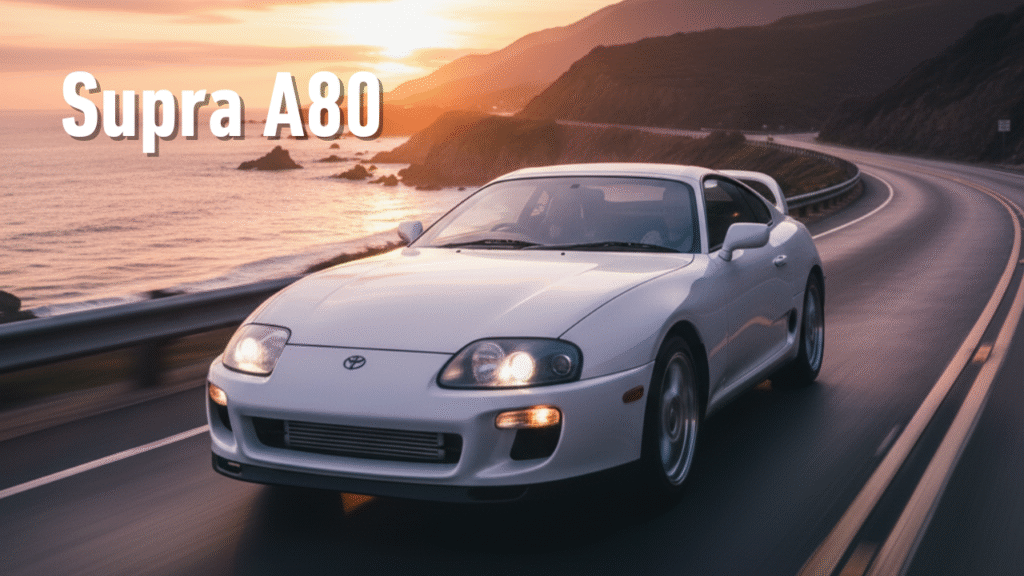
Supra A80 (Brian O’Conner)
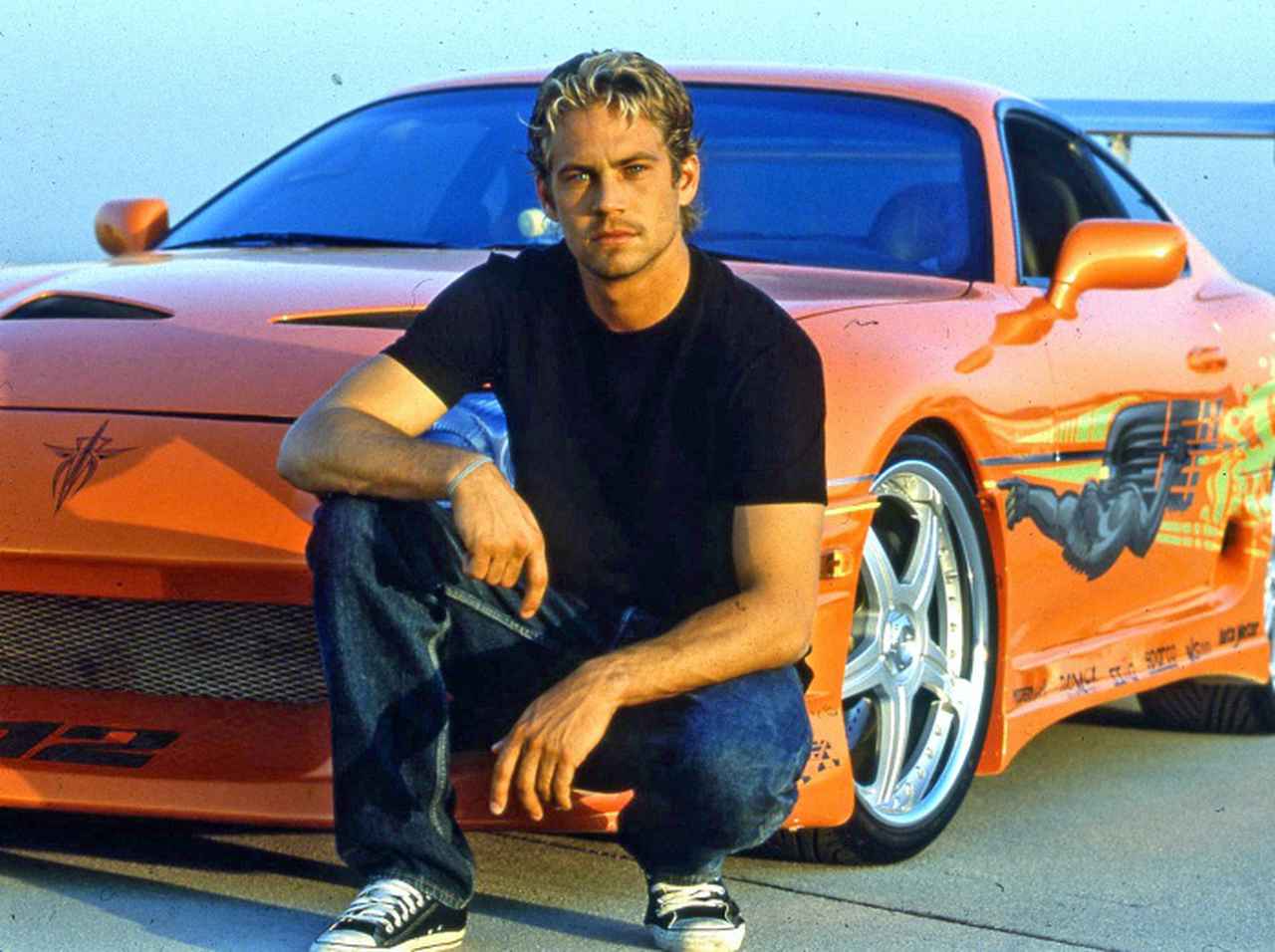
- Appearance: The Fast and the Furious (2001)
- Scene: Built from a junkyard wreck, later raced against Dom’s Charger.
- Features: Legendary 2JZ-GTE inline-six engine; extremely durable and tunable. The orange Supra is the face of JDM worldwide.
The A80-generation Toyota Supra (model code JZA80 / E-JZA80) was introduced in May 1993 as a high-performance sports coupe for the Japanese market. It was equipped with the legendary 2JZ-GTE 3.0-liter inline-six twin-turbo engine, renowned for its durability and immense tuning potential. In its domestic specification, output was officially rated at 280 PS at 5,600 rpm and 44.0 kgf·m (about 432 Nm) of torque at 3,600 rpm, in accordance with Japan’s voluntary horsepower limit at the time.
The Supra’s chassis and body design were meticulously engineered, resulting in a muscular yet sleek silhouette that set it apart from its contemporaries. The combination of power, balance, and aesthetics made it one of Toyota’s most celebrated sports machines.
In the film, the orange-and-black Supra represents not only a rebuilt “junkyard legend” but also the spirit of Japanese tuning culture showcasing what the 2JZ engine and FR layout are capable of when pushed to their limits. Its presence cemented the Supra A80 as the iconic face of JDM performance, a title it continues to hold among enthusiasts around the world.
Supra A90 (Han Lue)
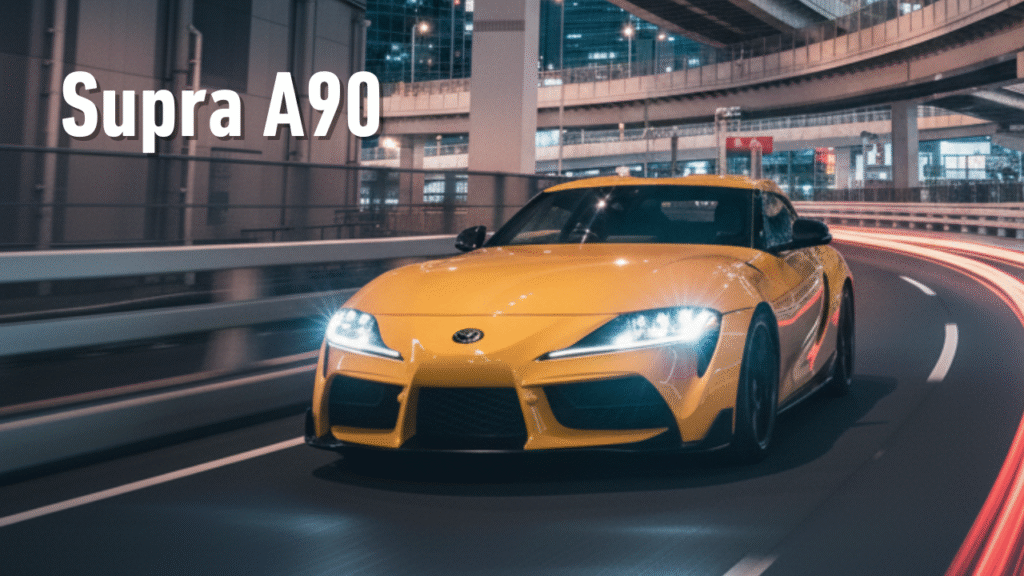
- Appearance: F9
- Scene: Han’s comeback in Tokyo.
- Features: Powered by the BMW B58 turbo engine. Combines modern German tech with Toyota heritage and bold design.
The A90-generation Toyota Supra, introduced in 2019, marked the rebirth of Toyota’s legendary sports coupe. Co-developed with BMW, it is powered by the B58 3.0-liter inline-six turbocharged engine, combining modern German engineering with Toyota’s traditional “inline-six and FR layout” philosophy. In the Japanese specification, Toyota officially lists this engine as a lightweight, high-rigidity power unit designed for balance and agility.
According to automotive reviews, the B58 engine produces approximately 340 PS and 51 kgf·m of torque, with performance that some enthusiasts claim surpasses the legendary 2JZ-GTE from the previous generation. The A90’s platform features advanced chassis rigidity, refined aerodynamics, and a bold, muscular design that reflects Toyota’s modern sports car evolution.
In F9, Han’s orange Supra embodies the fusion of modern German technology and Japanese performance heritage, symbolizing both his return and the Supra’s new identity. As he speeds through the streets of Tokyo, the A90 stands out as a perfect expression of Toyota’s revived sports car spirit a modern evolution of power, precision, and legacy.
Chaser JZX100 (background)
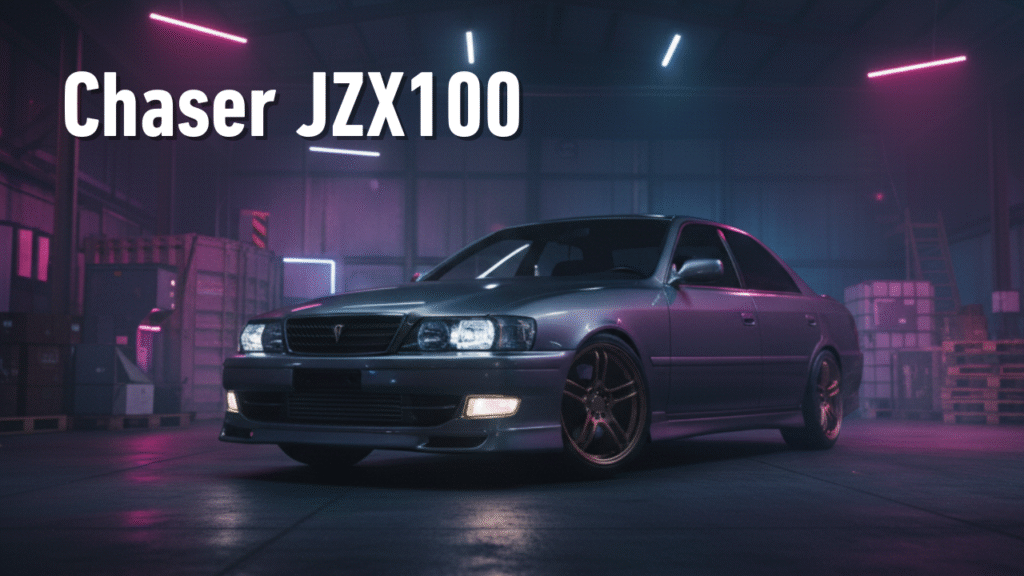
- Appearance: Tokyo Drift
- Scene: Seen at drift meets and parking lots.
- Features: 4-door sedan with 1JZ turbo power—VIP comfort meets drift potential.
The JZX100-generation Toyota Chaser, introduced in September 1996, was the sixth generation of the model and positioned as a “sporty four-door hardtop sedan.” In Japan, the most renowned trim—the Tourer V was equipped with the 1JZ-GTE 2.5-liter inline-six DOHC turbo engine, producing 280 PS, the maximum output allowed under Japan’s voluntary horsepower limit at the time.
Its combination of a rear-wheel-drive (FR) layout, turbocharged power, and four-door practicality made it a favorite among enthusiasts who sought both performance and comfort. The Chaser quickly became a popular platform in Japan’s drifting community, offering VIP luxury with genuine motorsport potential.
In Tokyo Drift, while not a main character car, the Chaser appears in drift meet and parking lot scenes subtly representing the authentic grassroots JDM drift culture that underpins the movie’s atmosphere. It stands as a symbol of how everyday Japanese sedans evolved into legendary drift icons.
MR2 SW20
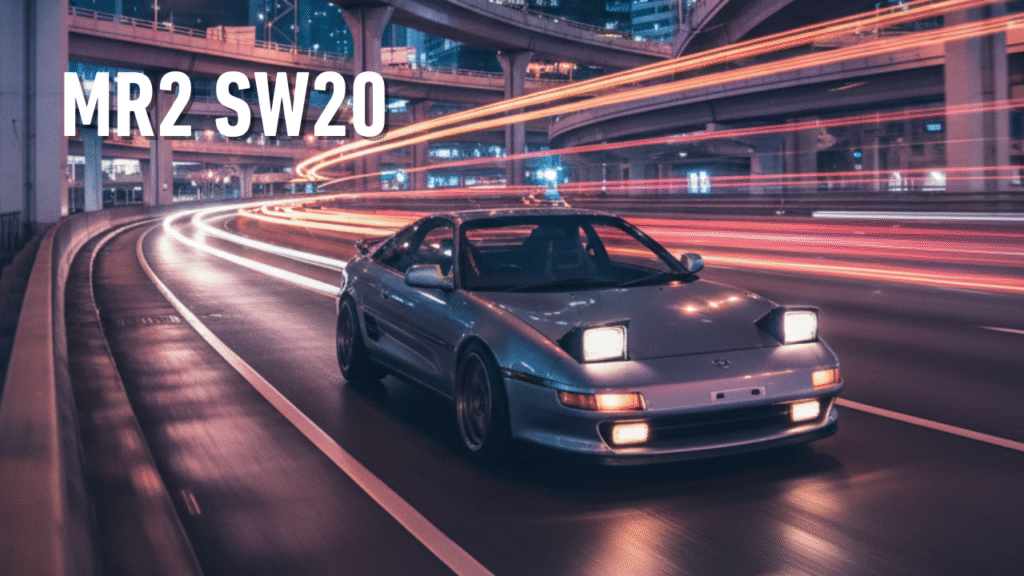
- Appearance: 2 Fast 2 Furious
- Scene: Background car during Miami races.
- Features: Mid-engine layout offering sharp handling; a hidden gem among ’90s sports cars.
The SW20-generation Toyota MR2, produced from 1989 to 1999, was the second generation of the MR2 series and continued its signature mid-engine, rear-wheel-drive (MR) layout. Despite being a compact two-seater, the MR2 achieved exceptional handling balance thanks to its midship design. The turbocharged model was powered by the 2.0-liter 3S-GTE engine, a highly respected unit among enthusiasts for its responsiveness and tuning potential.
Japanese automotive sources often describe the MR2 as “surprisingly easy to drive” and “an affordable way to experience the appeal of a mid-engine sports car,” highlighting its accessibility even for entry-level sports drivers.
In 2 Fast 2 Furious, the MR2 appears as a background vehicle during the Miami race scenes. While not a hero car, its presence adds authenticity to the 1990s Japanese sports car culture portrayed in the film. The mid-engine configuration, rarely seen in this segment, gives it a distinct character that subtly enriches the atmosphere.
Thus, the MR2 SW20 stands as both a rare mid-engine sports car and a hidden gem of the 1990s JDM era, embodying precision handling, lightweight design, and the unmistakable spirit of Japan’s golden age of sports cars even from the background.
Mazda
RX-7 FD3S (Han Lue)
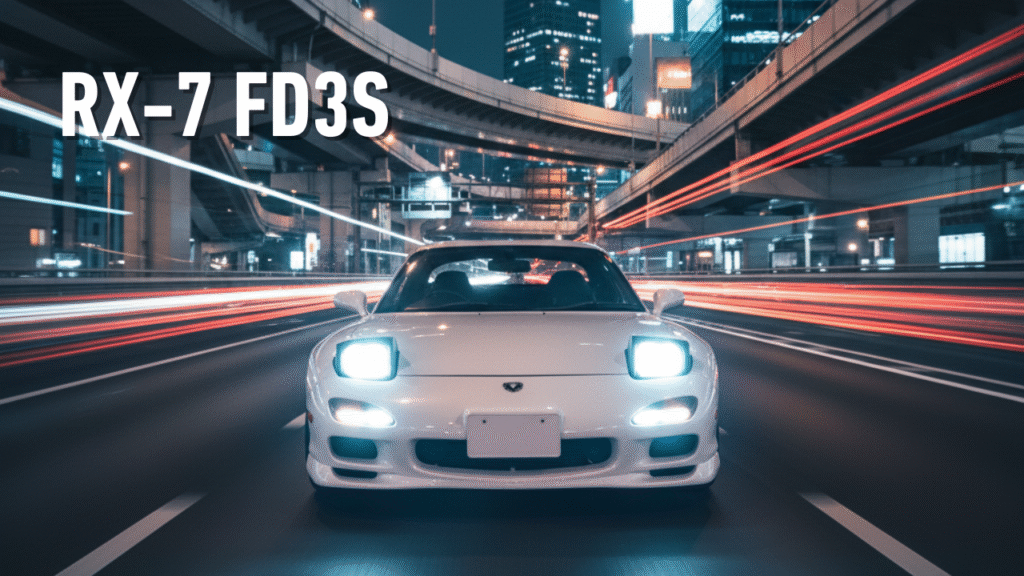
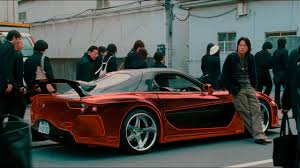
- Appearance: Tokyo Drift
- Scene: Han’s red Veilside RX-7 racing through Shibuya and mountain passes.
- Features: Lightweight chassis and high-revving rotary engine. The movie made the RX-7 a global symbol of Japanese artistry.
The FD3S-generation Mazda RX-7, launched in December 1991 as the third generation of the RX-7 series (model code GF/FD3S), represents the pinnacle of Japan’s lightweight rotary-powered sports cars. The Japanese-market version was equipped with Mazda’s signature 13B-REW twin-rotor twin-turbo engine, officially rated at 280 PS at 6,500 rpm and 32.0 kg·m (about 314 Nm) of torque at 5,000 rpm—the maximum allowed under Japan’s self-imposed power limit of the 1990s.
The RX-7 employed a rear-wheel-drive (FR) layout with a lightweight, low-center-of-gravity chassis, delivering exceptionally sharp handling and instant throttle response at high revs. Japanese automotive publications have long praised it as the definitive pure sports car of the rotary turbo era, achieving the perfect balance between agility, power, and design refinement.
In Tokyo Drift, Han’s red VeilSide RX-7 embodies the fusion of craftsmanship, precision, and visual drama. The car’s rotary performance and striking aerodynamic kit make it a memorable symbol of Japanese automotive artistry a machine that captivated audiences far beyond Japan’s borders.
Thus, the RX-7 FD3S stands as both a lightweight, high-revving performance icon and a cultural emblem of Japan’s tuning heritage. Though not the film’s main hero car, its elegant lines, custom styling, and dynamic presence elevate it into an unmistakable representation of JDM excellence on screen.
RX-8 (Neela Takara)
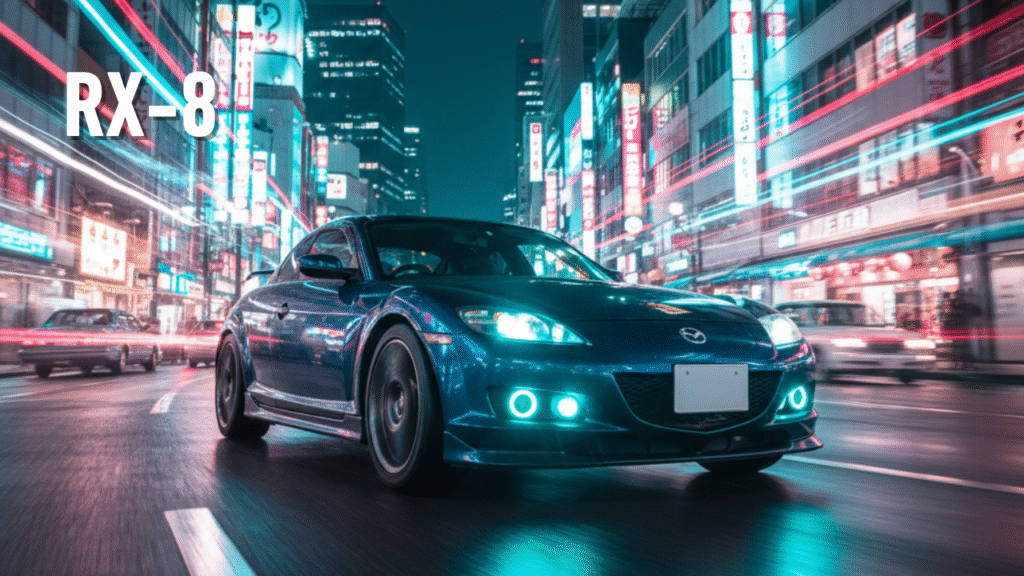
- Appearance: Tokyo Drift
- Scene: Neela’s white RX-8 during mountain runs.
- Features: Last mass-produced rotary sports car; praised for balance and futuristic design.
The Mazda RX-8, introduced to the Japanese market in May 2003, was a four-door, four-seater sports car powered by Mazda’s signature rotary engine. Its RENESIS (13B-MSP) rotary unit was an evolution of the previous 13B-REW twin-turbo, offering high-revving characteristics reaching up to 9,000 rpm along with a lightweight and compact chassis. This combination gave the RX-8 its reputation for nimble handling and the distinctive rotary sound that set it apart from conventional sports cars.
As one of the last mass-produced rotary-powered vehicles, the RX-8 earned praise in Japanese automotive media not only for its performance but also for its unique ability to balance daily practicality and driving excitement. It embodied Mazda’s philosophy of “the joy of driving,” emphasizing balance and connection rather than sheer speed.
In Tokyo Drift, Neela’s white RX-8 makes a memorable appearance during the mountain race scenes, showcasing the car’s agile dynamics and smooth rotary response. Though not a central car, it serves as a symbol of Japanese sports car heritage, blending futuristic design with timeless rotary performance.
Thus, the RX-8 stands out as both a technological successor to the RX-7 and a distinctly modern interpretation of Mazda’s rotary legacy delivering refined handling, elegant design, and an unmistakable sense of freedom behind the wheel.
Mitsubishi

Lancer Evolution VII (Brian O’Conner)
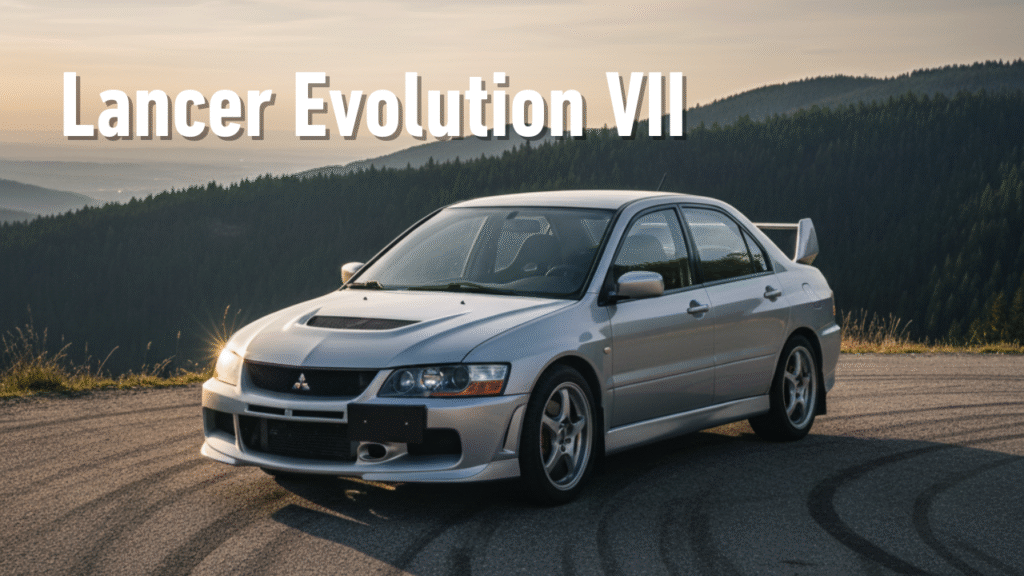
- Appearance: 2 Fast 2 Furious
- Scene: Used in the undercover mission.
- Features: AWD turbo sedan inspired by WRC racing. Combines precision handling with turbocharged acceleration.
The Lancer Evolution VII (model code GH-CT9A) was introduced in February 2001 as a high-performance four-door sedan. It was powered by the 4G63 2.0-liter inline-four turbocharged engine and featured a full-time all-wheel-drive (AWD) system derived from Mitsubishi’s World Rally Championship (WRC) technology. The Japanese-spec model was officially rated at 280 PS at 6,500 rpm and 39.0 kgf·m (382 Nm) of torque at 3,500 rpm, in accordance with Japan’s horsepower regulations of the time.
Major improvements were made to the chassis and body rigidity, with reports indicating that torsional stiffness increased by 1.5 times compared to the previous generation. This enhanced precision handling, cornering stability, and acceleration performance.
In 2 Fast 2 Furious, Brian’s Lancer Evolution VII is portrayed as a mission-ready vehicle for undercover operations rather than pure racing. Its combination of turbocharged power and AWD stability made it perfectly suited for high-speed chases and tactical driving sequences, showcasing its rally-bred engineering in an urban setting.
Thus, the Lancer Evolution VII embodies the essence of Mitsubishi’s WRC heritage—a sedan that merges everyday usability with precision, control, and explosive turbo performance—making it a fitting choice for Brian O’Conner’s role as an undercover driver.
Lancer Evolution IX (Sean Boswell)
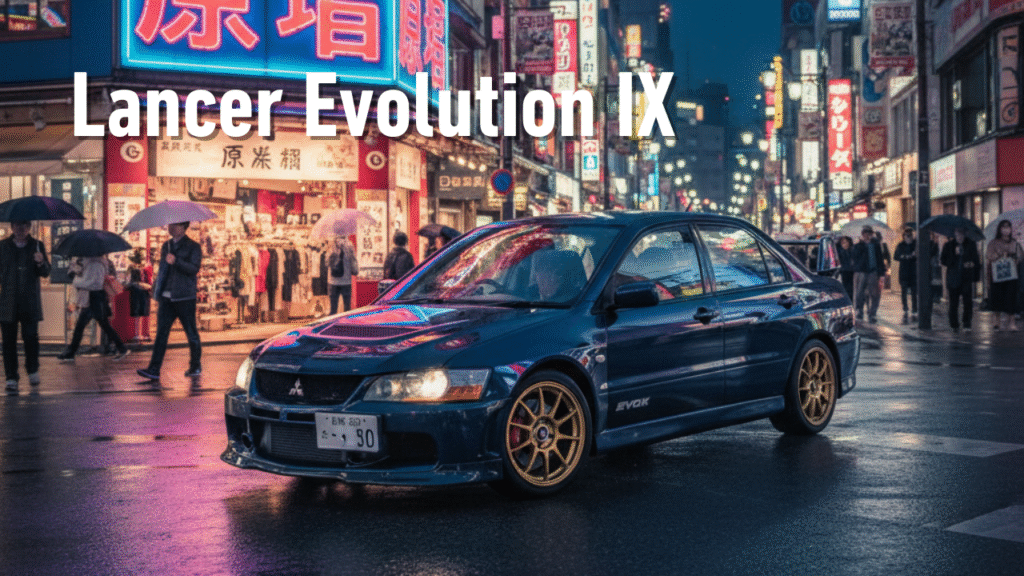
- Appearance: Tokyo Drift
- Scene: Sean’s red Evo used during early Tokyo races.
- Features: 2.0L turbo engine, 6-speed manual, and razor-sharp response—agility meets control.
The Lancer Evolution IX, released in March 2005, is a high-performance four-door sedan that continues Mitsubishi’s rally-bred legacy. It features the renowned 4G63 2.0-liter inline-four turbocharged engine paired with an electronically controlled AWD system. In the Japanese-spec version, official figures list 280 PS at 6,500 rpm and 40.8 kg·m (approximately 400 Nm) of torque at 3,000 rpm.
A six-speed manual transmission was available for select trims, offering razor-sharp throttle response and exceptional driver control—characteristics that defined the Evo’s precision engineering.
In Tokyo Drift, Sean’s red Lancer Evolution IX perfectly represents this fusion of agility and control. Built on Mitsubishi’s rally-derived turbo and AWD technologies, it embodies the ideal balance between power and precision, making it the perfect machine for high-speed duels on Tokyo’s streets.
Eclipse (Brian O’Conner)
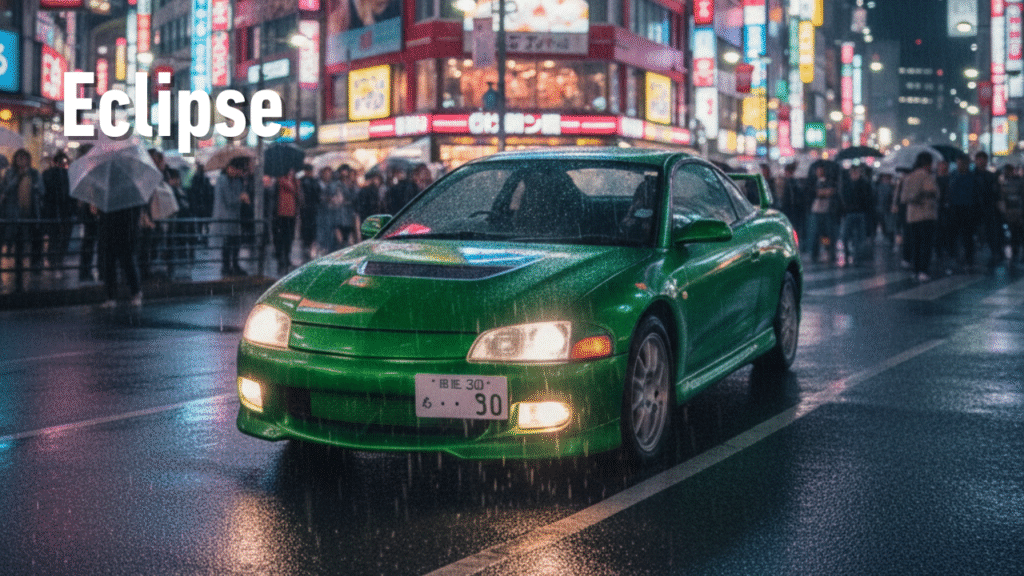
- Appearance: The Fast and the Furious
- Scene: Brian’s green Eclipse in his first race against Dom.
- Features: Iconic 1990s tuner car with a 2.0L turbo engine. Bright neon styling defined early-2000s car culture.
The Mitsubishi Eclipse stands as one of the most iconic tuner cars of the 1990s. Early imported models to Japan featured a 2.0-liter inline-four DOHC turbo engine (4G63 Turbo), producing around 200 PS, according to domestic automotive records. This engine, combined with a lightweight chassis, provided quick acceleration and strong tuning potential—qualities that made the Eclipse a favorite among modification enthusiasts.
Its design, highlighted by bright neon colors, bold body kits, and aftermarket styling, perfectly captured the essence of early-2000s street tuning culture. The vivid green paint scheme seen in the film reflects this era’s aesthetic, where personal expression and visual impact were as important as performance.
Although the Eclipse was primarily a front-wheel-drive sports coupe, its combination of affordability, tunability, and visual flair helped define the look and feel of an entire tuning generation. In The Fast and the Furious, Brian’s green Eclipse became an iconic representation of the 1990s–2000s street racing scene, symbolizing the freedom, creativity, and excitement of the early tuner movement.
Eclipse Spyder (Roman Pearce)
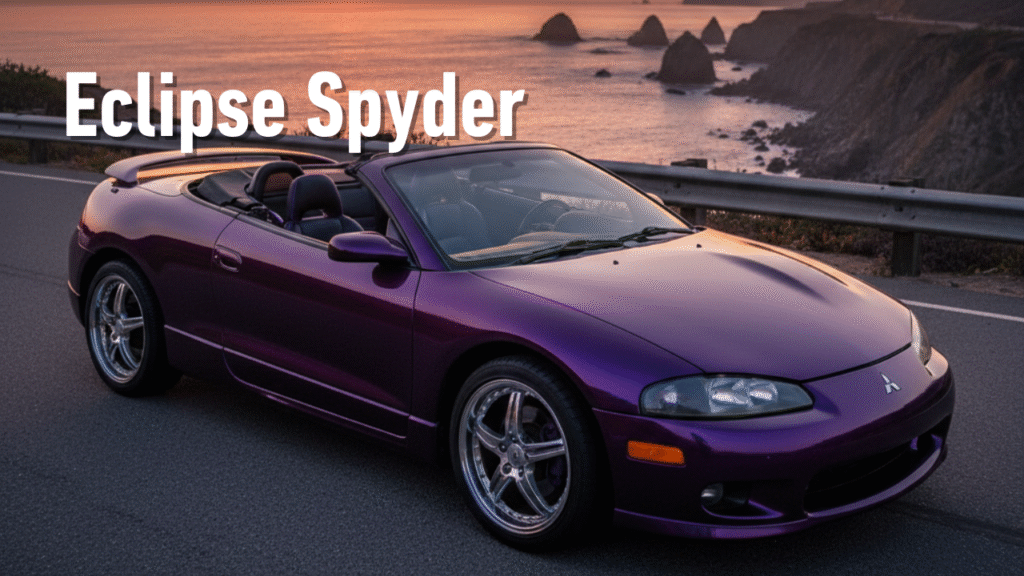
- Appearance: 2 Fast 2 Furious
- Scene: Miami street chases.
- Features: Convertible version of the Eclipse with bold styling and loud aesthetics—a perfect fit for Roman’s flashy personality.
The Mitsubishi Eclipse Spyder, featured as Roman Pearce’s convertible in 2 Fast 2 Furious, perfectly mirrors his bold and flashy personality. The model introduced to the Japanese market around October 2004 was a left-hand-drive import, characterized by its two-door, four-seater open-top design.
It was powered by a 3.0-liter V6 SOHC 24-valve engine (6G72), producing approximately 196 PS and 27.2 kg·m of torque, as reported in domestic specifications. The car used a front-wheel-drive (FF) layout and weighed around 1,520 kg. Japanese automotive reviews noted its distinctive American styling, combining muscular proportions and smooth lines, describing it as a “uniquely expressive convertible with refined presence.”
In the film, the Eclipse Spyder’s vivid aesthetics and open-top design emphasized Roman’s showy and confident nature. While not a purebred performance car like the AWD rally-derived Evos, its customizability, visual impact, and tuning potential made it an essential part of early-2000s tuner culture.
Ultimately, Roman’s bright convertible Eclipse Spyder became an icon of Miami’s vibrant street racing scene—representing freedom, flamboyance, and the playful energy that defined the Fast & Furious universe.
Subaru
Impreza WRX Wagon (Brian O’Conner)
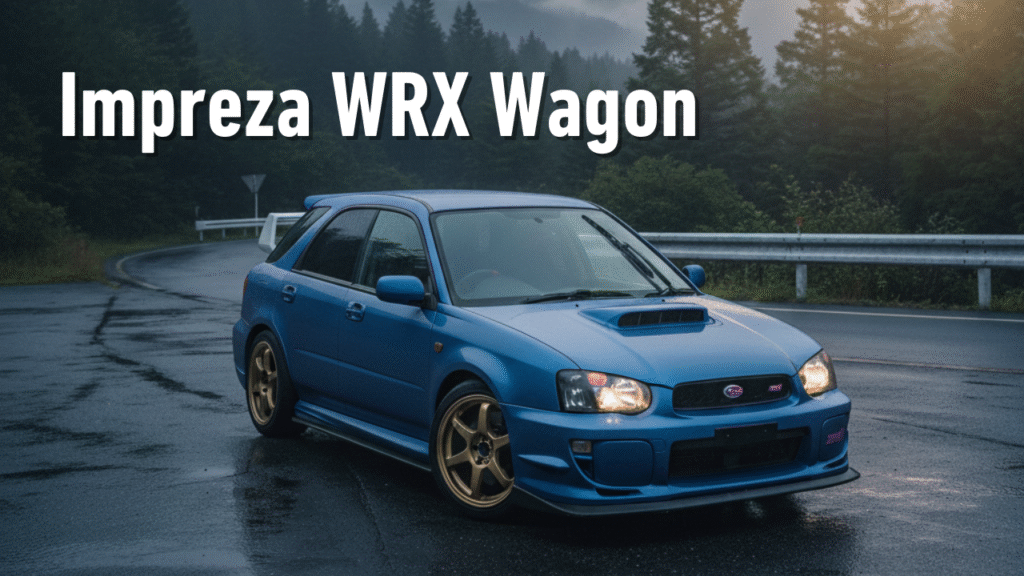
- Appearance: Fast & Furious 4
- Scene: Used during the Mexico tunnel mission.
- Features: AWD traction and rally-bred durability. A stealthy yet capable workhorse.
The Subaru Impreza WRX Wagon, featured in Fast & Furious 4, embodies the perfect balance between everyday usability and rally-bred performance. The Japanese-spec models were equipped with the EJ20 2.0-liter horizontally opposed four-cylinder turbo engine, producing around 250 PS at 6,000 rpm and 34.0 kg·m (333 Nm) of torque at 3,600 rpm. Earlier versions offered similar output with slightly different tuning, maintaining the model’s hallmark responsiveness and power delivery.
Despite its wagon body, the WRX retained the full-time all-wheel-drive (AWD) system and sport-tuned suspension derived from Subaru’s rally engineering heritage. This setup provided exceptional stability, traction, and durability across a range of driving conditions.
In the film, Brian’s WRX Wagon is portrayed as a stealthy yet capable workhorse, ideally suited for the intense Mexico tunnel mission. With its turbocharged acceleration and rally-honed AWD grip, it serves as the unsung hero of the chase—discreet, rugged, and built for control in the most demanding terrain.
Impreza WRX STI (Team car)
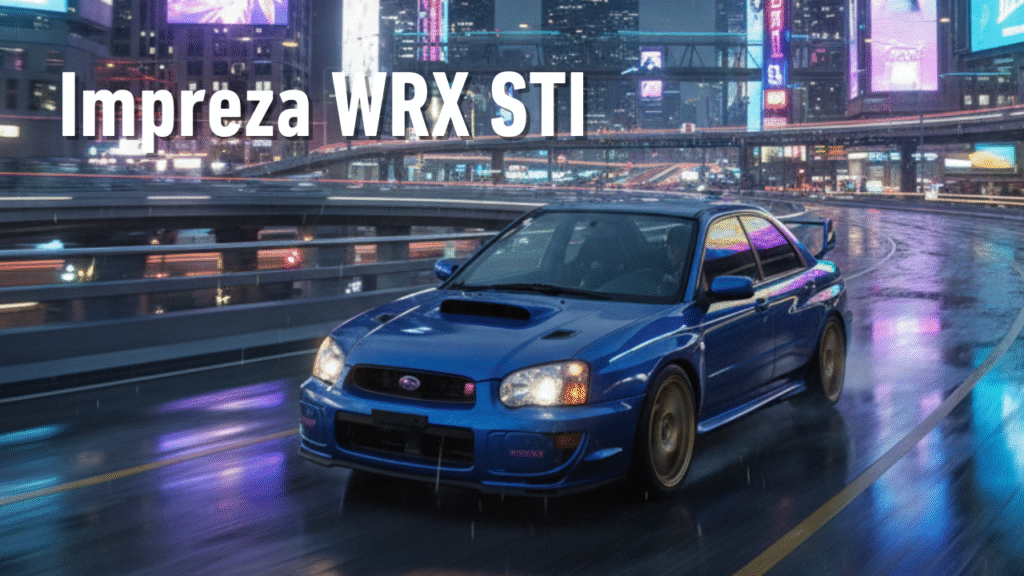
- Appearance: Fast & Furious 6
- Scene: London chase scene.
- Features: 2.5L turbo boxer engine and symmetrical AWD. The blue-and-gold color scheme is iconic among rally fans.
The Subaru Impreza WRX STI is a high-performance sedan that brings Japan’s renowned rally technology to the streets. The Japanese-spec model, produced around 2005, was equipped with the EJ20 2.0-liter horizontally opposed four-cylinder DOHC turbo engine, delivering 280 PS at 6,400 rpm and 43.0 kgf·m (about 422 Nm) of torque at 4,400 rpm.
Its drivetrain features Subaru’s signature Symmetrical All-Wheel Drive (AWD) system, providing exceptional traction and cornering stability. Combined with a perfectly balanced chassis, the WRX STI embodies the rally-bred confidence to conquer any road condition.
The car’s blue and gold livery pays homage to Subaru’s legendary WRC (World Rally Championship) heritage—colors affectionately known to fans as “Subaru Blue.” This instantly recognizable scheme connects the film to real-world motorsport culture, resonating deeply with rally enthusiasts.
In Fast & Furious 6, the WRX STI serves as a team car during the London chase scene. Its AWD traction and turbocharged power make it the perfect choice for navigating the city’s tight streets and unpredictable terrain. The car’s performance, durability, and unmistakable rally spirit highlight Subaru’s philosophy of combining everyday usability with motorsport engineering, making it one of the standout vehicles in the film’s lineup.
Honda
Civic EG6 (Dom’s Crew)
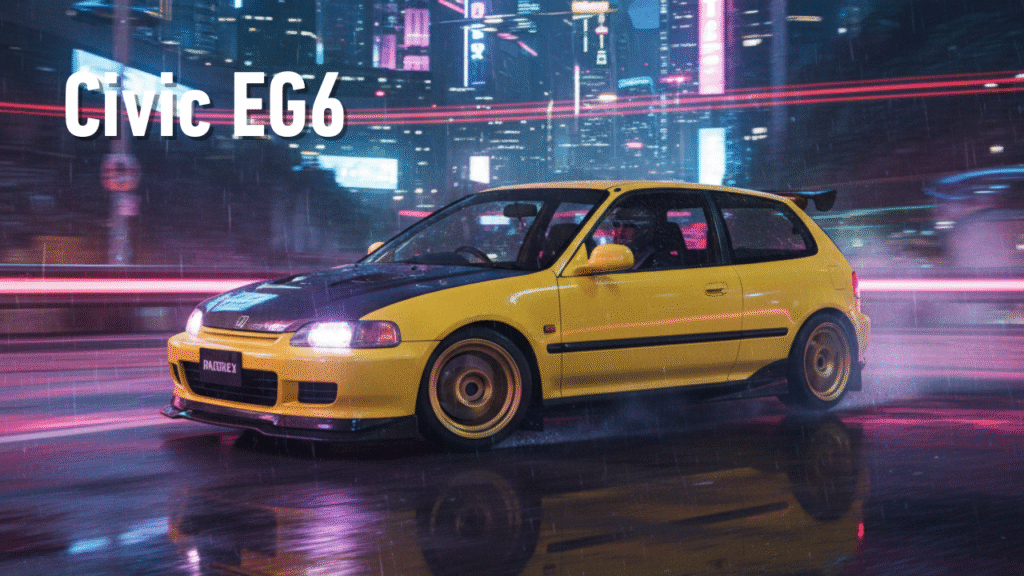
- Appearance: The Fast and the Furious
- Scene: Three black Civics used to hijack trucks at night.
- Features: Lightweight hatchback with a rev-happy VTEC engine. Symbol of early street racing ingenuity.
The Honda Civic EG6 (model code E-EG6) was introduced in September 1991 as part of the fifth-generation Civic lineup in Japan. It featured a 1.6-liter inline-four DOHC VTEC engine and became one of the most influential cars in Japan’s 1990s tuning scene. Weighing only around 1,040 kg, the EG6 offered an ideal balance of lightness and high-revving performance, making it a favorite among street racers and tuners.
In the film, three black Civics are used by Dom’s crew during the nighttime truck hijacking missions. Despite their compact hatchback form, they demonstrate remarkable agility and responsiveness, symbolizing the clever engineering and grassroots spirit of early street racing culture.
The Civic EG6 stands as a timeless icon of “lightweight VTEC power,” representing both Japanese tuning ingenuity and the creative energy of the 1990s street racing era qualities that made it the perfect choice for Dom’s fast-moving crew.
S2000 (Suki)
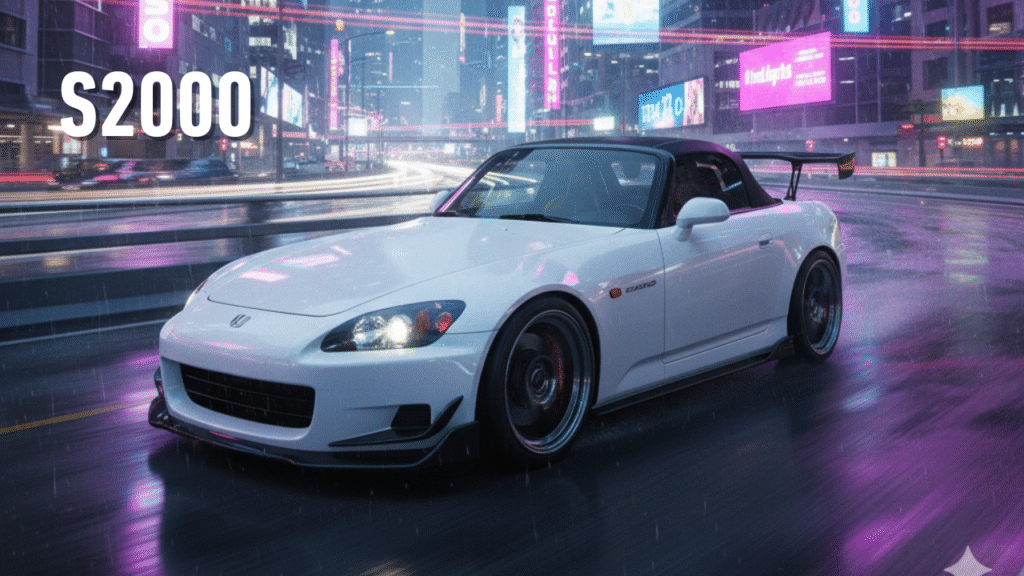
- Appearance: The Fast and the Furious
- Scene: Suki’s pink S2000 in Miami’s race.
- Features: 9000 rpm redline, rear-wheel drive, and precise handling—one of the purest driver’s cars ever built.
The Honda S2000, introduced in 1999 to celebrate Honda’s 50th anniversary, is a two-seat open-top sports car that embodies the essence of Japanese precision engineering. The Japan-spec model was powered by the F20C 2.0-liter inline-four DOHC VTEC engine, capable of revving up to an incredible 9,000 rpm, earning it a reputation as one of the highest-revving naturally aspirated engines ever fitted to a production car.
Its chassis achieved a near-perfect 50:50 front-to-rear weight balance, and the rear-wheel-drive (FR) configuration provided exceptional agility and feedback. Japanese automotive reviewers praised the S2000 for its lightweight design, sharp cornering performance, and driver-focused dynamics qualities that made it a true “pure sports car.”
In The Fast and the Furious, Suki’s pink S2000 perfectly captures the car’s spirited nature and balance of style and performance. With its vibrant color, open-top design, and precision handling, it reflects both Suki’s bold personality and the early-2000s street racing culture.
The Honda S2000 remains an icon of Japanese automotive excellence a car that seamlessly combines high-revving power, mechanical purity, and timeless design, earning its place as one of the most celebrated sports cars of its era.
NSX (Letty Ortiz)
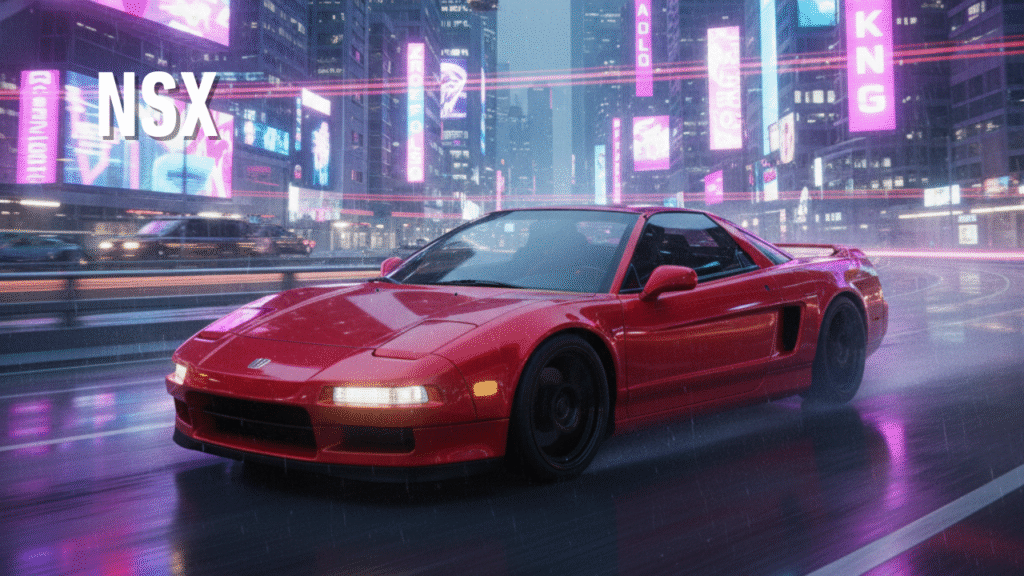
- Appearance: Fast & Furious 7
- Scene: Letty’s personal car after rejoining Dom’s crew.
- Features: Mid-engine balance, aluminum body, and timeless styling. Japan’s true supercar.
The Honda NSX, first launched in September 1990 in Japan, represented the pinnacle of Honda’s sports car engineering. It was the world’s first production car to feature an all-aluminum monocoque body, delivering a lightweight yet rigid structure that set new standards in performance and handling. Powered by a 3.0-liter mid-mounted V6 DOHC VTEC engine, the NSX achieved supercar-level dynamics while maintaining everyday drivability.
Japanese automotive media have long praised the NSX for its exceptional balance, precise handling, and harmonious blend of performance and usability, often describing it as “Japan’s true supercar.” Its mid-engine layout, aerodynamic design, and timeless styling continue to define its legacy as one of the most iconic sports cars ever built.
In Fast & Furious 7, Letty’s NSX reflects both her refined driving skill and the car’s heritage of control and confidence. As her personal vehicle after rejoining Dom’s crew, it symbolizes strength, loyalty, and precision qualities shared by both driver and machine.
Thus, the NSX stands not only as a technological masterpiece of Japanese engineering, but also as a cinematic representation of JDM excellence a supercar that seamlessly merges elegance, innovation, and raw performance.
Integra DC2 (background)
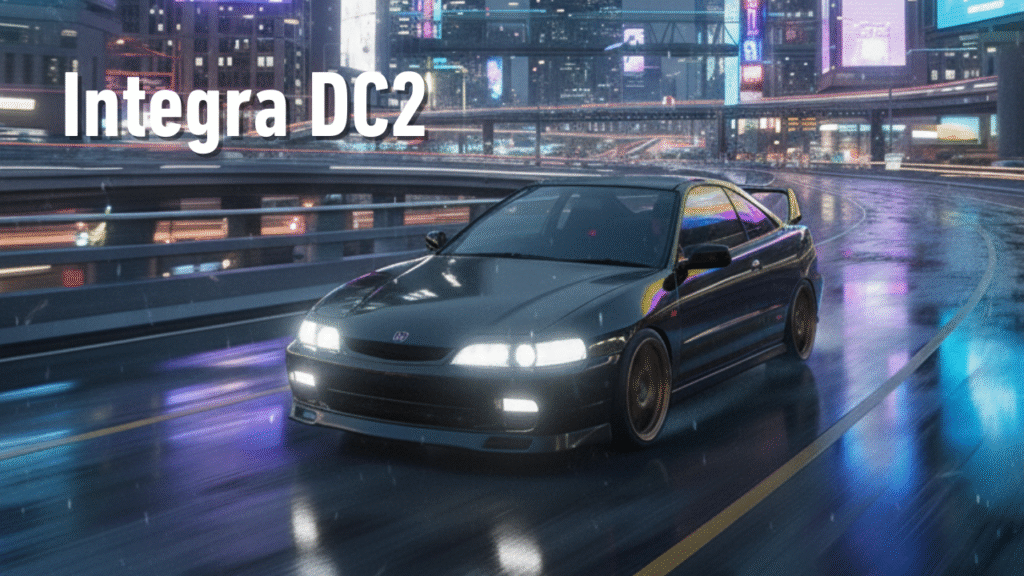
- Appearance: Tokyo Drift
- Scene: Parking lot cameo.
- Features: Lightweight coupe with VTEC power and agile dynamics.
The Honda Integra DC2 represents one of Japan’s most iconic 1990s front-wheel-drive sports coupes, celebrated for its combination of lightweight design, high-revving VTEC power, and agile handling. Japanese automotive media have described it as “a car that revolutionized the FF sports segment,” thanks to its sharp cornering performance and precise steering response.
The Japan-spec E-DC2 Integra Type R was equipped with the legendary B18C 1.8-liter DOHC VTEC engine, producing up to 200 PS, and weighed just around 1,080 kg. Paired with a close-ratio 5-speed manual transmission, it offered exceptional balance and control, making it one of the most revered driver’s cars of its time.
In Tokyo Drift, while not a featured vehicle, the Integra DC2 appears in the background its presence reinforcing the film’s authentic portrayal of Japan’s tuning culture. The car symbolizes the grassroots ingenuity of 1990s Japanese street racers: lightweight, responsive, and built for quick, precise driving.
Thus, the Integra DC2 embodies the spirit of lightweight engineering and high-revving excitement, representing both the performance ethos and creative freedom that defined Japan’s golden age of tuner culture.
Other Japanese Models
Lexus LFA (Han & Gisele)
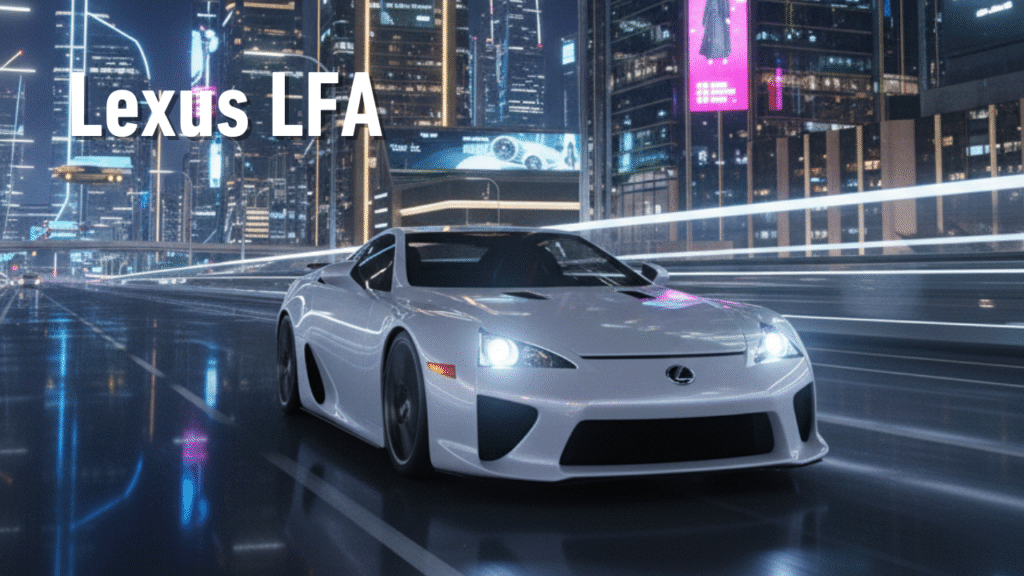
- Appearance: Fast Five end credits
- Scene: Han and Gisele driving into the sunset.
- Features: Hand-built V10 producing a legendary high-pitched scream. The pinnacle of Japanese engineering.
The Lexus LFA, produced in Japan between December 2010 and December 2012, was limited to just 500 units worldwide, marking Lexus’s first true supercar. It was powered by a hand-built 4.8-liter naturally aspirated V10 engine (1LR-GUE), delivering 560 PS at 8,700 rpm and 480 Nm (48.9 kgf·m) of torque at 6,800 rpm. With a redline of 9,000 rpm, the LFA’s engine produces a high-pitched, Formula 1–like scream that has become legendary among enthusiasts.
The chassis and body structure were crafted from CFRP (carbon fiber reinforced plastic), accounting for about 65% of its construction, giving the car both high rigidity and lightness. The rear-wheel-drive (FR) layout and nearly 50:50 weight distribution exemplify the precision and engineering balance of Japanese design. The LFA was conceived as a statement piece Japan’s technological answer to the world’s European supercars.
In Fast Five, the LFA symbolizes freedom, rebirth, and connection, as Han and Gisele drive into the sunset together. Its inclusion in this emotional final scene reinforces the car’s image as Japan’s ultimate supercar, blending cutting-edge craftsmanship with emotional resonance.
Hand-assembled to perfection, capable of 9,000 rpm, and built around a carbon-fiber monocoque, the LFA stands as the pinnacle of Japanese automotive engineering a masterpiece that fuses passion, precision, and artistry both on screen and in reality.
Daihatsu Copen (background)
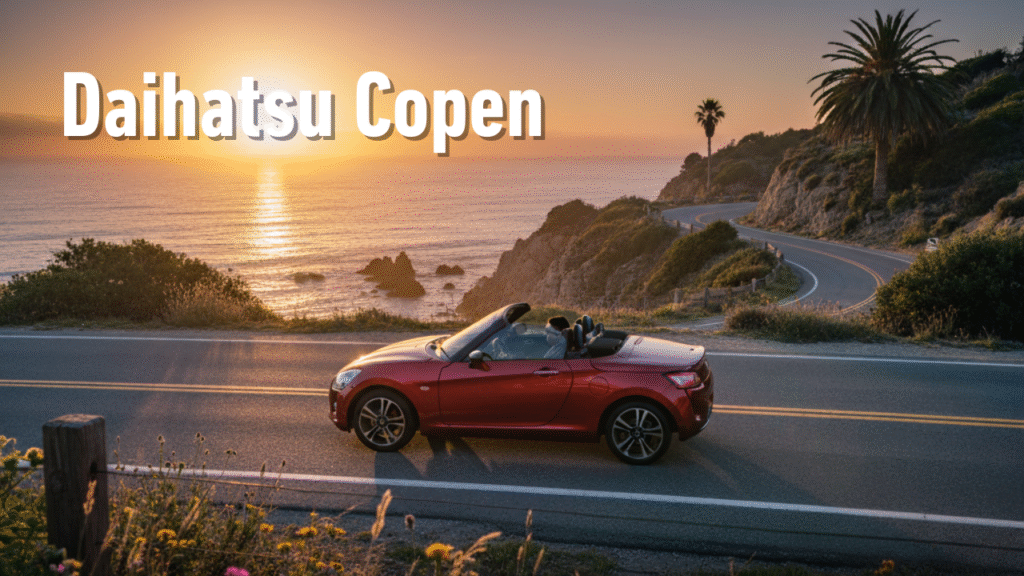
- Appearance: Tokyo Drift
- Scene: Seen in Shibuya street scenes.
- Features: Tiny kei convertible capturing Japan’s everyday charm amid the chaos of Tokyo.
The Daihatsu Copen, introduced to the Japanese market in June 2002, is a lightweight, two-seater convertible designed under Japan’s kei car regulations. Despite its compact size, it was created to deliver genuine sports car enjoyment, offering an open-top driving experience with everyday practicality.
Built on a lightweight chassis, the Copen features a retractable hardtop roof and precise handling that make it ideal for city driving. Japanese automotive media have often described it as a car that “captures the joy of driving in a compact, approachable form,” perfectly suited to Japan’s urban landscape.
In Tokyo Drift, while not a featured car, the Copen appears briefly in the bustling streets of Shibuya. Its small yet distinctive silhouette helps portray the authentic atmosphere of Tokyo’s nightlife a mix of modern energy, vibrant lights, and diverse automotive culture.
Thus, the Daihatsu Copen stands as a subtle but meaningful symbol of Japan’s unique kei sports car tradition, adding realism and charm to the film’s Tokyo setting.
4. The Global Rise of JDM Culture

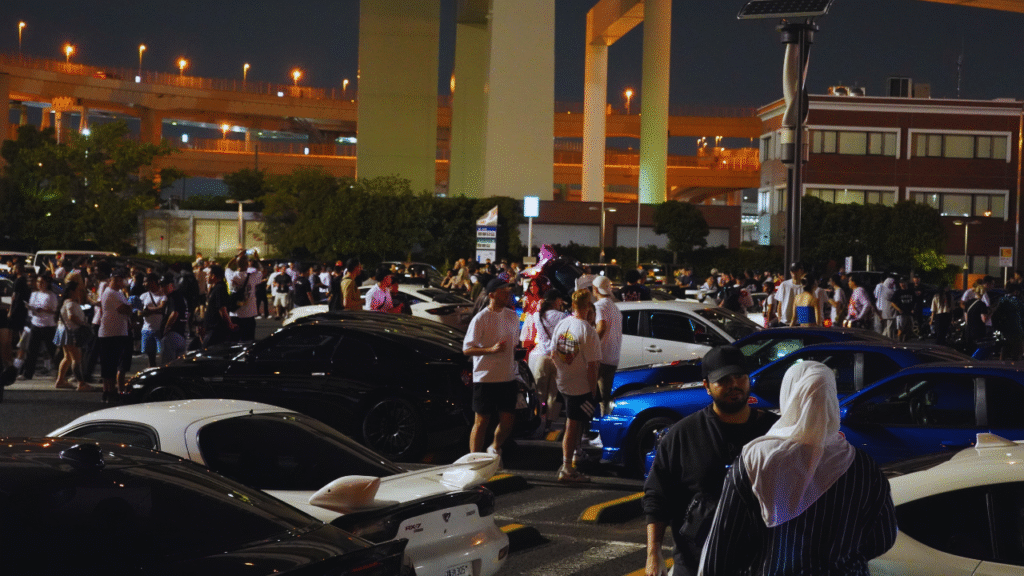
JDM has evolved into a worldwide movement.
From Los Angeles to London, car meets and drift events celebrate Japanese engineering and creativity.
Fans proudly display Japanese stickers, kanji decals, and retro license plates.
Social media hashtags like #JDM, #DaikokuPA, and #Wangan dominate the global scene,
while the 25-year import rule in the U.S. has reignited demand for classics like the R32 and Supra.
5. The Tuning Spirit of JDM
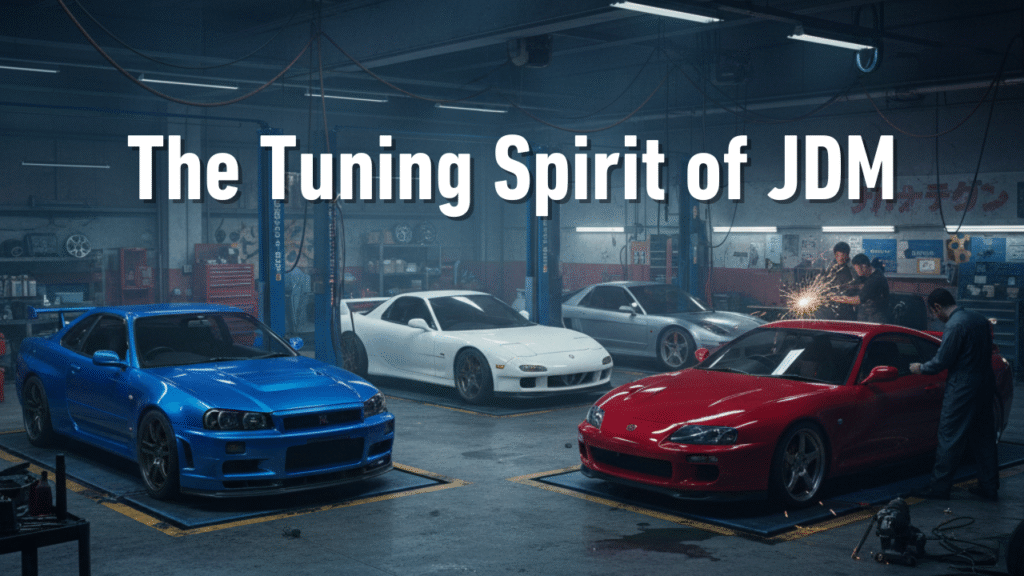
The essence of JDM lies in personalization.
Every enthusiast strives to create “their one and only” machine.
Common upgrades include turbo swaps, ECU tuning, wide-body kits, and custom interiors.
Japanese brands such as HKS, Top Secret, and RE Amemiya have achieved cult status abroad.
“Stance” and “shakotan” styles reflect Japan’s unique aesthetic of minimalism and aggression.
6. Experiencing JDM in Japan
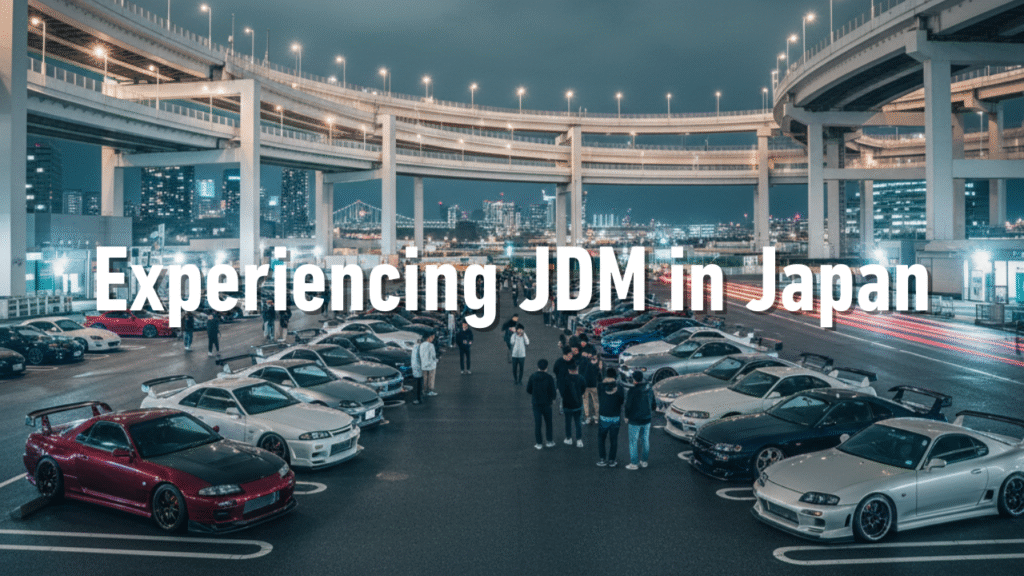
To truly feel JDM culture, you have to visit its birthplace:
- Daikoku Parking Area (Yokohama) – the ultimate weekend car meet spot.
- Shuto Expressway / Wangan Line – drive through neon-lit cityscapes like in the movies.
- Tsukuba & Fuji Speedway – join open track days for amateurs.
- JDM Tours – guided trips combining tourism and car culture.
Every site tells a story of passion, craftsmanship, and community.
7. The Future of JDM
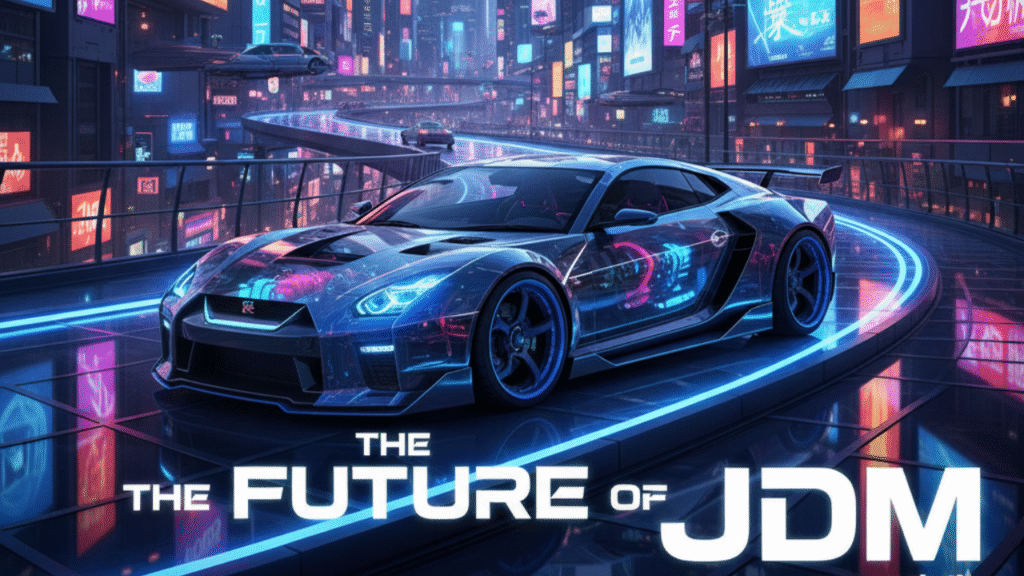
Even in an age of electrification, JDM spirit lives on.
Retro cars are being reborn through EV conversions and digital restoration,
while AI and 3D tuning redefine customization.
The next generation of builders raised on Skylines and Supras are fusing tradition with technology.
JDM isn’t just about cars; it’s a philosophy of creativity, individuality, and respect for engineering.
Conclusion
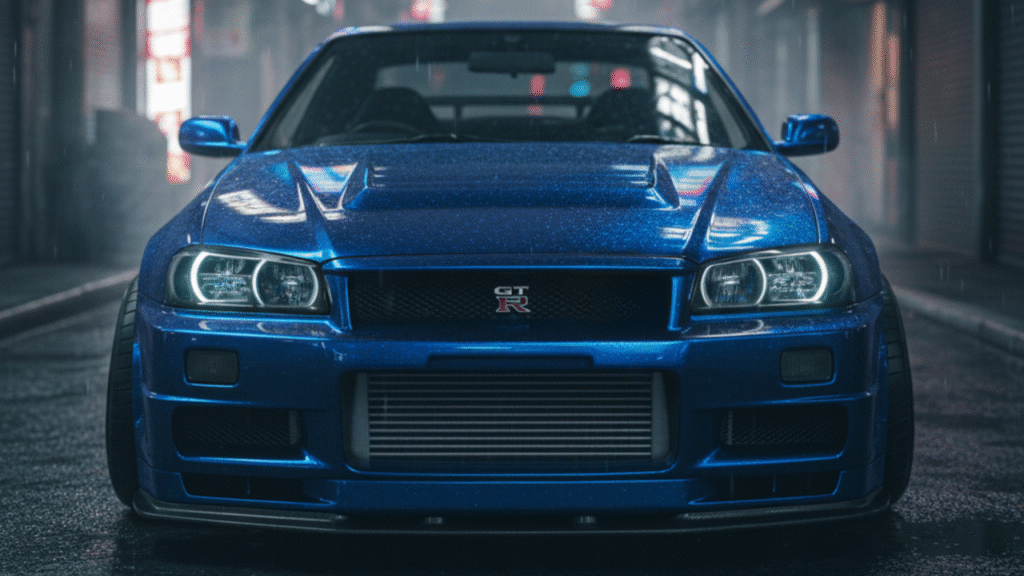
JDM is more than a category it’s an art form born in Japan and loved around the world.
From the backstreets of Tokyo to Hollywood blockbusters, these cars embody speed, precision, and passion.
Thanks to The Fast & Furious, the roar of Japan’s finest engines will echo for generations to come.