
Why Daikoku Parking Area Is Called a “Sanctuary”
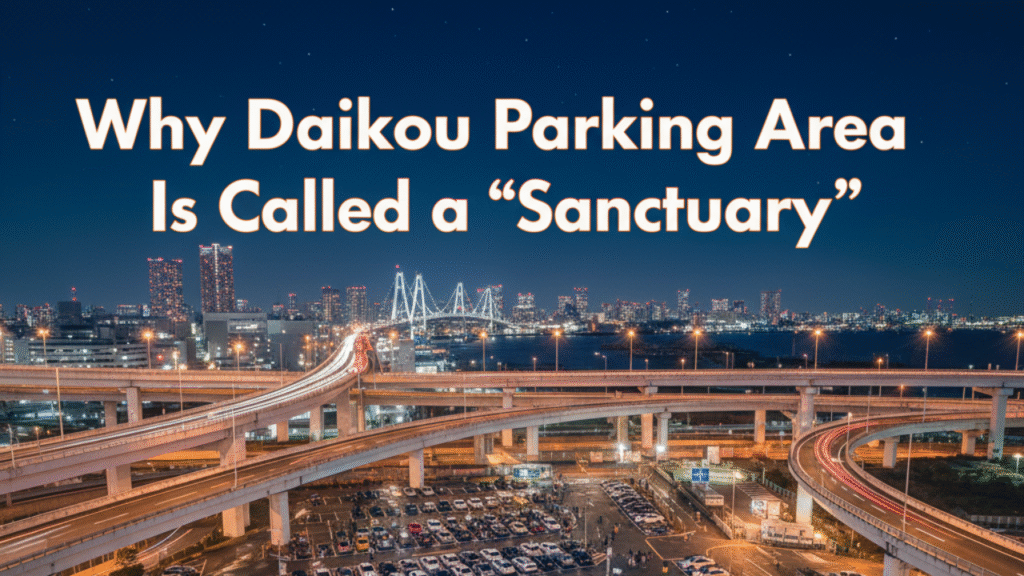
Opened in 1989 along with the completion of the Yokohama Bay Bridge, the Daikoku Parking Area quickly evolved from a simple highway rest stop into a living monument of Japan’s automotive culture. Originally designed as a peaceful spot for couples to enjoy panoramic night views of the bay, it has since transformed into something far more symbolic a gathering point where the sound of engines, the shimmer of headlights, and the shared language of passion unite enthusiasts from across Japan and around the world.
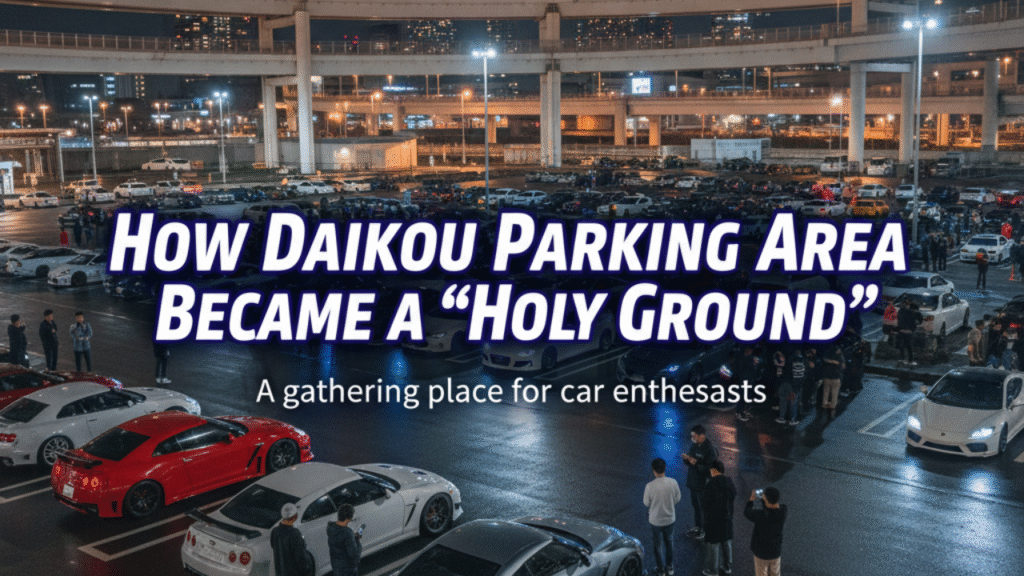
Today, the Daikoku Parking Area stands as a sanctuary for anyone who loves cars, from nostalgic tuners to owners of high-end supercars. On weekend nights, it becomes a dazzling stage of automotive expression rows of JDM cars lined up beside Italian exotics, each polished and customized with pride. The air fills with the scent of gasoline, the hum of idling engines, and conversations that cross languages but share the same excitement for machines.
Yet beneath the spectacle, the Daikoku Parking Area operates on a quiet understanding a delicate harmony built on respect, self-discipline, and community. Visitors follow unspoken rules known in Japan as “Okite,” a set of courtesies that preserve the atmosphere of this sacred ground. These gestures turning off headlights, keeping noise levels down, parking neatly might seem small, but they’re what allow this extraordinary place to continue thriving. For newcomers, learning these customs isn’t just about following etiquette; it’s about becoming part of the spirit that makes Daikoku Parking Area unlike anywhere else in the world.
What is Daikoku? The currently popular Daikoku pa tour.
How Daikoku Parking Area Became a “Holy Ground”
From Date Spot to Car Culture Hub
When the Daikoku Parking Area first opened its gates in the late 1980s, few could have predicted that this unassuming rest stop would evolve into one of the most recognized names in global car culture. Back then, the neon-lit skyline of Yokohama reflected off Tokyo Bay, and the area was known mostly as a quiet, romantic night view destination a scenic lookout where couples would park to admire the glowing bridges and city lights.
But as Japan’s tuning culture and underground racing scene began to explode in the early 1990s, everything changed. The Bayshore Route of the Shuto Expressway became a legendary loop for late-night drivers testing their machines, and the Daikoku Parking Area naturally transformed into their gathering place. It wasn’t long before the rumble of engines replaced the calm hum of the city rows of JDM cars like Skylines, Supras, RX-7s, and Evos lined the lot, representing the golden age of Japan’s automotive innovation.
By 1997, the opening of the Tokyo Bay Aqua-Line connected Kanagawa, Tokyo, and Chiba more directly than ever, making the Daikoku Parking Area even more accessible. The site’s reputation spread beyond Japan’s borders, drawing photographers, filmmakers, and travelers who wanted to experience the birthplace of authentic JDM spirit. The BBC’s Top Gear famously filmed here, capturing the surreal harmony of flashing lights, roaring supercars, and respectful order that defines the Daikoku Parking Area today. For car enthusiasts worldwide, this was no longer just a rest stop it had become a cultural landmark, a holy ground where JDM cars and global car passion coexist in perfect rhythm.
The Unspoken Rules — “Okite” of Daikoku Parking Area
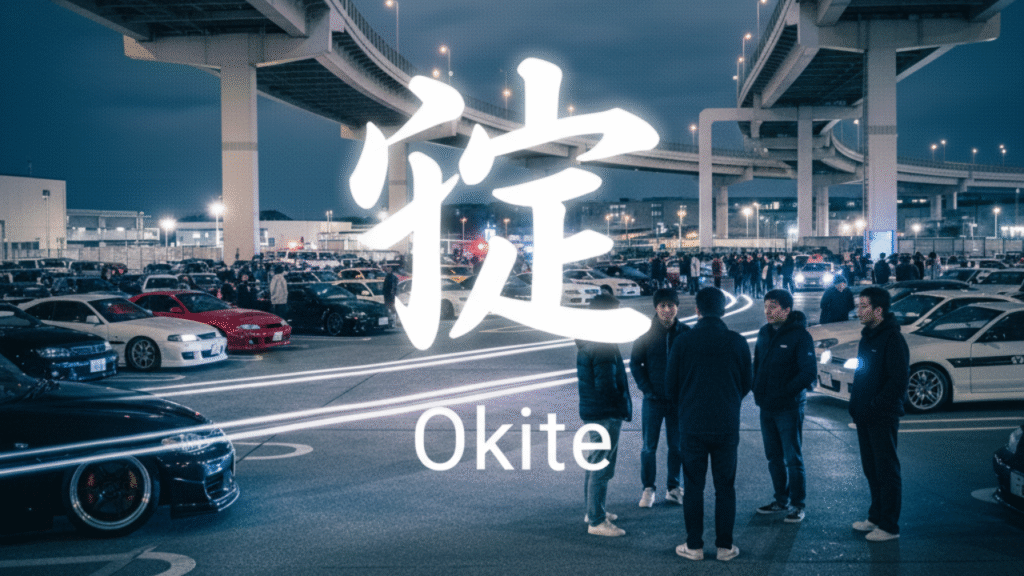
Before you visit, remember: the Daikoku Parking Area isn’t just a rest stop or parking lot it’s a living, breathing cultural space where passion and discipline coexist. Every “Okite” the unspoken rules that govern behavior here exists for a reason. These small gestures of respect maintain harmony between local commuters, long-haul truckers, and visiting enthusiasts who come to admire JDM cars under the glow of Yokohama’s skyline. Following them isn’t about strict enforcement; it’s about protecting the spirit that keeps the Daikoku Parking Area alive.
1: Never Park in the Truck Zone
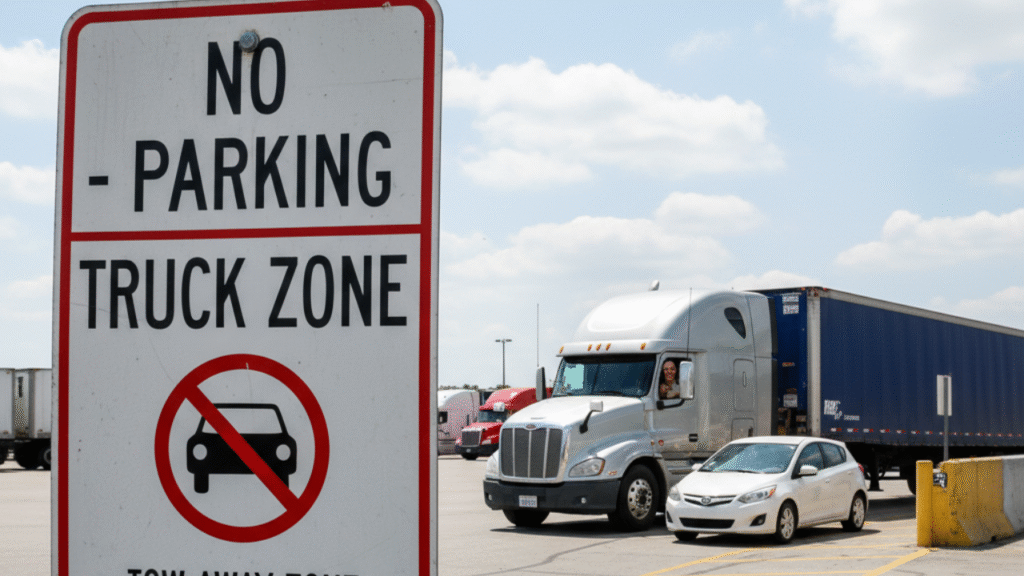
The first large section you encounter when entering the Daikoku Parking Area is dedicated to trucks — the lifeline of Japan’s logistics network. These long-haul drivers rely on the area for mandatory rest breaks, a right protected by road safety law. Taking their spots, even for a few minutes, isn’t just inconsiderate — it’s breaking the social contract that defines this place.
Parking your JDM car or import vehicle in the truck bays disrupts their workflow and draws unwanted attention to all enthusiasts. The Daikoku Parking Area is heavily monitored, and improper parking can lead to restrictions that affect everyone. The golden rule? Always park in the small-vehicle zone, even if it means walking a little further. That short walk is part of respecting the shared space — the foundation of what makes the Daikoku Parking Area more than a parking lot, but a community.
2: Do Not Park in Front of the Restrooms
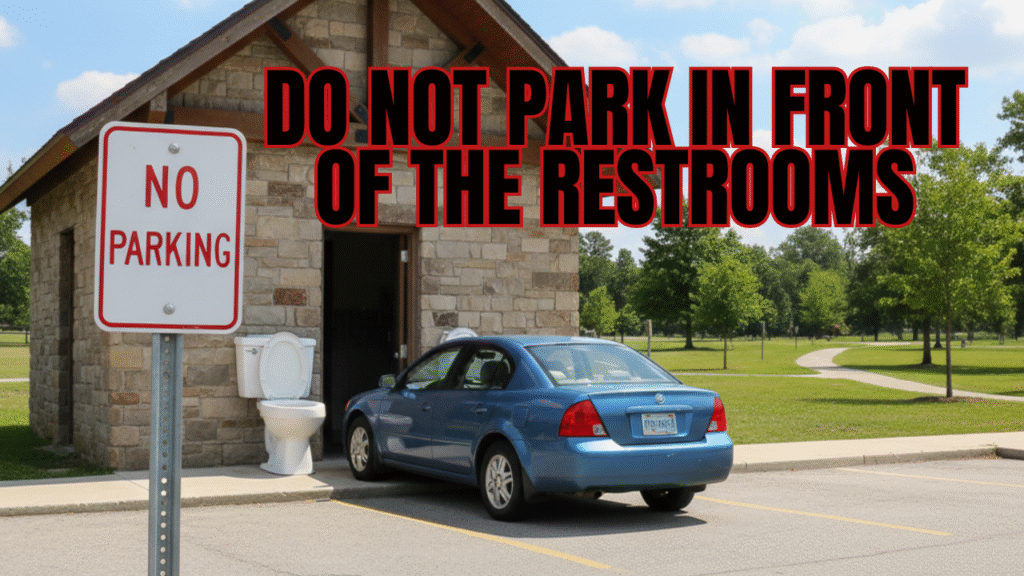
Among the unwritten Okite of the Daikoku Parking Area, one of the most overlooked is this: never occupy the spaces in front of the restroom area for extended periods. These spots are designed for families with children, elderly drivers, and travelers making quick stops along the expressway. When someone leaves their JDM car parked there to take photos or chat for half an hour, it causes real inconvenience — and it reflects poorly on all enthusiasts.
At the Daikoku Parking Area, courtesy is as important as horsepower. Being mindful of others reinforces the Japanese value of harmony, or wa. Every driver who visits — whether in a Skyline GT-R or a rental car — contributes to the tone of the community. By parking considerately, you embody the spirit that makes Daikoku Parking Area a respected symbol of Japanese car culture worldwide.
What is Daikoku? The currently popular Daikoku pa tour.
3: Don’t Force Your Way into a Group Lineup
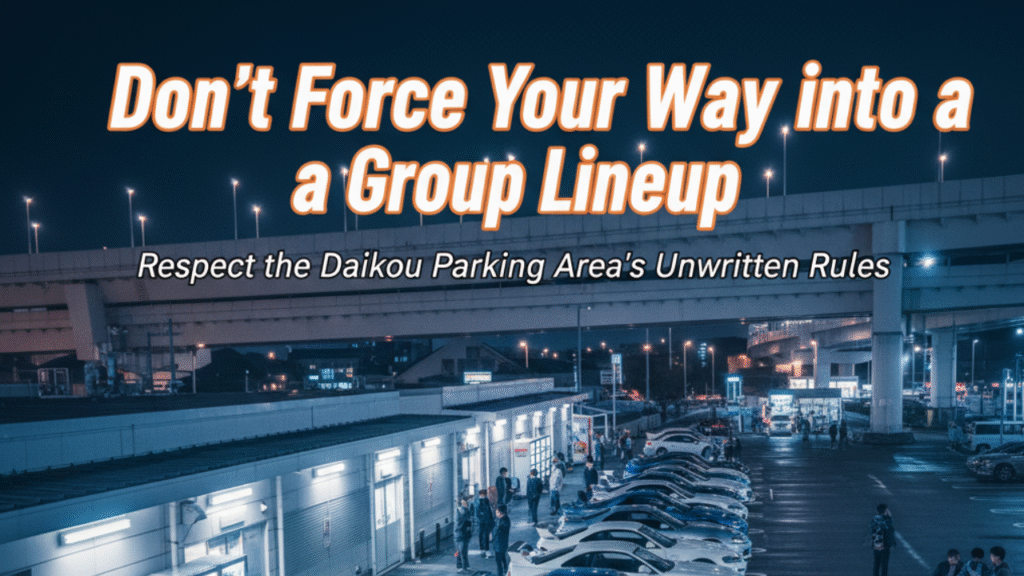
If you’ve ever dreamed of parking your JDM car beside a perfect row of R34 Skylines or Supras, remember — most of these groups are organized car clubs or long-standing friend circles. The Daikoku Parking Area is famous for these lineups, but joining one uninvited is seen as impolite. Each row often has an unspoken order: members, friends, photographers, then visitors.
The best approach? Take a slow lap around the Daikoku Parking Area, enjoy the view, and find an open space near the food court or vending machine area. From there, you can meet people naturally and earn an invitation into a lineup later. The Daikoku Parking Area thrives on mutual respect — and understanding that every JDM car owner values both individuality and community.
4: Watch Out for the Step on the Pedestrian Path
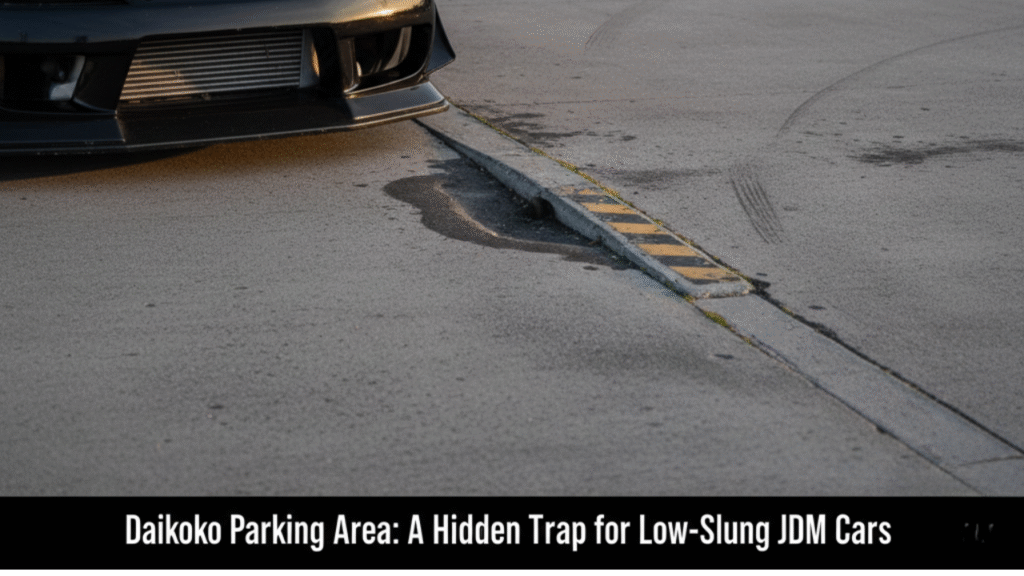
The Daikoku Parking Area may seem smooth and open, but many visitors overlook a small, 3–4 cm raised curb running through its central walkway. For low-slung JDM cars — especially those with aero kits or custom lips — it’s a hidden trap. Many drivers have scraped bumpers or diffusers here, leaving behind scars on both the pavement and their pride.
To protect your car — and to preserve the clean, polished image of the Daikoku Parking Area — slow down, approach diagonally, and keep an eye on clearance. This may sound like a minor detail, but attention to such subtleties is what separates true enthusiasts from casual visitors. Respecting your machine and respecting the space go hand in hand in Japan’s car culture.
5: No Circling Around or Wrong-Way Driving
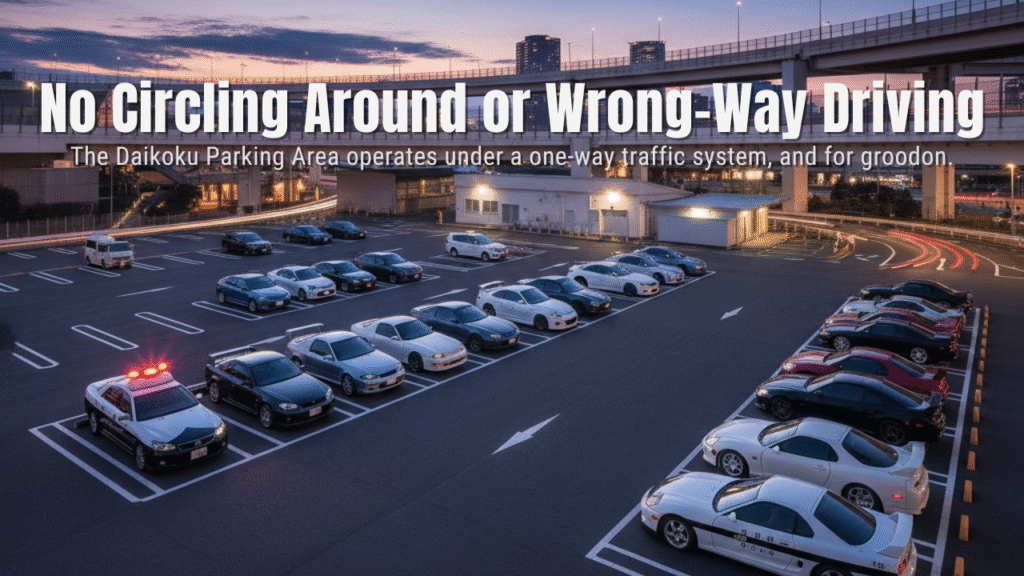
The Daikoku Parking Area operates under a one-way traffic system, and for good reason. Circling repeatedly, revving, or driving against the flow is not only frowned upon — it invites police attention and can lead to temporary closures for everyone.
If you miss a spot or wish to explore a different section, take the proper loop via the expressway and re-enter. It may seem inconvenient, but patience is part of the Daikoku Parking Area’s etiquette. In Japan’s car scene, discipline and passion coexist. The best JDM cars aren’t just built beautifully — they’re driven with respect for the culture surrounding them.
6: Do Not Enter Truck Lanes or Restricted Turns
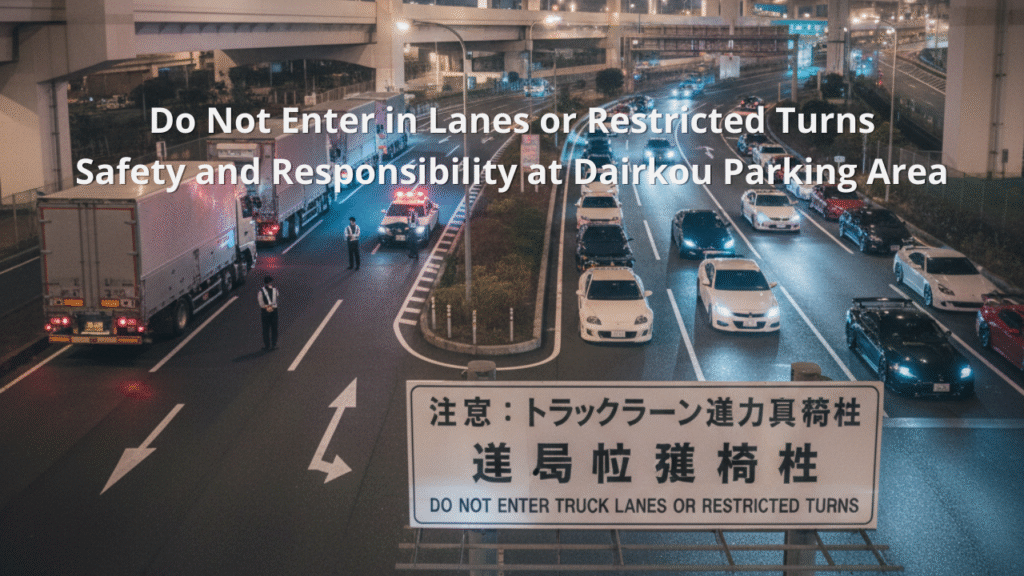
The truck lanes and restricted turns at the Daikoku Parking Area are strictly for heavy vehicles. They’re engineered with wider turning radii and lower visibility — unsuitable for normal cars. Entering these lanes to “shortcut” your way out is dangerous and disrespectful.
The Daikoku Parking Area has its own Highway Patrol Substation nearby, and officers monitor activity closely. Even a brief infraction can lead to fines or warnings, tarnishing the reputation of car enthusiasts. Staying within the correct lanes shows you understand that being part of the Daikoku Parking Area community means upholding safety and responsibility — values that define Japan’s love for JDM cars.
7: Never Leave Your Car with the Hood Open

The temptation to showcase your build is understandable — the Daikoku Parking Area is, after all, a stage for some of the world’s most stunning JDM cars. But leaving your hood open while walking away exposes sensitive details like engine and chassis numbers, making your vehicle vulnerable to theft or cloning.
High-demand JDM cars such as the R34 GT-R, RX-7, and Mk4 Supra fetch enormous prices abroad, and criminal networks know it. The Daikoku Parking Area attracts enthusiasts — and, occasionally, opportunists. If you wish to display your engine bay, stay close and engage with others respectfully. Sharing knowledge face-to-face, rather than showing off unattended, reflects the true soul of the Daikoku Parking Area — pride with humility, passion with vigilance.
Closures, Crackdowns, and “Free Vehicle Inspections”
Temporary Closures
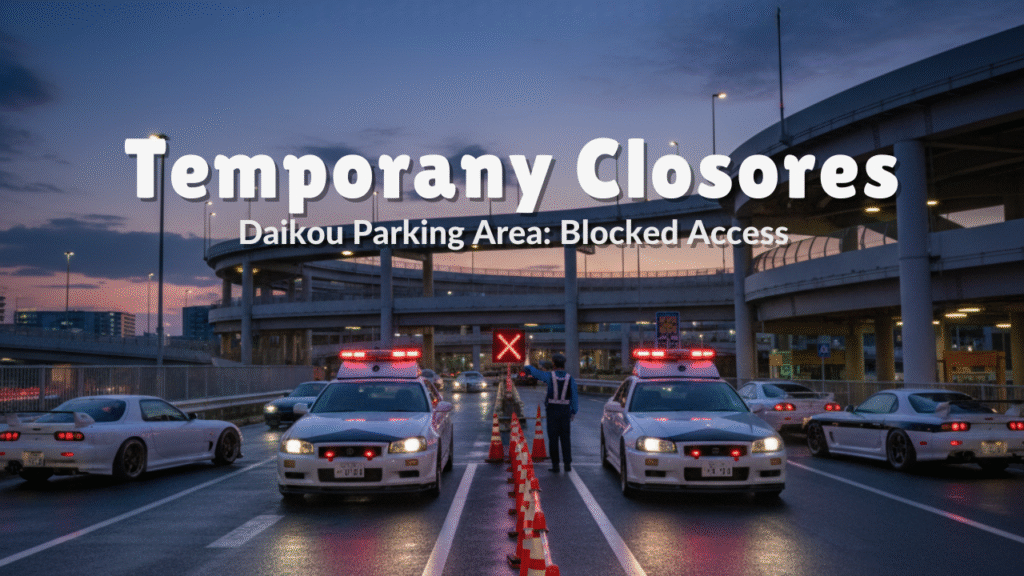
The immense popularity of the Daikoku Parking Area is both its blessing and its curse. On busy nights — especially weekends, national holidays, or evenings following large car events — the sheer volume of visitors can cause congestion so intense that authorities step in. When the parking spaces fill beyond safe capacity, highway patrol officers initiate temporary closures, often beginning around 8:00 to 8:30 PM. The small-vehicle section of the Daikoku Parking Area is usually the first to close, leaving only truck zones open for essential logistics drivers.
When this happens, officers may walk through the area, politely asking enthusiasts to start their engines and move out in an orderly manner. Entrance ramps are then blocked with patrol cars or cones to prevent new arrivals. Still, the Daikoku Parking Area itself doesn’t “shut down” entirely — the truck areas remain operational for professional drivers, and the restrooms, vending machines, and convenience stores like Lawson continue to serve those passing through. For those who travel long distances to admire JDM cars or take night photos, the best way to avoid disappointment is preparation: check X (formerly Twitter), Google Maps updates, or the official Shuto Expressway website before making the drive. Remember, respecting closures helps protect access for everyone who loves the Daikoku Parking Area and the culture it represents.
The So-Called “Free Vehicle Inspection Days”
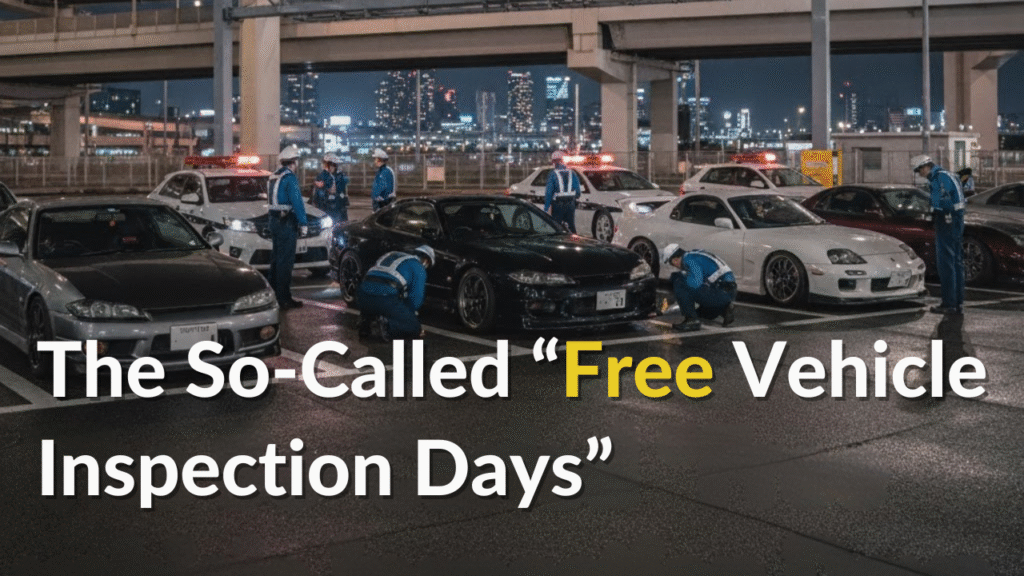
Among regulars of the Daikoku Parking Area, there’s a phrase whispered half-jokingly — “Free Vehicle Inspection Day.” These are not actual community events but rather heightened police operations, often rumored to occur on memorable dates like July 7 (7/7), August 6 (8/6), or March 4 (3/4). On these nights, the Daikoku Parking Area can resemble a quiet checkpoint rather than the vibrant car sanctuary it’s known to be. Officers from the Kanagawa Highway Patrol and regional departments conduct detailed inspections of vehicles, focusing on modification legality — checking exhaust volume, underglow lighting, ride height, and license-plate visibility.
It’s not a crackdown on JDM cars specifically, but rather an effort to maintain public safety and compliance on the Shuto Expressway network. Still, because the Daikoku Parking Area has become a global symbol of Japan’s car culture, it naturally attracts a mix of enthusiasts — from domestic tuners to international visitors — making it a prime target for oversight. If you plan to visit on one of these rumored “inspection days,” ensure your car adheres to local regulations. A properly maintained JDM car, tuned within legal limits, not only avoids trouble but also reflects the authenticity and respect that define the Daikoku Parking Area community. In this way, you help sustain the delicate trust that keeps Japan’s most legendary car spot open to everyone.
General Manners and Related Situations
Wrong-Way Driving Is Never Acceptable
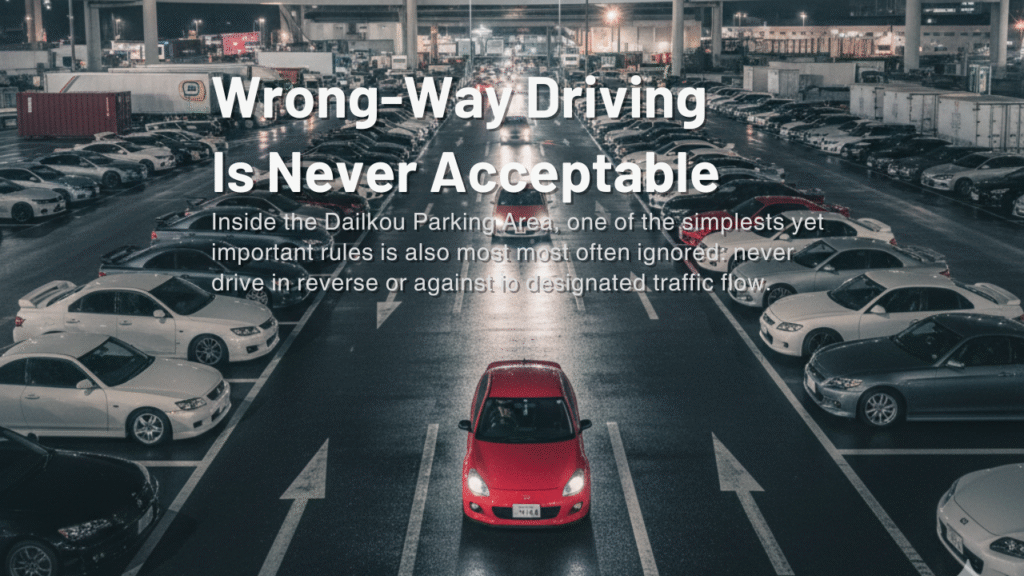
Inside the Daikoku Parking Area, one of the simplest yet most important rules is also the most often ignored: never drive in reverse or against the designated traffic flow. The road layout here was designed to manage a constant rotation of vehicles, from long-haul trucks to low-slung JDM cars, all sharing limited space. Even though Japan’s traffic law doesn’t always specify penalties for reversing in rest areas, any resulting collision or obstruction places full legal responsibility on the reversing driver.
At the Daikoku Parking Area, this behavior isn’t just unsafe — it’s seen as disrespectful to the shared culture of order that defines the space. If you miss a parking spot, continue forward or exit, loop around via the expressway, and re-enter properly. That extra five-minute drive is part of the rhythm of the Daikoku Parking Area experience — a small act of discipline that separates true car enthusiasts from reckless show-offs. Remember, every driver, whether behind the wheel of a tuned Skyline or a visiting rental, contributes to the atmosphere that keeps the Daikoku Parking Area open and respected worldwide. Safety and etiquette are as much a part of Japan’s car culture as the beauty of the JDM cars themselves.
Walking Entrances and Ride-Sharing Restrictions
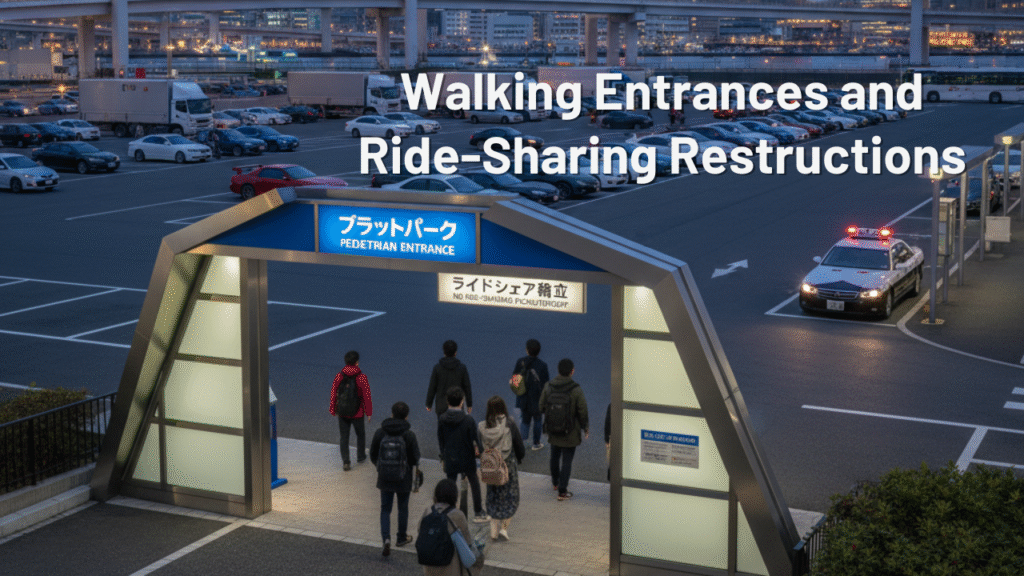
Modern highway rest stops across Japan now feature “Platto Park” pedestrian entrances, designed for visitors who arrive on foot to shop, dine, or simply watch the flow of cars. The Daikoku Parking Area is no exception — its pedestrian gate has become popular with travelers staying nearby or locals who want to enjoy the view of Yokohama Bay without driving. However, this convenience is often misunderstood. Using these gates as a pickup or drop-off point, or coordinating ride-shares to avoid expressway tolls, is strictly prohibited.
Such practices disrupt the carefully managed traffic system that allows the Daikoku Parking Area to operate safely. These gates are meant for foot traffic only — not for bypassing toll barriers or staging rendezvous between JDM car groups. Similarly, the bus stop areas located near the expressway are reserved exclusively for licensed commercial buses. Parking or waiting there, even momentarily, can result in immediate warnings or fines from highway patrol officers stationed near the Daikoku Parking Area. Respecting these small details maintains the order that lets Japan’s most famous car gathering spot coexist with everyday drivers and logistics workers. When visitors treat the Daikoku Parking Area as more than a photo backdrop — as a living part of Japan’s infrastructure and car heritage — they preserve the harmony that keeps the world of JDM cars shining proudly each night.
How to Enjoy Daikoku PA the Right Way
Before You Go

- Check live updates:Before heading to the Daikoku Parking Area, always confirm the latest closure or congestion info. Use the official Shuto Expressway website or social media like X (formerly Twitter) for real-time updates. It saves time and frustration.
- Plan your timing:The Daikoku Parking Area becomes busiest between 10 PM and 1 AM, especially on Fridays through Sundays. To enjoy the scene with fewer crowds and easier parking, visit earlier in the evening or on weekday nights.
- Prepare for the atmosphere:Remember that the Daikoku Parking Area is not just a stopover — it’s a hub of culture. Expect to see everything from tuned JDM cars to rare imports, photographers, and fans soaking in the city lights.
- Choose your parking spot wisely:Be considerate when selecting your spot. Leave enough space for others, avoid blocking exits, and prioritize safety over photo angles. Respectful parking keeps the Daikoku Parking Area harmonious for everyone.
While You’re There
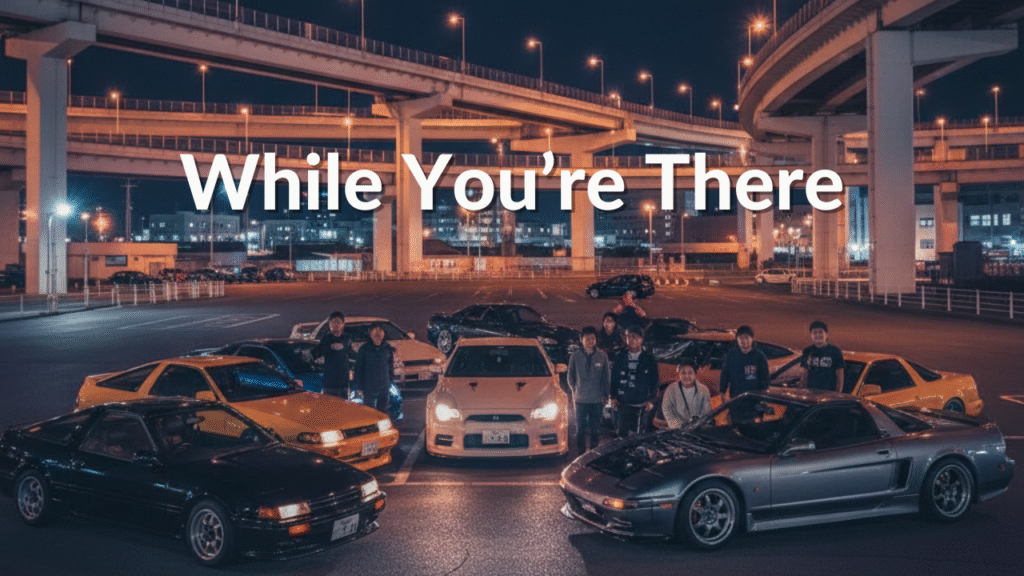
■ Be approachable and friendly
The Daikoku Parking Area thrives on community. Smile, greet others, and share stories about your builds — meeting fellow enthusiasts of JDM cars is part of the fun.
■ Photograph respectfully
Always blur license plates or ask permission before shooting. This is an unspoken rule among Daikoku Parking Area regulars and shows respect for privacy.
■ Keep noise under control
Avoid excessive revving, loud music, or long idling. The balance of calm conversation and subtle engine notes defines the true spirit of JDM car culture at the Daikoku Parking Area.
■ Mind your lights
Switch headlights to low beam to prevent glare for pedestrians and nearby drivers. It’s a small gesture that makes the Daikoku Parking Area safer and more enjoyable for all.
■ Leave no trace
Dispose of all trash, check for oil drips, and tidy your space before departure. Clean surroundings protect the reputation of the Daikoku Parking Area and uphold the global respect for Japan’s JDM cars.
Every small gesture contributes to keeping Daikoku beautiful and respected.
Manners Create Culture
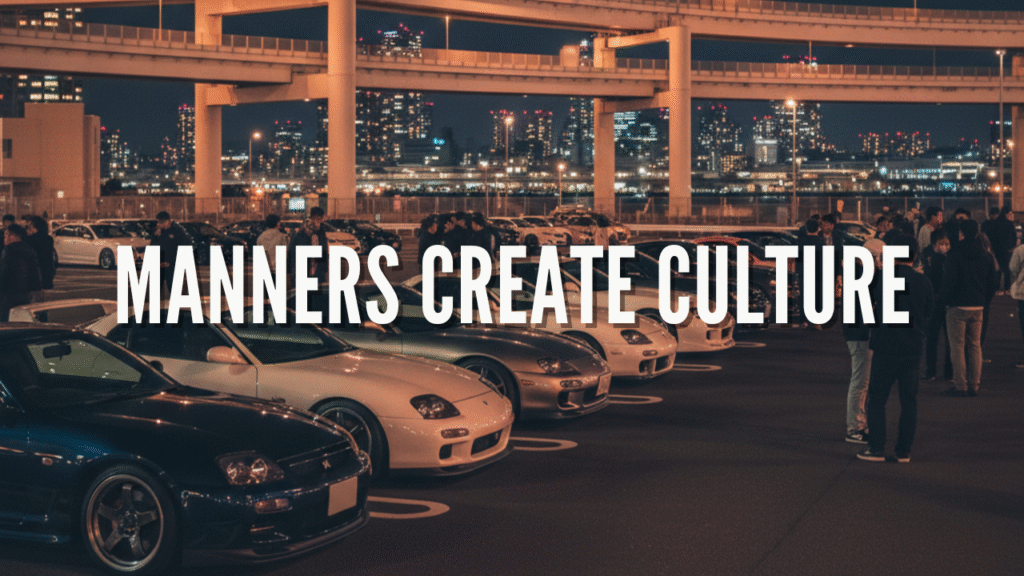
DThe Daikoku Parking Area is far more than asphalt, concrete, and glowing vending machines — it’s a living monument to Japan’s automotive spirit. Beneath the hum of engines and the shimmer of Tokyo Bay lies something deeper: a culture built on balance, precision, and mutual respect. Every night, the Daikoku Parking Area becomes a stage where passion meets discipline — where the timeless beauty of JDM cars coexists with the quiet order that defines Japanese society.
What truly defines this “sanctuary” isn’t horsepower or exhaust noise, but the shared manners of those who gather there. Avoiding the truck zones so professional drivers can rest, leaving restroom areas open for real travelers, lowering your headlights for pedestrians — these may seem like small gestures, but they form the invisible foundation of the Daikoku Parking Area. Each act of courtesy reflects a simple truth that every seasoned enthusiast understands: “Politeness is the most powerful modification.” It’s what turns a parking lot into a cultural landmark, and what keeps the JDM car community admired around the world.
The beauty of Japanese car culture lies not in chaos, but in its quiet harmony. At the Daikoku Parking Area, passion doesn’t need to be loud to be felt — it’s in the respectful conversations, the careful parking lines, and the pride owners take in presenting their JDM cars with dignity. To everyone who visits the Daikoku Parking Area — enjoy the machines, share your passion, and protect the peace that makes this sacred place so extraordinary. What you bring here isn’t just your car; it’s your attitude. And through that, you help preserve a legacy — ensuring that the Daikoku Parking Area continues to shine as Japan’s true temple of car culture for generations to come.