
Safe and Smooth Driving on Japanese Roads
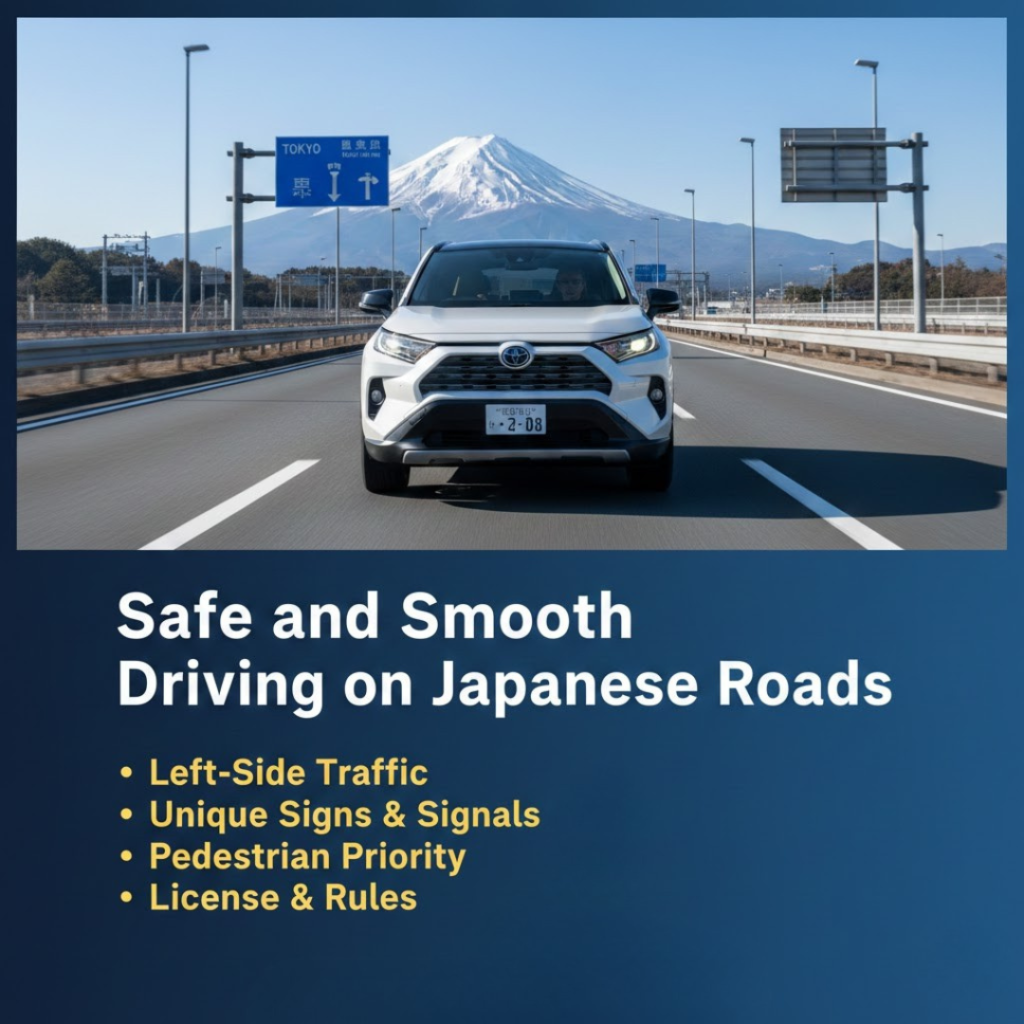
With its captivating culture, breathtaking natural beauty, and world-renowned cuisine, Japan offers an unforgettable experience to every visitor. To fully appreciate its diverse charms, the best way is often to travel at your own pace, freely exploring places inaccessible by trains or buses. Yes, we’re talking about renting a car and driving on Japanese roads.
However, for first-time foreign travelers, Japan’s traffic rules can be different in many respects, which might initially cause confusion. Japan strictly adheres to the “Right-Hand Drive, Left-Side Traffic” system, meaning the direction of travel might be the opposite of what you are used to in your home country. Furthermore, there are strict regulations and unique traffic manners in place. For example, when a light is red, you must stop and cannot turn right (or left, as is common in some counter-traffic countries) unless a specific arrow signal permits it. Moreover, Japan has an extremely high awareness of pedestrian priority, and stopping at crosswalks to yield to pedestrians is an absolute obligation for drivers.
This comprehensive guide is intended to be your “compass” for enjoying a safe and comfortable driving trip in Japan. It covers all the necessary details you need to know to navigate Japan’s roads, from the legal requirements for your driving license, the fundamentals of left-side traffic, the unique characteristics of signals and signs, how to find parking, and how to handle accidents or emergencies. By grasping this information beforehand, you will minimize driving stress and be able to fully indulge in the freedom of movement—the essence of a great journey. Let’s get ready to take the wheel in Japan.
Legal Requirements and Preparations for Driving in Japan
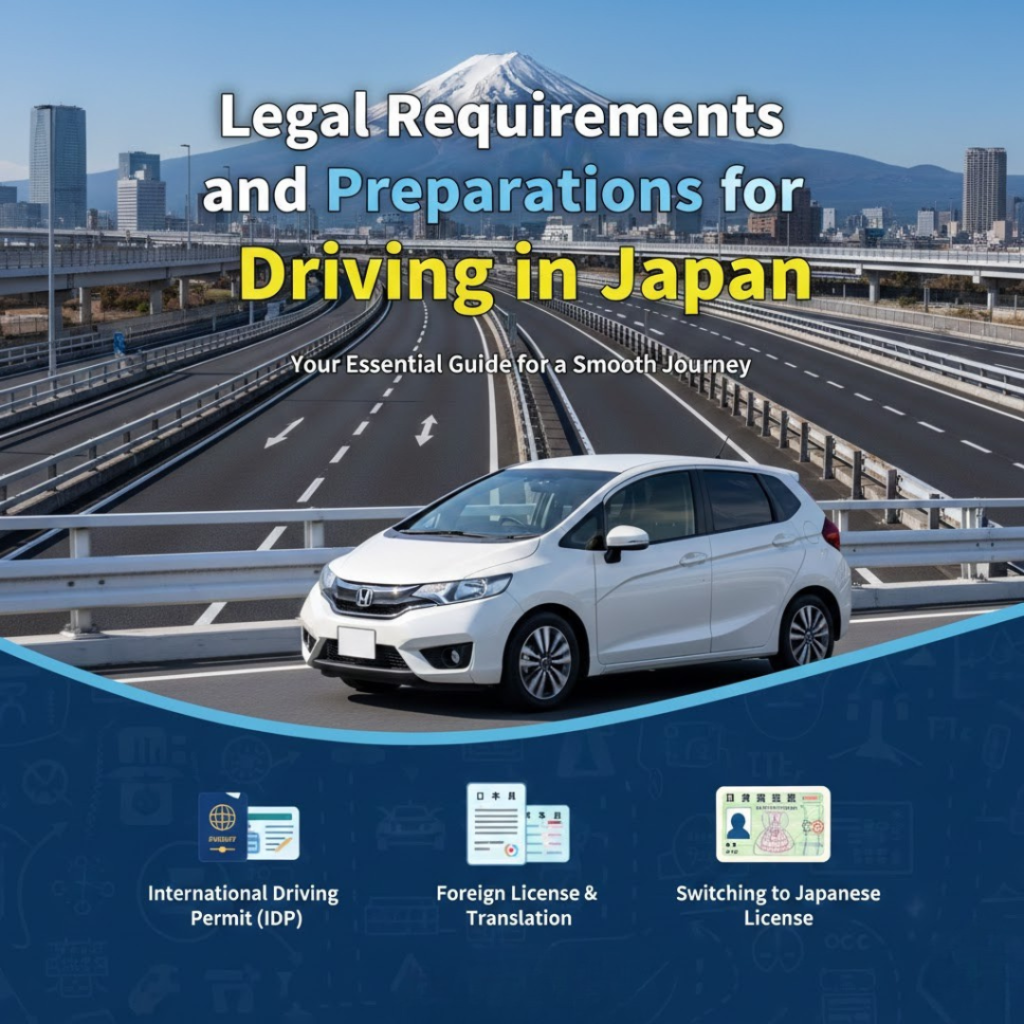
Types and Validity of Required Licenses
International Driving Permit (IDP)
- Only the International Driving Permit based on the Geneva Convention is valid in Japan. Permits based on other conventions, such as the Vienna Convention, cannot be used.
- The IDP is valid for up to one year from the date of issue, and for up to one year from the date you entered Japan.
- However, individuals who are registered on Japan’s Basic Resident Registration (Japanese nationals, mid-to-long-term foreign residents, etc.) must not violate the “3-month rule.” This rule prevents the driving period based on the IDP from being reset if a resident repeatedly re-enters Japan after short stays of less than three months. For details, refer to official information from the National Police Agency or JAF and confirm your specific case.
- You must carry your IDP, your valid driving license issued by your home country, and your passport at all times while driving.
Foreign Driving License with Japanese Translation
- Driving licenses issued in certain countries and regions, such as Switzerland, Germany, France, Belgium, Monaco, Taiwan, and Estonia, are permitted for use in Japan when accompanied by a Japanese translation prepared by JAF (Japan Automobile Federation) or the respective country’s embassy.
- In this case, too, the validity is limited to one year from the date of entry into Japan.
Switching to a Japanese Driving License (Gaimen Kirikae)
- If you plan a long-term stay, it is recommended to apply for the procedure to switch to a Japanese driving license (known as Gaimen Kirikae).
- The procedure requires a valid foreign license and documents proving you stayed in that country for a cumulative period of at least three months after the license was issued.
- Generally, it involves an aptitude test (vision, etc.), a knowledge test on traffic rules, and a practical driving skills test. However, the knowledge and skills tests are waived for licenses from certain countries.
- Currently, due to a high volume of applicants, the waiting period for appointments can be long, so early inquiries are advised.
Additional Notes When Renting a Car
Rental car companies will verify your valid license (original copy), passport, and confirm whether your International Driving Permit adheres to Japanese regulations. Furthermore, depending on the car model, a Japanese ETC (Electronic Toll Collection System) card can be highly convenient. It is also wise to check during booking if the vehicle is equipped with a multilingual GPS navigation system for foreign visitors.
Basic Japanese Traffic Rules
Understanding Left-Side Traffic and Right-Hand Drive Vehicles
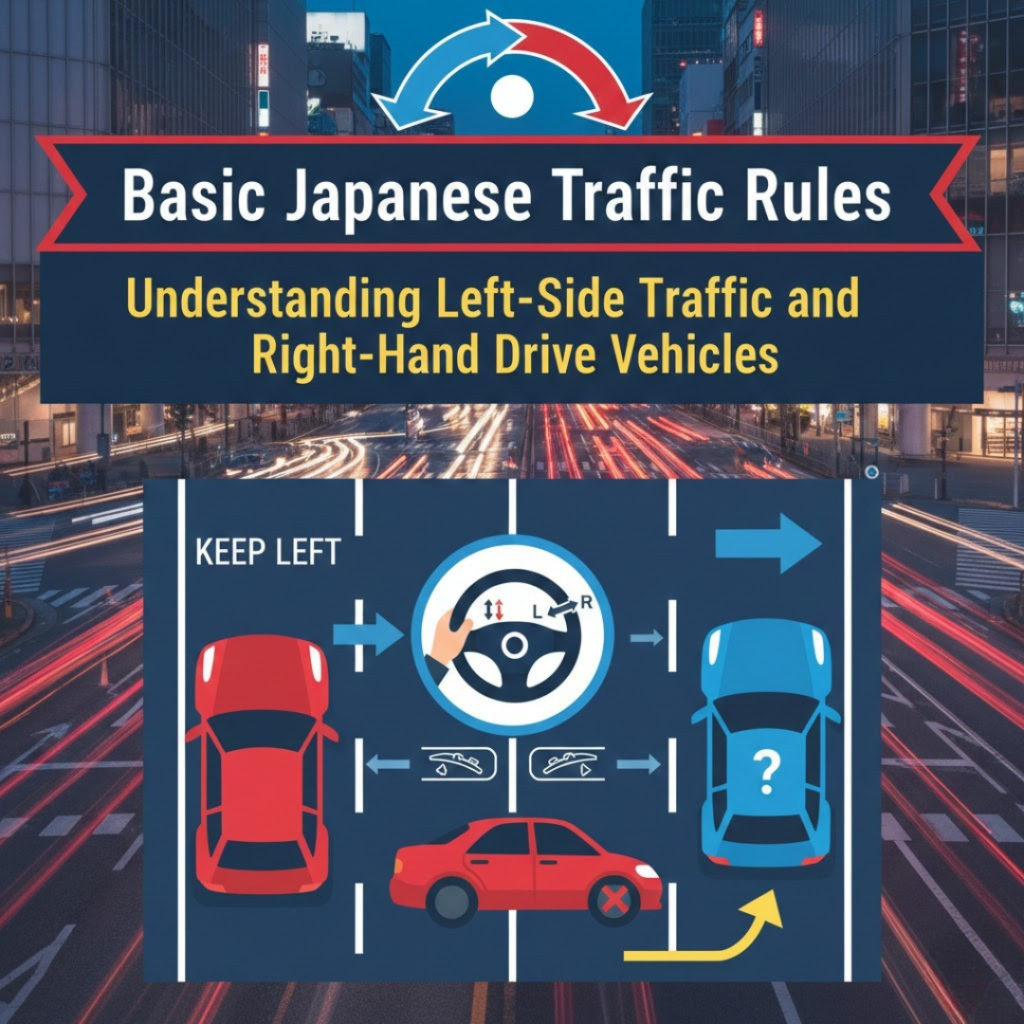
The Principle of Left-Side Traffic (Keep Left)
- Lane Discipline: In Japan, you must always drive on the left side of the road in the direction of travel. This is the most critical basic rule to avoid head-on collisions.
- Caution when Turning Right: When turning right, you must move beyond the center line of the opposing lane, enter the right-turn lane, and wait for oncoming straight-moving or left-turning traffic to clear. Since oncoming traffic has priority even under a green light (unless a dedicated arrow is shown), extreme caution is necessary.
- Caution when Turning Left: To prevent accidents involving cyclists or pedestrians (known as makikomi accidents), you must pull over as close as possible to the left edge of the road before turning, and thoroughly check behind you using mirrors and shoulder checks.
Characteristics of Right-Hand Drive Vehicle Operation
- Turn Signals and Wipers: Drivers accustomed to left-hand drive cars in many countries may be confused by the reverse placement of the turn signal and wiper levers (Japanese cars typically have the turn signal on the right and the wiper on the left). Accidentally engaging the wiper when attempting to signal a turn (known as “wiper driving”) is a common phenomenon among foreign drivers. Be sure to check this before departure and consciously aim for the correct operation.
- Vehicle Width Perception on the Left: Since the driver’s seat is on the right side, it can be difficult to gauge the car’s width on the left. Pay close attention to the distance from curbs or obstacles on the left, especially on narrow roads and when parallel parking or maneuvering in parking lots.
Understanding Unique Japanese Signals and Signs
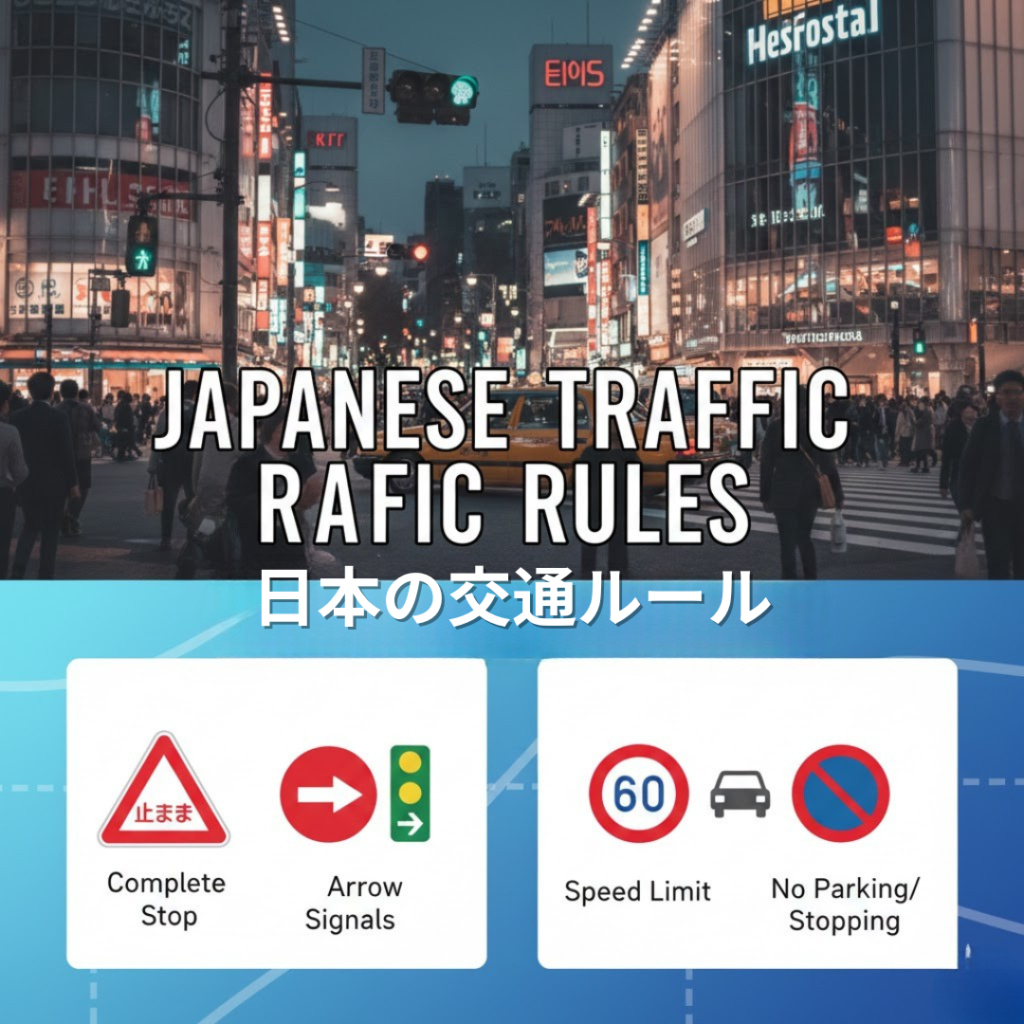
Unique Traffic Light Rules
- Complete Stop at Red Light: A red light in Japan signifies a prohibition of movement in all directions. As a rule, there is no “stop and then turn right (or left, in counter-traffic countries)” rule, as seen in some parts of the world like the US.
- Obeying Arrow Signals: If a green arrow is displayed on the traffic light, you are permitted to proceed only in the direction indicated by the arrow, even if the main light is red (e.g., right-turn arrow, left-turn arrow). You must not move on a red light unless an arrow is displayed.
- Meaning of Yellow Light: A yellow light means “stop in principle.” You may only proceed if you cannot safely stop before the line. Attempting to accelerate to pass through is a violation.
- Flashing Signals:
- Flashing Red: This has the same meaning as a “Stop” sign. You must bring the vehicle to a complete stop at the stop line, confirm safety left and right, and then proceed.
- Flashing Yellow: This means “proceed with caution to other traffic.” Slow down and proceed with extreme care and attention to your surroundings.
Important Road Signs and Markings
Stop Sign
- The sign, an inverted triangle with the Japanese characters for “Stop” (Tomare), is one of the most crucial signs.
- Where this sign is present, you must execute a complete stop (approximately 3 seconds is a good rule of thumb) until the tires have fully stopped just before the stop line. If there is no line, stop immediately before the sign.
Speed Limit Signs
- On general roads without specific signage, the default legal speed limit is 60 km/h, but speed limits are often detailed and lowered to 30 km/h or 40 km/h in residential areas and on narrow streets.
- On expressways (Kōsoku Dōro), the maximum speed is generally 100 km/h, though some sections may be marked up to 120 km/h. There is also a minimum speed limit of 50 km/h enforced.
No Parking / No Stopping Signs
- Signs with red and blue diagonal lines (No Stopping and Parking) and signs with a single red diagonal line (No Parking) are common.
- Japan has strict enforcement against on-street parking. Violating the rules will result in a yellow “Abandoned Vehicle Confirmation Sticker” being placed on your car, requiring you to report to the police station and pay a fine.
Pedestrian Priority and Unique Japanese Road Manners
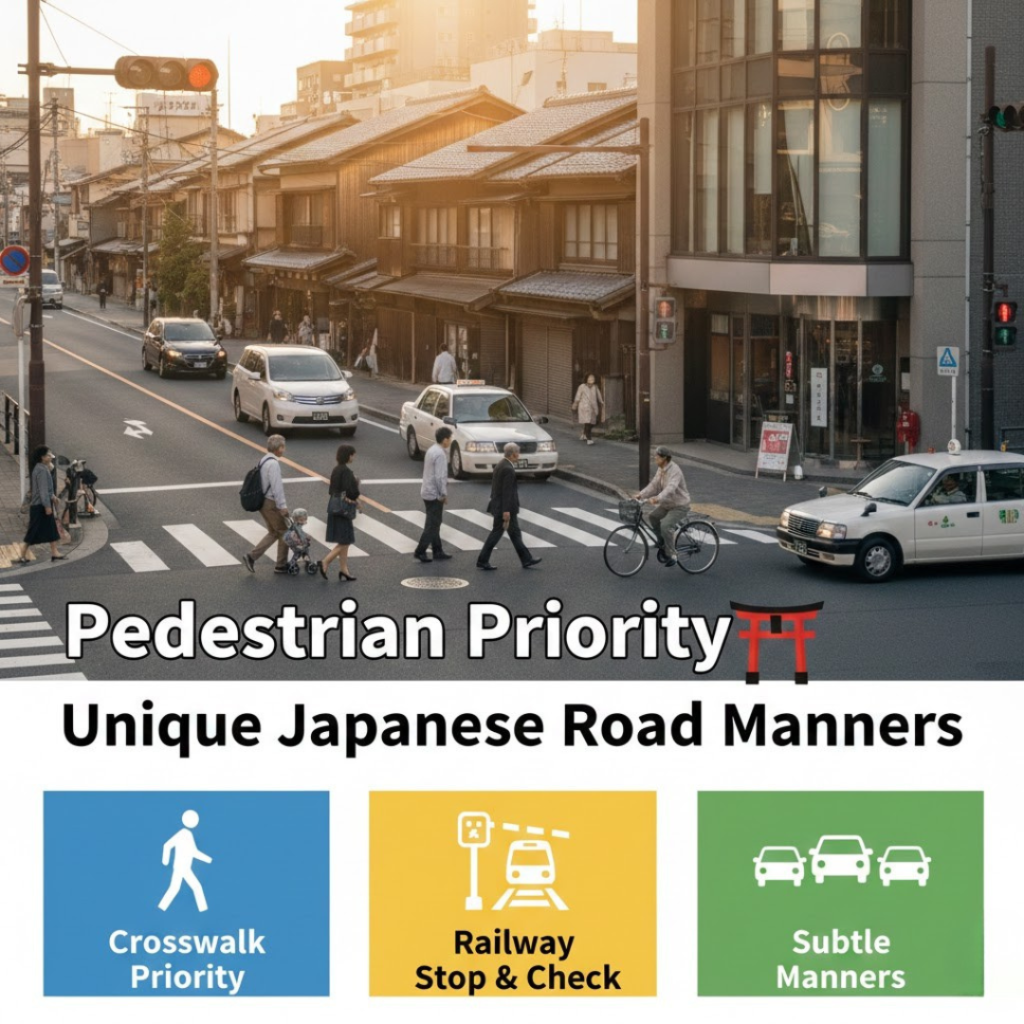
The most emphasized characteristic of Japan’s traffic rules is that pedestrians and cyclists are given extremely high priority. This is not just a rule but the foundation of Japanese traffic culture.
Obligations at Crosswalks
- The “Stop and Yield” Culture: If a pedestrian or cyclist is intending to cross a crosswalk without traffic lights, the driver is obligated to stop and yield the right of way. Police enforcement for “pedestrian interference” has been intensified recently, and violations are strictly penalized.
- Checking for Pedestrians When Turning: When turning right or left at an intersection, pedestrians and cyclists crossing the crosswalk ahead always have the absolute priority. Vehicles must not enter the crosswalk before they have passed.
Rules at Railway Crossings (Fumikiri)
- At Japanese railway crossings, you must come to a complete stop immediately before proceeding across the tracks. Lower your window or turn down the music volume, confirm the safety and listen for trains from both sides, and then proceed slowly.
- In the event of traffic congestion that might cause you to stall inside the crossing, you must not enter the crossing area.
Subtle Manners and Consideration
- Slowing Down in Residential Areas: In narrow residential streets and school zones, practice slow and cautious driving, even if you are within the legal speed limit, to be prepared for children or the elderly suddenly stepping out.
- Consideration for Oncoming Traffic: On narrow roads where vehicles must pass one another, one driver must yield. When an opposing driver yields the right of way to you, it is common courtesy to acknowledge them with a slight bow or a raised hand as a gesture of thanks.
How to Use Expressways (Toll Roads)
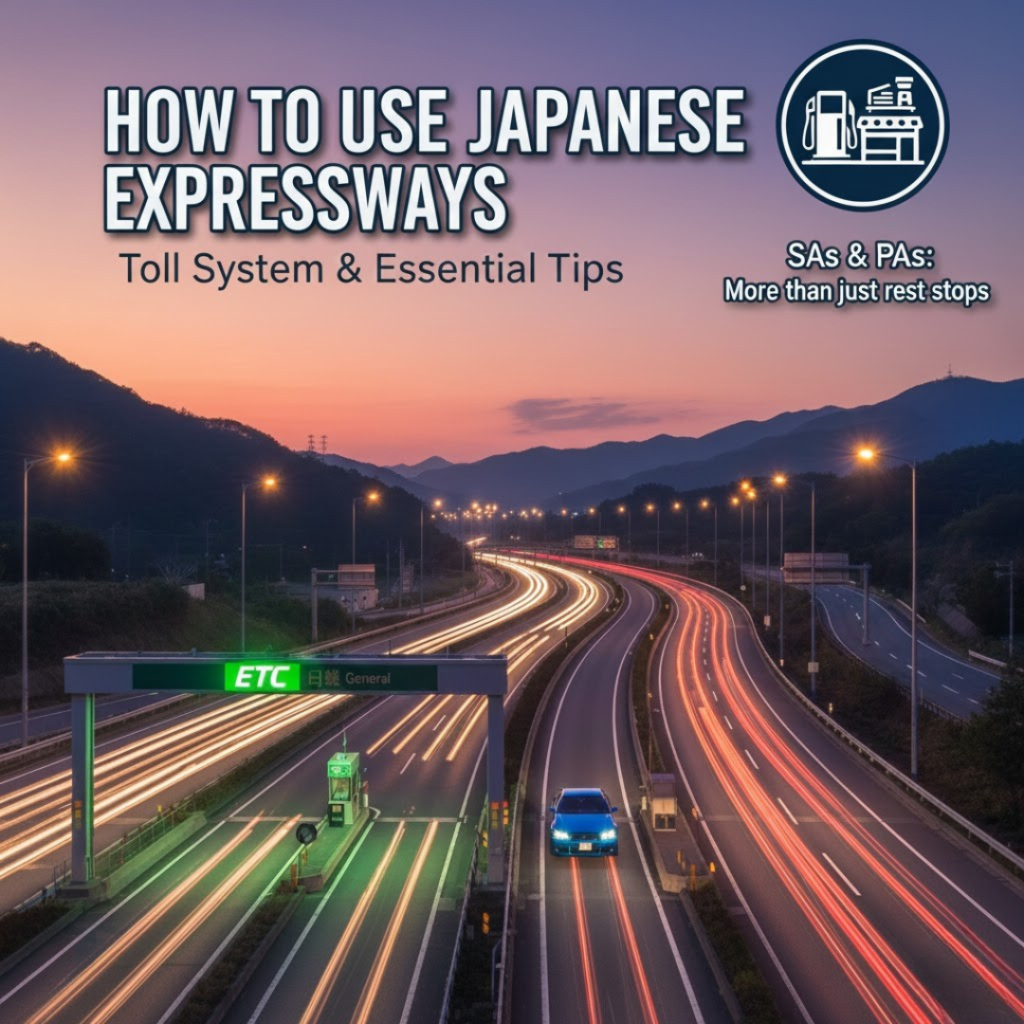
Japanese “Expressways” (Kōsoku Dōro) are highly convenient for long-distance travel, but their toll system and usage have several unique features.
The ETC System and Toll Payment
- ETC Use is Highly Recommended: At toll gates on Japanese expressways, the ETC (Electronic Toll Collection System) is overwhelmingly the most common method of payment. It is strongly advised to rent an ETC card along with your rental car. It allows you to pass smoothly through ETC-exclusive gates and often qualifies you for discounted tolls.
- Payment at General Lanes: If you do not have an ETC card, you must enter the “General” lane at the toll gate and pay the fee to an attendant using cash or a credit card. Be aware that this process can sometimes contribute to congestion.
Utilizing SAs (Service Areas) and PAs (Parking Areas)
- Importance of Breaks: Japanese expressways feature SAs (Service Areas) and PAs (Parking Areas) at intervals of every few tens of minutes. SAs are large facilities equipped with gas stations, restaurants, and extensive souvenir shops. PAs are smaller facilities with restrooms and simple rest facilities.
- Rest and Sightseeing: SAs/PAs are more than just rest stops; they function as small tourist spots where you can enjoy local gourmet foods, buy souvenirs, and appreciate the scenery. If you feel tired during long drives, actively use these areas and prioritize taking early breaks. A good rule of thumb is to “rest for 20 minutes after 2 hours of driving.”
Strict Rules on Parking and Stopping
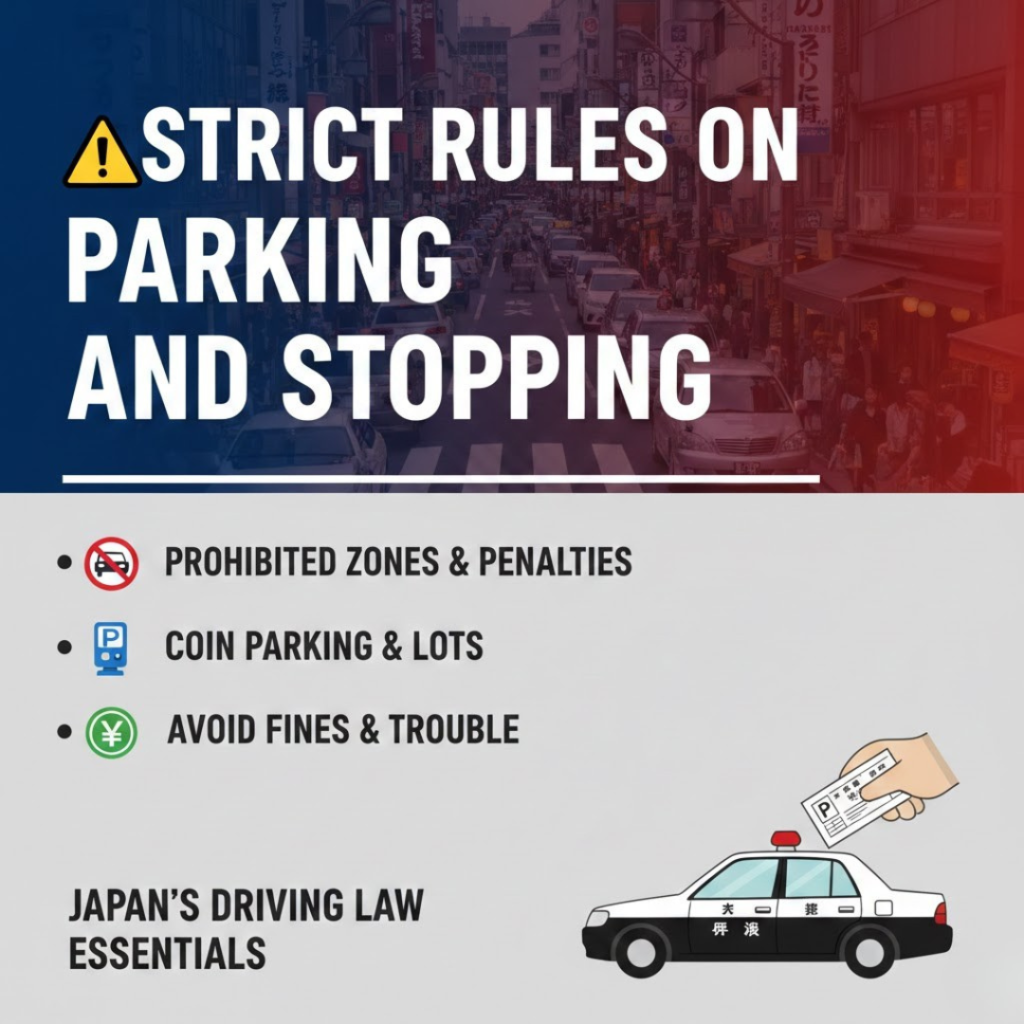
Parking in urban areas and tourist spots can be the most stressful aspect of driving in Japan. Japan’s parking and stopping rules are extremely strict, and penalties for violations are severe, making a thorough understanding essential.
Prohibited Parking Zones and Penalties
- No Stopping and Parking Zones:
- Intersections, crosswalks, and within 5 meters of their edges.
- Within 10 meters of a bus stop sign.
- Inside tunnels, near the top of slopes, or on steep inclines.
- Within 1 meter of a fire alarm box.
- Even outside specifically prohibited areas, parking is forbidden if the gap between your car and the right edge of the road is less than 3.5 meters.
- Penalties: If a confirmation sticker for an abandoned vehicle (Hōchi Sharyō Kakunin Hyōshō) is placed on your car, you will be required to report to the police station and pay a fine (hansokukin) depending on the type of violation. Failure to pay the fine may result in criminal penalties for the driver.
Utilizing Coin Parking and Parking Lots
- Using Metered Parking (Coin Parking): Utilizing hourly-rate coin parking lots is the only safe way to avoid illegal on-street parking. Especially in urban areas, check the signs carefully, as rates and maximum daily fees often vary based on the time of day.
- Payment Systems: Coin parking lots typically use systems where a lock plate rises after you park to secure the vehicle, or cameras recognize the license plate. The lock is released upon payment at the machine.
- Commercial Facility Parking: Shopping malls and tourist attractions have designated parking lots, but check their operating hours and any conditions for free parking beforehand, as they can differ.
Stricter Traffic Violations and Trouble Handling
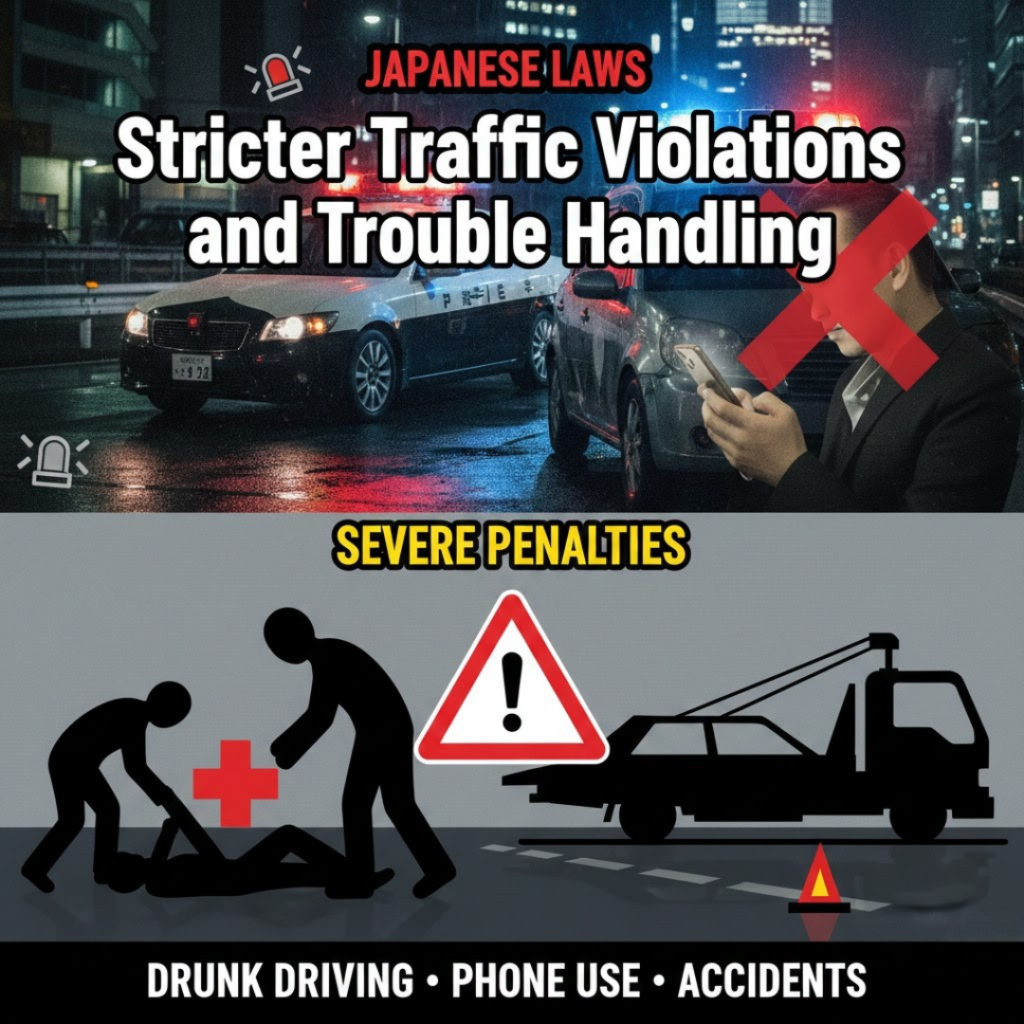
Japanese traffic laws impose extremely severe penalties for serious offenses like drunk driving and dangerous driving, as well as strict penalties for basic violations like using a mobile phone while driving.
Violations with Particularly Heavy Penalties
- Drunk Driving (Intoxicated/Alcohol-Impaired Driving): Penalties for drunk driving in Japan are among the world’s strictest. Penalties are applied not only to the driver but also to the person who provided the vehicle and passengers who knowingly rode with an intoxicated driver. Even a small amount of detected alcohol is enough for an offense, and tourists are no exception.
- Distracted Driving (Mobile Phone Use, etc.): It is strictly prohibited to hold and operate a mobile phone (smartphone) or engage in a call while driving. Operating the car navigation system must also be done while the vehicle is stopped. Violations result in severe penalties (fines and demerit points). Hands-free calls are permitted, but any action that impairs concentration on driving should be avoided.
- Speeding (Exceeding the Limit): Significant speeding carries a high risk of immediate license suspension, which could potentially impact a tourist’s future entry into Japan.
How to Deal with Accidents and Trouble
In Case of an Accident (Injury or Property Damage)
- First Aid for the Injured: First, check for injuries and immediately call 119 (Ambulance) if necessary.
- Contact the Police: Regardless of the severity, you must always call 110 (Police) to report the accident. Avoid settling the matter privately without police involvement, as a police accident report is necessary for insurance claims.
- Ensure Safety: Move the vehicle to a safe location, such as the roadside, and warn subsequent vehicles of the accident using hazard lights or an emergency flare.
- Exchange Information: Exchange information with the other party, including their name, contact details, car license plate number, and insurance company.
- Contact the Rental Company: Contact the rental car company (or your insurance provider) and follow their instructions.
Vehicle Trouble (Breakdown, Flat Tire, etc.)
- Contact your rental car company and request roadside assistance (such as JAF). If the trouble occurs on an expressway, you can also call the Road Emergency Dial (#9910).
- Pull over to a safe place, and if you must exit the car, exercise extreme caution, especially on expressways.
Driving Safely to Enjoy Your Japanese Journey (Approx. 300 words)
Driving in Japan for the first time is both exciting and a challenge that requires adapting to many new rules and manners. Through this article, we have thoroughly explored the essential knowledge for safe driving in Japan, from the basic principle of “Right-Hand Drive, Left-Side Traffic” and the legal requirements for your international driving permit, to the meaning of unique signals and signs, and above all, the strict culture of pedestrian priority.
Japanese traffic laws are not merely about avoiding penalties; they are born from the country’s unique geographical characteristics (many narrow roads) and a high level of safety consciousness. In particular, the spirit of “Pedestrian First” and “Absolute Adherence to Stop Signs” are the two major principles for comfortable and accident-free travel on Japanese roads. Furthermore, strictly adhering to parking rules in urban areas and wisely utilizing the ETC system on expressways will significantly reduce travel stress.
Driving in Japan grants you access to beautiful local scenery and hidden gems, dramatically enriching your travel experience. Use this guide to prepare thoroughly beforehand and always drive calmly and cautiously throughout your trip.
Driving is a means, not the goal, of your journey. Prioritize safety and enjoy the Japanese roads to the fullest.