
Introduction
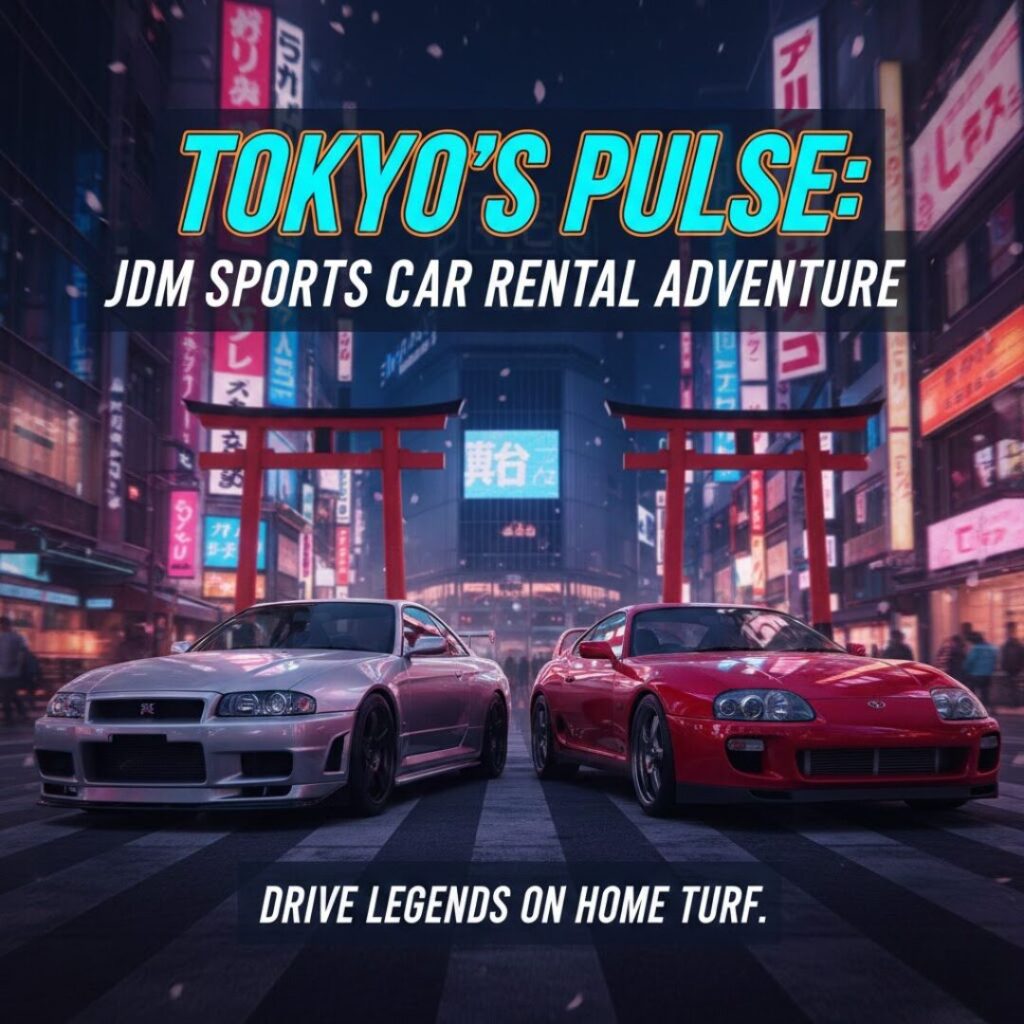
Tokyo is a massive metropolis where the future and tradition intersect, and cultures from around the world converge. To feel the energy of this city firsthand and experience the true essence of Japanese automotive culture, there is no better way than to hire a sports car. Specifically, the non-daily experience of driving iconic JDM (Japanese Domestic Market) models—legends like the Nissan GT-R and Toyota Supra, which continue to captivate enthusiasts globally—on their home ground in Tokyo’s public streets, is the ultimate form of excitement.
This article is a complete guide to renting a sports car in Tokyo and enjoying an unforgettable drive. It provides detailed information to ensure you savor these famous cars as a “personal vehicle” and not just a means of transport.
- Benefits of Reading This Article
- Vehicle Selection Tips: Gain detailed comparison information to help you find the perfect vehicle among the GT-R, Supra, and other attractive JDM models.
- Clarification of Rental Eligibility and Procedures: Understand the specific requirements, such as the need for an International Driving Permit, age limits, and required years since obtaining the license, to ensure a smooth rental process for foreign nationals.
- Understanding Pricing and Market Rates: Learn the typical rental rates (for 6-hour, 24-hour periods, etc.) and the cost of collision damage waiver systems from major Tokyo sports car rental companies, helping you plan your budget.
- Best Drive Spot Suggestions in Tokyo: Discover popular driving routes and photo spots, both away from the urban hustle and bustle and where you can fully utilize the performance of the GT-R or Supra.
For many car lovers, the GT-R and Supra are more than just high-performance vehicles; they are “legends” they’ve admired through movies and games. The following sections will detail the steps to make that dream a reality in Tokyo. Renting a piece of unique Japanese JDM culture and speeding along the Tokyo bay area or cruising through the nightscape—an experience full of excitement awaits, ready to transform your journey into something special.
🏎️ GT-R and Supra: A Detailed Comparison of JDM Icons Available for Rent in Tokyo
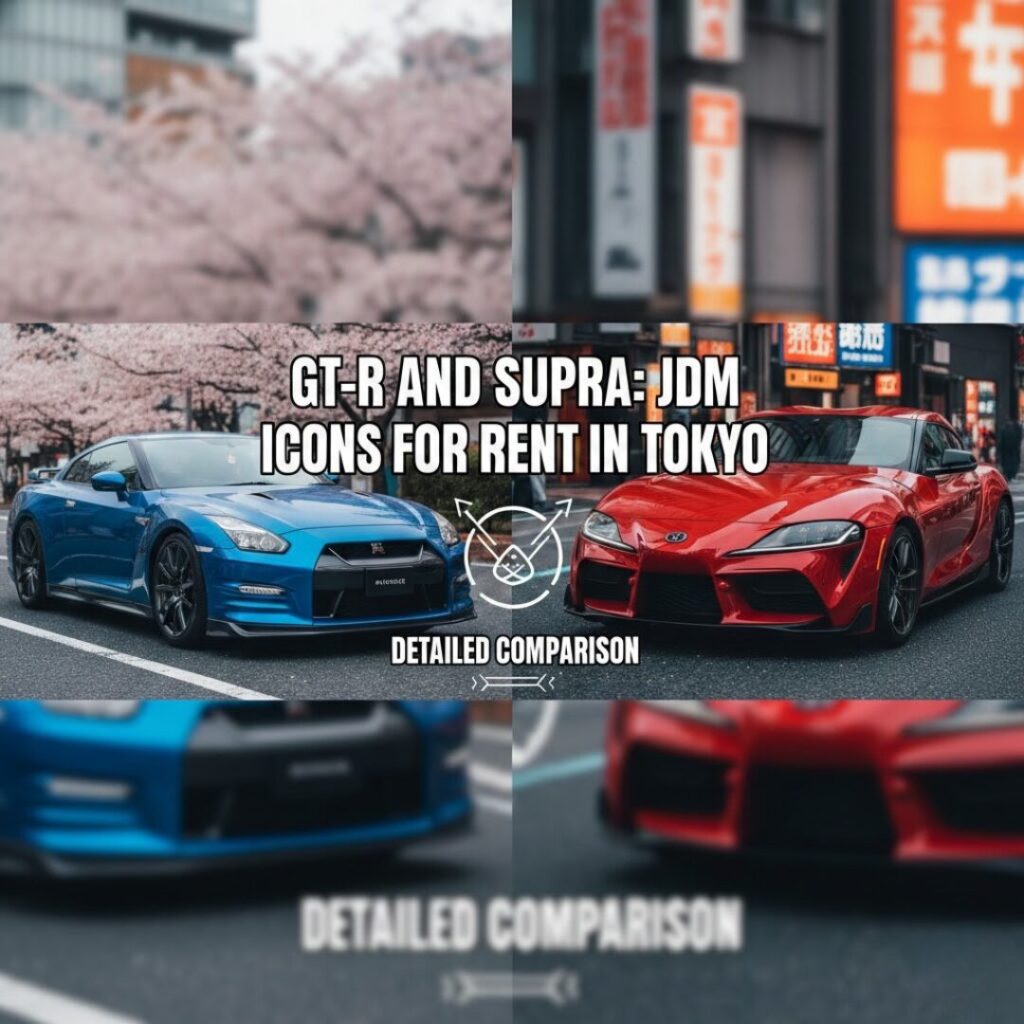
When renting a sports car in Tokyo, the most sought-after models are undoubtedly the Nissan GT-R (such as the R35) and the Toyota GR Supra (A90). These two cars represent the pinnacle of Japanese automotive engineering, each possessing distinct charms and driving feels. Here is a detailed comparison to help you decide which one you should choose.
GT-R: The All-Rounder Known as Godzilla
The Nissan GT-R, especially the current R35 model, is a high-performance all-rounder nicknamed “Godzilla.”
Attractions and Features of the R35 GT-R
- Overwhelming Acceleration and Traction: The GT-R is powered by the VR38DETT 3.8-liter V6 twin-turbo engine combined with the advanced ATTESA E-TS All-Wheel Drive (4WD) system. This pairing ensures grip in any road condition, delivering other-worldly acceleration. As noted in search results, the R35 is often placed in the highest price category by many rental companies (e.g., ¥47,000~/12 hours at JIMS Rent-a-Car), reflecting its performance and rarity.
- Precise Handling: Despite its large size, the GT-R boasts extremely high levels of cornering performance thanks to its electronic control technology.
- Legendary Presence: As the successor to the Skyline GT-R lineage, the R35 carries the prestige of a legend in Japanese automotive history, and the special feeling of “driving a globally renowned machine” is a major appeal.
GR Supra: The Joy of Pure FR Sports
The GR Supra (A90) is a pure FR (Front-engine, Rear-wheel-drive) sports car born from a collaboration between Toyota and BMW.
Attractions and Features of the A90 GR Supra
- Sleek Design and Driving Fun: The Supra’s appeal lies in its sensuous design and the sheer joy of driving. The smooth feel of the inline-six engine (RZ grade, etc.) and the nimble behavior resulting from its short wheelbase shine on Japan’s tight mountain roads and winding courses.
- Accessible Rental Cost: Compared to the GT-R, the GR Supra tends to have more accessible rental prices (e.g., ¥49,900~/24 hours at Omoshiro Rent-a-Car, or special rates of ¥11,000/day at GR Garage, as seen on GAZOO.com). This makes it easier to rent for longer periods or multiple times.
- Diverse Grades: A four-cylinder model (SZ-R) is also available, offering lighter weight and more agile handling.
Other Noteworthy JDM Models
Beyond the GT-R and Supra, the Tokyo sports car rental market offers a rich selection of appealing JDM models.
- Nissan Skyline GT-R (R32, R34): The legendary older generation GT-R. The R34, in particular, has high international popularity due to its appearance in franchises like Fast & Furious. Many are MT cars, which test pure driving skill (e.g., R34 is ¥52,800~/10 hours at Car Rental Tokyo).
- Honda NSX (NA1, NC1): Japan’s proud mid-ship sports car. The first-generation NSX (NA1) is highly sought after for its development philosophy and rarity (e.g., First-gen NSX is ¥19,980~/1.5 hours at Fun2Drive).
- Mazda RX-7 (FD3S): A model equipped with a unique rotary engine. Its distinct engine sound and response provide a special experience unmatched by other cars (e.g., ¥16,980~/1.5 hours at Fun2Drive).
Choosing the optimal car from these diverse options—whether you prioritize absolute speed, the pure joy of driving, or rarity—is key to maximizing your Tokyo sports car experience.
🚗 Tokyo Sports Car Rental: Price Ranges and Booking Tips
To drive your dream sports car in Tokyo, prior budgeting and a smart booking strategy are essential. The rental fees for high-class vehicles like the GT-R and Supra differ significantly from standard passenger cars.
Typical Rental Prices by Key Model (Per 24 Hours)
Sports car rental prices fluctuate greatly depending on the model, year, rental company, and duration of use.
| Vehicle Model | Price Range (24 Hours) | Notes |
| Nissan GT-R (R35) | ¥59,800 〜 ¥67,800 | The highest-priced category. Older models like the R34 can be similarly or more expensive (Car Rental Tokyo, etc.). |
| Toyota GR Supra (A90) | ¥35,000 〜 ¥50,000 | Prices vary by grade (TOM’S KINTO, Omoshiro Rent-a-Car, etc.). |
| Honda Civic Type R (FL5) | ¥35,900 〜 | New high-performance FF sports car (Car Rental Tokyo, etc.). |
| GR Yaris | ¥22,800 〜 ¥40,000 | Compact yet high-performance 4WD sports car (Car Rental Tokyo, TOM’S KINTO, etc.). |
| GR86/BRZ | ¥12,000 〜 ¥35,000 | Entry-level FR sports cars (JIMS Rent-a-Car, TOM’S KINTO, etc.). |
Reference Information:
- Short-Term Rental (6–12 hours): Options like ¥29,900~/6 hours (GR Supra/Omoshiro Rent-a-Car) or ¥47,000~/12 hours (GT-R/JIMS Rent-a-Car) are available for those who want to enjoy the experience intensively for a shorter duration.
- Mileage Limit: Most specialized rental companies impose a mileage limit, typically around 200km to 250km per 24 hours. Exceeding this limit incurs additional charges of ¥50 to ¥150 per kilometer (OnlyJDM reference), so travelers planning long-distance drives should take note.
Cost Breakdown: Collision Damage Waiver (CDW) and Deposit
In addition to the rental fee, you must consider the following costs:
- Collision Damage Waiver (CDW):
- This system waives the payment of the deductible (out-of-pocket expense) for property and vehicle damage in case of an accident.
- The market rate is approximately ¥3,900 to ¥5,800 per day (Omoshiro Rent-a-Car, OnlyJDM reference). Given the high value of sports cars, purchasing this coverage is highly recommended.
- Non-Operation Charge (NOC):
- A fee charged if the vehicle requires repair or cleaning due to an accident or damage, making it unavailable for rental during that period. This is separate from insurance and is borne by the user.
- Deposit (Security Deposit):
- Some luxury and sports car rentals require a high deposit (e.g., ¥200,000 or more) to be held on a credit card upon departure (Car Rental Tokyo reference). This amount is refunded upon the vehicle’s return, provided there are no issues.
Smart Booking Tips
- Book Early: Models like the GT-R and Supra, especially limited MT versions, have limited availability. Book as soon as your travel dates are finalized.
- Compare Rental Companies: Specific plans may offer lower prices under certain conditions (e.g., owner benefits at GR Garage, according to GAZOO.com), or companies like TOM’S KINTO may offer tuned vehicles. Comparing multiple specialized companies is essential.
- Confirm Peak Season Rates: Surcharges are commonly applied during peak seasons such as Golden Week, Obon (mid-August), and the New Year holidays.
🛂 Rental Eligibility and Required Documents for Foreign National Drivers
Sports car rental in Japan is a very popular activity for foreign tourists, but driving eligibility is governed by strict rules. To make your dream drive a reality, you must confirm the necessary conditions in advance.
Mandatory Driving License Requirements
Foreign national drivers require one of the following valid licenses to drive in Japan:
- International Driving Permit (IDP):
- Only IDPs issued under the Geneva Convention (1949) are valid. IDPs based on the Hague Convention (1968) or the Vienna Convention (1968) are not valid for driving in Japan.
- The IDP must be valid for driving in Japan and have been issued within the last year.
- Simultaneous presentation of your passport and local driving license is mandatory (Omoshiro Rent-a-Car, Car Rental Tokyo, etc., reference).
- Foreign Driving License and Translation from Designated Countries/Regions:
- Travelers from specific countries/regions such as Switzerland, Germany, France, Belgium, Taiwan, and Monaco can drive by carrying their local license along with a Japanese translation issued by the Japan Automobile Federation (JAF) or an embassy.
Important: Even if you have an IDP, if the issuing country is not a signatory to the Geneva Convention or if the treaty format is different, you cannot drive. Always confirm with the rental company before booking.
Age and Post-Licensing Experience
Renting sports cars, especially high-performance models, is subject to stricter restrictions than general rental cars.
- Age Limit: Most specialized rental companies set the minimum age condition at 23 years or older or 25 years or older (Omoshiro Rent-a-Car, Car Rental Tokyo, etc., reference). For high-performance cars like the GT-R, some may require 28 years or older.
- Years of Driving Experience: In most cases, a minimum of 3 years of driving experience since obtaining the license is required (Omoshiro Rent-a-Car, Car Rental Tokyo, etc., reference). If renting an MT car, the condition may specifically be 3 years or more since obtaining the MT license.
- Renter and Driver: The regulations regarding the “Renter” who completes the rental procedure and the actual “Driver” vary by company. Generally, the booker (Renter) and the credit card holder must be the same person. Licenses for all individuals who will drive are required.
Payment and Other Considerations
- Credit Card: To prevent fraud, payment is generally accepted only via a credit card in the Renter’s own name (Omoshiro Rent-a-Car, OnlyJDM, etc., reference). Most companies do not accept cash payments.
- No Smoking Policy: All rental cars are generally non-smoking (including e-cigarettes). If smoking is discovered inside the vehicle, it will be subject to a Non-Operation Charge (NOC).
- Safe Driving Obligation: Although sports cars are high-performance vehicles, strict adherence to speed limits and safe driving are absolute requirements on Japanese public roads. Some companies stipulate that dangerous driving will result in immediate termination of the contract and voiding of insurance/CDW coverage (Omoshiro Rent-a-Car, etc., reference).
🛣️ Tokyo and its Surroundings: The Best Drive Courses for the GT-R/Supra
Once you rent a high-performance sports car, selecting a drive course that allows you to fully leverage its potential and enjoy memorable scenery is vital. Tokyo is one of the world’s largest cities, but a short trip outside the city will reveal wonderful winding roads and spectacular views.
Courses to Enjoy the Urban Symphony: Bay Area and Tokyo Nightscape
- Rainbow Bridge and the Shuto Expressway Wangan Line:
- The Shuto Expressway (Metropolitan Expressway) is ideal for experiencing the GT-R or Supra’s acceleration performance within safe speed limits.
- Tatsumi First Parking Area (PA) and Daikoku Parking Area (PA) are famous gathering spots for car enthusiasts at night, providing a perfect opportunity to feel the JDM culture firsthand. These PAs are known internationally (e.g., from movies like Fast & Furious) and are particularly popular with international visitors. Services like JDM TOUR (recommended service) also offer these cultural experiences (Klook reviews reference).
- Caution: The Shuto Expressway has many curves and complicated merging points. Prioritize safe driving and strictly observe traffic rules.
- Odaiba Area:
- Often located near rental bases like TOM’S TOKYO SHOWROOM (Daiba), this area is perfect for photographing your car against the backdrop of futuristic buildings. At night, you can highlight the GT-R or Supra against the illuminated Fuji TV building and the Statue of Liberty.
Weekend Winding Roads: Hakone and Izu Areas
The true value of a high-performance sports car is revealed on winding mountain roads. The Hakone and Izu areas, about 90 minutes to 2 hours drive from Tokyo, are sanctuaries for car enthusiasts from Japan and abroad.
- Hakone Turnpike (Anest Iwata Turnpike Hakone):
- An easily accessible toll road from Tokyo, where you can enjoy the superior cornering performance of the GT-R or Supra while viewing the spectacular scenery of Mt. Fuji and Lake Ashi. The well-maintained road surface also makes for comfortable driving.
- Izu Skyline:
- A plateau road running along the ridge of the Izu Peninsula, offering views of the Pacific Ocean on clear days. It features suitable curves and elevation changes, making it ideal for pursuing the pure joy of driving. The popularity is clear, as specialized sports car rental companies like Fun2Drive Rent-a-Car (search result reference) operate in this area.
Hidden Gem in the Suburbs: Okutama周遊道路 (Okutama Lake Road)
The Okutama Lake Road offers deep nature and tight winding roads despite being within the Tokyo Metropolis area.
- Okutama Lake Road:
- While a bit far from central Tokyo, this road winding through lush mountains is perfect for testing the agility of MT cars and lightweight sports cars.
- Caution: Be extremely careful about safety, as there is a risk of freezing in winter and heavy traffic from motorcycles on weekends.
🛠️ JDM TOUR: Introducing a Recommended Service for Special Experiences
If you wish to elevate your Tokyo sports car rental beyond just a driving experience and deeply immerse yourself in Japan’s unique car culture—the JDM culture—specialized services like JDM TOUR are ideal.
What is JDM TOUR?
JDM TOUR offers not only rentals of iconic Japanese sports cars but also guided tours of the hubs of Japanese car culture and opportunities to participate in car events.
Reasons to Recommend JDM TOUR
- Immersive Cultural Experience: They assist with access to popular gathering spots for passionate Japanese car enthusiasts (e.g., Daikoku PA). Their tours are rated highly as “a very memorable and fantastic experience” and “the highlight of the trip, like a dream come true” (Klook reviews reference).
- Expert Knowledgeable Guides: Friendly and knowledgeable guides often accompany the tours, providing detailed explanations of JDM car history, custom culture, and local information. This allows you to understand the cultural background while enjoying the drive.
- Diverse Vehicle Selection: In addition to mainstream models like the GT-R and Supra, they sometimes include rare JDM models in their lineup.
The Charm of Daikoku PA and Tatsumi PA: The Heart of JDM Culture
One of the highlights of JDM TOUR is visiting the Metropolitan Expressway parking areas where many custom cars gather on weekend nights.
- Daikoku Parking Area (PA):
- One of the world-famous “car meeting” sanctuaries. A diverse collection of vehicles, from domestic sports cars to supercars and Dekotora (decorated trucks), converges here, making the spectacle resemble a mobile automotive museum.
- JDM TOUR facilitates interaction opportunities at such locations, offering a special thrill that cannot be achieved with independent rentals.
- Tatsumi First Parking Area (PA):
- Known as a spectacular photo spot with panoramic views of Tokyo’s skyscrapers, especially impressive at night. It is the best place to photograph the GT-R or Supra with the Tokyo night view.
By utilizing JDM TOUR, your Tokyo sports car experience will transcend the joy of driving on public roads and be elevated to “participation” in Japan’s vibrant car culture.
⚙️ Manual (MT) or Automatic (AT)?
The choice of transmission is a critical factor that significantly influences the driving experience when renting a sports car. When operating a high-performance sports car, you must consider the pros and cons of choosing an MT car versus an AT car (Automatic Transmission, often a DCT or AT with paddle shifters).
Significance and Challenges of Choosing an MT Car
- Pursuit of Pure Driving: Older generation GT-Rs (R32, R34, etc.), Honda S2000, and Mazda RX-7 models are predominantly MT. An MT car, where the driver controls the clutch and gear shifts, offers the strongest sense of unity between the driver and the car, pursuing the pure “joy of driving” (surveys, such as FNN, show a strong yearning for MT cars).
- Operation on Tight Japanese Roads: While the meticulous operation of an MT car is beneficial on suburban winding roads, frequent clutch operation in Tokyo’s city areas with many traffic lights or congestion can lead to fatigue.
- Rental Eligibility Restrictions: MT cars tend to have stricter rental eligibility. As mentioned earlier, conditions such as 3 years or more since obtaining the MT license are commonly added.
Advantages of Choosing an AT/DCT Car
- Convenience and Comfort: The GR Supra (A90) and the current R35 GT-R are equipped with high-performance ATs (torque converter type or Dual-Clutch Transmission/DCT). The R35 GT-R’s DCT, in particular, boasts lightning-fast shifting speeds.
- Superiority in Tokyo City Areas: Inevitable traffic congestion on Tokyo’s public roads means AT/DCT cars significantly reduce driver fatigue. Paddle shifters also offer the enjoyment of gear selection, similar to an MT car.
- Wider Range of Vehicle Choices: Current high-performance sports cars are predominantly AT/DCT, meaning if you want to rent the latest high-performance model, AT cars will be the main option.
Conclusion: If you want to comfortably cruise the streets and enjoy the night view of Tokyo, or experience the absolute performance of the latest GT-R or Supra, AT/DCT is advisable. If you prefer to enjoy the operation of a classic JDM car and test your pure driving skill, choosing an MT car is wise.
📸 Capturing Memories and Japanese Traffic Rules
One of the crucial elements of the sports car rental experience is capturing the memories in photographs. Tokyo has numerous photo-genic spots that highlight your chosen car, but it is extremely important to strictly observe Japanese traffic rules and etiquette during photo shoots.
Must-See Photo Spots
- Daikoku PA / Tatsumi PA:
- As mentioned, the nighttime car gatherings are the best subject for photography enthusiasts. Photos taken from Tatsumi PA against the Tokyo nightscape are guaranteed to be popular on social media.
- Photography Caution: Be particularly mindful of etiquette so as not to bother other users. Dangerous behavior, such as standing in front of vehicles, is strictly prohibited.
- Metropolitan Expressway Junctions:
- The aesthetic contrast between the futuristic structural beauty of the complex expressway junctions (e.g., Hakozaki JCT, Takebashi JCT) and the sports car is captivating.
- Caution: Absolutely avoid taking photos in off-limits areas or no-parking zones, and always park your car in a safe location before commencing photography.
- Retro Townscapes (Yanaka, Nezu, etc.):
- The contrast between a high-performance modern sports car and Tokyo’s remaining wooden architecture and cobblestones creates a unique, nostalgic atmosphere. However, as these areas often have narrow roads, exercise extreme caution when driving and parking.
Important Japanese Traffic Rules
For a safe and comfortable drive, foreign visitors should reconfirm Japanese traffic rules.
- Left-Hand Traffic, Right-Hand Drive: Japan operates on left-hand traffic with the driver’s seat on the right. Always drive in the left lane and give priority to oncoming traffic when turning right.
- Strict Adherence to Speed Limits: The speed limit on general Japanese roads is generally 60 km/h or less, and on expressways, it is generally 100 km/h. Driving a sports car beyond the speed limit carries the serious risk of contract termination and voiding of insurance coverage, as previously mentioned.
- Full Stop and Pedestrian Priority: You must bring your tires to a complete stop at intersections marked with a “Stop” sign. Furthermore, pedestrians always have the absolute priority at crosswalks.
- No Parking Zones and Paid Parking: Street parking is strictly enforced in Tokyo. Always use nearby coin parking lots or designated paid parking facilities.
💡 Other Rental Options and Considerations: The Charm of Classic JDM Cars
Beyond high-performance current models like the GT-R and Supra, the Tokyo sports car rental market also offers the significant appeal of classic JDM cars that have defined Japanese automotive history. We will discuss the options and specific precautions when renting these vehicles.
The Charm of Classic JDM Cars
- Legendary Status: Models such as the Skyline GT-R (Hakosuka, Kenmeri, R32, etc.), Toyota Supra (A80), Mazda RX-7 (FD3S), and Toyota AE86 (famous from Initial D) have fans worldwide through movies, comics, and games.
- Pure Analog Experience: Without modern electronic control, the car’s behavior is transmitted directly, testing the driver’s skill and passion. Experiencing the unique mechanics of cars like the rotary-engined RX-7 is also a major draw (FNN survey reference).
- Rare MT Options: Classic cars are often MT, providing a valuable option for drivers who are committed to manual operation.
Specific Precautions for Classic Car Rental
- Condition and Expertise:
- Older cars are more delicate than modern vehicles. Special driving techniques and knowledge for handling minor issues may be required.
- Some rental companies may refuse rental if they deem the driver inexperienced with handling classic cars.
- Scope of Coverage:
- Many models have highly appreciated market values, so the scope of insurance, CDW, and self-pay amounts may differ from modern vehicles. Confirm the detailed scope of the vehicle insurance beforehand.
- Mileage Limits and Additional Fees:
- To preserve the vehicles, mileage limits may be stricter than for current models. If planning a long drive, you must factor in excess mileage charges when budgeting.
Comparing Services: Specialized Companies vs. Major Chains
Tokyo primarily features two types of rental services:
- Specialized Sports Car Rental Companies (e.g., Omoshiro Rent-a-Car, Car Rental Tokyo, Fun2Drive, OnlyJDM):
- They specialize in JDM sports cars like the GT-R and Supra, offering a wide range of tuned cars and classic cars.
- Rental conditions tend to be strict, but they often have excellent vehicle knowledge and maintenance standards.
- Major Rental Car Chains (e.g., Times Car Rental, Toyota Rent-a-Car (GR Garage)):
- Vehicle selection is limited, but they may carry the latest high-performance models like the GR Supra and GR Yaris.
- They offer the reliability of a major brand and benefits like loyalty programs (some, like GR Garage, may have special pricing).
Selecting the optimal rental company based on your desired vehicle and experience (casual vs. enthusiast) is key to a successful Tokyo sports car adventure.
🏁 Conclusion and Final Thoughts (Approx. 300 Words)
Renting an iconic Japanese sports car like the Nissan GT-R or Toyota Supra in Tokyo means stepping into the passionate world of JDM culture, not just going for a drive. Through this article, you have gained all the information and knowledge necessary to plan this extraordinary experience, from vehicle selection and strict rental qualifications to costs and the best driving routes.
【Key Points Recap】
- Vehicle Selection: The GT-R offers extraordinary 4WD performance, while the GR Supra provides the pure joy of FR. Including MT cars and classic JDM models can broaden your experience.
- Qualification Check: Foreign nationals must have the Geneva Convention-based International Driving Permit, Passport, and local license (the three-document set). Additionally, most companies require drivers to be 23 years or older with 3 years or more of driving experience.
- Cost Clarity: The market rate is tens of thousands of yen per 24 hours (GT-R being higher). Be sure to confirm the CDW system, mileage limits, and the presence of a security deposit beforehand.
- Ultimate Experience: Choose routes that allow you to tap into the car’s potential, such as nighttime cruising on the Wangan Line or winding roads in Hakone/Izu. Specialized services like JDM TOUR are the best means to deepen the cultural experience.
The GT-R and Supra are works of art that encapsulate the essence of Japanese automotive technology. The opportunity to experience their powerful engine sound, precise handling, and global legacy amidst the energy of this city will make your trip unforgettable.
Now is the time to realize your dream of driving on Japanese public roads. Armed with the knowledge from this article, plan and execute your ultimate JDM sports car cruising adventure on the streets of Tokyo.
Next Step:
First, determine your desired vehicle (GT-R or Supra, MT or AT) and check the official websites of rental companies for availability and detailed rental conditions (especially age and license restrictions).