
Introduction
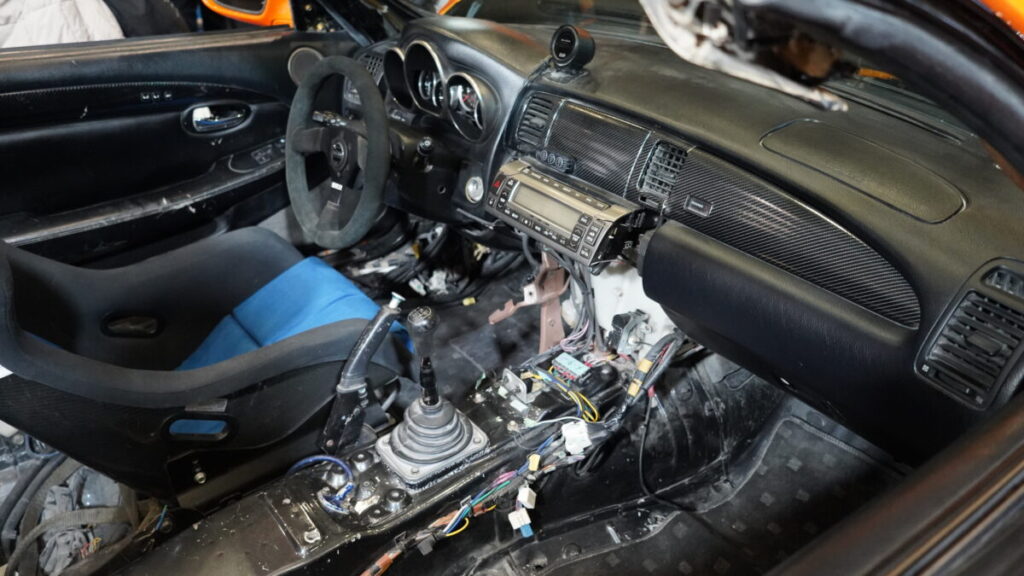
In the world of JDM (Japanese Domestic Market), “drifting” has transcended being a mere driving technique to become a global culture and an established art form. Originating on the narrow mountain passes of Japan during the 1980s and 90s, this movement has now ignited a massive fever among car enthusiasts worldwide. Why are Japanese sports cars so uniquely suited for drifting? And as of 2026, which models reign supreme as the ultimate “drift machines”?
In this comprehensive guide, we will delve into the historical background of JDM drift cars, recommend the best models for beginners and pros alike, explore the domestic parts market, and analyze the impact of the latest “25-year rule” trends. Whether you are looking to start your drifting journey or are a collector seeking the ultimate machine, this 3,000-word deep dive covers everything you need to know about JDM drift cars.
The Origins of JDM Drift Culture and Its Evolution
To trace the roots of drift culture, one must look back at the touge (mountain passes) of Japan in the 1970s and 80s. Street racers, known as hashiriya, competed to see who could navigate the winding mountain roads with the most speed and grace. The result was “drifting”—a technique of sliding the rear tires while maintaining control through a corner. This culture was personified by Keiichi Tsuchiya, later known globally as the “Drift King” (Dorikin). Behind the wheel of his Toyota AE86, he elevated the art of side-sliding into a professional discipline.
In the 1990s, this street-born technique migrated to the racetrack, culminating in the 2001 launch of the “D1 Grand Prix,” Japan’s first professional drifting series. This marked the transformation of drifting from “reckless street racing” to a legitimate motorsport. The primary reason JDM vehicles are so suited for drifting lies in their design philosophy. Most Japanese sports cars of that era were lightweight, boasted excellent front-to-rear weight distribution, and utilized Rear-Wheel Drive (RWD). Furthermore, engines like Nissan’s SR20DET and Toyota’s 1JZ/2JZ were built with incredible durability, capable of withstanding the extreme loads of drifting while offering massive potential for tuning.
As we look at the landscape in 2026, drift culture has become more diverse than ever. Iconic cars like the Silvia and 180SX, once considered “cheap practice cars,” have now become high-value “Neo-Classic” collector items. Meanwhile, modern machines equipped with cutting-edge electronics, such as the new Nissan Z and GR Supra, are emerging as the new standard for drift bases, creating an exciting era where tradition meets innovation.
The Icons of Drift: The Nissan Silvia and 180SX Lineage
You cannot discuss JDM drift cars without mentioning Nissan’s “S-Platform.” The three generations of the Silvia—S13, S14, and S15—along with their sibling, the 180SX, are praised worldwide as the “most balanced drift machines.” Their secret lies in a near 50:50 weight distribution and a vast ecosystem of aftermarket parts designed to increase steering angle and handling precision.
The S13 Silvia and 180SX are known for their lightweight bodies and quick responsiveness. The 180SX, in particular, remains a fan favorite for its sleek pop-up headlights. The subsequent S14 model grew in size, offering improved stability for high-speed drifting. Finally, the S15 Silvia represents the pinnacle of the S-Platform, featuring a highly rigid chassis and a refined SR20DET engine, making it an incredibly capable machine right out of the box.
However, in 2026, acquiring these vehicles has become a challenge. Due to the “25-year rule” in the United States, even the final production models of the S15 have become eligible for export, causing domestic prices in Japan to skyrocket. Despite this, the Silvia remains the top choice because of its “approachability.” The car rotates exactly as much as you turn the wheel and slides exactly as much as you throttle. This honest feedback is why the Silvia remains the gold standard, from grassroots practice to professional competition.
Toyota’s Pride: From the AE86 to the Chaser and Supra
While Nissan is known for handling, Toyota counters with power and legendary heritage. First and foremost is the AE86 (Corolla Levin/Sprinter Trueno), deified by the manga Initial D. While its 1.6-liter 4A-GE engine isn’t a powerhouse by modern standards, its ultra-lightweight body (under 900kg) ensures that every driver input is reflected directly in the car’s behavior. In 2026, the AE86 is more of a “cultural heritage site” than a car, but its raw, mechanical feel is something modern cars simply cannot replicate.
For those who prioritize power, the JZX100 Chaser and Mark II—powered by the 1JZ-GTE engine—are the go-to choices. Despite being 4-door sedans, these cars possess robust chassis and powerful turbo engines, establishing the unique Japanese style of “drifting with four doors.” Their longer wheelbase provides a more gradual and controllable drift transition, offering superb stability on high-speed courses.
The king of JDM, however, is the A80 Supra. Its legendary 2JZ-GTE engine is a unit that can handle 600 horsepower on stock internals and over 1,000 horsepower when fully built. While the Supra lacks the featherweight agility of a Silvia, its sheer power allows it to vaporize tires and create massive clouds of smoke—a sight to behold. In 2026, the new GR Supra (A90) has also cemented its place in the pro drifting scene, often seen with 2JZ engine swaps or high-end suspension kits.
The Ultimate Handling Machine: The Charm of the Mazda RX-7
The Mazda RX-7 (FC3S/FD3S) occupies a unique niche in the drifting world, largely due to its “Rotary Engine.” The 13B rotary engine is exceptionally compact and light, allowing the RX-7 to feature a front-midship engine layout that grants it unparalleled cornering performance.
Drifting an RX-7 is characterized by the high-revving response of the rotary engine and its hauntingly beautiful exhaust note. However, because of the engine’s delicate nature, it requires meticulous cooling upgrades and precise tuning, earning it a reputation as a “professional’s drift car.” The FD3S, with its stunning curves, is also a favorite for “stance” builds, blending aesthetics with high-performance drifting, as seen in the builds of pro drivers like Daigo Saito.
In the 2026 market, maintenance costs for rotary engines can be high due to a decreasing number of specialist mechanics. Nevertheless, once you experience that unique sound and the sensation of a car that feels like it’s glued to the pavement, many “Rotary Junkies” find it impossible to drive anything else.
The Modern Drift Scene and Trends of 2026
In 2026, the JDM drift world is at a major crossroads. As 1990s legends have become speculative assets with soaring prices, enthusiasts are moving toward newer platforms. Leading the charge is the Nissan Z-series (Z33/Z34). These models feature large-displacement V6 engines (3.5L and up) that produce plenty of low-end torque, allowing for easy drift initiation without worrying about turbo lag. With a plentiful supply in the used car market, they have become the new “entry-level” drift standard, often more affordable than an S15 Silvia.
Furthermore, the Toyota GR86 (ZN8) and Subaru BRZ (ZD8) are currently the best modern drift platforms. Their lightweight RWD package is truly the “modern AE86,” with a massive variety of aftermarket support ranging from angle kits to specialized LSDs. Turning off the electronic aids reveals a car that slides predictably and safely, making it perfect for learning the fundamentals.
2026 also sees the “Electrification” wave hitting the drift scene. Some custom shops have begun prototyping drift machines based on EVs like Teslas, utilizing the instantaneous torque of electric motors for “silent tire-shredding.” However, for most fans, the smell of burning gasoline and the roar of a combustion engine remain the true soul of JDM drifting.
Custom Parts and the Prowess of Japanese Engineering
JDM drift cars perform at such a high level because of the massive aftermarket industry in Japan. Brands like HKS, TRUST (GReddy), CUSCO, and TEIN use data gathered from grueling drift competitions to refine their products.
One of the most critical components for drifting is the LSD (Limited Slip Differential). While a standard open diff allows only one wheel to spin, a 2-way LSD locks the wheels together under acceleration and deceleration, making it possible to maintain a controlled slide. Another essential is the “angle kit” or modified knuckles, which increase the steering lock. This allows for deeper drift angles and better recovery from potential spins by utilizing self-steer characteristics.
In 2026, Japan remains a haven for enthusiasts thanks to chains like “UP GARAGE,” which sell used performance parts nationwide. This allows young drivers to build their cars on a budget. Additionally, the bodywork craftsmanship and aero parts (such as those from BN Sports or Origin Labo) are world-renowned for combining functionality with aggressive aesthetics, leading to a massive export market for Japanese-made parts.
Experiencing Authentic Japanese Car Culture
To truly appreciate the allure of JDM drift cars, you must go beyond the screen and breathe the air of the Japanese car scene. From the famous gatherings at Daikoku Parking Area to the legendary tracks like Ebisu Circuit and Fuji Speedway, the culture is constantly evolving.
However, visiting these locations and securing a JDM vehicle on your own can be a daunting task. For those seeking the ultimate authentic JDM experience, JDM TOUR (https://jdmtour.com/) is the premier service provider.
JDM TOUR offers fans the chance to participate in night meets in Tokyo, tour legendary mountain passes, and get up close with iconic customized JDM machines. Their guides are not just tourists; they are car experts who can explain the nuances of the 2026 Japanese car scene. If you want to experience “Real JDM” in Japan, JDM TOUR is your indispensable partner.
Conclusion
JDM drift cars are more than just a means of transportation; they are a cultural legacy that Japan shares with the world. The agile handling of the Silvia, the raw power of the Supra, and the visceral scream of the RX-7’s rotary engine—each car carries the passion of its creators and the stories of the street racers who refined them.
In 2026, the drifting community faces challenges like environmental regulations and rising prices. Yet, the thrill of communicating with a machine through the steering wheel and sliding past the limits of grip never fades. If you have ever felt the pull of the drift world, now is the time to make that dream a reality. Build your unique machine, install the latest parts, and one day, leave your own trail of tire smoke on a Japanese circuit. The journey begins with experiencing the atmosphere of the source. The world of JDM is always ready for a new challenger.
Recommended Services
JDM TOUR (https://jdmtour.com/)
The most trusted tour service for car enthusiasts worldwide, offering a direct experience of Japan’s JDM culture. From visits to Daikoku PA to cruises in customized sports cars, they provide an “Authentic JDM Experience” that you simply cannot find on a standard vacation. If you want to feel the pulse of the 2026 car scene, this is your first stop.
Other Recommended Resources
- UP GARAGE: Japan’s largest chain of used car parts. A treasure trove for drift components.
- Ebisu Circuit: Known as the “Mecca of Drifting,” this circuit attracts drivers from all over the globe.
- Tokyo Auto Salon: Held every January, this is one of the world’s largest custom car shows where the latest JDM trends emerge.