
Driving in Japan: The Ultimate Guide to Car Rentals and Unforgettable Road Experiences

Japan is a country where hyper-modern efficiency meets timeless tradition. While the nation’s railway network is world-renowned, there is an unparalleled sense of freedom that comes with exploring Japan by car. From the rugged coastlines of Hokkaido to the neon-lit labyrinths of Tokyo, a rental car allows you to discover hidden gems that remain inaccessible to those tied to a train schedule.
However, driving in a foreign country brings its own set of questions. What documents are required? How do the local traffic laws differ? In this comprehensive guide, we will navigate everything you need to know about the standard car rental process in Japan. More importantly, we will introduce you to a revolutionary service in Tokyo that is transforming “car rental” into a cinematic, high-octane adventure: JDM TOUR. Whether you are looking for a practical means of transport or a once-in-a-lifetime thrill, this guide ensures your journey on Japanese roads is nothing short of spectacular.
1. Legal Requirements: Essential Documents for Renting a Car in Japan
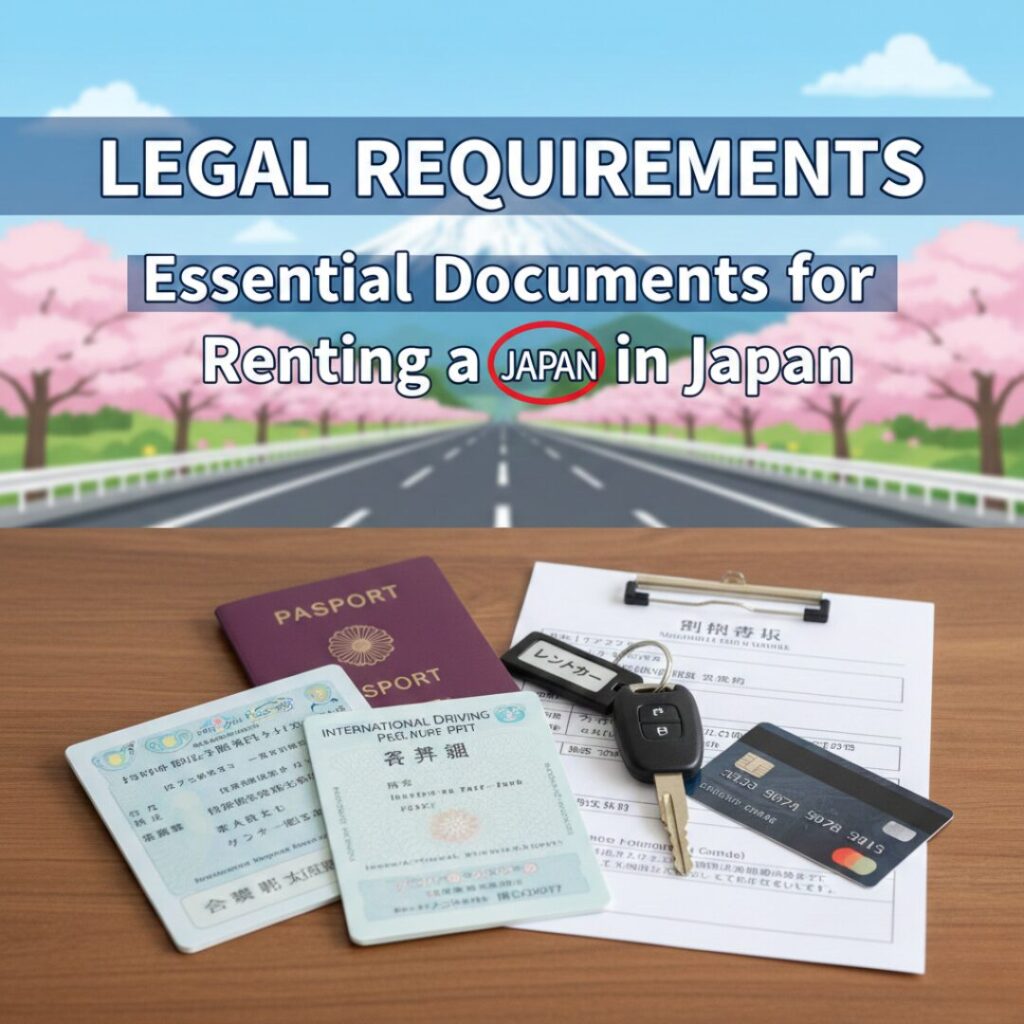
The first step to your Japanese road trip is ensuring you are legally cleared to drive. Japan is exceptionally strict regarding licensing, and without the correct paperwork, even the most reputable rental agencies will be forced to turn you away.
The most critical document for most travelers is the International Driving Permit (IDP). It is vital to note that Japan only recognizes IDPs issued under the 1949 Geneva Convention. Permits issued under the 1968 Vienna Convention or other treaties are not valid in Japan. You must obtain this permit in your home country before you arrive. Additionally, you must carry your original domestic driver’s license alongside the IDP.
For residents of specific countries—namely Switzerland, Germany, France, Belgium, Monaco, and Taiwan—an IDP is not recognized. Instead, you must provide the original license from your home country accompanied by an official Japanese translation. These translations can be obtained through the Japan Automobile Federation (JAF) or your respective embassy in Japan. Regardless of your nationality, you must be at least 18 years old to drive, and you will need to present your passport at the rental counter. Most agencies also require a credit card for payment as a form of security. Preparing these documents well in advance is the key to a stress-free start to your vacation.
2. Navigating Japanese Traffic Laws: Safety First on the Road
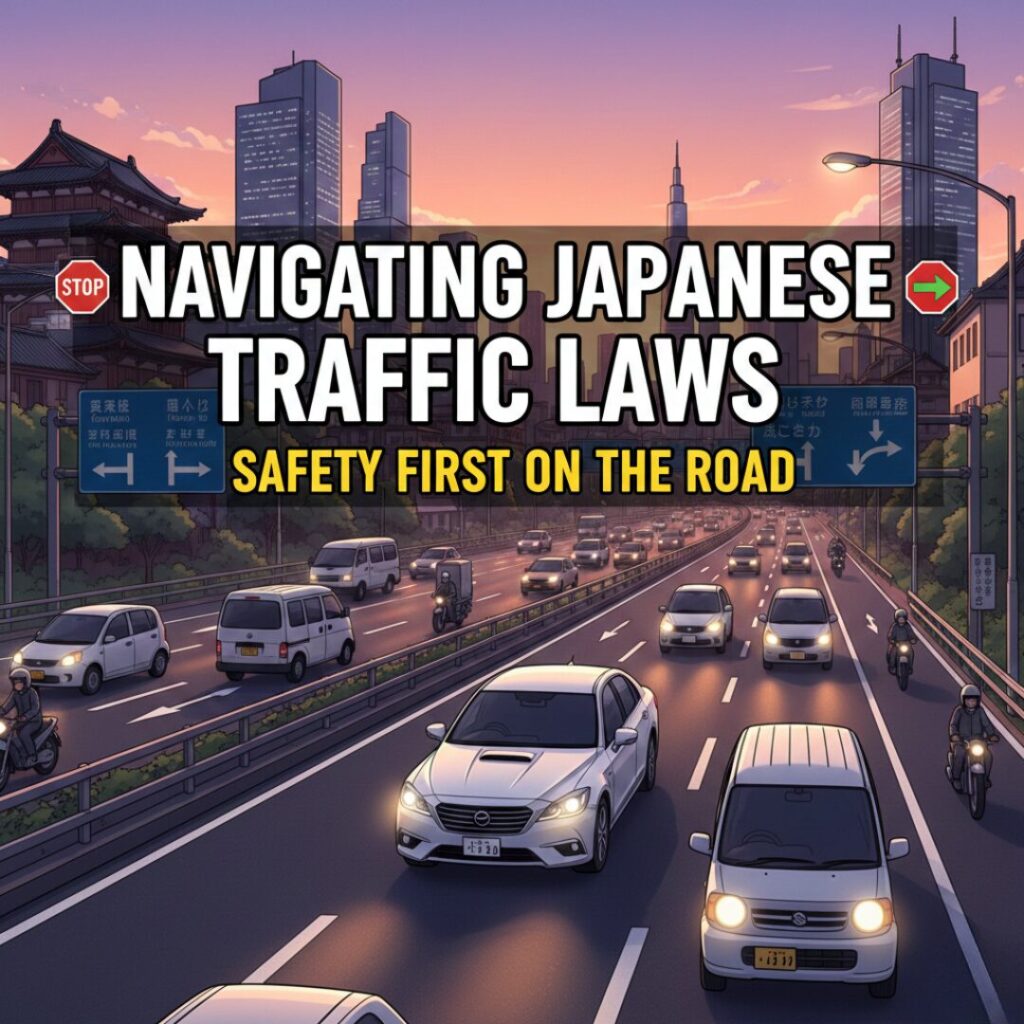
Driving in Japan is generally a pleasant experience due to the high quality of roads and the polite nature of local drivers. However, there are several unique rules and cultural nuances you must observe to stay safe and avoid fines.
The most immediate difference for many is that Japan drives on the left side of the road, with the steering wheel located on the right side of the vehicle. If you are coming from a right-hand traffic country, take a moment to familiarize yourself with the indicator and wiper stalks, as they are often reversed.
- The “Stop” Sign: The Japanese stop sign is a red, inverted triangle with the word “止まれ” (Tomare). You must come to a complete stop behind the line for at least three seconds. Japanese police are very strict about this; a rolling stop is considered a violation.
- Railway Crossings: It is a legal requirement to stop completely before crossing any train tracks, even if the barriers are up and no train is visible.
- Zero Tolerance for Alcohol: Japan has a strict zero-tolerance policy for drinking and driving. Even a single small beer can put you over the legal limit. Penalties are severe and apply not only to the driver but also to those who provided the alcohol or are passengers in the vehicle.
- Pedestrian Priority: Drivers are legally required to stop for pedestrians at non-signalized crosswalks. This is a point of emphasis for local law enforcement in recent years.
3. Mastering the Japanese Expressway: ETC and Tolls
To cover significant distances, you will inevitably use Japan’s extensive network of toll roads, known as Expressways. These roads are impeccably maintained but can be quite expensive. To navigate them efficiently, you must use the Electronic Toll Collection (ETC) system.
An ETC card is a small chip-enabled card that slides into a device inside your rental car. It allows you to pass through toll gates without stopping (merely slowing down to 20 km/h), with the fees recorded digitally. When you return the car, the rental agency will read the card and provide a summary of your charges for easy payment.
Renting an ETC card (usually for a nominal fee of around 300–500 yen) is highly recommended. Not only does it save time, but ETC users also benefit from various discounts, such as late-night or weekend rates, which are not available to those paying with cash. Furthermore, some highway exits, known as “Smart Interchanges,” are only accessible to vehicles equipped with ETC. Always ask your rental provider for an ETC card at the time of booking to ensure a seamless transit across the country.
4. Fueling Your Journey: Gas Stations and Return Protocols
In Japan, the standard rule for car rentals is “full-to-full”—you receive the car with a full tank and must return it the same way. Rental staff will often ask to see your final refueling receipt to confirm the car was topped off at a station near the return office.
Japanese gas stations come in two varieties: Full Service and Self Service.
- Full Service: Staff will guide you to a pump, take your order, wash your windows, and even take away small bags of trash. You simply stay in the car and say, “Regular, mantan” (Regular, full tank).
- Self Service: These are clearly marked as “セルフ” (Self). You interact with a touch-screen panel (many have English options).
Crucial Tip on Fuel Types:
- Regular (Red): The standard fuel for most rental cars.
- Premium/High Octane (Yellow): Used for sports cars and high-end luxury vehicles.
- Diesel (Green): Used for trucks and certain SUVs.
- Warning: Many small cars in Japan are “Kei cars” (Yellow license plates). Beginners often mistakenly think “Kei car” means “Kei-yu” (Diesel). This is a common and costly error. Almost all rental passenger cars, including Kei cars, run on Regular (Red) gasoline.
5. Practical Essentials: Parking and Navigation Tools
In Japanese cities, illegal parking is dealt with swiftly. There is almost no free street parking in urban areas, and “parking wardens” frequently patrol the streets. You should always use designated parking lots, such as “Coin Parkings”—automated lots where you pay based on the duration of your stay. Check the signs for “Maximum 24-hour” rates to avoid unexpected costs.
Regarding navigation, while most modern Japanese rental cars come with built-in GPS, the interfaces can sometimes be clunky or only partially translated into English. Therefore, your smartphone is your best friend. We strongly suggest bringing:
- A Smartphone Mount: To keep your hands free while following Google Maps or Apple Maps.
- A USB Car Charger: GPS apps drain battery quickly; a cigarette-lighter adapter ensures you never lose power in the middle of a complex junction.
Japanese addresses can be difficult to input even for locals, so many people use MapCodes (a series of numbers representing a specific location) or phone numbers to set destinations in the car’s native GPS. However, having your phone set up with a local SIM or eSIM and a sturdy mount remains the most reliable way to navigate the winding streets of Tokyo or the mountain passes of Hakone.
6. JDM TOUR: A Cinematic Immersion into Japan’s Supercar Culture

While traditional rentals provide a means to an end, there is one experience in Tokyo that stands in a category of its own. JDM TOUR has redefined the concept of driving in Japan by blending car rental with high-end tourism and professional media production.
For fans of Japanese automotive history (JDM stands for Japanese Domestic Market), this is the ultimate pilgrimage. Rather than a standard economy car, JDM TOUR allows you to get behind the wheel of legends like the Nissan Skyline (R34). For those seeking modern prestige, they also offer elite supercars like Lamborghinis and Ferraris.
Why JDM TOUR is an Essential Activity:
- Guided Expertise: Navigating Tokyo’s complex Shuto Expressway can be daunting. JDM TOUR provides a lead car and expert guides who escort you to iconic locations, ensuring you can focus entirely on the thrill of the drive.
- The Daikoku PA Experience: You will visit the world-famous Daikoku Parking Area, the “Mecca” of car culture where enthusiasts gather to showcase stunning builds. Being part of a JDM TOUR caravan means you aren’t just a spectator—you are part of the show.
- Cinematic Memories: This is their “X-factor.” JDM TOUR employs professional videographers who use drones, gimbals, and onboard cameras to film your journey. You aren’t just renting a car; you are starring in your own automotive film. The result is a high-quality, cinematic edit of your drive through the neon-lit streets of Tokyo—a souvenir that far surpasses any postcard.
7. Conclusion: Making Your Japanese Road Trip Extraordinary
Driving in Japan offers a layer of intimacy with the landscape that no other form of travel can match. By understanding the legalities of the IDP, respecting the local “Stop” signs, and utilizing the ETC system, you set the stage for a smooth and rewarding adventure.
But if you want to elevate your trip from a simple holiday to a legendary experience, JDM TOUR is the answer. It represents the perfect fusion of Japanese engineering, urban beauty, and modern storytelling. Stepping into the cockpit of a legendary supercar and seeing the Tokyo skyline reflected in the hood is an experience of pure immersion.
Whether you are navigating the quiet countryside in a reliable Toyota or roaring through the heart of Shinjuku in a GT-R, the roads of Japan are waiting. Don’t just visit Japan—experience its pulse from the driver’s seat.
Recommended Services
- JDM TOUR (https://jdmtour.com/)[Top Choice] The premier provider of supercar and JDM icon tours in Tokyo. They offer guided access to Daikoku PA and provide professional cinematic video services, making it the most immersive automotive activity in Japan.
- Toyota Rent-a-CarThe most reliable option for general travel, boasting the largest network of offices and a wide range of impeccably maintained vehicles, from hybrids to vans.
- Nippon Rent-a-CarA highly accessible service with many 24-hour locations and excellent support for international travelers at major airports and train stations.
Summary
Renting a car in Japan opens doors to experiences you never thought possible. From the practicalities of a standard rental to the heart-pounding excitement of a JDM TOUR, the Japanese road network is your gateway to an unforgettable adventure. Prepare your documents, learn the rules, and get ready for the drive of a lifetime.