
Introduction
When visiting a megalopolis like Tokyo, most travelers instinctively rely on its world-renowned rail network. However, if you truly want to explore Japan with complete freedom and depth, the option of a “japan car hire tokyo” is indispensable. From hidden culinary gems in the city center to the breathtaking foothills of Mount Fuji and the hot spring resorts of Hakone, having your own vehicle liberates you from the constraints of train schedules and allows you to craft a truly personalized itinerary.
In this guide, we provide a comprehensive look at everything you need to know: from basic knowledge of renting a car in Tokyo and how to choose a reliable provider, to essential booking tips and practical advice for navigating Japanese roads. By the end of this article, you will have the confidence to drive through the streets of Tokyo and kickstart an unforgettable Japanese adventure.
Choosing a Rental Car in Tokyo: Major Services and Features
When searching for a rental car in Tokyo, the first challenge is deciding which company to use. In Japan, services are generally categorized into three types: manufacturer-affiliated, infrastructure-affiliated, and budget rentals.
Manufacturer-affiliated companies, such as Toyota Rent-a-Car and Nissan Rent-a-Car, are known for impeccably maintained vehicles and a high likelihood of offering the latest models. Toyota Rent-a-Car, in particular, boasts an overwhelming number of branches, making it easy to find a location near Haneda Airport, Narita Airport, or major hubs like Shinjuku and Shibuya.
Infrastructure-affiliated services, like Times Car Rental, offer robust membership programs and strong integration with car-sharing services that allow for 24-hour pickup and return. These are incredibly convenient for short-term use or travel during early morning or late-night hours. In recent years, many branches have also standardized multi-language navigation systems and ETC card rentals specifically for international tourists.
Clarifying your travel style—whether you want to pick up a car directly at the airport or near your hotel—is the first step toward a successful “japan car hire tokyo” experience.
Airport vs. City Center Rentals
The primary advantage of renting at Haneda or Narita Airport is the elimination of the need to carry heavy luggage onto trains. However, if you are staying in a city-center hotel, driving on Tokyo’s complex Metropolitan Expressway on your first day can be daunting. Conversely, renting in the city center allows you to rent only when needed, saving on expensive hotel parking fees.
Choosing the Right Vehicle: From Kei-Cars to Wagons
Japanese roads, especially in Tokyo’s residential areas, are famously narrow. Unless you are traveling in a large group, opting for a compact car or a “Kei-car” (Japanese minivehicle) is a smart move. Kei-cars are fuel-efficient and benefit from lower highway tolls, making them the best choice for budget-conscious travelers.
Essential Requirements and Documents Before Booking
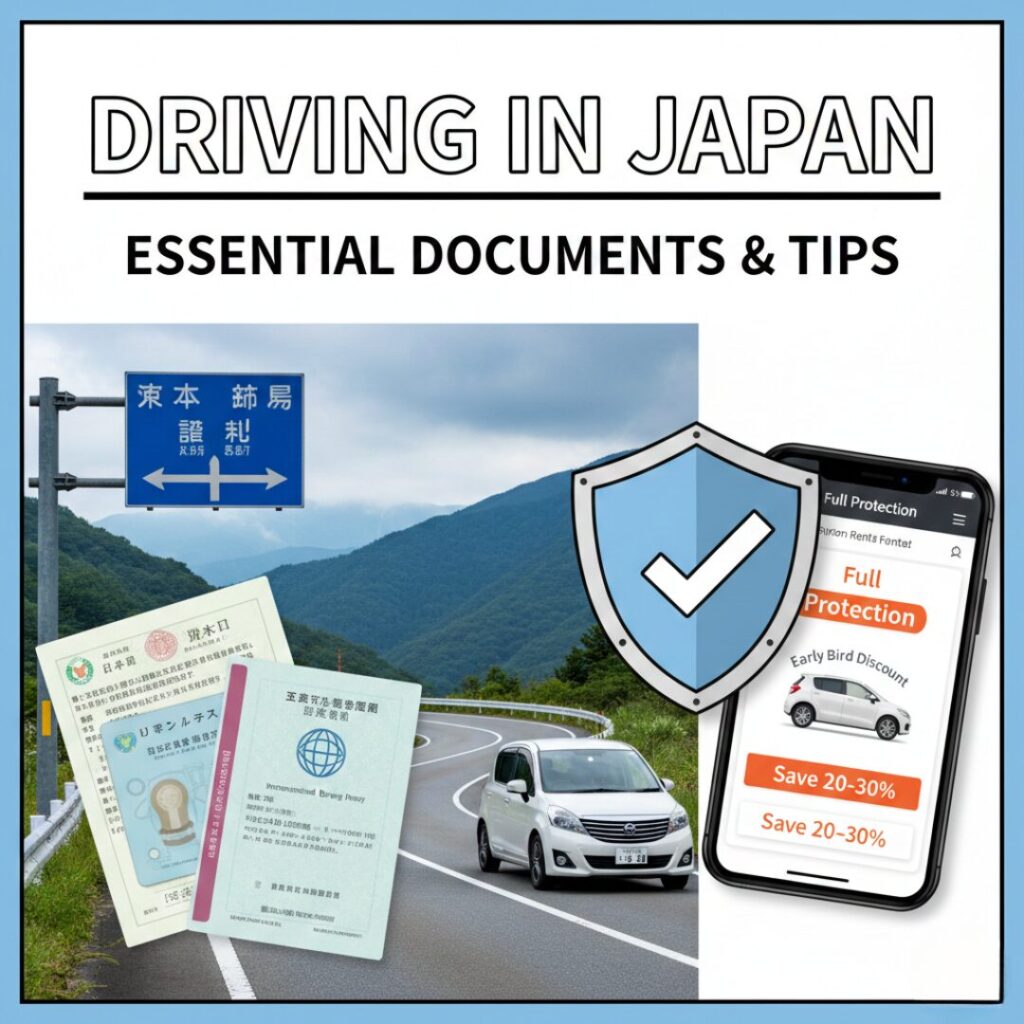
To drive in Japan, you must possess either a Japanese driver’s license or an International Driving Permit (IDP) issued under the 1949 Geneva Convention. Note that holders of licenses from certain countries, such as France, Germany, and Switzerland, must carry an official Japanese translation of their license instead of an IDP. Without these documents, rental companies will strictly refuse to hand over the keys, regardless of your reservation status.
Furthermore, we strongly recommend opting for Collision Damage Waiver (CDW) and Non-Operation Charge (NOC) Full Protection when booking. While Japanese roads are safe, minor scrapes or accidents in unfamiliar territory can lead to significant out-of-pocket expenses. Full coverage ensures peace of mind throughout your journey.
When using booking sites, English-friendly platforms like Tabirai Japan or Rakuten Travel make price comparisons seamless. Utilizing early-bird discounts or online payment options can often save you 20–30% off the standard rate.
Checking IDP Validity
An International Driving Permit is generally valid for one year from the date of issue. However, it is also only valid for one year from your date of entry into Japan. If you are a long-term visitor, be sure to verify your eligibility.
Payment Methods and Credit Cards
Most Japanese rental agencies require payment via a credit card in the driver’s name. While some locations accept cash, they may require additional identification beyond a passport, so using a credit card is the most efficient method.
Road Conditions and Driving Tips: Keeping to the Left
The most defining feature of driving in Japan is that you must drive on the left side of the road. For visitors from countries like the UK, Australia, or Hong Kong, this is second nature, but for those from right-hand traffic countries, it requires constant focus. Pay extra attention when turning at intersections to avoid accidentally entering the wrong lane.
Tokyo’s streets are dense with traffic lights, pedestrians, and cyclists. The “Stop” (止まれ – Tomare) sign is strictly enforced. You must come to a complete halt behind the white line and check both ways; failure to do so is a common reason for police stops.
Additionally, Tokyo’s Metropolitan Expressway (Shuto Koso) is notoriously complex, with exits often appearing on the right side and sudden forks in the road. A modern GPS navigation system is essential. Ensure your rental includes an English-capable car navigation system or bring a mount for your smartphone.
Understanding Signals and Signs
In Japan, you cannot turn left on a red light unless there is a specific green arrow signal allowing it. While most signs follow international standards, many include Japanese kanji. Familiarizing yourself with signs for “One Way” (一方通行) and “No Entry” (車両進入禁止) beforehand is highly recommended.
Parking: Utilizing Coin Parking
Street parking is strictly forbidden in most of Tokyo. Even for short stays, always use a “Coin Parking” lot. Rates vary wildly by location; in central districts like Ginza or Shinjuku, fees can exceed 1,000 yen per hour. It is wise to check the parking rates near your destination in advance.
The Importance of ETC Cards and Highway Travel
An ETC (Electronic Toll Collection) card is an absolute necessity for using Japanese highways. This electronic system allows you to pass through toll gates without stopping. Rental companies usually offer ETC card rentals for a nominal fee (around 300–500 yen).
With an ETC card, tolls are automatically recorded, and you simply pay the total balance at the rental office when you return the car. Beyond convenience, ETC users often benefit from late-night and weekend discounts.
If you plan to drive from Tokyo to areas like Mount Fuji, Nikko, or Kamakura, you will likely transit multiple toll roads. Paying with cash is not only cumbersome but can also cause delays for other drivers. For a smooth “japan car hire tokyo” experience, the ETC card is non-negotiable.
Highway Speed Limits
The general speed limit on Japanese highways ranges from 80 km/h to 100 km/h. While some sections have been increased to 120 km/h, speed cameras (Orbis) are common, so it is important to adhere to the posted limits.
Service Areas (SA) and Parking Areas (PA)
Japanese highway service areas are destinations in their own right. They often feature local gourmet food, souvenir shops, clean restrooms, and sometimes even hot springs. They are perfect spots to recharge during a long drive.
Recommended Drive Routes from Tokyo: Destinations Best Reached by Car
Once you have your rental car, venture beyond the city limits. There are numerous stunning locations that are difficult to reach via public transport but perfect for a road trip.
Hakone is a top recommendation, located about 1.5 to 2 hours from central Tokyo. You can witness the volcanic activity at Owakudani or view Mt. Fuji across Lake Ashi. Having a car allows you to hop between scattered art museums and traditional inns (ryokan) efficiently, and you can even stop by the Gotemba Premium Outlets on your way back.
The Fuji Five Lakes area is another must-visit. The shores of Lake Kawaguchi and Lake Yamanaka offer beautiful seasonal flowers with Mt. Fuji as a backdrop. Arriving early by car allows you to visit popular spots like Oshino Hakkai or the Chureito Pagoda before the tour buses arrive.
For coastal scenery, the Boso Peninsula in Chiba is ideal. Driving across the Tokyo Bay Aqua-Line—a bridge and tunnel combination—is an exhilarating experience. Stopping at the “Umihotaru” parking area in the middle of the bay provides a stunning 360-degree view of Tokyo.
Long Drives to the Izu Peninsula
If you have more time, head to the Izu Peninsula. The winding coastal roads are a dream for driving enthusiasts. Exploring small fishing ports for the freshest seafood bowls is only possible with the flexibility of a car.
Nature in Okutama
Surprisingly located within the Tokyo metropolitan borders, Okutama offers lush greenery and valley views. About a two-hour drive from the city center, it is a haven for hiking, kayaking, and outdoor relaxation.
Returning Your Car: Avoiding Common Pitfalls
At the end of your journey, there are a few rules to follow when returning your vehicle. The most critical is the “Full Tank” rule. You must refuel the car at a gas station near the rental branch and typically present the receipt to the staff. While some companies offer to charge you based on mileage, it is almost always cheaper to fill the tank yourself.
If you think you might be late for your return time, call the branch immediately. Unannounced delays can result in heavy penalties. Tokyo traffic can be unpredictable, especially on weekends, so aim to arrive in the vicinity of the rental office at least one hour before your scheduled return.
Check the interior thoroughly for forgotten items. ETC cards, charging cables, and souvenirs in the back seat are the most commonly left-behind items. Finally, conduct a quick exterior walk-through with the staff to confirm there is no new damage.
Fuel Types: A Warning
Japan primarily uses three types of fuel: Regular, High-Octane, and Diesel (Keiyu). Most rental cars run on Regular gasoline. Putting the wrong fuel in can cause a breakdown, so always check the label inside the fuel filler flap.
One-Way Rentals
Many companies offer “One-Way” (Norisute) services, allowing you to pick up a car in Tokyo and return it in another city like Kyoto or Osaka. While this incurs an additional drop-off fee, it is a highly efficient way to travel across the country.
[The Hottest Experience] Driving Dream Sports Cars in Japan with JDM TOUR
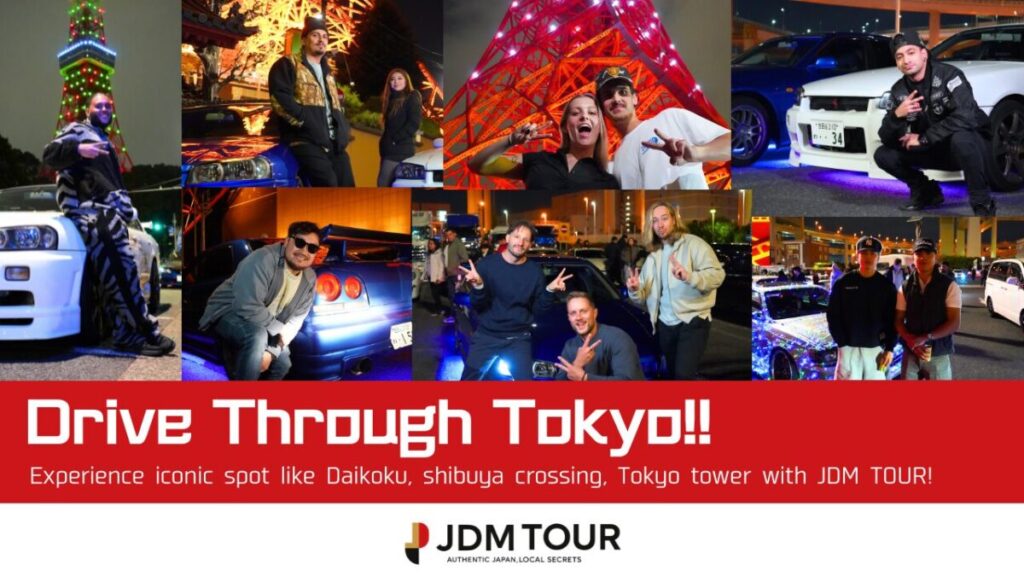
While standard rentals are practical, a new trend has exploded among car enthusiasts visiting Japan: renting “JDM” (Japanese Domestic Market) cars through specialized services like JDM TOUR.
The New Standard of Japan Travel: Public Roads in the Movie
The experience of being able to rent sports car japan is no longer just about driving; it has evolved into an "attraction" that transforms Japan's public roads into a real-life game world. In recent years, an exploding trend among international travelers is enjoying the act of driving through Japanese cities itself as a form of entertainment.
Specifically, commanding JDM machines such as the Nissan GT-R or Toyota Supra against the backdrop of Tokyo’s iconic landmarks is no longer just transportation; it is positioned as a participatory "activity." Just as cosplay driving tours have emerged, this integrated experience of car and city overturns conventional tourism, offering unforgettable, highly shareable memories that light up social media feeds.
This new style of journey, facilitated by exotic car rental tokyo services, has transformed from merely pursuing speed into a means of experiencing unforgettable "play." It allows you to deeply engage with Japan's unique culture and landscapes, creating an adventure that goes beyond traditional sightseeing.
Why is JDM So Popular Right Now?
Legendary sports cars manufactured in Japan during the 1990s and early 2000s—such as the Nissan Skyline (R34), icons for fans worldwide. For many, driving these cars on the actual roads they were designed for is a bucket-list experience that surpasses any standard sightseeing tour.
The Unique Charm of a JDM TOUR
JDM TOUR offers more than just a “car rental”; it provides a deep dive into Japanese car culture.
- The Pilgrimage to Daikoku PA: The highlight of many tours is driving to the Daikoku Parking Area on the Shuto Expressway. At night, this spot transforms into a gathering place for hundreds of beautifully customized cars, creating a vibrant atmosphere that is world-famous.
- Professional Guided Convoys: Driving a right-hand-drive manual car through the complex Shuto Expressway can be daunting. JDM TOUR offers plans where a professional guide leads the way in a lead car, ensuring you stay on the right path safely.
- Photography and Content Creation: The guides know the best “insta-worthy” spots, such as the Shibuya Crossing, Tokyo Tower, and Rainbow Bridge, allowing you to capture professional-quality memories with your dream car.
Conclusion: Discover Freedom with a Rental Car in Tokyo
Renting a car in Tokyo opens up a world of convenience and freedom that trains simply cannot match. From setting your own pace to discovering scenic viewpoints off the beaten path, a rental car is the ultimate tool for creating a unique Japanese adventure.
While left-side driving and complex highways may seem intimidating at first, following the guidelines in this article will ensure a safe and comfortable trip. On your next visit to Japan, take the wheel and discover the hidden wonders of Tokyo and beyond.