
Introduction
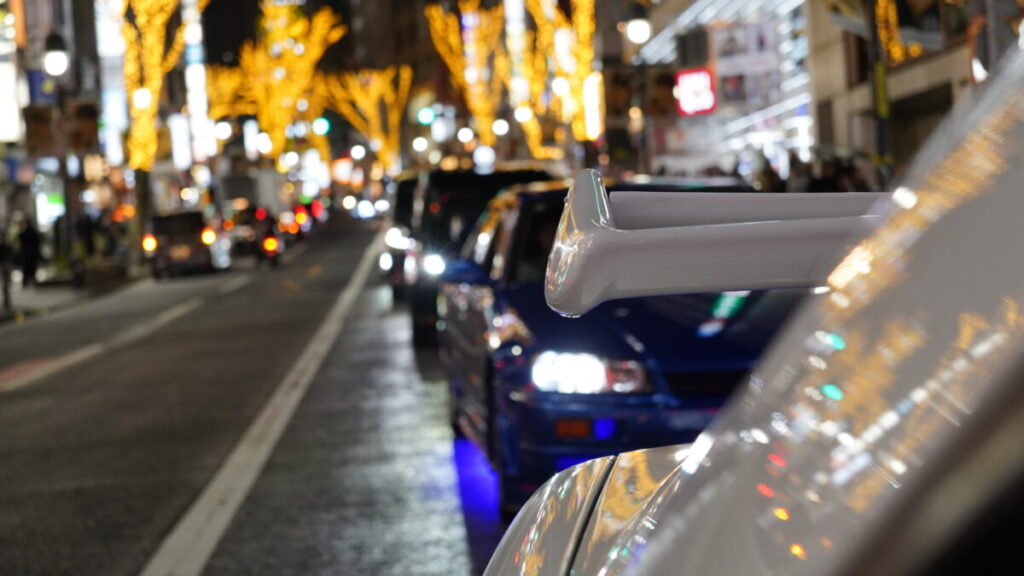
While Tokyo boasts one of the world’s most efficient public transportation networks, “driving in Tokyo”—taking the wheel and traversing this megalopolis at your own pace—offers a unique charm that trains simply cannot replicate. The exhilaration of weaving through skyscrapers on the Shuto Expressway, the glimmering neon lights of Ginza flowing past your window, and the refreshing sea breeze of the Bay Area away from the urban hustle. By choosing to drive, Tokyo transforms from a series of disconnected points into a continuous, flowing line, revealing its true character.
This article provides a comprehensive guide to enjoying the Tokyo drive, covering everything from basic knowledge and breathtaking routes favored by local drivers to essential tips for those less confident behind the wheel. We will delve deep into the art of experiencing Tokyo through a lens, integrating the latest trends and local traffic conditions. By the end of this guide, you will be ready to navigate the complex junctions and discover the unknown vistas that lie beyond.
Mastering the Labyrinth: The Thrill of the Shuto Expressway drive in Tokyo
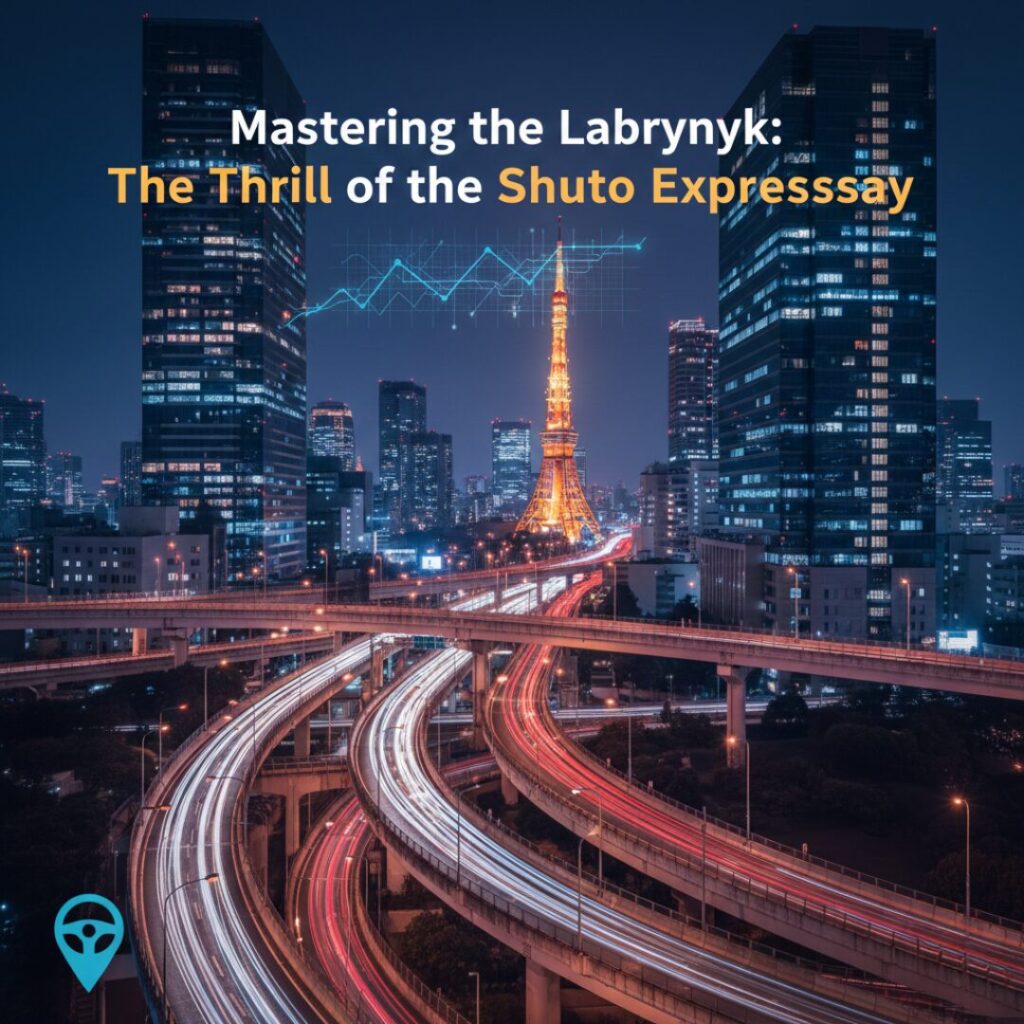
You cannot talk about driving in Tokyo without mentioning the “Shuto Expressway” (Shuto-ko), a web of highways woven into the very fabric of the city. Piercing through buildings and suspended over canals, this urban expressway is the lifeblood of Tokyo. For first-timers, the complex bifurcations and sharp curves may seem daunting, but navigating these smoothly is the ultimate highlight of a Tokyo drive.
The “C1” Inner Circular Route is particularly popular. Offering close-up views of Tokyo Tower and glimpses of the Imperial Palace greenery, this route allows you to see Tokyo’s major landmarks in a short amount of time. At night, office buildings sparkle like jewels, creating a futuristic landscape right before your eyes. However, the Shuto Expressway is famous for its unique structure, featuring frequent “right-side merges” and “right-side exits.” It is vital not to rely solely on navigation systems but to simulate your route in advance for a safe and comfortable journey.
Furthermore, unique architectural feats like the “Ohashi Junction”—a massive loop structure with a park on its roof—have become landmarks in their own right. By viewing the expressway not just as a road but as a masterpiece of civil engineering, even traffic jams can be appreciated as a quintessential part of the Tokyo experience.
Intoxicated by Nightscapes: A Midnight Cruise through Tokyo
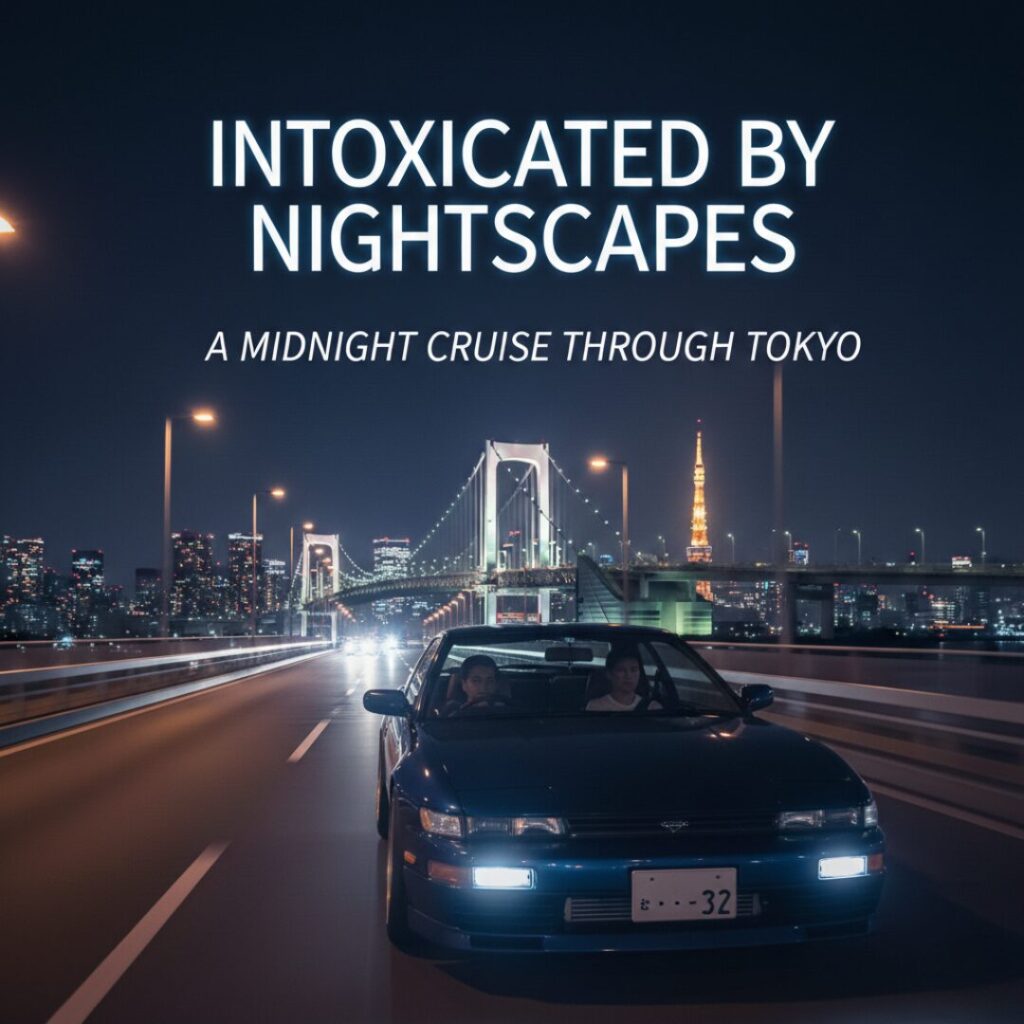
When the sun sets and the city lights flicker to life, Tokyo reveals a different face. A “Night Cruise” is perhaps the best way to enjoy the city at its most beautiful and serene. A highly recommended route takes you from the Shibaura area, across the Rainbow Bridge, and into Odaiba.
Crossing the double-decked Rainbow Bridge provides a panoramic view of Tokyo Bay and the glittering skyscrapers on the opposite shore. Watching this scenery unfold through the windshield feels like a scene from a movie. Upon arriving in Odaiba, stopping near the Telecom Center area allows you to enjoy the quiet sea breeze and the city’s silhouette from a peaceful distance.
For a more niche experience, head toward the Haneda Airport area. Late at night, traffic is light, and you can see the illuminated runways and the dramatic silhouettes of planes taking off and landing. Watching the factory nightscapes of the Keihin Industrial Zone from afar offers a poetic blend of urban solitude and industrial beauty, making for a special time that helps you forget the stresses of daily life.
From Bayside to Downtown: Recommended Routes by Area
Tokyo’s charm lies in its diversity. Every area has a completely different personality, meaning you can discover something new every time you change your route.
First is the “Bayside Route.” The roads stretching from Toyosu to Ariake and on to Wakasu Seaside Park are wide and offer a great sense of freedom. Crossing the Tokyo Gate Bridge, nicknamed the “Dinosaur Bridge,” feels like flying over the ocean. This route is especially recommended during a clear day when the blue sky and sea create an expansive, open atmosphere.
On the other hand, the “Shitamachi (Downtown) Route” offers a nostalgic charm. Driving past the Kaminarimon Gate in Asakusa and along the Sumida River toward the Tokyo Skytree allows you to feel the layers of history. While entering the narrow alleys of the old neighborhoods requires caution, simply cruising the main boulevards allows you to soak in the vibrant energy that has persisted since the Edo period.
Essential Knowledge: The Reality of Parking and Traffic Rules
When driving in Tokyo, two unavoidable challenges are “parking” and “unique traffic rules.” Street parking in the city center is strictly prohibited, and “green-clad” parking enforcement officers patrol frequently. It is essential to use apps to locate coin-operated parking lots near your destination in advance.
Parking fees vary significantly by location. In premium districts like Ginza or Roppongi, rates can be several hundred yen for just 15 minutes. Conversely, you can save costs by using public underground parking lots slightly further from the center or commercial facility parking that offers discounts for shoppers.
Additionally, Tokyo is characterized by a high frequency of “one-way streets.” The backstreets of Chiyoda and Chuo wards, in particular, are a labyrinth of one-way paths. You must also pay close attention to signs for bus-only lanes and roads that become pedestrian zones during specific hours. However, by observing these rules and picking up on the “unspoken etiquette” of surrounding drivers, you will eventually feel a sense of solidarity as a Tokyo driver.
More Than Just Sightseeing: Utilizing Car-Sharing and Rentals
You don’t need to own a car to enjoy a Tokyo drive. In fact, Tokyo has some of the best car-sharing and rental services in the world.
Car-sharing services like “Times Car” and “Careco” allow you to rent a vehicle 24/7 from stations scattered across the city using just your smartphone. Since you can rent in 15-minute increments, these services are flexible enough for everything from “hauling heavy shopping bags home” to a “midnight night-view drive.”
For those seeking a special experience, renting a luxury or sports car is a fantastic option. Cruising through Tokyo in a Ferrari, a Porsche, or a legendary Japanese GT-R is a lifelong memory for car enthusiasts. Renting a modern Electric Vehicle (EV) to experience a silent, futuristic drive through the city is another interesting endeavor. The ability to choose the perfect “ride” for your specific style is a testament to Tokyo’s versatility.
Safety and Etiquette: Driving Pleasantly in Tokyo
Despite the massive volume of traffic, Tokyo is known for its relatively polite drivers. To maintain the flow of traffic, there are a few key tips to keep in mind.
First, perform lane changes “early and clearly.” Because exits and junctions on the Shuto Expressway can appear suddenly, hesitating can cause confusion for others and lead to accidents. Avoid forced merges, and remember the “Thank You Hazard”—flashing your hazard lights briefly to thank someone for letting you in—which is a standard form of communication in Tokyo.
Pedestrian safety is paramount. In busy areas like Omotesando, Harajuku, and Shibuya, pedestrians have the right of way even at crosswalks without signals. A “spirit of mutual concession”—being mindful when passing oncoming cars in narrow streets or passing cyclists—acts as the lubricant that keeps Tokyo’s complex road network moving smoothly. Stay calm, don’t rush, and drive with patience; that is the most important rule for enjoying Tokyo.
Wrapping Up the Journey: Rest and Refreshment
Proper rest is essential for long drives. In Tokyo, choosing a rest spot is part of the fun.
The “Parking Areas (PA)” on the Shuto Expressway are highly recommended. Spots like “Yoyogi PA” or “Komazawa PA” are small but function as urban oases, often featuring stylish cafes and local gourmet food. Additionally, the “Daikoku PA” on the Bayshore Route is world-famous as a mecca for car enthusiasts, where you can see rare custom cars on weekends.
On local roads, utilize drive-throughs like Starbucks or cafes near large parks. Areas around Komazawa Park and Yoyogi Park have plenty of spots where you can pull over and take a breather. Ending your drive with a meal at a restaurant overlooking Tokyo Bay provides a perfect balance between the thrill of the road and the serenity of the view.
[The Hottest Experience] Driving Dream Sports Cars in Japan with JDM TOUR
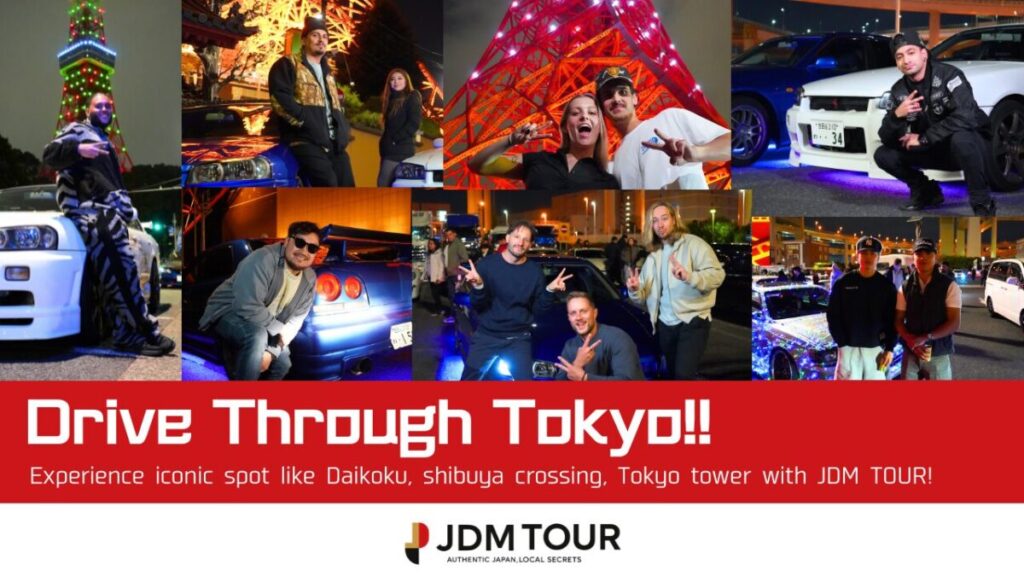
While standard rentals are practical, a new trend has exploded among car enthusiasts visiting Japan: renting “JDM” (Japanese Domestic Market) cars through specialized services like JDM TOUR.
The New Standard of Japan Travel: Public Roads in the Movie
The experience of being able to rent sports car japan is no longer just about driving; it has evolved into an "attraction" that transforms Japan's public roads into a real-life game world. In recent years, an exploding trend among international travelers is enjoying the act of driving through Japanese cities itself as a form of entertainment.
Specifically, commanding JDM machines such as the Nissan GT-R or Toyota Supra against the backdrop of Tokyo’s iconic landmarks is no longer just transportation; it is positioned as a participatory "activity." Just as cosplay driving tours have emerged, this integrated experience of car and city overturns conventional tourism, offering unforgettable, highly shareable memories that light up social media feeds.
This new style of journey, facilitated by exotic car rental tokyo services, has transformed from merely pursuing speed into a means of experiencing unforgettable "play." It allows you to deeply engage with Japan's unique culture and landscapes, creating an adventure that goes beyond traditional sightseeing.
Why is JDM So Popular Right Now?
Legendary sports cars manufactured in Japan during the 1990s and early 2000s—such as the Nissan Skyline (R34), icons for fans worldwide. For many, driving these cars on the actual roads they were designed for is a bucket-list experience that surpasses any standard sightseeing tour.
The Unique Charm of a JDM TOUR
JDM TOUR offers more than just a “car rental”; it provides a deep dive into Japanese car culture.
- The Pilgrimage to Daikoku PA: The highlight of many tours is driving to the Daikoku Parking Area on the Shuto Expressway. At night, this spot transforms into a gathering place for hundreds of beautifully customized cars, creating a vibrant atmosphere that is world-famous.
- Professional Guided Convoys: Driving a right-hand-drive manual car through the complex Shuto Expressway can be daunting. JDM TOUR offers plans where a professional guide leads the way in a lead car, ensuring you stay on the right path safely.
- Photography and Content Creation: The guides know the best “insta-worthy” spots, such as the Shibuya Crossing, Tokyo Tower, and Rainbow Bridge, allowing you to capture professional-quality memories with your dream car.
Location for JDM TOUR
Conclusion
Driving in Tokyo may seem complex and intimidating at first glance. However, once you immerse yourself in it, you will be overwhelmed by the beauty of the meticulously constructed city and the dynamic landscapes that change from moment to moment. The thrilling merges of the Shuto Expressway, the night views from the Rainbow Bridge, and the lived-in atmosphere of the Shitamachi alleys—taking all this in from the private sanctuary of your car, accompanied by your favorite music, is the ultimate luxury.
Use the routes and knowledge shared in this article to take the wheel and explore Tokyo for yourself. If you can learn to appreciate even the traffic jams as part of the giant system that is Tokyo, you are already a true Tokyo driver. The road goes on forever. Start your own “drive tokyo” today.