
Introduction
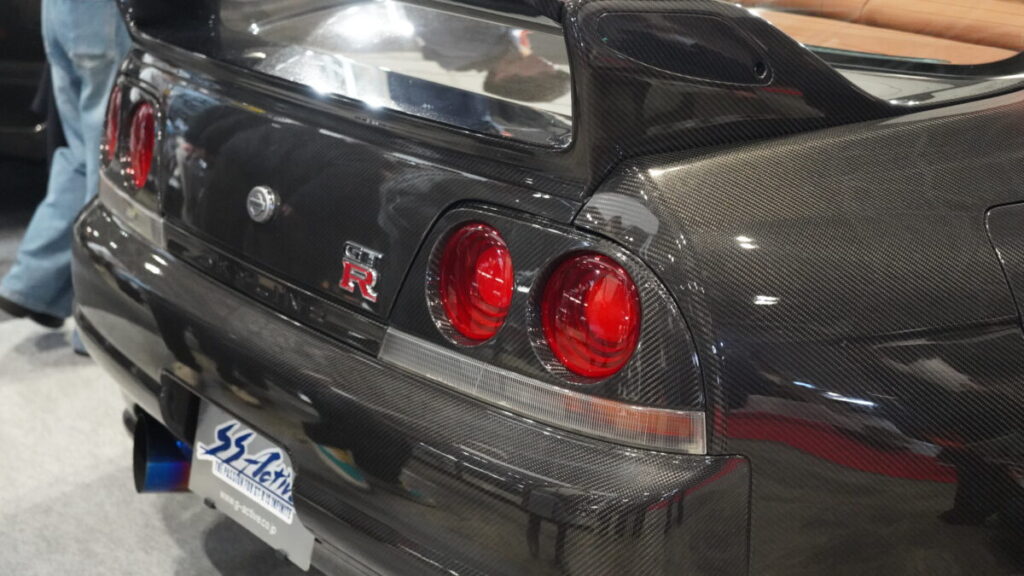
When you see those three letters—JDM (Japanese Domestic Market)—what flashes across your mind? Is it the haunting wail of a straight-six echoing through Tokyo’s Daikoku Parking Area, or the flash of circular taillights slicing through a misty mountain pass? Once a clinical term for cars meant only for the Japanese public, “JDM cars” has evolved into a global phenomenon, a culture, and a universal language that transcends borders and generations.
Why is it that thirty-year-old Japanese cars are igniting more passion today than modern, million-dollar supercars? It’s because the Japanese cars of that era possessed a level of “insane” devotion—a passion from engineers that simply cannot be replicated in today’s world of cost-cutting and efficiency-driven manufacturing. In this article, I’ll take you through the deep history, the legendary engines, and the near-frenzied market value of these machines, all from the perspective of a true enthusiast.
1. What is JDM? The Legend That Crossed the Seas
Strictly speaking, JDM cars refer to vehicles built specifically for the Japanese market. Unlike the versions exported to the US or Europe, these cars are right-hand drive and were built under Japan’s unique set of rules—including the famous “280-horsepower gentleman’s agreement.” They were honed to perfection within the context of Japan’s strict inspection laws and narrow, winding roads.
This culture exploded globally in the early 2000s, sparked by the Fast & Furious film franchise and the Gran Turismo video games. Seeing a Japanese car go toe-to-toe with a Porsche or a Ferrari and win through sheer agility felt like witnessing a “giant-killing” hero in action.
Today, the “25-Year Rule” in the United States—which allows the legal import of these cars once they hit a quarter-century in age—has poured gasoline on the fire. Icons like the R34 GT-R and the A80 Supra are finally crossing the Pacific, fueling a worldwide scramble for the remaining clean examples.
2. Legendary Hearts: Why the RB26, 2JZ, and 13B are Worshiped
The true essence of JDM cars lie hidden beneath the hood. The engineers of the 90s acted as if they knew the era of the internal combustion engine was coming to an end, pouring every ounce of their soul into creating engines that were over-engineered, incredibly durable, and possessed limitless potential.
The RB26DETT is at the top of the list. Designed for Group A racing, this 2.6L twin-turbo straight-six features a cast-iron block that can handle 1,000 horsepower with the right tuning. The metallic scream it produces at high RPM is a sound you never forget.
In contrast, Toyota’s 2JZ-GTE is the “indestructible monster.” Found in the Supra, this engine is legendary for its reliability. No matter how much power you throw at it, it refuses to break. It has become the undisputed king of the drag racing world for its sheer torque and toughness.
Then there is Mazda’s Rotary Engine (13B-REW). With triangular rotors spinning in a housing, it feels alive, vibrating with a unique pulse. It’s not easy to maintain, and it’s thirsty for fuel, but once you experience that smooth, high-revving delivery that feels more like an electric motor than a piston engine, there’s no going back.
3. Portraits of Icons: From GT-R to Civic and the “Kei” Impact
The stars of the JDM cars world are incredibly diverse, each offering a different philosophy of speed.
The Skyline GT-R, feared as “Godzilla,” always sat at the cutting edge of technology. From the R32 to the R34, its advanced ATTESA E-TS 4WD system allowed it to defy the laws of physics. It remains the ultimate symbol of Japanese engineering prowess.
On the other hand, Honda’s Type R series offers a different kind of thrill. The Civic EK9, for example, screams all the way to 9,000 RPM with its tiny 1.6L heart. It doesn’t rely on turbos; it wins through lightweight precision and surgical throttle response. It’s a “sharpened scalpel” that becomes addictive once you master it.
We also can’t forget the unique Kei Sports cars. Small machines like the Honda Beat or Suzuki Cappuccino are beloved by international fans as “Baby JDM cars.” They prove that you don’t need 500 horsepower to have fun; sometimes, “wearing” a car and using every bit of its power is the purest form of driving joy.
4. JDM as an Asset: Market Madness and Owner Struggles
Let’s be honest: the current JDM market is a bit insane. A Nissan Silvia that used to cost $10,000 now sells for five times that. An R32 GT-R, once affordable for a teenager with a part-time job, now commands prices equivalent to a luxury apartment.
This is because global investors now see JDM cars as “blue-chip assets” that rarely depreciate. However, this fame has a dark side. While owners love seeing their car’s value rise, the risk of theft has skyrocketed. Many owners now face the heartbreak of being too afraid to park their car anywhere but a high-security garage.
If you’re looking to jump into the JDM world now, be prepared for the struggle of “parts scarcity.” Thirty-year-old plastic clips and circuit boards eventually fail. While manufacturers are starting “Heritage Programs” to reproduce parts, keeping these cars on the road requires significant capital and, more importantly, an iron will to keep the legend alive.
5. The “Hashiriya” Culture and the Art of the Custom Build
The reason JDM is considered so cool isn’t just the cars themselves—it’s the atmosphere surrounding them.
The “Hashiriya” (street racers) who haunted Japan’s mountain passes (Touge) gave birth to Drifting, a motorsport that has taken the world by storm. The sight of a car sliding sideways at impossible angles in a cloud of tire smoke is a rebellious art form that continues to mesmerize fans.
Customization styles have also diversified. There is the “Stance” scene, where cars are lowered to the extreme for aesthetic perfection. There are the “Replicas” that faithfully recreate legendary race liveries. And now, the “Restomod” trend is growing—using modern ECUs and electronics to give these vintage cars modern reliability. A JDM car is rarely “finished” when you buy it; that’s just the day your story begins.
6. Pilgrimage: Immersing Yourself in the Reality of Daikoku PA
If you want to experience the JDM vibe in its rawest form, head to Daikoku Parking Area in Yokohama on a Friday or Saturday night. It is the world’s largest impromptu, free motor show. People gather there simply because they love cars.
You’ll see everything from neon-lit machines and thunderous audio cars to museum-quality GT-Rs. It’s a place where the smell of gasoline and the heat of the engines tell a story that an Instagram screen never could.
However, be warned: due to overcrowding and noise, police closures are frequent. “Respect the rules to protect the culture” has become the mantra for enthusiasts who want to ensure this Mecca remains open for the next generation.
7. Passing the Torch: JDM in the Era of Electrification
As the world shifts toward carbon neutrality and EVs, gas-guzzling 90s sports cars might seem like “enemies of the era.” But Japanese manufacturers aren’t giving up.
Toyota is fighting to keep internal combustion engines alive for enthusiasts, while Honda and Nissan are exploring what a “next-gen” sports car looks like. Even if the fuel changes to hydrogen or synthetic blends, the “connection between driver and machine” that JDM stands for must never disappear. Maintaining the old while embracing the new—this spirit of On-ko-chi-shin will keep JDM relevant for decades to come.
Conclusion: JDM is More Than a Car; It’s a Lifestyle
A JDM car is not just a collection of steel and rubber. It is the dream of engineers from Japan’s golden era, and the pride of the owners who keep them running today.
The road isn’t always easy. Maintenance is expensive, and as soon as you fix one thing, another might break. But when you’re standing at a gas station at midnight, looking at your car under the fluorescent lights, or when you’re redlining the engine on an empty mountain road at dawn, you’ll know. You’ll feel that it was all worth it.
Life is short. If your heart beats to the rhythm of a 90s rev limiter, follow that instinct. You might just find your soul’s best friend.