
Introduction
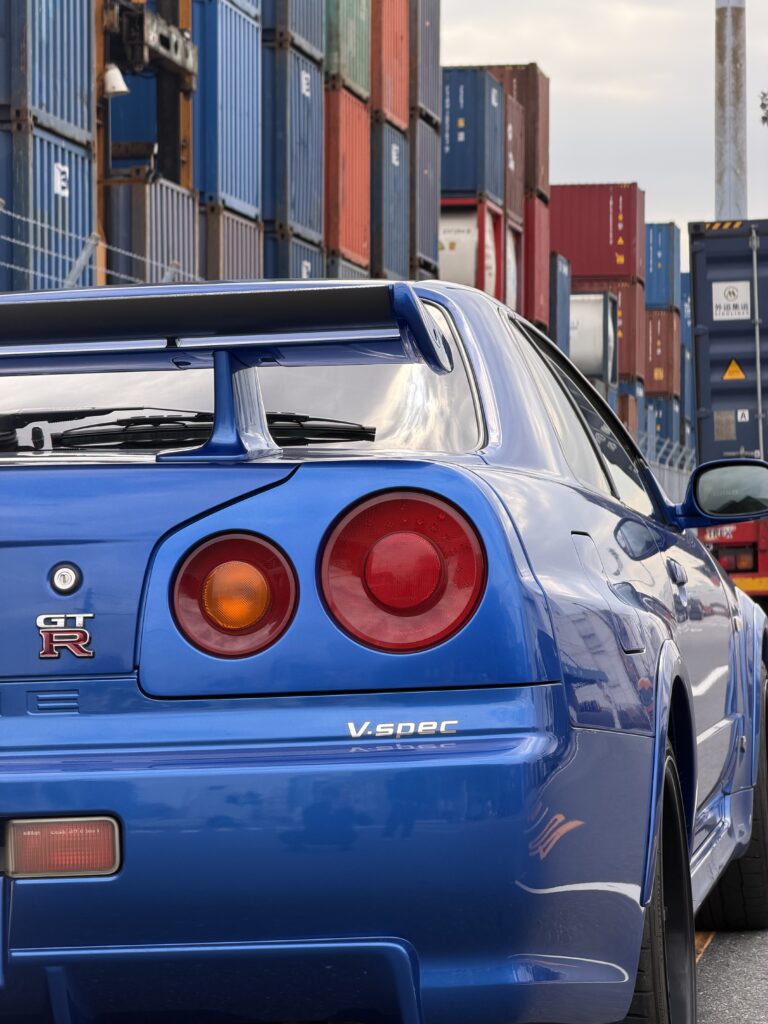
Renting a Nissan GT-R in Japan is very different from using a standard rental car. It is less about simple transportation and more about enjoying the car itself as an experience. Now that the R35 GT-R has reached the end of its production run, the value of driving a well-kept example as a rental experience has become even more meaningful.
At the same time, renting a GT-R is not something to approach casually. It costs more than an ordinary rental car, and there are more details to check in advance, including insurance coverage, license requirements, necessary documents, and local driving rules. For international visitors in particular, your driving permit and your understanding of Japanese road rules can have a major impact on whether the experience feels smooth and enjoyable. Both JNTO and JAF emphasize the importance of confirming these points before driving in Japan.
This article looks at whether renting a Nissan GT-R is actually worth it, not from a hype perspective, but from a practical one. By the end, you should have a much clearer sense of the costs, the conditions, the kind of person this experience suits, and the common mistakes that can make it disappointing.
Why renting a GT-R feels like a special experience
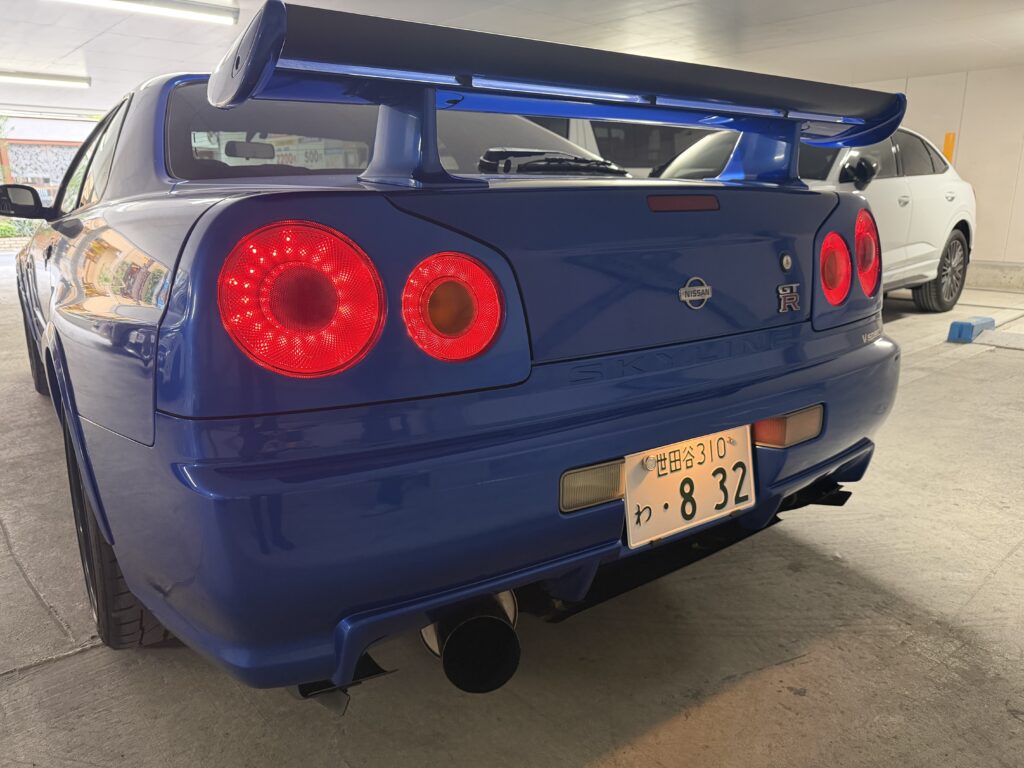
The appeal of renting a GT-R is not just that it is a fast car. The GT-R has long been seen as one of the most iconic performance cars to come out of Japan, which gives it a meaning beyond its spec sheet. For many enthusiasts, it represents a direct way to experience JDM culture, not just a high-powered machine.
The timing also matters. With the R35 GT-R reaching the end of its run, opportunities to interact with the model in its familiar form are becoming more limited. Owning one requires a serious financial commitment, but renting one lets you enjoy the essence of the GT-R—its surge of acceleration, its planted all-wheel-drive feel, and its unmistakable presence—without taking on the costs of ownership.
That said, the real pleasure of a GT-R rental in Japan is not about driving flat-out. According to JAF, when there are no posted signs, the default speed limits for standard passenger cars are 60 km/h on regular roads and 100 km/h on expressways. In other words, the public-road GT-R experience is not about chasing its maximum performance. It is about enjoying its effortless power, highway composure, and the density of its driving feel.
Because of that, renting a GT-R tends to suit people who value the experience more than basic convenience. It makes sense for travelers who want a memorable JDM moment in Japan, enthusiasts who have always wanted to drive a GT-R at least once, and people who want to get a feel for the car before ever considering ownership. On the other hand, someone who simply wants the cheapest way to move around will probably not feel that the cost is justified.
Typical cost and what the total expense really feels like
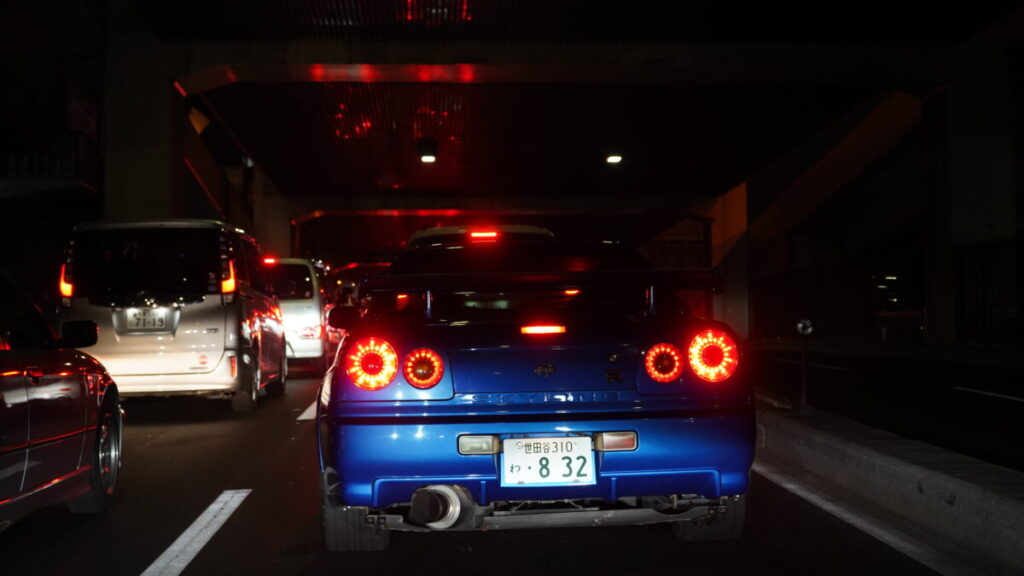
The first thing to understand is that a GT-R rental sits in a completely different category from a normal rental car. With specialist or performance-car rental services, a half day to one day can easily cost the equivalent of tens of thousands of yen, often landing somewhere in the upper five-figure to roughly 70,000-yen range. That is clearly more expensive than renting a compact car or minivan, but the difference reflects not only the car’s value, but also insurance, maintenance, and risk management costs.
It is also important not to judge the rental by the listed vehicle rate alone. With a GT-R, the real total can be shaped by several additional costs.
Insurance and protection coverage
When you rent a high-value sports car, the level of coverage can significantly affect both your peace of mind and your financial exposure. Many rental services offer optional protection plans, and the details can vary depending on the provider. What matters is not just whether a plan is available, but how much you would actually have to pay out of pocket if something happened.
Because a GT-R is a car that naturally makes drivers more cautious, choosing the cheapest possible coverage is not always the smartest move. If you are going to spend the entire drive worrying about a minor scrape or parking incident, the experience becomes much less enjoyable.
Optional extras
GT-R rentals may also involve extra charges for things like ETC-related options, additional driver registration, upgraded coverage, or accessory add-ons. Each one may seem small, but together they can increase the final bill more than expected. It helps to confirm in advance what is included in the base price and what is charged separately.
Fuel, tolls, and parking
Fuel costs are likely to be higher than with an ordinary rental car, and parking in urban areas can add up quickly. On top of that, the value of a GT-R rental depends more on how and where you drive than on how long you technically have the car. Renting it for a longer period does not automatically make it a better deal. In many cases, choosing the right time of day and a better driving route creates more value than simply extending the rental window.
So yes, renting a Nissan GT-R is expensive. But if you look at it as the chance to buy a one-day GT-R experience in Japan, it can still make sense for the right kind of enthusiast. If your only concern is price, another sports car may be the more sensible choice. But if what you want is specifically the GT-R, there are not many real substitutes.
What to check before booking and what documents you need
One of the easiest ways to ruin a GT-R rental is not a lack of availability, but moving ahead without clearly understanding the conditions. High-performance rentals often come with stricter requirements than ordinary rental cars, so it is important to check the basics in advance: license validity, identity verification, payment method, additional driver rules, insurance terms, and return conditions.
The most important issue is whether your driving credentials are valid in Japan. According to JNTO, international visitors generally need an International Driving Permit based on the 1949 Geneva Convention. Only the booklet-style paper format is valid. Card-style or app-based versions are not accepted. Entry date confirmation can also matter, so the passport entry stamp may be necessary in practice, especially if you entered Japan through an automated gate.
JAF also notes that licenses issued in Switzerland, Germany, France, Belgium, Monaco, and Taiwan are handled differently. In those cases, people may drive in Japan using the original license plus an official Japanese translation, rather than a Geneva Convention IDP. This means the correct paperwork depends on the country or region that issued your license. It is not something to treat as a one-size-fits-all requirement.
For a high-value car like a GT-R, providers may also be stricter about identity checks and credit card requirements. If you want someone else to drive during the rental, you should also confirm whether additional drivers are allowed and whether advance registration is required. The more you leave vague until the day of pickup, the more stressful the entire experience becomes.
What international visitors should know about driving in Japan
For overseas travelers, the biggest challenge in a GT-R rental is often not the car itself, but adapting quickly to Japan’s road environment. Japan drives on the left-hand side of the road, and most cars have the steering wheel on the right. Even for confident drivers, the first 30 minutes can require a lot of concentration if this setup is unfamiliar.
Speed rules matter too. JAF states that where there are no posted signs, the default limit is 60 km/h on regular roads and 100 km/h on expressways. A GT-R can gain speed very easily, so it demands a little more discipline than a normal rental car. In Japan, the best way to enjoy it is not to chase top speed, but to appreciate its effortless acceleration and confidence at legal highway speeds.
There are also time limits attached to international driving eligibility. Guidance from the Tokyo Metropolitan Police indicates that while the IDP itself is valid for one year from the date of issue, the period during which you may legally drive in Japan is generally within one year of your date of entry into Japan. For long-term stays or repeat entries, additional conditions may apply.
A GT-R’s width and road presence also matter. In tight urban streets, narrow parking structures, or crowded tourist areas, it can feel more demanding than many visitors expect. For most travelers, a route focused on major roads and expressways is far less stressful and much better suited to what makes the GT-R enjoyable.
How choosing the right rental provider changes the experience
With GT-R rentals, where you rent the car can make a major difference. Price matters, but it is not the only thing that matters. You should also look at location, pickup flow, the quality of the pre-rental explanation, how clearly the car is described, and how easy it is to understand the terms before booking.
Location is especially important. The most stressful part of the drive is often the first 30 minutes after pickup. If that means immediately navigating narrow streets or a dense city center, the experience can become tiring very quickly. Instead of comparing only prices, it often makes more sense to ask whether the rental point lets you get into a comfortable driving environment quickly.
Clear vehicle information also helps. Not every GT-R feels the same. Year, condition, equipment, and setup can all shape the experience. Providers that explain the car clearly tend to reduce the gap between expectation and reality.
The quality of the handover matters as well. With a high-performance car, the pre-drive explanation can be more important than it is with a normal rental. A good provider should make the car feel approachable, not intimidating, especially for first-time GT-R drivers or international visitors who are also adapting to Japanese roads.
How to make a GT-R rental feel worth the money
The satisfaction you get from renting a GT-R depends less on how long you rent it for and more on how intentionally you use it. Expensive cars tend to disappoint when people rent them without a clear plan. On the other hand, even a relatively short rental can feel memorable if the purpose is well defined.
Start by thinking about what you actually want from the car. Do you want to enjoy the act of driving itself? Capture photos and video as part of a Japan trip? Share the experience with a travel companion? Use it as a kind of real-world test drive? Each goal leads to a slightly different ideal rental plan. A GT-R works best when treated as part of the trip’s main content, not just transportation between points.
Timing matters too. Renting during busy traffic hours can make even a long rental feel disappointing. Choosing a quiet morning window or a calmer weekday period often creates a much better experience, even if the total rental time is shorter.
Route planning is just as important. The GT-R’s strengths become easier to appreciate on expressways and flowing major roads, where its stability and ease of acceleration stand out more clearly. Even while staying within legal limits, it can feel special in a way that is harder to access in stop-and-go city traffic.
It also helps to think about the memory side of the experience. Because the rental cost is high, the value often feels greater when you build in time for photos, scenic stops, or simple moments that make the day feel distinct. A GT-R tends to work best when the drive is treated as an event.
Common mistakes and what to avoid before you rent
The most common GT-R rental mistakes are expecting too much from public roads, being careless about documents, and squeezing the rental into a regular sightseeing day.
First, it is easy to overestimate how much of the GT-R’s raw performance you will be able to enjoy legally. In Japan, default speed rules still apply. That means the real reward of the car is not maximum pace, but the refinement and authority it brings to ordinary roads.
Second, document issues can derail the plan entirely, especially for international visitors. JNTO and Japanese police guidance are very clear about the format of the IDP, the countries it applies to, and the importance of entry-date rules. A GT-R provider is likely to check these things carefully, so assumptions are risky.
Third, a GT-R is not always the best car for a day built around hopping between tourist attractions. Its size and presence can make tight streets and crowded parking areas feel more tiring than fun. The experience works much better when the drive itself is the main purpose of the day.
Finally, do not overlook insurance. A high-performance rental can become much less enjoyable if you are tense the whole time about what might happen in a parking lot or a narrow lane. Peace of mind is part of the product.
So who is a Nissan GT-R rental actually worth it for?
Looking at everything together, renting a Nissan GT-R makes the most sense for people who value the experience itself more than basic efficiency. It is especially well suited to people who care deeply about Japanese car culture, want a memorable JDM moment during a Japan trip, or have always wanted to drive a real GT-R at least once.
It can also make a lot of sense for people who would never realistically buy or own one, but still want to understand what the car feels like in the real world. Ownership brings purchase costs, insurance, storage, servicing, and ongoing wear expenses. Renting lets you access the most exciting part of that world without committing to all of it. With the R35 now at the end of its production story, that opportunity arguably feels even more meaningful.
On the other hand, it is a poor fit for people who care mainly about the cheapest transportation, want to move efficiently between many sightseeing spots, or dislike dealing with paperwork and driving conditions. A GT-R rental is not for everyone, but for the right person, it clearly can be worth it.
Conclusion
Renting a Nissan GT-R is not a cheap or casual choice. Compared with a normal rental car, the cost is higher, the preparation is heavier, and there is more that can go wrong if you book impulsively.
But it can still be worth it because the GT-R is not just a vehicle. It is a distinctly memorable driving experience in Japan. And now that the R35 has reached the end of its production life, it no longer feels like a car that will simply always be there in the background.
The keys to getting good value are straightforward:
Confirm your documents early.
Take insurance seriously.
Choose a route and time that suit the car.
Make the GT-R the centerpiece of the day.
If you do those four things well, the experience is much more likely to feel like money well spent rather than just expensive. For the right traveler or enthusiast, a Nissan GT-R rental can easily become one of the most memorable parts of a trip to Japan.
[The Hottest Experience] Driving Dream Sports Cars in Japan with JDM TOUR
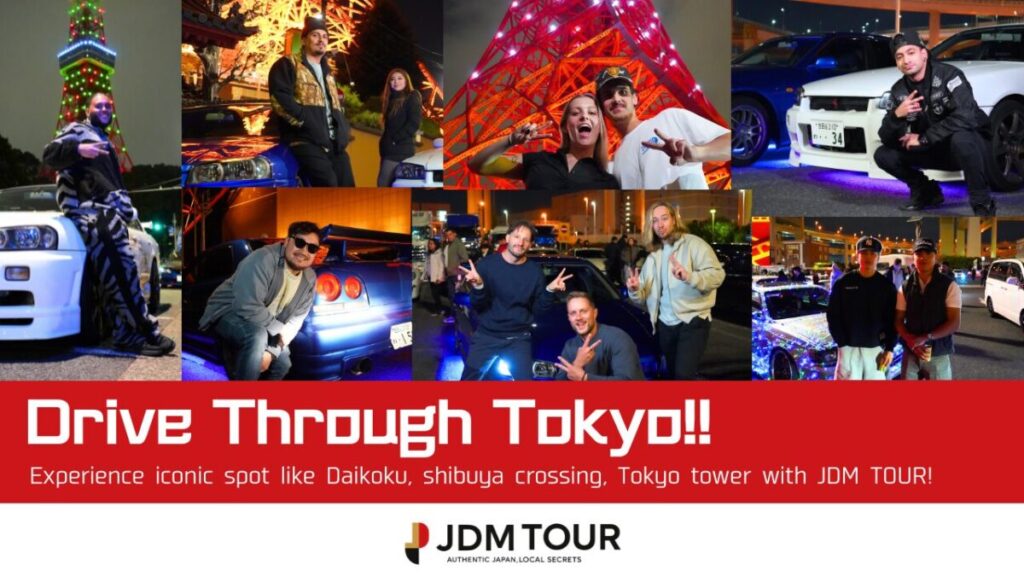
While standard rentals are practical, a new trend has exploded among car enthusiasts visiting Japan: renting “JDM” (Japanese Domestic Market) cars through specialized services like JDM TOUR.
The New Standard of Japan Travel: Public Roads in the Movie
The experience of being able to rent sports car japan is no longer just about driving; it has evolved into an "attraction" that transforms Japan's public roads into a real-life game world. In recent years, an exploding trend among international travelers is enjoying the act of driving through Japanese cities itself as a form of entertainment.
Specifically, commanding JDM machines such as the Nissan GT-R or Toyota Supra against the backdrop of Tokyo’s iconic landmarks is no longer just transportation; it is positioned as a participatory "activity." Just as cosplay driving tours have emerged, this integrated experience of car and city overturns conventional tourism, offering unforgettable, highly shareable memories that light up social media feeds.
This new style of journey, facilitated by exotic car rental tokyo services, has transformed from merely pursuing speed into a means of experiencing unforgettable "play." It allows you to deeply engage with Japan's unique culture and landscapes, creating an adventure that goes beyond traditional sightseeing.
Why is JDM So Popular Right Now?
Legendary sports cars manufactured in Japan during the 1990s and early 2000s—such as the Nissan Skyline (R34), icons for fans worldwide. For many, driving these cars on the actual roads they were designed for is a bucket-list experience that surpasses any standard sightseeing tour.
The Unique Charm of a JDM TOUR
JDM TOUR offers more than just a “car rental”; it provides a deep dive into Japanese car culture.
- The Pilgrimage to Daikoku PA: The highlight of many tours is driving to the Daikoku Parking Area on the Shuto Expressway. At night, this spot transforms into a gathering place for hundreds of beautifully customized cars, creating a vibrant atmosphere that is world-famous.
- Professional Guided Convoys: Driving a right-hand-drive manual car through the complex Shuto Expressway can be daunting. JDM TOUR offers plans where a professional guide leads the way in a lead car, ensuring you stay on the right path safely.
- Photography and Content Creation: The guides know the best “insta-worthy” spots, such as the Shibuya Crossing, Tokyo Tower, and Rainbow Bridge, allowing you to capture professional-quality memories with your dream car.
Location for JDM TOUR
Major rental car companies
Large rental car companies offer reassurance through clearer procedures, broader support, and more familiar insurance structures. They may not always carry a GT-R or similar specialty vehicles, but they can still serve as a useful benchmark when comparing terms, coverage, and general rental standards.
Specialist sports car rental services
Specialist providers tend to be better aligned with enthusiasts and may offer more exciting vehicle selections and a more experience-driven approach. When comparing them, it helps to look beyond price and pay attention to vehicle details, handover quality, location, and how clearly the rental conditions are explained.