
Introduction
Many people use rental cars when traveling in Japan, but those looking for a premium rental car are usually after more than simple transportation. They want to turn travel time itself into part of the experience, ride in a photogenic car, or drive a luxury import or iconic performance car on Japanese roads. For that kind of traveler, the selection criteria are very different from choosing a standard compact rental.
At the same time, people searching for “Premium Rent a Car Japan” often overlook several important points before booking. For example, whether their international driving permit is valid in Japan, whether they understand premium-car-specific insurance and non-operation charges, and whether they have considered parking, toll roads, and local driving conditions can make a major difference in their overall satisfaction. With expensive vehicles, it is not enough to simply secure a reservation. Pickup location, return logistics, support quality, onboard equipment, and trip suitability all matter.
This article explains how travelers should evaluate premium rental cars in Japan in a practical and easy-to-follow way. It covers how to think about vehicle categories, expected costs, required documents, insurance and coverage, how to choose by region, and common mistakes to avoid. If you are wondering which company to check, how premium rentals differ from standard rentals, or whether a luxury rental is truly worth it during your Japan trip, this guide is designed to give you a solid basis for making that decision.
What “Premium Rent a Car Japan” Really Means
When people search for Premium Rent a Car Japan, what they usually want is access to luxury imported cars, premium SUVs, high-end minivans, sports cars, and JDM performance models in Japan. Depending on the provider, that may include Mercedes-Benz, BMW, Audi, Porsche, Lexus flagship models, premium Alphard grades, and in some cases even GT-Rs, RX-7s, Ferraris, or McLarens. In Japan, the market is quite diverse: some services focus on dealer-backed imported cars, others specialize in sports cars, resort-area luxury rentals, or inbound-friendly JDM driving experiences.
The important point is that renting an expensive car and choosing the right premium rental car for your trip are not the same thing. In Tokyo, ease of maneuvering and parking may matter more than prestige. In Hokkaido or Kyushu, long-distance comfort may matter more than styling. In Okinawa, open-top cars and stylish SUVs often deliver the best experience. For family trips, a luxury minivan may be far more practical than a sports coupe. “Premium” should be judged not only by price, but also by the quality of the experience, the support level, and how well the car fits the trip itself.
Another key point is that Japan’s premium rental market is not evenly developed across the country. You can choose a premium trim from a major mainstream rental company, but you can also go with a specialist provider for imported luxury cars or rare performance models. If you are a JDM enthusiast, it often makes sense to look beyond the car itself and consider the broader car culture experience, scenic routes, and photographic appeal. It helps to distinguish between “I want to drive a luxury car” and “I want a uniquely Japanese car experience” before narrowing down your options.
Licenses and Required Documents Travelers Should Confirm First
Even if you are visiting Japan from overseas, you cannot assume that any international driving permit will allow you to drive legally in Japan. Japan recognizes international driving permits based on the 1949 Geneva Convention, as well as licenses from certain countries and regions when accompanied by an official Japanese translation. Those countries and regions include Switzerland, Germany, France, Belgium, Monaco, and Taiwan. On the other hand, some documents labeled “international license” in other countries may not be valid for driving in Japan, so this must be checked before booking.
One point travelers often miss is the validity period. In practice, the international driving permit is generally valid for one year from the date of issue, and in Japan the usable period is typically limited by both the arrival date and the permit’s own validity. Many rental companies also require you to show your passport at pickup, so arriving with only your permit may not be enough. That means a booking can still fail at the counter if your documents are incomplete.
In most cases, you should expect to prepare the following:
an international driving permit or an eligible foreign license with an official Japanese translation, your original driver’s license, your passport, reservation details, and a payment card. With premium cars, specialist shops may also impose age requirements, minimum driving experience, or additional screening depending on the model. This is especially common for supercars, rare vehicles, and iconic JDM models, so it is much safer to confirm the requirements in advance than to leave the final decision to the rental counter.
Families should also pay attention to child safety rules. In Japan, children under six must use a child seat, and broader safety guidance often recommends continued use until around 150 cm in height. Premium cars are often chosen for appearance or excitement, but rear-seat space and child-seat compatibility matter a great deal for practical travel. A two-door coupe or a low sports car may look great, but it may not work well for a family trip.
Choose the Vehicle Based on Your Itinerary, Not Just Appearance
When selecting a premium rental car, many people start with the brand. Of course, Porsche, AMG, BMW M, and upper Lexus models have obvious appeal. But from a traveler’s perspective, satisfaction depends less on the badge and more on where you are driving, who you are traveling with, and what kind of trip you are taking. If you get this wrong, the car itself may be excellent, yet the experience may still feel mismatched to Japan travel.
For Urban Sightseeing, Premium SUVs and Mid-Size Luxury Cars Are the Safer Choice
In major cities like Tokyo, Osaka, and Yokohama, factors such as narrow streets, parking space sizes, hotel access points, and traffic congestion often make oversized luxury cars less practical. In many cases, a premium SUV or a manageable luxury sedan is the better choice. These cars still feel upscale, but they are easier to handle in dense urban areas.
For Long-Distance Road Trips, Comfort Matters More Than Raw Performance
In areas such as Hokkaido, Tohoku, or Kyushu, where trips often involve long hours on the road, your satisfaction depends more on seat comfort, cabin quietness, luggage space, straight-line stability, and driving assistance features than on dramatic performance. A low-slung sports car may sound exciting, but for a multi-day road trip, a refined SUV or luxury minivan may provide a much better overall experience.
In Okinawa and Resort Areas, Style and Atmosphere Matter More
In Okinawa and other resort destinations, the appeal of premium rentals becomes especially obvious. Open-top cars, stylish imported models, and visually striking vehicles can make the drive itself feel like part of the vacation. In these settings, selecting a car for its visual impact and scenic fit makes much more sense than it would in a dense city.
For JDM and Driving Experiences, Focus on the Quality of the Experience
Some travelers are specifically interested in JDM culture and want something uniquely Japanese. In that case, the key factors are not just price or brand, but vehicle rarity, route suitability, pickup convenience, and whether the service understands enthusiast needs. If your goal is to feel the meaning of driving that car in Japan, an experience-focused provider will usually offer more value than a generic luxury rental service.
Cost Expectations and How to Build a Realistic Budget
Premium rental cars are expensive, but the actual price varies widely depending on the model, location, rental duration, insurance, and added services. It is more useful to separate the market into tiers than to think of “premium” as one single price category.
At the lower end of the premium range, some imported luxury models can be rented for relatively manageable short-term rates. This tier works well for travelers who want to experience a premium brand without spending extravagantly. A half-day drive, airport-to-hotel transfer experience, or a one-day scenic outing can fit into this bracket.
At the higher end, rare JDM cars, supercars, and highly experiential rentals can become dramatically more expensive. These are not just about transportation. They are about exclusivity, rarity, and memory-making. So when thinking about the cost of Premium Rent a Car Japan, it helps to distinguish between a refined luxury mobility upgrade and a special-event driving experience. They are priced very differently because they serve different purposes.
It is also easy to overlook the costs beyond the vehicle itself. Tolls, ETC card rental, highway passes, child seats, additional coverage, fuel, parking, hotel valet limitations, and pickup or drop-off fees can all add up. If you budget only for the base rental charge, your total may end up higher than expected.
As a rough framework, you can think about it like this:
under ¥30,000 is often entry-level premium or short-duration imported-car rental.
around ¥30,000 to ¥80,000 is the range where many travelers can enjoy a clearly premium experience.
above ¥100,000 usually moves into supercar, rare-vehicle, or highly exclusive territory.
This kind of breakdown helps clarify what you are really paying for: better mobility, more prestige, or a one-of-a-kind experience.
Why Insurance, Coverage, and NOC Matter So Much
The most important part of a premium rental is often not the car itself, but the coverage terms. Insurance is important with any rental, but with expensive or rare vehicles, even a minor issue can become costly. You should pay special attention to liability coverage, collision coverage, deductible amounts, NOC, roadside support, and how wheel, tire, underbody, and stone-chip damage are handled.
One especially important concept in Japan is NOC, or Non-Operation Charge. This is a fee charged when a rental vehicle cannot be used for business because of damage or other problems after your rental. Even if you purchase a collision damage waiver, NOC may still apply separately. That means you should never assume that buying “insurance” automatically removes all financial exposure.
Optional coverage can feel expensive at first, but with premium cars it is often worth paying for. High-end rentals are more vulnerable to curb rash, wheel damage, low-clearance scraping, and small contact damage in tight parking areas. For travelers who are unfamiliar with left-side driving or Japanese road widths, the added peace of mind can be significant.
Another reason to read the rules carefully is that premium and luxury specialists often have stricter policies than mainstream rental operators. Their vehicles are more valuable, more limited in number, and more expensive to repair, so the terms are often more detailed. Before confirming any booking, make sure you understand what is included in the base rate and what is not.
Japanese-Specific Driving, Tolls, and Parking Issues Travelers Often Overlook
One of the first things overseas drivers need to adapt to in Japan is left-side driving and right-hand-drive traffic flow. Even experienced drivers may need time to adjust. Japan’s roads are generally orderly, but speed awareness, lane usage, and turning habits can feel different at first, especially in urban areas.
Parking rules are another area where mistakes happen easily. In Japan, there is a clear difference between No Parking and No Stopping or Parking, and enforcement can be strict, particularly in city centers and tourist districts. Premium cars are often more noticeable, and because they tend to be larger or lower, casual roadside stopping can be a bad idea. In cities, it is usually better to plan your route around hotel parking or coin-operated parking lots from the beginning.
If you plan to use expressways, having access to an ETC card can greatly improve convenience. In some regions, there are also fixed-price expressway passes for foreign visitors, which can be especially useful in large sightseeing areas such as Hokkaido, Tohoku, and Kyushu. These can make longer drives smoother and sometimes more economical.
Japan’s road conditions also mean that bigger or more powerful is not always better. Narrow residential streets, mechanical parking restrictions, snowy regions, mountain roads, and hotel entrances all influence what kind of premium car makes sense. In winter destinations such as Hokkaido and other snowy regions, proper seasonal tire setups become especially important. Vehicle choice should always reflect not just your style preferences, but also the region and season of your trip.
How to Choose a Premium Rental by Region
Tokyo and Yokohama: Balance Visual Impact With Practical Usability
In the Tokyo area, you may not spend as many total hours driving as you would in rural regions, but premium rentals still work well for stylish city outings, date drives, hotel arrivals, and short scenic routes outside the city. In these areas, it is often better to choose a car that looks premium but is still easy to manage rather than going for something excessively large or difficult to park.
Osaka and Kansai: Great for Broader Touring
The Kansai region works especially well for premium rentals because it connects urban access with excellent day-trip routes. From Osaka, it is easy to combine a premium car with drives to Kyoto, Kobe, Awaji Island, or Wakayama. This makes the region appealing for travelers who want both city convenience and scenic touring.
Hokkaido: Luxury SUVs and Premium Minivans Shine
In Hokkaido, comfort tends to matter more than drama. The roads are wider, the distances are longer, and weather can change quickly. For these reasons, refined SUVs and premium minivans often outperform sports cars in real-world travel satisfaction. Travelers who prioritize easy cruising, scenery, and room for luggage or passengers usually do best here.
Okinawa: Ideal for Lifestyle-Focused Premium Rentals
Okinawa is one of the clearest examples of where premium rentals can feel truly worthwhile. Stylish imports, convertibles, and resort-friendly vehicles fit the destination naturally. In this kind of environment, a premium rental is not just transportation. It becomes part of the atmosphere of the trip.
Booking Tips and Cases Where a Premium Rental May Not Be the Best Choice
Premium rental cars should generally be booked as early as possible. Popular models are limited in number, and with specialist operators, travelers may be reserving not just a model but effectively a specific vehicle. This becomes even more important during weekends, cherry blossom season, autumn foliage periods, summer holidays, and year-end travel peaks.
When booking, make sure you confirm the following:
pickup and return locations, opening hours, late-return handling, fuel return policy, additional driver rules, insurance details, tire and wheel damage policies, and whether pets, smoking, photography, or event use are allowed. Premium rental contracts are often more detailed than standard rental contracts, and assumptions based on ordinary rentals can lead to unpleasant surprises.
It is also true that premium rentals are not the right fit for everyone. If this is your first time driving in Japan, if you are only staying in dense city centers, if you are nervous about parking, or if you need to keep your budget tight, then a premium rental may not be the best use of your money. In such cases, a higher-grade mainstream rental or a manageable mid-size SUV may actually provide better satisfaction.
On the other hand, premium rentals can be an excellent choice for travelers who want the drive itself to be a highlight of the trip, those who see the car as part of the travel purpose, or those planning a special anniversary, photo trip, or memorable personal experience. In the end, the most important question is not how impressive the car looks, but whether it actually improves the overall quality of your trip. When you choose based on itinerary fit rather than appearance alone, you are far more likely to be happy with the result.
Conclusion
When choosing a Premium Rent a Car in Japan, the first thing to decide is not simply what luxury car you want, but what kind of trip you want to have. For city sightseeing, a manageable premium SUV or luxury sedan often makes the most sense. For long-distance road trips in places like Hokkaido, comfort and stability matter more. In Okinawa, open-top cars and eye-catching imports fit the destination perfectly. For JDM-focused travelers, rarity and enthusiast appeal may matter most.
Once that is clear, make sure you also check license validity, required documents, insurance, NOC, ETC access, highway passes, parking conditions, and child seating requirements. Driving in Japan comes with its own habits and systems, but with proper preparation, a premium rental can be much more than a luxury extra. It can be one of the most memorable parts of the trip.
If you are about to book, compare options not only by vehicle type and price, but also by pickup convenience, match with your itinerary, clarity of insurance terms, and how easy the service is for international travelers to use. When you look at the full picture, Premium Rent a Car Japan can become a smart way to make your Japan journey feel more personal, memorable, and rewarding.
Recommended Services
JDM TOUR
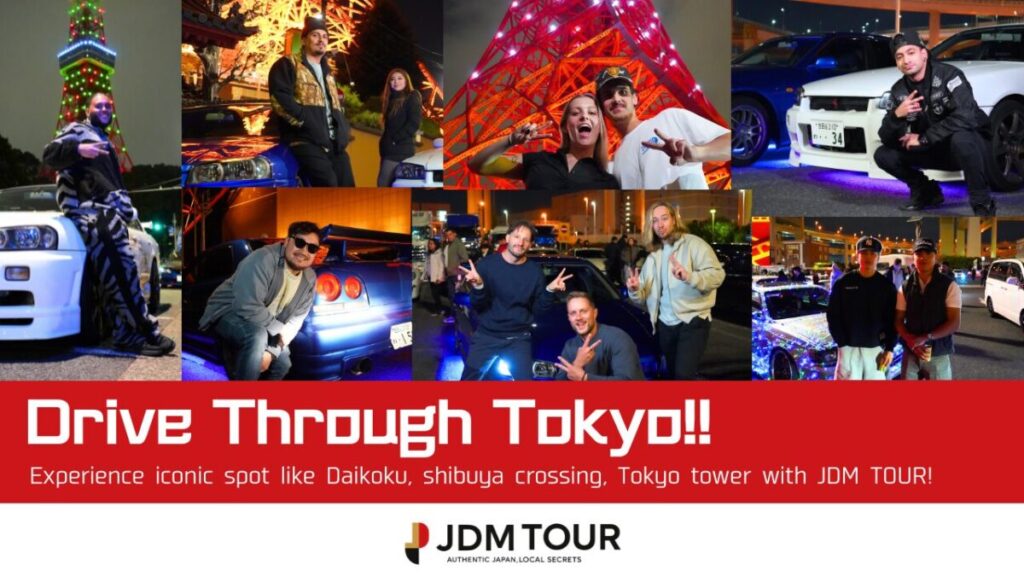
JDM TOUR is a strong choice for travelers who want more than simple vehicle rental and are specifically looking for a JDM-centered experience. It is especially well suited to people who want the car itself to be part of a broader Japanese car culture journey rather than just a stylish means of transport.
YANASE Rental Car
This is a good option for travelers who want to rent imported luxury cars with a greater sense of structure and reassurance. It works especially well for those new to premium rentals or those planning shorter usage periods with recognizable luxury brands.
GLION Premium Rent-A-Car
A practical candidate for travelers looking in the Osaka or Yokohama area. It is well suited to premium touring in the Kansai region and can be attractive for couples and families who want both convenience and a higher-end driving experience.
Hokkaido Luxury Car Rental
A good match for travelers who want something special in Hokkaido. It is particularly appealing for those who value quiet comfort, long-distance ease, and a refined road trip atmosphere.
Okinawa Premium Rental Services
Best for travelers who want their rental car to enhance the resort mood of the trip. These services are ideal for people who prioritize visual impact, memorable photos, and a more lifestyle-driven vacation experience.
OMOSHIRO RENT-A-CAR
A good choice for people who want sports cars and open-top vehicles in a more casual enthusiast-friendly setting. It suits travelers who care more about driving fun than pure luxury prestige.
Related Keywords
luxury car rental, premium car hire, imported cars, sports car rental, JDM, international driving permit, passport, ETC, NOC, insurance, child seat, left-side driving, Tokyo, Osaka, Hokkaido, Okinawa, airport pickup, road trip, vehicle selection