
Introduction
“If I’m going all the way to Japan, I don’t want to rent an ordinary compact car. I want to drive a real JDM machine.”
“I want to experience an R34, RX-7, Supra, NSX, or AE86 on Japanese roads.”
Many people searching for jdm car rental have exactly that dream. At the same time, they usually have a few practical concerns.
Can tourists actually rent these cars in Japan? Is an international driving permit enough? Can you choose a manual transmission? What kind of insurance is included? How do toll roads and ETC work? And beyond the car itself, should you rent in Tokyo, or would it be better to start in a driving-focused area like Hakone or around Mount Fuji?
These questions matter because JDM car rental in Japan is not just about transportation. It is about combining the car, the road, the scenery, and the culture into one memorable experience. If you only focus on the vehicle and ignore the logistics, the experience can quickly become stressful.
This guide is designed to help you approach jdm car rental in Japan the right way. Rather than giving you a simple list of rental providers, it explains the key things you actually need to know before booking.
In this article, you will learn:
- what makes JDM car rental different from an ordinary rental car
- what tourists need in terms of license documents and eligibility
- how to think about price, insurance, and hidden costs
- how to choose between Tokyo, Hakone, Mount Fuji, and other areas
- how to avoid common booking mistakes
- which services are worth checking first
A JDM rental can easily become one of the highlights of a Japan trip. But the best experience usually comes from planning more than just the car model. Once you understand how the system works, it becomes much easier to choose the right vehicle, the right location, and the right schedule.
What JDM Car Rental Really Means
Why JDM car rental is so appealing
JDM car rental refers to renting sports cars and enthusiast vehicles associated with Japanese domestic car culture. Unlike a standard rental car, where the main purpose is simply getting from one place to another, a JDM rental is usually about the driving experience itself.
For many overseas visitors, “JDM” does not just mean a Japanese brand. It also means the broader culture around the car: Japanese roads, mountain passes, expressways, parking areas, tuning culture, and the atmosphere of places connected to automotive enthusiasm.
That is why JDM rental in Japan often feels more like an experience product than a standard transportation service. Some companies position themselves around the culture and lifestyle, while others emphasize specific driving routes, scenic regions, or iconic sports cars.
How it differs from regular rental cars
Mainstream rental companies usually focus on convenience, branch networks, airport access, predictable policies, and easy reservations. JDM-oriented rental providers, on the other hand, tend to emphasize:
- unique or iconic car models
- manual transmission options
- enthusiast appeal
- memorable driving routes
- a stronger connection to car culture
That difference matters. Someone who wants a smooth family trip with luggage has very different needs from someone who wants to drive a legendary Japanese sports car on the roads they have seen in videos and magazines.
A standard sports-oriented rental from a major company can still be a good option, especially for travelers who want something like an 86 or GR86 without the higher cost or stricter conditions of a specialist service. But if your dream is something more niche or iconic, a specialist provider is usually the more realistic path.
Who JDM car rental is best for
JDM car rental is especially well suited to people like these:
Drivers who want the road experience
If you care about winding roads, mountain scenery, night drives, or the overall feel of driving in Japan, JDM rental makes much more sense than ordinary car hire.
Fans of specific models
If you have always wanted to drive something like a Skyline GT-R, FD RX-7, NSX, S2000, AE86, or Supra, a specialist rental can turn that dream into a real experience.
Travelers who want automotive culture, not just transport
For some visitors, the goal is not only to move between sightseeing spots. It is to enjoy the places, atmosphere, rest areas, and roads that make Japan special for car enthusiasts.
That said, JDM rental is not automatically the best fit for everyone. If your main priority is cheap transportation, if you are traveling with family and luggage, or if it is your first time driving on the left side of the road, jumping straight into a high-performance enthusiast car may not be the smartest choice.
License and Documents You Need for JDM Car Rental in Japan
When an international driving permit works
The first thing any traveler should check is whether their license is actually valid for driving in Japan.
A lot of people assume that if they have something called an “international license” in their home country, they are fine. In reality, what matters is whether your document is a valid International Driving Permit under the 1949 Geneva Convention format and whether it meets Japan’s conditions.
In general, visitors must pay attention to issues such as:
- whether their country issues the correct Geneva Convention format
- whether the permit is still within its valid period
- whether they are within the legally allowed period after entering Japan
This is one of the most important parts of the entire process. If your documents are not acceptable in Japan, it does not matter how early you booked or how much you paid. You may simply be unable to collect the car.
Countries that use a license translation instead
Not every traveler drives in Japan with an international driving permit. Some countries and regions use a different system: their home driver’s license plus an official Japanese translation.
This applies to certain places such as Switzerland, Germany, France, Belgium, Monaco, and Taiwan. If you are from one of these, the international permit route may not be the one you need. Instead, you may need a proper translation attached to your valid home license.
This is exactly the kind of detail that causes problems when travelers assume all foreign licenses are treated the same way. They are not. Checking your own country’s status before the trip is essential.
What you may need at pickup
Even if your license is valid for driving in Japan, specialist JDM rental services often require more than the bare legal minimum.
At pickup, you may need:
- your passport
- your original driver’s license
- your international driving permit or Japanese translation
- a credit card in your name
- contact details and accommodation information
- driver information for any additional driver
Some specialist providers may also ask for more practical confirmation, such as:
- your age
- your experience with manual transmission
- your experience with sports cars
- your understanding of the car’s rules and insurance
- a security deposit or pre-authorization
High-value JDM cars are not usually treated the same way as a basic economy rental. The rarer and more performance-oriented the vehicle, the stricter the conditions can become.
Understanding JDM Car Rental Pricing and Real Costs
The rental price is only the starting point
One of the biggest mistakes people make with jdm car rental is focusing only on the advertised car price.
In practice, your real budget often includes much more than the base rental fee. Depending on the provider and your travel plan, the full cost may also include:
- insurance or damage waiver options
- non-operation charges
- ETC-related costs
- tolls
- fuel
- parking
- extra driver fees
- late return fees
- cleaning or damage-related charges
That means a rental that looks affordable at first glance can become much more expensive once all the practical costs are added.
Why NOC matters more than many travelers think
A detail many first-time renters overlook is NOC, or Non-Operation Charge.
Even if an accident seems minor, if the car needs repairs, inspection, cleaning, or downtime, the provider may charge an NOC because the vehicle cannot be rented to the next customer. This matters even more with specialty JDM cars, because parts, repair time, and lost business can be more serious than with an ordinary rental vehicle.
For that reason, it is important to understand the difference between:
- the deductible or excess
- optional insurance or waiver plans
- NOC coverage or lack of coverage
Trying to save a little money by skipping protection can become very expensive if something goes wrong. For overseas visitors who are unfamiliar with Japanese roads, parking spaces, narrow streets, and left-side traffic, this is not a small risk.
A realistic way to think about your budget
A useful way to think about JDM rental cost is to divide options into three broad groups.
Mainstream sports-oriented rentals
Cars like the 86 or GR86 can be easier to book and easier to live with during a trip. They may also offer a better balance between performance and practicality.
Specialist JDM rentals and experience-focused services
These are the places to look if you want more iconic enthusiast cars such as GT-Rs, RX-7s, NSXs, Supras, or older legends. Prices are usually higher, but the emotional value can be much higher too.
Hidden trip costs
Even if the car itself fits your budget, your total spend may rise because of toll roads, urban parking, mountain-area timing, or protection packages.
In Tokyo especially, the rental itself may be only part of the story. Urban tolls, parking, and traffic can all affect value. In scenic areas like Hakone or around Mount Fuji, the driving experience may be more rewarding, but timing and congestion also matter. In other words, the best “value” is not always the cheapest car. It is often the car and region combination that gives you the best overall experience.
How to Choose the Right Car and the Right Area
Pick the road before you pick the dream car
A common mistake is choosing the car first and only later thinking about where to drive it.
In reality, satisfaction often depends more on the match between the car and the road than on the badge itself.
For example, if you are driving in the Hakone or Mount Fuji area, lightweight sports cars, naturally aspirated cars, and driver-focused manual cars can feel especially rewarding on scenic and winding roads. In that environment, the character of the car comes alive.
Tokyo offers something different. In the city, you may be dealing with traffic, narrower streets, and more complex routes. A Tokyo-based JDM experience can still be excellent, but the value may come more from atmosphere, night views, urban car culture, and access to famous enthusiast spots than from uninterrupted spirited driving.
Choosing between common JDM favorites
GT-R models
These offer huge presence and a strong sense of occasion. They are ideal for people who want something iconic and powerful. But they can also feel intimidating on narrow roads or in crowded city settings.
RX-7, S2000, NSX, and similar driver’s cars
These are often better for people who want engagement and feel, especially in areas with winding roads. They are about connection, not just speed or status.
86 / GR86 / Roadster-type options
These can be an excellent entry point for first-time Japan drivers. They are sporty enough to feel special, but often easier to manage than more extreme or more valuable classics.
Older icons like the AE86
The emotional appeal is huge, but so is the possibility that the experience will be more demanding than expected. Older cars may feel rawer, tighter, and less forgiving than modern enthusiasts imagine.
Which areas suit which kind of trip
Tokyo and nearby areas
These are strong if you want accessibility, city atmosphere, and easier integration into a wider sightseeing plan. They work especially well for short experiences or culturally focused drives.
Hakone and Mount Fuji regions
These are ideal if your main goal is the drive itself. The scenery and road character can make the experience feel far more rewarding than simply driving around dense urban streets.
Airport-oriented mainstream rental networks
These may not offer the deepest JDM experience, but they are often the easiest choice for travelers who need convenience, luggage space, and a rental that fits naturally into a broader travel itinerary.
Booking Tips That Help You Avoid Mistakes
What to confirm before reserving
JDM rental is not the kind of service where you should click “book now” and think later.
Before you reserve, confirm these points:
- exact license requirements
- manual or automatic transmission
- insurance scope
- NOC rules
- mileage limits
- pickup and return times
- luggage practicality
- whether the car really suits your route
This last point is more important than many people realize. A dream car may look perfect in photos, but that does not mean it fits your actual trip. A two-seat sports car may be amazing for a focused driving day and completely inconvenient for a travel day with suitcases and multiple destinations.
Book early if you want a specific car
Popular enthusiast cars, especially manual transmission models and rare vehicles, are often limited in number. Unlike major rental chains, specialist providers do not usually have large fleets.
That means if you already know the model you want, waiting until the last minute is risky. Weekends, holidays, cherry blossom season, autumn travel, and year-end peak periods can all reduce availability quickly.
If the car matters to you, earlier booking gives you more control, more choice, and fewer compromises.
How to reduce day-of-rental stress
Two common problems on rental day are:
- document issues
- unrealistic timing
Arriving in Japan and planning to collect the car immediately after landing can sound efficient, but in practice it can create unnecessary stress. Immigration, baggage claim, train transfers, and delays all add uncertainty.
The same is true on return day. Scenic regions and tourist-heavy destinations often take more time than they appear to on a map. Toll roads do not automatically guarantee a fast return if you are unfamiliar with the route, traffic patterns, or local systems.
A little extra buffer can make the entire day feel smoother and more enjoyable.
Traffic Rules and Safety Tips for Driving a JDM Car in Japan
Adjusting to left-side traffic
For many international visitors, the biggest adjustment is not the right-hand-drive car itself. It is driving on the left side of the road.
The moments that tend to cause the most confusion are:
- turning at intersections
- changing lanes
- leaving parking areas
- navigating tight urban roads
This is especially important in a performance-oriented JDM car. Fast acceleration, sharper handling, and unfamiliar road positioning can create extra pressure. Until you settle in, smooth and cautious driving is far more important than trying to “enjoy the car” immediately.
Understanding ETC and toll roads
Japan’s expressways can be convenient, but they also come with systems that may be unfamiliar to foreign drivers.
One area that causes confusion is ETC, the electronic toll collection system. Not every rental setup is the same. Some cars may have an ETC unit installed, but that does not always mean an ETC card is included. Some providers offer card rental, while others expect you to arrange things in advance.
This is worth checking before the day of your rental. Getting confused at toll gates is not a fun way to start or ruin a driving experience.
Weather, roads, and low-speed risks
People often imagine the main danger in a performance car comes from speed. In reality, some of the most common problems happen at low speed.
In Japan, travelers may face:
- narrow streets
- curbs
- steep driveways
- small parking spaces
- multi-story parking facilities
- weather changes in mountain areas
Low cars, rear-wheel-drive cars, and older enthusiast vehicles may be less forgiving than a normal rental. Rain, cold roads, fog, fallen leaves, and unfamiliar parking environments all increase risk.
That is why calm, deliberate driving matters so much. Avoid forcing the car into tight spaces just because they look manageable. Walking a little farther from a safer parking spot is usually a better choice.
How to Make the Experience More Enjoyable
Decide whether you want a short highlight or a full driving day
The value of jdm car rental is not only in how many hours you have the car. It is in how well those hours are used.
A short drive can still feel amazing if the route is built around city atmosphere, a scenic stop, or a focused cultural experience. A half-day or full-day rental can be even better if it gives the car room to shine in the right setting.
The key is to plan for more than just driving time. Include time for:
- photos
- breaks
- food
- traffic
- route changes
- simply enjoying the moment
JDM rental works best when it feels like an experience, not a rushed transport task.
First-time drivers should keep the plan simple
If it is your first time driving in Japan, avoid trying to combine everything in one day.
A smarter approach is to pick one theme for the day:
- Tokyo for night views and urban car culture
- Hakone for mountain roads and scenery
- Mount Fuji areas for a scenic road-trip feel
- mainstream rental plus sightseeing for mixed-priority travel
This kind of focus reduces fatigue and helps you enjoy the day more. It also makes it easier to choose the right car. If you are unsure about driving a manual on the left side of the road, starting with an automatic sports car is perfectly reasonable.
Think about your whole trip, not only the car
A JDM rental may be a dream experience, but it is still one part of a larger journey.
You will usually enjoy it more if you:
separate your JDM day from major transfer days
Do not pair it with long-distance travel, airport pressure, or too many other obligations.
avoid heavy luggage on your driving day
Use trains or a practical rental car when you actually need space.
treat photo spots and driving roads as different goals
Some areas are better for atmosphere and pictures, while others are better for driving itself.
keep post-return logistics easy
Do not schedule an airport or train departure immediately after returning the car.
This kind of planning turns the JDM rental into a highlight rather than a complication.
[The Hottest Experience] Driving Dream Sports Cars in Japan with JDM TOUR
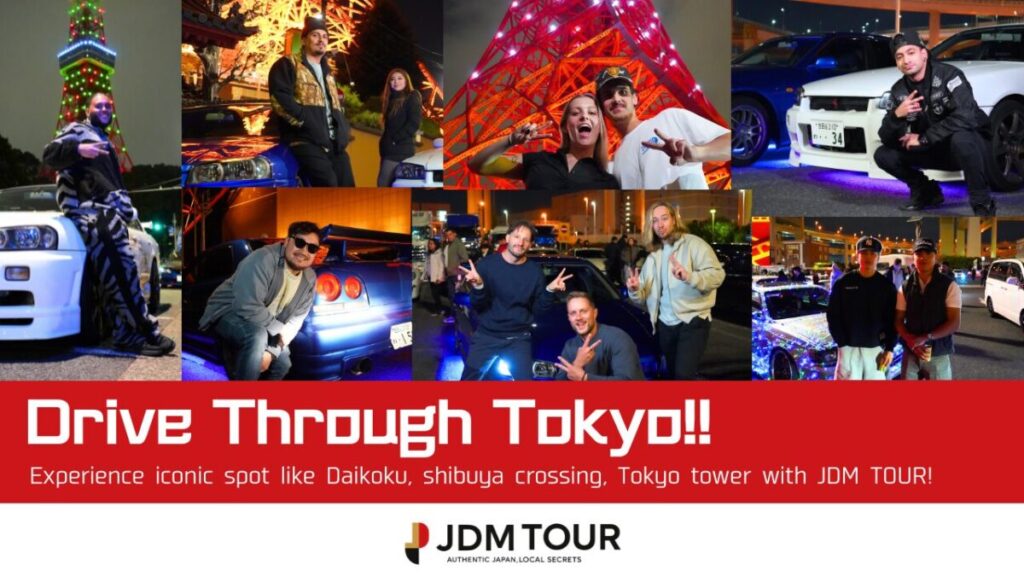
While standard rentals are practical, a new trend has exploded among car enthusiasts visiting Japan: renting “JDM” (Japanese Domestic Market) cars through specialized services like JDM TOUR.
The New Standard of Japan Travel: Public Roads in the Movie
The experience of being able to rent sports car japan is no longer just about driving; it has evolved into an "attraction" that transforms Japan's public roads into a real-life game world. In recent years, an exploding trend among international travelers is enjoying the act of driving through Japanese cities itself as a form of entertainment.
Specifically, commanding JDM machines such as the Nissan GT-R or Toyota Supra against the backdrop of Tokyo’s iconic landmarks is no longer just transportation; it is positioned as a participatory "activity." Just as cosplay driving tours have emerged, this integrated experience of car and city overturns conventional tourism, offering unforgettable, highly shareable memories that light up social media feeds.
This new style of journey, facilitated by exotic car rental tokyo services, has transformed from merely pursuing speed into a means of experiencing unforgettable "play." It allows you to deeply engage with Japan's unique culture and landscapes, creating an adventure that goes beyond traditional sightseeing.
Why is JDM So Popular Right Now?
Legendary sports cars manufactured in Japan during the 1990s and early 2000s—such as the Nissan Skyline (R34), icons for fans worldwide. For many, driving these cars on the actual roads they were designed for is a bucket-list experience that surpasses any standard sightseeing tour.
The Unique Charm of a JDM TOUR
JDM TOUR offers more than just a “car rental”; it provides a deep dive into Japanese car culture.
- The Pilgrimage to Daikoku PA: The highlight of many tours is driving to the Daikoku Parking Area on the Shuto Expressway. At night, this spot transforms into a gathering place for hundreds of beautifully customized cars, creating a vibrant atmosphere that is world-famous.
- Professional Guided Convoys: Driving a right-hand-drive manual car through the complex Shuto Expressway can be daunting. JDM TOUR offers plans where a professional guide leads the way in a lead car, ensuring you stay on the right path safely.
- Photography and Content Creation: The guides know the best “insta-worthy” spots, such as the Shibuya Crossing, Tokyo Tower, and Rainbow Bridge, allowing you to capture professional-quality memories with your dream car.
Location for JDM TOUR
Final Checklist Before Choosing a JDM Car Rental
Do not choose based on price alone
The cheapest option is not always the best option.
With jdm car rental, you should compare more than the daily rate. The real decision should include:
- how easy the booking process is
- whether the provider is foreigner-friendly
- how clearly insurance is explained
- whether the pickup location fits your trip
- whether the car fits your real purpose
A Tokyo-based visitor looking for a short cultural driving experience needs something different from a driver who wants a full day in the Hakone area. Someone who wants a practical sports car for a road trip also has different needs from someone chasing a once-in-a-lifetime dream car.
Start with an easy-to-enjoy setup if you are unsure
If this is your first JDM rental in Japan, you do not need to start with the most intense or most legendary option.
A more manageable sports car in a more forgiving area can still be unforgettable. In fact, it may be the better experience if it lets you relax and actually enjoy the drive.
The point of JDM rental is not just to say you drove a famous model. It is to come away feeling that you truly experienced Japan through the car, the road, and the setting.
Your final pre-booking checklist
Before you confirm your reservation, check these five things one last time:
Are your license documents valid in Japan?
Make sure you know whether you need an international driving permit or a Japanese translation.
Do you fully understand the insurance and NOC rules?
Do not assume all protection is included.
Are ETC and toll road arrangements clear?
Confirm what is installed, what is provided, and what you need yourself.
Is your return schedule realistic?
Leave room for traffic, fuel, and navigation delays.
Does the car fit your trip, not just your dream?
Balance desire with practicality.
Once you get these basics right, jdm car rental becomes much more than a cool idea. It becomes a realistic, rewarding, and memorable part of your Japan trip.
Conclusion
JDM car rental can easily become one of the most unforgettable parts of visiting Japan.
But the best experiences usually come from good planning, not just from choosing the most famous car.
To get the most out of it, you need to think about:
- license eligibility
- insurance and NOC
- ETC and toll road preparation
- where you actually want to drive
- whether the car fits your route and your comfort level
- how the rental fits into your wider itinerary
When those pieces line up, a JDM rental becomes far more than transport. It becomes a true Japan car culture experience.
Whether your goal is to drive an iconic model, enjoy mountain roads, explore the atmosphere around Tokyo, or simply create one great memory on your trip, choosing the right service and the right plan makes all the difference.