Introduction
If you love JDM cars, you have probably imagined at least once what it would feel like to drive a real JDM machine in Japan with your own hands. Not just taking photos. Not just riding in the passenger seat. Actually getting behind the wheel of a right-hand-drive sports car and experiencing the roads of Japan yourself. That idea alone has a special appeal. In recent years, more “self-drive” style experiences have appeared around Tokyo, Daikoku PA, Hakone, Izu, Gunma, and other well-known driving areas. These are not just ordinary car rentals. Many of them are designed as automotive experiences built around JDM culture itself.
That said, not every “jdm self drive” option is the same.
Some are guided convoy-style tours with a lead car, making them easier for first-time visitors to Japan and reducing the risk of getting lost. Others are independent rental-style experiences, which give you much more freedom but also leave route planning, tolls, parking, and problem-solving largely in your hands. Even when two services both use the phrase “self-drive,” the details can vary significantly: insurance coverage, license requirements, minimum age, manual-transmission eligibility, deposit rules, and accident liability are often very different from one operator to another.
This is exactly why choosing based on the car name alone is risky. A GT-R may sound exciting on paper, but your actual satisfaction depends on much more than the badge. The structure of the experience, the roads you drive, how much support you receive, and how comfortable you feel driving in Japan all matter.
In this article, we will break down the real differences that matter when comparing jdm self drive options, including experience design, pricing, license requirements, route styles, and practical precautions. By the end, you will understand:
- the two main formats of jdm self drive experiences
- who guided tours suit best and who rental-style options suit best
- what to check before booking in terms of license, insurance, and responsibility
- what to realistically expect when driving to places like Daikoku PA or on Tokyo expressways
- how to choose the option that fits your travel style and driving confidence
If you have been looking at these services and thinking, “They all seem similar, but I can’t tell which one is right for me,” this guide is meant for you. The best jdm self drive experience is usually not the flashiest one. It is the one that matches your schedule, skill level, and idea of what makes a dream drive in Japan truly memorable.
What Is a JDM Self-Drive Experience?
It is no longer just a car rental, but an experience product
A jdm self drive experience is more than simply renting a Japanese car. In many cases, it is sold as a curated experience built around iconic cars, specific locations, time-of-day atmosphere, and Japanese car culture. Around Tokyo, for example, many services revolve around Daikoku PA, Wangan routes, city night views, mountain roads, or themed driving experiences tied to well-known automotive scenes. In other words, the point is not simply transportation. The point is how the experience lets you feel immersed in Japanese car culture.
Ordinary domestic rental cars in Japan are usually designed for sightseeing, airport transfers, or practical travel between destinations. By contrast, jdm self drive services put the spotlight on cars that enthusiasts actively dream of driving: GT-Rs, Supras, RX-7s, Skylines, Evos, Type Rs, NSXs, and similar models. In those cases, the vehicle itself is not just a means of getting somewhere. It is the reason for booking in the first place.
The value depends not only on the car, but on the driving context
One of the biggest misunderstandings around jdm self drive is assuming that the car alone determines the quality of the experience. In reality, the context of the drive often matters just as much as the car.
Driving an R35 GT-R on your own near an airport feels very different from joining a night convoy through Tokyo with a lead car, and both feel completely different again from taking a longer Hakone or Izu route built around mountain roads and scenic driving. Some operators design products around urban atmosphere, some around legendary driving roads, and some around cinematic stops and photo opportunities. So even when the same vehicle appears in several listings, the experience itself can vary dramatically.
This means that before choosing a car, it often helps to define the real goal:
Do you want Tokyo night views?
Do you want a famous highway atmosphere?
Do you want to visit a legendary car spot?
Do you want to actually enjoy the chassis and steering feel on winding roads?
Do you want memorable photos and videos?
When you answer that question first, comparing services becomes far easier.
Why it appeals so strongly to overseas visitors
For international visitors, Japan is the spiritual home of JDM culture. That alone gives these experiences emotional weight. Right-hand-drive cars, left-side traffic, distinctive urban expressways, iconic service areas, and the possibility of driving cars long admired from overseas all create a sense of “finally doing it for real.”
For many travelers, that makes jdm self drive more than a tourism activity. It becomes a bucket-list experience. Public transport can take visitors to major destinations, but it cannot replicate the feeling of personally driving a JDM car through roads they have seen in videos, anime, magazines, or social media. That blend of freedom, automotive culture, and place-specific atmosphere is why the category keeps attracting attention.
The Difference Between Guided Tours and Rental-Style Options
Guided tours are strong on ease, support, and presentation
Guided tour-style jdm self drive experiences are often the most approachable option for first-time drivers in Japan.
A common format is the lead-car convoy, where participants follow a guide vehicle along a pre-planned route. This reduces anxiety about navigation and helps the entire experience feel smoother, especially for travelers unfamiliar with Tokyo roads, toll systems, and local driving flow.
The biggest advantage here is not just convenience. It is also how well the experience is staged. A properly designed guided route can connect city lights, expressway atmosphere, scenic stops, and destination highlights like Daikoku PA into one coherent story. That makes even a relatively short session feel memorable and complete.
For travelers who want the “Japan car culture experience” rather than the responsibility of planning everything themselves, this structure can be a major benefit. It is especially helpful for those who do not want to worry about getting lost, misreading signs, or missing the best route windows.
Rental-style options are stronger on freedom and time flexibility
Rental-style jdm self drive services shine when your priority is control over your own schedule and pace.
Instead of following a group or fixed route, you decide when to stop, where to go, how long to stay somewhere, and how to integrate the car into the rest of your trip.
This works particularly well for travelers who already know where they want to drive, who may want to combine automotive plans with sightseeing, or who want more uninterrupted time with a specific car. It also makes it easier to build multi-day travel around a vehicle, rather than treating the drive as a short packaged activity.
Another benefit is the ability to focus more directly on the car itself. If your main goal is to spend meaningful time driving a particular model, experimenting with routes, or even trying different cars across several days, rental-style services often make more sense than a guided convoy.
It is not about which format is better, but which suits you
There is no universal winner between the two. They serve different types of travelers.
A guided tour tends to suit people who:
- are driving in Japan for the first time
- want an easier way to experience famous routes or destinations
- are interested in Daikoku PA, Tokyo night driving, or a more cinematic experience
- prefer support, structure, and less stress
A rental-style option tends to suit people who:
- are comfortable handling unfamiliar roads independently
- want to fit the drive into a broader travel itinerary
- care more about flexibility and time with the car itself
- are less interested in convoy-style presentation and more interested in personal driving freedom
The smartest way to choose is not by asking which format sounds cooler, but by asking which one matches your confidence level and travel style.
License Requirements and Eligibility You Should Check Before Booking
An international driving permit is not a universal answer
One of the most common mistakes travelers make is assuming that having an international driving permit automatically means they are ready to drive in Japan. In reality, the rules are more specific than that.
Japan allows driving based on an international permit or certain foreign licenses only within defined legal conditions. The period during which a person may drive is typically based on the date of entry into Japan, not simply the printed validity period on the permit itself. This detail matters more than many visitors realize, especially for longer stays or cases involving re-entry into Japan.
That means checking your own legal status carefully before booking is essential. A permit that appears valid at first glance may not always translate into valid driving status under Japan’s actual rules.
Some countries and regions require a Japanese translation instead
Another important point is that not all foreign license holders use the same process.
For some countries and regions, driving in Japan may rely not on a standard international permit, but on an official Japanese translation of the original license.
This surprises many travelers. They assume everyone uses the same license document, but that is not how the system works. Depending on where your license was issued, the paperwork may differ. Because of that, it is best to confirm the requirement specific to your country well before your trip. Waiting until the last minute can create serious problems, especially if your booking depends on time-sensitive documentation.
Operators may have their own stricter rules on top of legal requirements
Even if you are legally allowed to drive in Japan, that does not guarantee every operator will approve you for a self-drive booking. Many companies that offer high-value, high-performance, or rare vehicles apply stricter internal standards than the law alone requires.
These can include:
- minimum age requirements
- previous driving experience
- manual-transmission ability
- familiarity with right-hand-drive cars
- confidence in Japanese road rules
- refusal rights if staff believe the drive would be unsafe
This is especially relevant for manual cars and powerful models. From the operator’s perspective, legal eligibility is only the baseline. They also need to manage risk. For that reason, booking approval often depends on both your documents and your apparent driving suitability.
How to Read the Pricing and Spot Hidden Costs
List prices alone can be misleading
At first glance, jdm self drive pricing can look straightforward. You may see one product that seems cheaper and another that seems expensive, but the displayed number often does not tell the full story.
The real question is not just, “How much does it cost?”
It is, “What exactly is included in that price?”
A more expensive guided experience may include route design, lead-car support, photo stops, staff coordination, and better on-road assistance. A cheaper rental-style option may include only the vehicle and the basic rental period. If you compare the numbers without comparing the structure, you may think you are evaluating similar products when you are actually comparing very different kinds of experiences.
Tolls, fuel, parking, deposits, and non-operation charges matter
Japan’s road environment adds several cost layers that travelers should never ignore. Depending on where you drive, expressway tolls can become a real expense. Urban driving, especially around Tokyo, can also involve parking fees and route-dependent toll accumulation.
Then there are the less glamorous but extremely important items:
- fuel refill requirements
- deposits
- collision damage waiver terms
- excess liability
- non-operation charges
- business interruption compensation after accidents or damage
These items do not look exciting in a marketing description, but they can have a much bigger effect on your final experience than the listed base rate. A booking that seems affordable at first may become much less attractive if the risk exposure is high.
Lower pricing often means something has been reduced
When you see a cheaper product, it is worth asking what has been removed or simplified.
Sometimes it is the support level.
Sometimes it is route guidance.
Sometimes it is insurance depth.
Sometimes it is the amount of staff assistance available if something goes wrong.
That does not automatically mean the cheaper option is bad. It simply means the lower price usually reflects a trade-off. For experienced drivers who value independence, that may be perfectly acceptable. For first-time visitors driving in an unfamiliar environment, paying more for smoother support can often be worth it.
The Route Changes the Entire Experience
Daikoku PA is iconic, but expectations should be realistic
Daikoku PA is one of the most famous destinations associated with jdm self drive experiences. It has a strong image online, especially in enthusiast media and social posts, so many travelers imagine it as a guaranteed automotive spectacle every time.
In reality, expectations should be managed carefully.
A visit to Daikoku PA does not guarantee the exact atmosphere you have seen in photos or videos. The number and type of cars present can vary depending on timing, weather, day of the week, enforcement conditions, and many other factors. That means it is best to think of Daikoku as a potentially exciting stop, not a guaranteed cinematic climax.
There are also practical access limitations. It is not the kind of place where most people can simply arrive on foot or treat like an ordinary sightseeing area. For many travelers, this is exactly why guided or vehicle-based access is so attractive.
Tokyo expressway driving is exciting, but not always beginner-friendly
Driving in Tokyo and on surrounding expressways can feel incredibly special.
The layered roads, city lights, elevated routes, and urban atmosphere create exactly the kind of visual experience that many JDM fans imagine before they ever visit Japan.
At the same time, it can also be demanding. Traffic flow, lane changes, complex junctions, navigation pressure, and unfamiliar signage can make urban driving more mentally intense than expected. Add a powerful car, a right-hand-drive layout, left-side traffic, and travel-day excitement, and the experience can become overwhelming for beginners.
This is why many first-time visitors benefit from guided formats. It is not because they are less enthusiastic. It is because the support lets them focus more on the drive itself and less on the stress surrounding it.
Hakone, Izu, and mountain routes are often better for driving enjoyment itself
If your priority is not the famous Tokyo car-spot atmosphere but the actual feeling of driving, then mountain and scenic road routes may be the better fit.
Areas like Hakone, Izu, and parts of Gunma can offer more rewarding road rhythm, more space to appreciate the vehicle’s handling, and a more immersive connection between machine and road. These routes often feel less like an event built around one famous destination and more like a proper driver’s experience.
That distinction matters.
Urban routes tend to emphasize culture, scenery, and symbolism.
Mountain routes tend to emphasize the act of driving.
Neither is inherently better. The right choice depends on whether you want to see JDM culture or feel the car in motion more directly.
What First-Time Drivers in Japan Should Be Careful About
Left-side traffic and right-hand drive can be more tiring than expected
Many people assume the biggest challenge is simply remembering to drive on the left. In practice, the real difficulty is often broader than that. Your visual habits, lane positioning instincts, turning judgment, and mirror awareness all need to adapt at once.
Even for experienced drivers, that can be draining at first. The issue is not intelligence or enthusiasm. It is that deeply learned habits from your home country do not immediately disappear. In the early stage of a Japan drive, simple tasks can demand more concentration than expected.
That is why the first hour should usually be treated as adaptation time rather than performance time. It is better to settle into the environment calmly than to rush into a “dream drive” mindset too quickly.
Japanese driving requires careful rule awareness, not just speed control
Driving safely in Japan is not just about staying under the speed limit. It also involves paying attention to practical rules and social expectations that may feel different from those in your home country.
Pedestrian priority, proper stopping behavior, parking restrictions, expressway discipline, and careful reading of road signs all matter. In some cases, visitors focus heavily on the car and the route while underestimating the importance of these smaller details. But in reality, those details often shape whether the experience feels smooth or stressful.
A jdm self drive booking should therefore be approached not only as an automotive thrill, but also as a real legal driving responsibility.
Do not stack too many difficult conditions on your first try
Many enthusiasts are tempted to create the most dramatic possible first experience:
night driving, Tokyo roads, rain, manual transmission, a powerful car, and unfamiliar traffic conditions all at once.
That combination may sound exciting, but it can also raise the difficulty level sharply. If you are not fully comfortable with right-hand-drive driving or manual control in Japan, piling all of those conditions together can reduce enjoyment instead of increasing it.
For a first experience, a more sensible approach is often:
- automatic transmission
- daytime or easier visibility conditions
- support available if needed
- a moderate route length
- a route designed for first-time confidence rather than maximum intensity
Choosing the less aggressive setup for your first drive often leads to a better memory overall.
How to Choose the Right JDM Self-Drive Experience Without Regret
Start by defining your main objective
The easiest way to avoid disappointment is to decide what you most want from the experience before comparing operators.
Do you mainly want:
- a famous destination like Daikoku PA?
- a Tokyo night atmosphere?
- a scenic mountain route?
- a specific car model?
- great video/photo moments?
- long uninterrupted driving time?
Once you identify the single strongest priority, the field narrows quickly. Many people get stuck because they try to maximize everything at once. But most experiences are stronger in some areas than others. Clarity about your main goal leads to much better choices.
Be honest about your driving ability and comfort level
Enthusiasm can cloud judgment, especially when the car itself is highly desirable. But the most satisfying jdm self drive experience is usually the one you can enjoy with confidence, not the one that sounds most extreme online.
Ask yourself honestly:
- Have I driven right-hand-drive cars before?
- Am I comfortable with left-side traffic?
- Can I handle unfamiliar roads calmly?
- Am I actually ready for a manual car in this environment?
- Do I want independence, or would I enjoy support more?
There is no shame in choosing an easier setup. In fact, doing so often increases the chance that the drive feels special for the right reasons.
Make your final decision based on insurance and responsibility, not just the car
At the final comparison stage, the most important factors are often the least glamorous:
insurance structure, liability limits, deposits, non-operation charges, late return conditions, fuel policy, and what happens if route conditions change.
These are the details that determine whether a small problem stays manageable or becomes an expensive headache. A dream car matters, but peace of mind matters too. The best booking is not always the one with the most famous model. It is the one where the full terms align with your skill, risk tolerance, and trip style.
A useful order for evaluation is:
license eligibility → support level → insurance/liability → route design → car model
That order may feel less exciting than choosing by badge first, but it usually leads to better outcomes.
[The Hottest Experience] Driving Dream Sports Cars in Japan with JDM TOUR
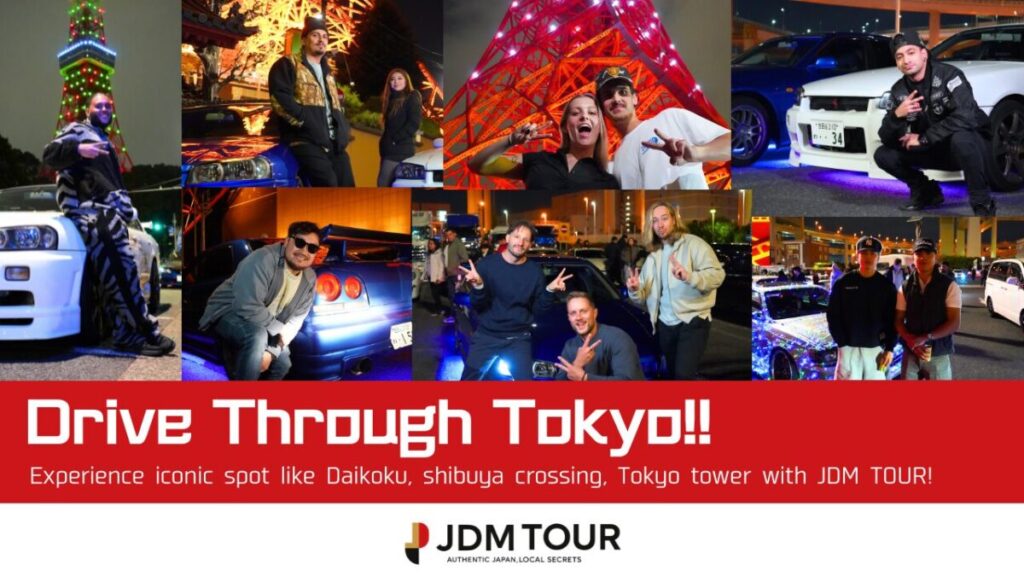
While standard rentals are practical, a new trend has exploded among car enthusiasts visiting Japan: renting “JDM” (Japanese Domestic Market) cars through specialized services like JDM TOUR.
The New Standard of Japan Travel: Public Roads in the Movie
The experience of being able to rent sports car japan is no longer just about driving; it has evolved into an "attraction" that transforms Japan's public roads into a real-life game world. In recent years, an exploding trend among international travelers is enjoying the act of driving through Japanese cities itself as a form of entertainment.
Specifically, commanding JDM machines such as the Nissan GT-R or Toyota Supra against the backdrop of Tokyo’s iconic landmarks is no longer just transportation; it is positioned as a participatory "activity." Just as cosplay driving tours have emerged, this integrated experience of car and city overturns conventional tourism, offering unforgettable, highly shareable memories that light up social media feeds.
This new style of journey, facilitated by exotic car rental tokyo services, has transformed from merely pursuing speed into a means of experiencing unforgettable "play." It allows you to deeply engage with Japan's unique culture and landscapes, creating an adventure that goes beyond traditional sightseeing.
Why is JDM So Popular Right Now?
Legendary sports cars manufactured in Japan during the 1990s and early 2000s—such as the Nissan Skyline (R34), icons for fans worldwide. For many, driving these cars on the actual roads they were designed for is a bucket-list experience that surpasses any standard sightseeing tour.
The Unique Charm of a JDM TOUR
JDM TOUR offers more than just a “car rental”; it provides a deep dive into Japanese car culture.
- The Pilgrimage to Daikoku PA: The highlight of many tours is driving to the Daikoku Parking Area on the Shuto Expressway. At night, this spot transforms into a gathering place for hundreds of beautifully customized cars, creating a vibrant atmosphere that is world-famous.
- Professional Guided Convoys: Driving a right-hand-drive manual car through the complex Shuto Expressway can be daunting. JDM TOUR offers plans where a professional guide leads the way in a lead car, ensuring you stay on the right path safely.
- Photography and Content Creation: The guides know the best “insta-worthy” spots, such as the Shibuya Crossing, Tokyo Tower, and Rainbow Bridge, allowing you to capture professional-quality memories with your dream car.
Location for JDM TOUR
Conclusion
A jdm self drive experience is far more than just renting a Japanese sports car. It is a layered travel experience that combines the car, the route, the culture, the road environment, and your own confidence behind the wheel. That is why two services that look similar on the surface can feel completely different in practice.
If you are driving in Japan for the first time, want to enjoy famous areas efficiently, and feel unsure about navigation or local driving conditions, a guided tour-style experience will often be the smarter choice.
If you are more experienced, want flexibility, and care most about spending more personal time with the car on your own terms, a rental-style experience may suit you better.
No matter which format you choose, the smartest booking approach is to check things in this order:
license requirements, support structure, insurance and liability, route content, and only then the car itself.
That may not sound as exciting as jumping straight to “Which GT-R should I book?”, but it is the most reliable way to avoid regret. When chosen well, a jdm self drive experience in Japan can easily become one of the highlights of an entire trip.