
Introduction
Many travelers dream of driving a JDM car in Japan. When that idea becomes real, one of the first searches they make is something like “jdm car for rent japan.” In practice, Japan does have rental providers that handle iconic Japanese performance cars such as the GT-R, Supra, AE86, RX-7, Lancer Evolution, and Civic Type R. For visitors, renting one is entirely possible as long as they meet the required conditions.
That said, “renting your dream JDM car” and “actually enjoying it smoothly in Japan” are not the same thing. The rules for legally driving in Japan depend on your license type and country of issue, and in some cases a general international driving permit alone is not enough. On top of that, Japan uses left-side traffic and right-hand-drive vehicles, and it has its own road culture, from strong pedestrian priority to ETC toll road systems. If you book without understanding these basics, you can end up dealing with missing documents, confusion at pickup, or unnecessary stress behind the wheel.
This article is for people searching for a jdm car for rent japan experience and want practical answers. We will cover what kinds of JDM cars are actually available, what visitors need in order to drive legally, what to watch out for on Japanese roads, and how to choose a car that suits your trip instead of just your dream garage. The goal is not to romanticize the idea, but to help you turn it into a realistic and enjoyable part of your trip to Japan.
What kinds of cars can you actually rent through a jdm car for rent japan search?
The appeal of JDM rentals is not simply that “you can rent a sports car.” What makes them special is the chance to drive cars that are deeply tied to Japanese car culture, motorsport history, anime and game nostalgia, and tuning culture. Looking at what rental operators tend to offer, the core lineup usually includes Nissan GT-R models, Toyota Supra models, Honda Civic Type R variants, Mitsubishi Lancer Evolutions, and Mazda RX-7s. Depending on the company, you may also find older enthusiast favorites like the AE86 or S2000—cars that offer as much emotional value as performance.
The classics are GT-R, Supra, and Type R
For most people, the first image that comes to mind is the GT-R or Supra. That makes sense. These are the headline cars of Japanese performance culture, and many specialized rental companies use them as flagship models. They are popular because they balance recognition, visual impact, and bucket-list value extremely well. Even people who are not hardcore enthusiasts often know these names, which makes them especially attractive for travelers who want one unforgettable driving day in Japan.
Cars like the AE86 and RX-7 are more about the experience than convenience
For serious enthusiasts, though, the dream often goes beyond pure horsepower. Cars like the AE86 or RX-7 are appealing because of their history, driving feel, and cultural significance. These are not always the easiest or most comfortable cars to use during a trip. They may be older, stiffer, noisier, or less forgiving than modern performance cars. But for the right driver, they offer something more meaningful: the chance to experience a car that shaped JDM culture rather than just admire it from afar.
Sometimes the best choice is not your dream car, but the easiest car to enjoy
This is one of the biggest differences between fantasy and reality. The more iconic the car, the more tempting it is to book an older manual car or a high-power model. But if it is your first time driving in Japan, you are already adapting to left-side traffic, narrower roads, right-hand drive, and a mix of Japanese and English road information. That alone takes mental energy. For that reason, many travelers end up enjoying more modern and manageable choices—something like a newer GT-R, an automatic Supra, a Civic Type R, or another well-sorted performance car with good visibility, reliable navigation, and modern controls. The right car is not only about what looks coolest in photos; it is also about what lets you enjoy the drive without tension.
License requirements and documents you need to rent a JDM car in Japan
Before you get excited about model choices, the first thing to confirm is whether you can legally drive in Japan at all. If you get this wrong, it does not matter how perfect your reservation is—you may not be able to leave with the car. In general, foreign visitors drive in Japan using one of two routes: an International Driving Permit based on the 1949 Geneva Convention, or a domestic license from certain countries together with an official Japanese translation.
Most visitors need an International Driving Permit
For many travelers, the standard route is to bring a valid International Driving Permit (IDP) issued in the correct Geneva Convention format before arriving in Japan. This is important because not every document called an “international license” is valid in Japan. Some countries issue permits based on different conventions or domestic systems, and those may not be accepted. A lot of problems happen because travelers assume all international permits work the same way. They do not. The safest approach is to verify the exact format well before your trip.
Some countries use a translation-based system instead
If your license was issued in places such as France, Germany, Switzerland, Belgium, Monaco, or Taiwan, the rules are different. In those cases, drivers can generally use their original domestic license together with an official Japanese translation rather than an IDP. This translation is often issued through approved organizations such as JAF. This exception catches many travelers by surprise, so it is worth checking carefully if your country falls into that category.
Pay attention to time limits and entry conditions
Even if you have the right documents, there are time limits. In general, the validity of driving in Japan depends not only on the permit itself, but also on how long it has been since issuance and how long it has been since you entered Japan. There are also rules connected to re-entry and residence timing that can affect eligibility. For ordinary short-term tourists this may not become a serious issue, but for longer stays or more complicated travel patterns, it is something you should confirm in advance rather than assume.
Driving rules in Japan you should know before enjoying a JDM rental
The biggest adjustment for many foreign visitors is simple but significant: Japan drives on the left. That sounds manageable in theory, but in practice it affects everything—turn timing, lane positioning, parking, intersections, and even how tired you feel after an hour or two. Before thinking about mountain roads or scenic driving, it is worth accepting that your first task is simply to get comfortable and stay safe.
Left-side traffic and right-hand drive are more tiring than many people expect
Most JDM rentals are naturally right-hand drive, which is part of the appeal. But for a traveler, that means adjusting to different stalk positions, different visual reference points, and a different sense of where the car sits in the lane. The most common moments of confusion are when turning at intersections, pulling out of parking lots, or positioning the car on narrow roads. For that reason, it is usually smart to start your rental during a quieter time of day and spend the first part of the drive on wider, calmer roads rather than jumping straight into dense city traffic.
Seat belts, child seats, and pedestrian priority are not optional
Japan takes road rules seriously, and visitors should do the same. Seat belts are required for all occupants, and young children must use the proper child seat. Pedestrians also have strong priority, especially near crosswalks. If you are focused only on the excitement of driving a performance car, it becomes easy to overlook the fact that Japanese road manners are often more restrained and safety-oriented than some visitors expect. A JDM rental in Japan is not really about driving aggressively. It is about enjoying the car responsibly within the rhythm of Japanese roads.
Mountain roads and winter conditions are harder than they look
A lot of travelers imagine taking a JDM car into the mountains, and that can absolutely be part of a great trip. But it is important not to underestimate weather, road width, surface conditions, and seasonal changes. Snow, ice, and cold-weather driving can make unfamiliar roads far more demanding, especially in older rear-wheel-drive cars or high-powered vehicles. In winter, the romance of the route should never matter more than tires, road conditions, and safety margins.
Pricing and the details people often miss when booking
JDM rentals are very different from ordinary economy-car rentals. Pricing can vary widely depending on the car, the company, and the conditions. Some modern performance cars may feel expensive, but rare older icons can be even more costly because of scarcity, maintenance complexity, and insurance considerations. When people first search for jdm car for rent japan, they often focus only on the headline price, but that can be misleading.
You are not just paying for horsepower
The rental price reflects much more than engine output. Factors like vehicle rarity, age, maintenance difficulty, gearbox type, insurance structure, and how the company manages pickup and return all influence what you pay. A legendary older car may cost more than a newer, faster car simply because keeping it available is harder. In other words, the price is often about the experience and the vehicle’s condition, not just performance numbers.
The conditions matter as much as the base price
Before booking, check more than the daily rate. Look at deposit requirements, insurance and liability terms, mileage limits, return conditions, fuel expectations, and whether there are special restrictions for manual cars or high-performance models. The cheapest listing is not always the easiest or safest choice. A slightly more expensive rental with clearer rules and better support may be the smarter option, especially for a visitor unfamiliar with Japan.
A manageable car for a full day often beats a dream car for a short rush
A lot of travelers assume the best plan is to rent the most famous car possible, even if only for a few hours. In reality, many people get more satisfaction from renting a slightly easier car for a full day, then using that time to enjoy the scenery, take photos, stop for breaks, and drive without pressure. A JDM experience is not only about the badge on the hood. It is also about the way the car feels in Japan, the roads around you, and the pace of the day.
How to choose the right JDM car for your trip
When deciding between cars, the best approach is to think in terms of itinerary, skill level, and road environment rather than pure dream value. A first-time driver in Japan who books an older manual car, starts in central Tokyo, and drives in the rain is stacking several challenges at once. That can be done, but it is not usually the best way to create a memorable and relaxed experience.
If it is your first time, a newer automatic is often the safest bet
For many travelers, a newer and more forgiving car is the best first choice. Something like a modern GT-R, automatic Supra, newer Type R, or another recent performance model tends to offer better brakes, better visibility, stronger air conditioning, easier navigation, and more predictable behavior in traffic. Those things matter more than people think when they are adjusting to driving in a new country.
Older cars and manuals are best for people who want the driving itself to be the main event
Cars like the AE86, RX-7, older Skyline variants, or S2000 make the most sense when you genuinely want to focus on the act of driving. These are not the ideal cars for a tightly packed sightseeing schedule with constant stops and time pressure. They are better suited to a day where the car itself is the highlight, with room for breaks, photos, and slower pacing. If that is the experience you want, they can be unforgettable. If your goal is efficient tourism, they may not be the best match.
If you have passengers, do not ignore comfort
A solo enthusiast can tolerate a lot in the name of a dream car. Passengers often feel differently. If you are traveling with a partner or friends, ride comfort, luggage space, climate control, and how easy the car is to get in and out of matter a lot more. Even among enthusiasts, not everyone enjoys spending hours in a stiff, noisy older performance car. If the trip is meant to be enjoyable for everyone, compromise can be part of making it successful.
How to build a travel plan around a JDM rental in Japan
If you are renting a JDM car in Japan, it helps to treat the drive as a featured part of the trip rather than just transportation between attractions. The best itineraries usually balance driving time, rest time, photo stops, and realistic return timing. Trying to do too much in one day often leads to fatigue and stress, which works against the whole point of the experience.
For a first drive, half a day to one destination is often enough
If it is your first time driving in Japan, there is no need to overload the schedule. A half-day or one-day route with one main destination is often ideal. The car itself already provides enough of a memorable experience. You do not need to pack in several tourist stops just to justify the rental. In fact, doing too much can leave you remembering traffic, wrong turns, and time pressure more than the joy of driving the car.
Learn how toll roads and ETC work before you leave
If you plan to use expressways, make sure you understand ETC usage, toll payment, and whether the rental car has the required equipment installed. At pickup, it is worth confirming whether the car includes an ETC device, whether you need a card, and what the company expects regarding toll settlement. This is one of those small details that can create unnecessary confusion if you ignore it before departure.
Build in time for photos, breaks, and refueling
With a special car, people naturally want more stops—for photos, coffee breaks, scenic pauses, and just taking the moment in. Pickup and return can also take longer than with an ordinary rental because there may be extra vehicle explanation or inspection. Add fuel stops and possible traffic on top of that, and it becomes clear why a relaxed schedule is one of the most important parts of the experience.
[The Hottest Experience] Driving Dream Sports Cars in Japan with JDM TOUR
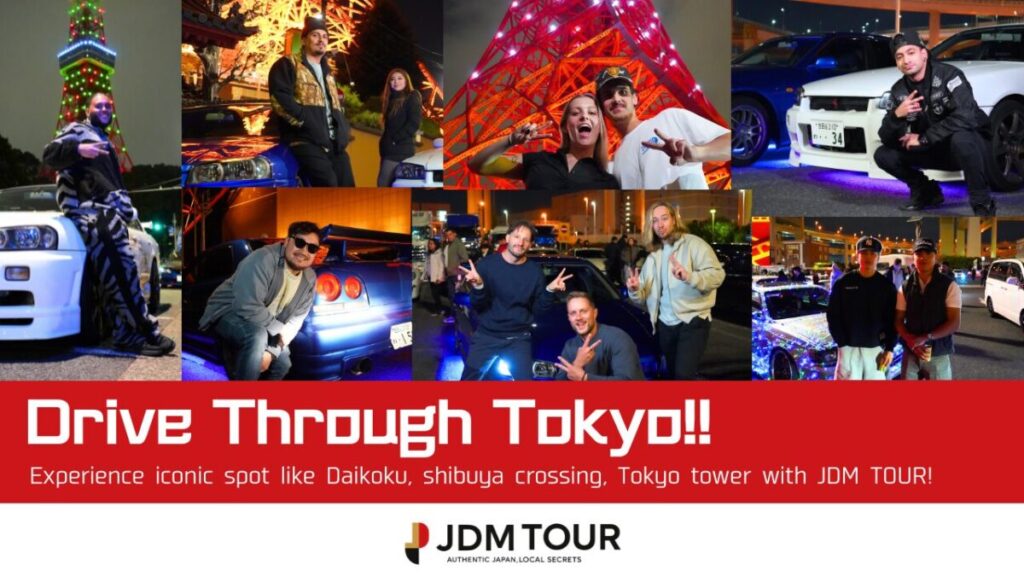
While standard rentals are practical, a new trend has exploded among car enthusiasts visiting Japan: renting “JDM” (Japanese Domestic Market) cars through specialized services like JDM TOUR.
The New Standard of Japan Travel: Public Roads in the Movie
The experience of being able to rent sports car japan is no longer just about driving; it has evolved into an "attraction" that transforms Japan's public roads into a real-life game world. In recent years, an exploding trend among international travelers is enjoying the act of driving through Japanese cities itself as a form of entertainment.
Specifically, commanding JDM machines such as the Nissan GT-R or Toyota Supra against the backdrop of Tokyo’s iconic landmarks is no longer just transportation; it is positioned as a participatory "activity." Just as cosplay driving tours have emerged, this integrated experience of car and city overturns conventional tourism, offering unforgettable, highly shareable memories that light up social media feeds.
This new style of journey, facilitated by exotic car rental tokyo services, has transformed from merely pursuing speed into a means of experiencing unforgettable "play." It allows you to deeply engage with Japan's unique culture and landscapes, creating an adventure that goes beyond traditional sightseeing.
Why is JDM So Popular Right Now?
Legendary sports cars manufactured in Japan during the 1990s and early 2000s—such as the Nissan Skyline (R34), icons for fans worldwide. For many, driving these cars on the actual roads they were designed for is a bucket-list experience that surpasses any standard sightseeing tour.
The Unique Charm of a JDM TOUR
JDM TOUR offers more than just a “car rental”; it provides a deep dive into Japanese car culture.
- The Pilgrimage to Daikoku PA: The highlight of many tours is driving to the Daikoku Parking Area on the Shuto Expressway. At night, this spot transforms into a gathering place for hundreds of beautifully customized cars, creating a vibrant atmosphere that is world-famous.
- Professional Guided Convoys: Driving a right-hand-drive manual car through the complex Shuto Expressway can be daunting. JDM TOUR offers plans where a professional guide leads the way in a lead car, ensuring you stay on the right path safely.
- Photography and Content Creation: The guides know the best “insta-worthy” spots, such as the Shibuya Crossing, Tokyo Tower, and Rainbow Bridge, allowing you to capture professional-quality memories with your dream car.
Location for JDM TOUR
Common mistakes to avoid before booking
JDM rentals are exciting, but they also make people rush decisions. Because the cars are special, it is easy to let excitement override common sense. The best way to avoid trouble is to slow down and review the basics before you book.
Make sure your documents are correct and physically with you
Your passport, original license, and either the correct IDP or official translation are not minor details—they determine whether you can actually drive. Do not assume a digital copy or a photo on your phone will be enough. Prepare the originals, keep them organized, and verify everything before arriving at pickup.
Be honest about your actual experience level
It is tempting to book the most iconic car available, especially if you may only do this once. But there is no shame in choosing a car that matches your real comfort level. Japan’s combination of left-side traffic, narrow roads, pedestrian awareness, and unfamiliar urban layouts can be more challenging than people expect. The best first JDM drive is usually not the most heroic one—it is the one you can enjoy with confidence.
Do not underestimate weather and seasonal conditions
Rain, cold temperatures, mountain weather, and winter road conditions all change how a performance car feels. A car that seems perfect in dry conditions may be far less relaxing in rain or cold, especially if it is older or more demanding to drive. Seasonal planning is part of smart vehicle selection. The more specialized the car, the more important that becomes.
Final thoughts
For people searching jdm car for rent japan, the good news is that the experience is absolutely possible. Japan does have rental providers offering cars like the GT-R, Supra, AE86, RX-7, Lancer Evolution, and Civic Type R, and for the right traveler it can become one of the most memorable parts of a trip.
At the same time, the quality of the experience depends on much more than simply securing a famous car. License eligibility, document preparation, left-side driving, weather, ETC use, timing, and route planning all shape whether the day feels exciting in the right way or stressful for the wrong reasons.
That is why the smartest first step is not chasing the most legendary badge. It is choosing a car and plan that you can genuinely enjoy. If you do that—pick a suitable car, leave room in the schedule, and treat the drive as an experience rather than a race—you are much more likely to come away with the kind of JDM memory you were hoping for in the first place.