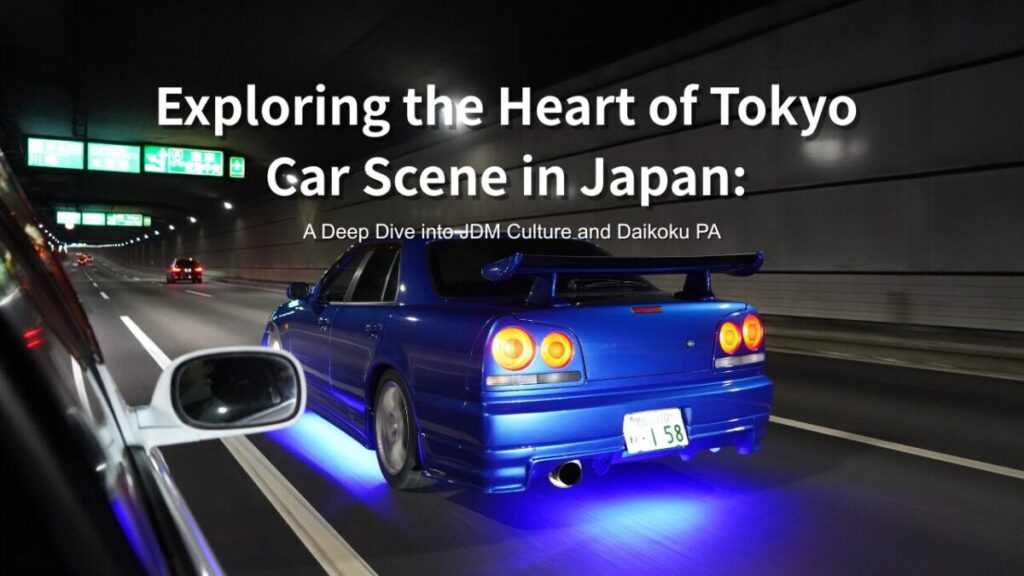
For many automotive enthusiasts, Japan is more than just a country; it’s a pilgrimage site. The Tokyo Car Scene has become a global phenomenon, fueled by movies, video games, and the legendary reputation of Japanese engineering. From the glowing lights of Shinkansen-speed expressways to the iconic silhouettes of the Nissan Skyline GT-R, the allure of JDM (Japanese Domestic Market) culture is undeniable.
However, experiencing this world firsthand isn’t as simple as hopping in a taxi. To truly immerse yourself in the authentic Japanese car culture, you need more than a map—you need local insight. This guide, supervised by a Japanese brand team that operates premium driving experiences for international visitors, will show you how to navigate the scene safely, respectfully, and memorably.
1. What Makes the Tokyo Car Scene So Iconic?
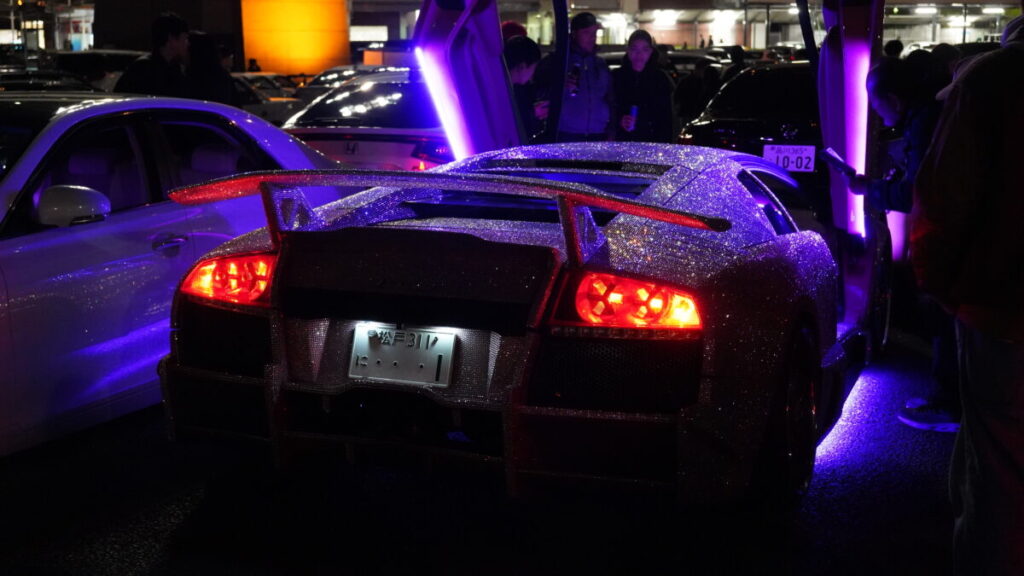
The Tokyo car scene is a unique blend of high-tech futurism and deep-rooted tradition. Unlike car meets in many other parts of the world, Japan’s culture is defined by a specific “aesthetic of perfection” and a sense of community that revolves around the Shuto Expressway.
The Evolution of Japanese Car Culture
Japanese car culture didn’t appear overnight. It evolved from the “Bosozoku” era into the sophisticated tuning scene of the 90s, influenced heavily by the spirit of drifting and the legendary touge (mountain pass) battles. Today, the scene is incredibly inclusive, yet full of surprises for first-timers.
Many visitors are shocked to see so many Nissan Skyline GT-Rs in one place—it’s not just a movie icon here; it’s a living part of the landscape. Another paradox that surprises international guests is the prestige of left-hand drive (LHD) European or American cars owned by Japanese enthusiasts. In a country that drives on the left, owning an LHD vehicle is often seen as a status symbol of a “true import,” adding a layer of complexity to the local car hierarchy.
Why JDM Enthusiasts Flock to Tokyo
Tokyo serves as the nervous system of this culture. Beyond world-class exhibitions like the Tokyo Auto Salon, the city’s streets are a living museum. The labyrinthine Shuto Expressway, the glowing backdrop of Tokyo Tower, and the architectural marvel of the Rainbow Bridge provide a cinematic stage. For international visitors, it’s about seeing these “rolling legends” in their natural habitat.
2. The Legendary Daikoku Parking Area (PA)
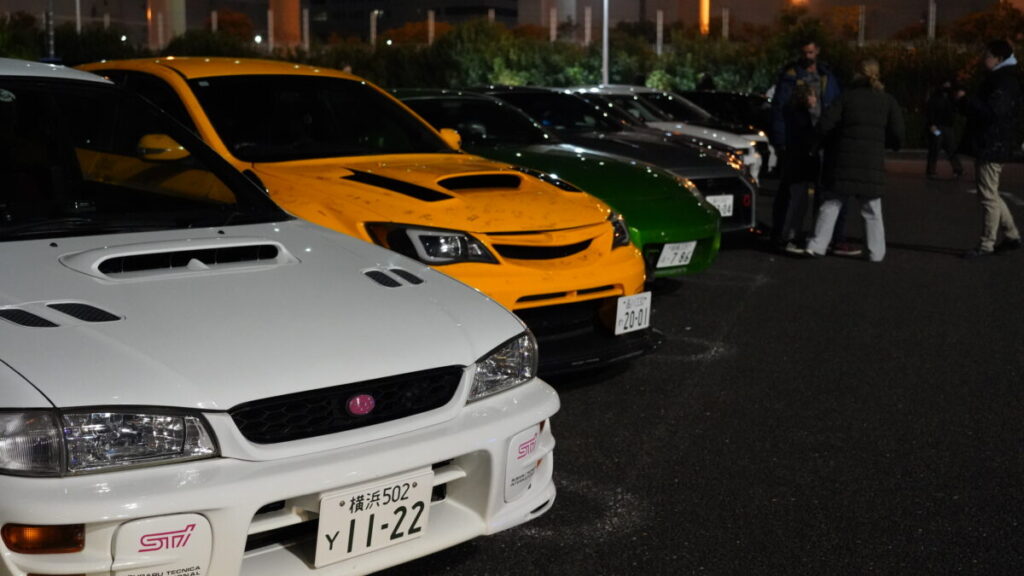
If there is a “Mecca” for car enthusiasts in Japan, it is undoubtedly the Daikoku Parking Area (Daikoku PA). Located on a man-made island in Yokohama, this circular rest stop transforms into the world’s most impressive open-air car museum.
The Truth About Visiting Daikoku PA
There is a crucial piece of local knowledge every visitor must understand: Daikoku PA is inaccessible to pedestrians. There is no train station nearby, and walking onto the grounds is strictly prohibited. To experience the magic of car meets here, you must arrive in a vehicle.
Furthermore, the atmosphere at Daikoku is spontaneous. Many travelers arrive via taxi only to realize they have no way to return or move between the rows of cars. This is why a structured, vehicle-based experience is the only way to truly “do” Daikoku right.
What to Expect at a JDM Car Meet
At a typical car meeting, you’ll see everything from “Itasha” (anime-themed cars) to high-end European supercars and JDM legends like the Toyota Supra. It’s a sensory overload. However, remember that Japanese car culture thrives on mutual respect. Following local etiquette is essential to build trust within the community.
3. Standard Car Rental vs. Guided JDM Tours
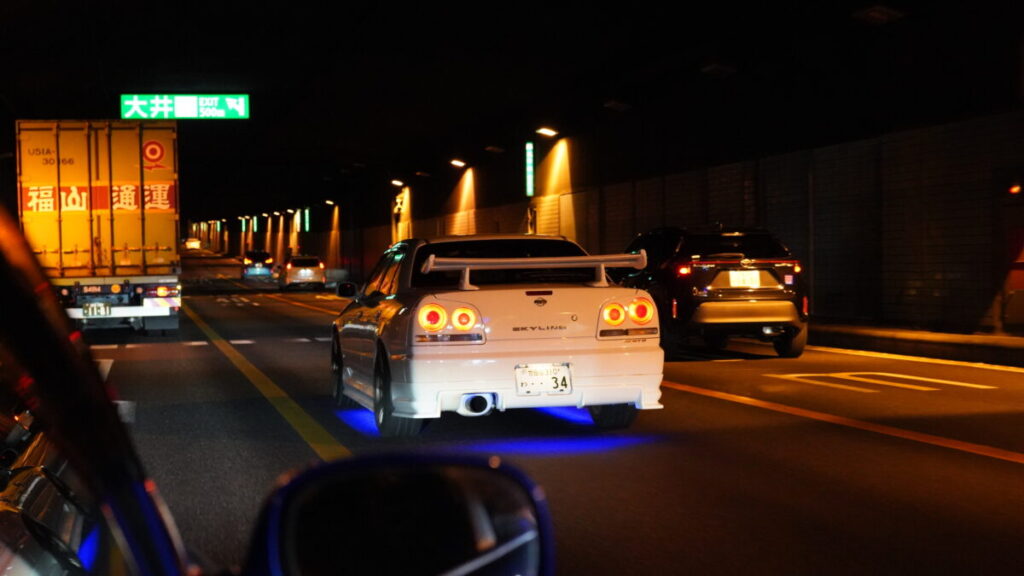
When planning your journey, you might wonder: “Should I just rent a car and go on my own?” While a standard rental is possible, there is a fundamental difference between a “transaction” and a premium “experience”.
Why “Just a Rental” Might Fall Short
Finding a rental company that offers iconic JDM sports cars like the Skyline or Supra is difficult, but the real challenge is the driving environment. Navigating Tokyo’s complex expressway system alone adds a layer of stress that often outweighs the fun. Standard rentals give you the keys, but they don’t give you the confidence to navigate a foreign car culture.
The Value of a Guided Experience
The services supervised by our team are designed as guided tours. You are led by a Japanese support team with local knowledge, ensuring you don’t get lost in the intricate junctions. This format allows you to focus entirely on the thrill of the drive, with the reassurance that a lead car is handling navigation and safety protocols.
[New] The Practical Reality of Driving JDM in Tokyo: The “Left-Side” Challenge
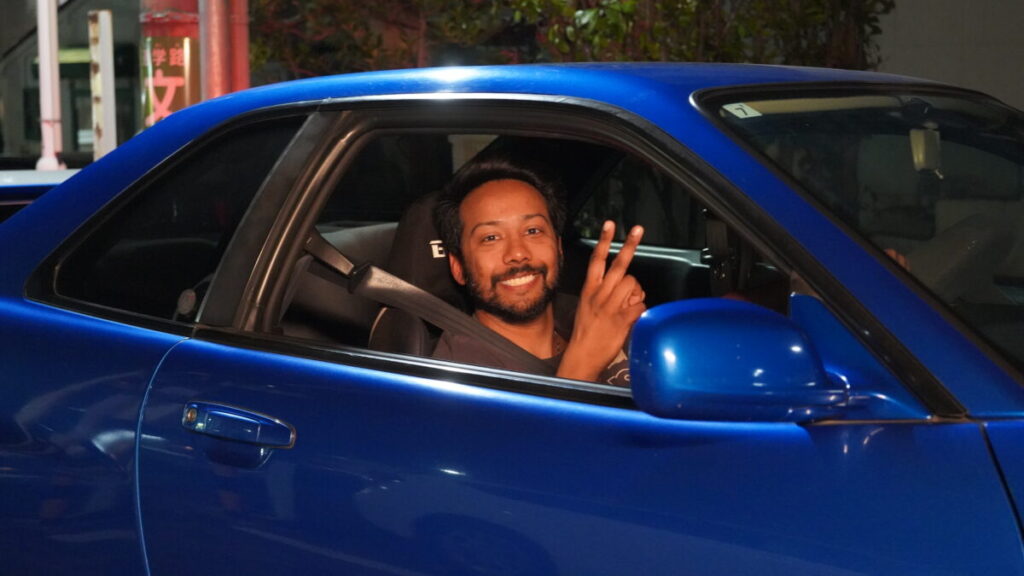
For visitors from countries that drive on the right side of the road (like the USA or most of Europe), the first few miles on the Shuto Expressway can be a nerve-wracking adjustment.
- The “Leaning” Habit: We often see drivers instinctively drift toward the left side of the lane because their sense of the car’s width is reversed.
- Mirror Confusion: Looking for the rearview or side mirrors in the “wrong” place can be disorienting when merging into fast-moving traffic.
- Merging from the “Wrong” Side: Highway on-ramps and merges are also mirrored, requiring split-second decisions that are much easier when following a lead car that knows the flow of Tokyo’s aggressive traffic.
4. Preparing for Your Drive: What You Need to Know

International Driving Permit (IDP) and Rules
To drive in Japan, you must possess a valid International Driving Permit (IDP) based on the 1949 Geneva Convention. Japan has a zero-tolerance policy for drinking and driving, and we drive on the left side of the road. Our team provides clear explanations to reduce any anxiety.
Safety and Navigation: The Lead Car Advantage (Handling Closures)
Police closures at Daikoku PA are common, especially on busy weekend nights. For a solo tourist, a “CLOSED” sign is the end of the night. However, our local guides can instantly pivot the route to alternative high-quality spots like A Pit Shinonome (a modern automotive lifestyle hub) or Umihotaru PA (a stunning parking area in the middle of Tokyo Bay). This local insight ensures your night isn’t wasted.
5. More Than a Drive: A Journey Through Tokyo’s Landmarks
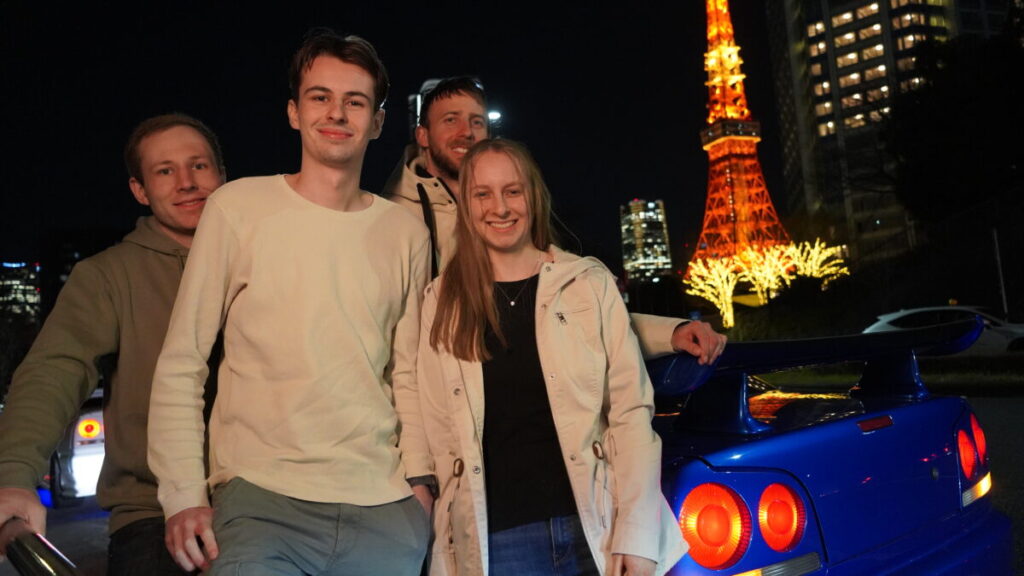
Our routes are carefully curated to include culturally significant spots:
- Tokyo Tower & Rainbow Bridge: Iconic backdrops for the Nissan Skyline GT-R.
- Shibuya Scramble Crossing: A neon-lit perspective from the driver’s seat.
- Daikoku PA: The heart of Japanese car culture (or alternative spots like A Pit Shinonome depending on the night).
Conclusion: Your Ultimate JDM Memory in Japan
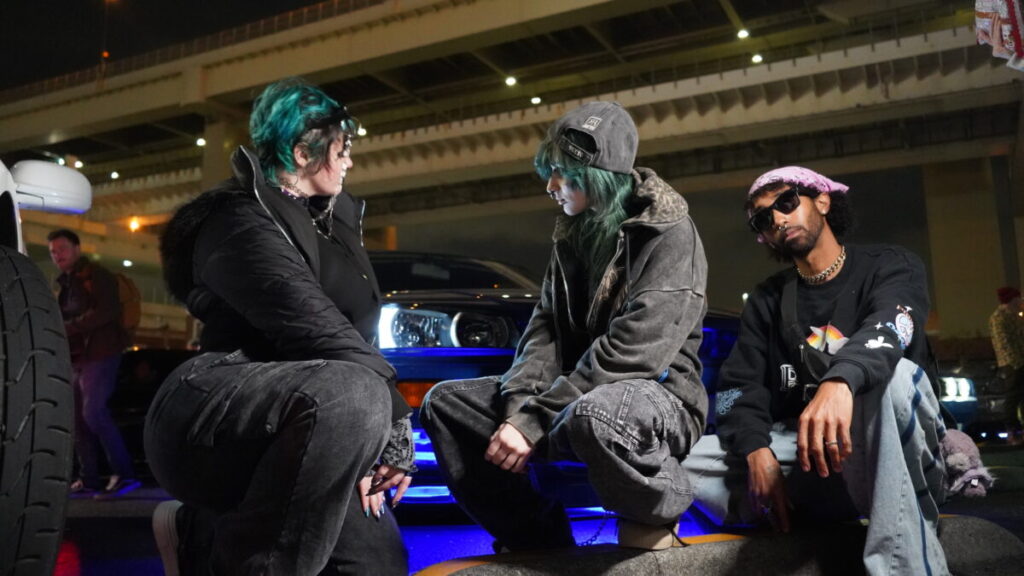
Participating in the Tokyo car scene is about more than just metal and rubber; it’s about capturing a piece of Japanese culture that is as emotional as it is mechanical. By choosing a guided experience, you bridge the gap between being a tourist and being an insider. Whether it’s the roar of a Mazda RX-7 engine or the camaraderie at a Daikoku PA meet, these moments become the highlights of a lifetime.