Introduction
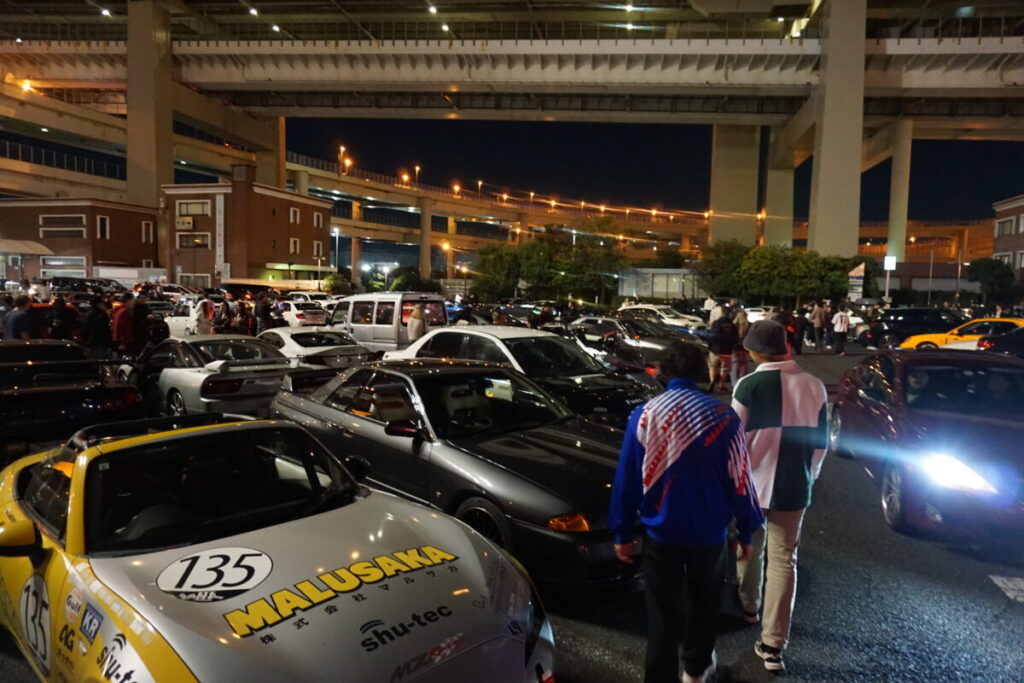
Daikoku Parking Area (PA), located on the Kanagawa route of the Shuto Expressway, has become a “Mecca for JDM (Japanese Domestic Market) cars” that car enthusiasts from around the world dream of visiting at least once. It was once a local spot where passionate Japanese car fans gathered nightly to show off their custom builds and nurture a unique car culture. However, fueled by social media, movies, and video games, this excitement has crossed borders, and today, it stands as a major destination for international tourists.
In this article, we will delve into the rapid changes Daikoku PA is currently facing, the strict laws and manners you must know when visiting as a tourist, and how to enjoy this culture safely and legally. To ensure your trip to Japan isn’t ruined, it’s vital to understand the local rules and consider how we can maintain a sustainable car culture together.
The Evolution of Daikoku PA: From Local Meetup to International Landmark
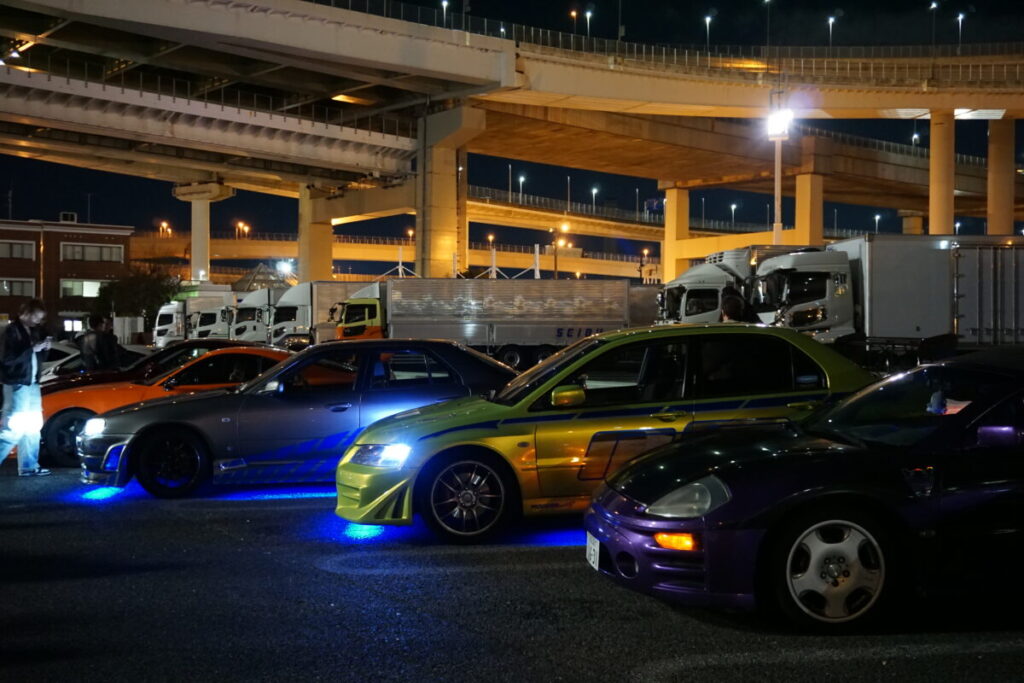
The history of Daikoku PA goes far beyond that of a simple rest area. From the sports car boom of the 90s to the present day, the sight of legendary Japanese cars like the Skyline GT-R, Supra, and RX-7 gathering on Saturday nights or Sunday mornings has symbolized Japan’s automotive spirit. Originally, these were unofficial, personal gatherings (car meets) for local enthusiasts.
However, the situation has shifted dramatically in recent years. As the hashtag #DaikokuPA exploded on Instagram and TikTok, tourists from all over the world began flocking to the site to “see real JDM.” It is now common to hear more English and other foreign languages spoken in the parking lot than Japanese. While this internationalization has the positive effect of showcasing Japanese car culture to the world, it has also created new challenges, such as straining the “original function of the parking area” as a rest stop for drivers.
Soaring Popularity and the Reality of “Entry Restrictions”
Due to the overwhelming number of vehicles and people, Daikoku PA now frequently implements “closures” (entry restrictions), particularly on weekends. Essentially, a parking area is a facility for drivers on the expressway to rest and ensure safe driving. However, because tourist vehicles and pedestrians have begun to occupy the lot, truck drivers and general travelers often find themselves unable to park.
In response, the Kanagawa Prefectural Police and the Metropolitan Expressway Co., Ltd. have stepped up enforcement to manage noise and maintain order. On weekend nights especially, when the lot nears capacity, the entrance may be closed without warning, preventing any further entry. There are countless cases of tourists arriving by taxi or rental car only to be turned away at the gate. Public facility rules take precedence over “tourist destination” expectations, and visitors must understand this risk before heading out.
Police Crackdowns and the Strict Eye on “Illegally Modified Vehicles”
Among the cars gathering at Daikoku PA, there are sometimes vehicles that exceed Japan’s safety standards—known as “illegally modified vehicles.” Recently, the police have taken a very firm stance against these cars. Regular simultaneous crackdowns are conducted, where parts that do not pass vehicle inspection (shaken) are identified on the spot, resulting in “maintenance orders” or, in worst-case scenarios, vehicle impoundment.
Tourists should be particularly careful about whether the car they are riding in or the tour vehicle they are using is legal. While flashy lights and loud exhausts might look appealing, they are likely illegal under Japanese law. While a large-scale police deployment might seem like a thrilling scene for a video, it is a serious public service to maintain peace. If you encounter a crackdown, it is mandatory to follow police instructions and never engage in provocative behavior.
The “Shirotaku” Problem and the Raid on Illegal Tours
Currently, the most serious issue around Daikoku PA is the rise of illegal transportation and tour services known as “Shirotaku” (unlicensed taxis). In Japan, to carry passengers for a fee, a vehicle must have a green license plate (commercial plate) and the operator must possess specific licenses and insurance. However, there has been a surge in illegal operators who scout for customers on social media or the street and take them to Daikoku PA in private vehicles (white plates) for high fees.
Last month, a major incident occurred where the president of a company conducting tours using illegally modified vehicles was arrested. This is just the tip of the iceberg. These illegal tours are not covered by insurance in the event of an accident and, because they ignore the law, carry a high risk of involving the user in legal trouble. Using “gray-area operators” who approach people on the street or lack official booking sites does not support Japanese car culture; rather, it provides a reason for authorities to tighten regulations further.
Photography Manners and Safety: No Jumping into Traffic
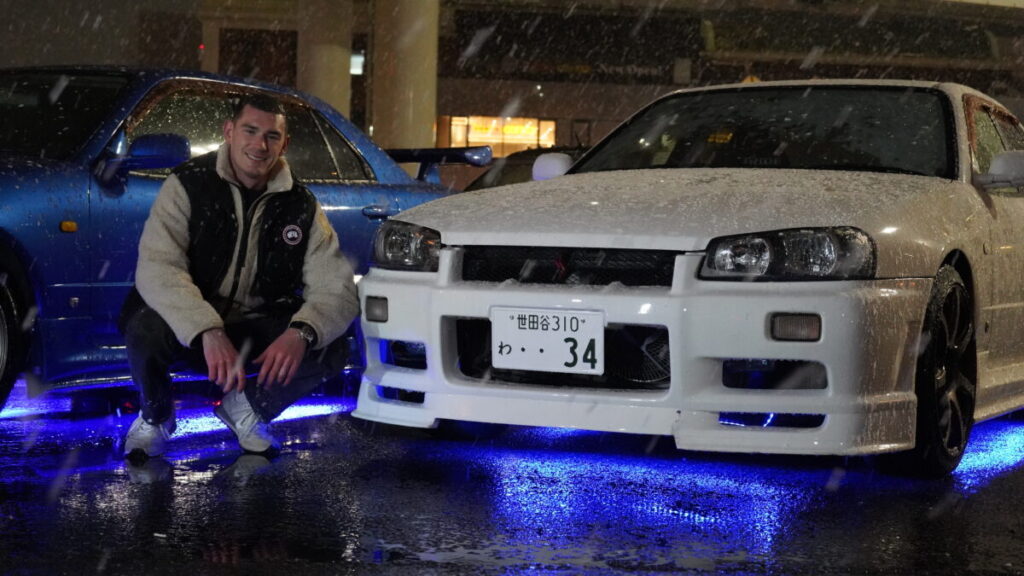
The main goal of visiting Daikoku PA is often to capture beautiful cars on camera. However, this passion has led to an increase in dangerous behavior. The most hazardous act is jumping into the lanes where cars are moving or standing in front of moving vehicles to force them to stop for a photo.
Daikoku PA is extremely crowded and has many blind spots. Setting up tripods that block pathways or flying drones without permission is strictly prohibited. Furthermore, touching a car or trying to open its door without the owner’s permission is a major breach of etiquette. These cars are the owners’ prized possessions. Exercising “self-restraint” and shooting from safe areas is the only way to protect the safety and culture of this location.
Safe and Legal Options: Recommended Services
Choosing reliable services that comply with Japanese law is the wisest decision for any traveler. Below are recommended services that allow you to experience JDM culture in a legally recognized manner.
- JDM TOUR : This is a top-tier tour company that deeply understands Japanese car culture and operates under proper licensing. They offer safe and legal tours of Daikoku PA and other Tokyo hotspots.
- Ichioku Tours: A highly reliable service where knowledgeable guides provide thorough support, covering everything from vehicle history to Japanese traffic rules.
- Only JDM: This service offers plans to see rare Japanese cars up close, emphasizing compliance and safety in its operations.
These services have thorough insurance and safety management, eliminating the risks associated with illegal operators. If you want a “real” experience, you should choose professionals who respect the law.
[The Hottest Experience] Driving Dream Sports Cars in Japan with JDM TOUR
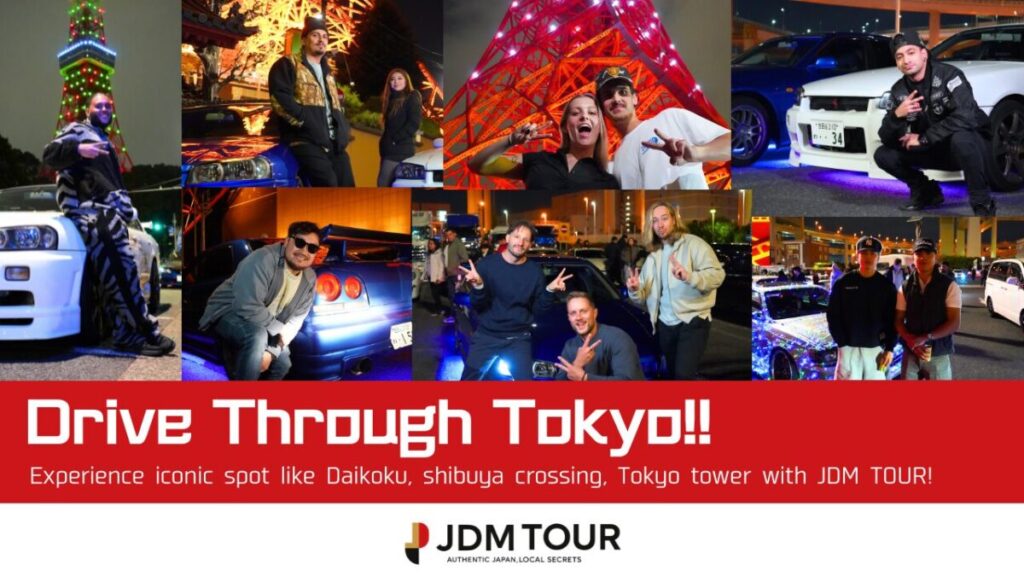
While standard rentals are practical, a new trend has exploded among car enthusiasts visiting Japan: renting “JDM” (Japanese Domestic Market) cars through specialized services like JDM TOUR.
The New Standard of Japan Travel: Public Roads in the Movie
The experience of being able to rent sports car japan is no longer just about driving; it has evolved into an "attraction" that transforms Japan's public roads into a real-life game world. In recent years, an exploding trend among international travelers is enjoying the act of driving through Japanese cities itself as a form of entertainment.
Specifically, commanding JDM machines such as the Nissan GT-R or Toyota Supra against the backdrop of Tokyo’s iconic landmarks is no longer just transportation; it is positioned as a participatory "activity." Just as cosplay driving tours have emerged, this integrated experience of car and city overturns conventional tourism, offering unforgettable, highly shareable memories that light up social media feeds.
This new style of journey, facilitated by exotic car rental tokyo services, has transformed from merely pursuing speed into a means of experiencing unforgettable "play." It allows you to deeply engage with Japan's unique culture and landscapes, creating an adventure that goes beyond traditional sightseeing.
Why is JDM So Popular Right Now?
Legendary sports cars manufactured in Japan during the 1990s and early 2000s—such as the Nissan Skyline (R34), icons for fans worldwide. For many, driving these cars on the actual roads they were designed for is a bucket-list experience that surpasses any standard sightseeing tour.
The Unique Charm of a JDM TOUR
JDM TOUR offers more than just a “car rental”; it provides a deep dive into Japanese car culture.
- The Pilgrimage to Daikoku PA: The highlight of many tours is driving to the Daikoku Parking Area on the Shuto Expressway. At night, this spot transforms into a gathering place for hundreds of beautifully customized cars, creating a vibrant atmosphere that is world-famous.
- Professional Guided Convoys: Driving a right-hand-drive manual car through the complex Shuto Expressway can be daunting. JDM TOUR offers plans where a professional guide leads the way in a lead car, ensuring you stay on the right path safely.
- Photography and Content Creation: The guides know the best “insta-worthy” spots, such as the Shibuya Crossing, Tokyo Tower, and Rainbow Bridge, allowing you to capture professional-quality memories with your dream car.
Location for JDM TOUR
Prepare Before You Arrive: The Importance of an International Driving Permit
If you plan to rent a sports car and drive to Daikoku PA yourself rather than joining a tour, you must prepare an “International Driving Permit (IDP)”. To drive in Japan, you need a valid license from your home country plus an IDP based on the Geneva Convention (or an official translation for specific countries like Germany, France, or Taiwan).
Japanese rental car companies and legitimate car-sharing services will absolutely not rent a vehicle to you without these documents. Realizing you don’t have it on the day of your visit will be too late. This applies to rental services around Daikoku PA as well. Respecting the law and following proper procedures to get behind the wheel is the minimum etiquette required of any driver on Japanese roads.
Conclusion: For a Sustainable “Daikoku Culture”
Daikoku Parking Area is a unique place where car enthusiasts from around the world can connect. However, its future depends on the actions of each and every one of us. Noise, littering, participating in illegal tours, and dangerous photography—if these continue, Daikoku PA may eventually be completely closed to non-essential vehicles.
What we want is to continue providing a clean and safe environment where everyone can appreciate the beauty of Japanese cars while respecting one another. Following police instructions, being mindful of others, and above all, respecting Japanese law—this “spirit of following rules” is the best passport for visiting the sanctuary of Daikoku PA. With your cooperation, let’s pass on Japanese car culture to the next generation.