
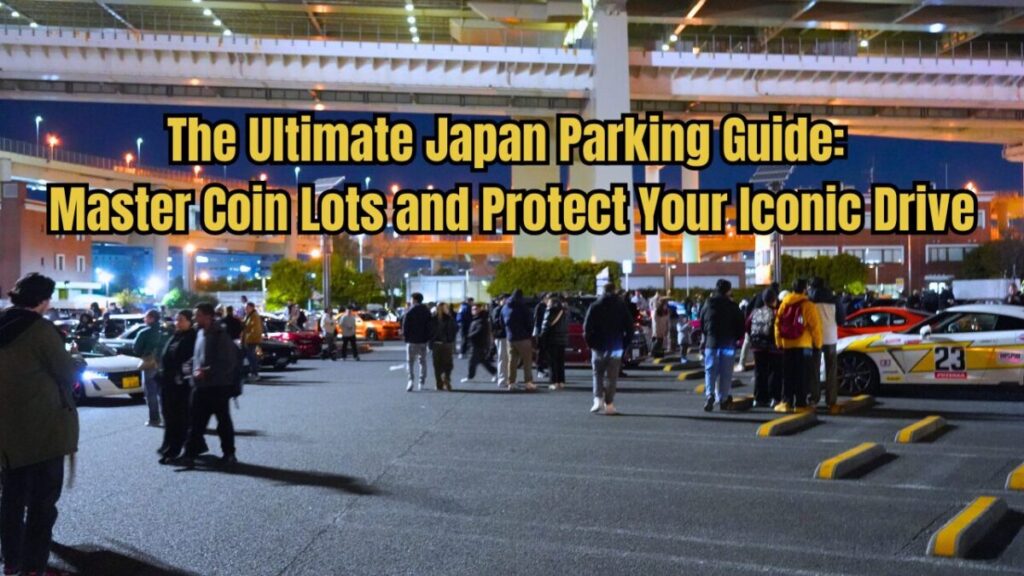
Driving an iconic Japanese sports car through the neon-lit streets of Tokyo is a bucket-list dream for many. However, that dream can quickly turn into a stressful ordeal when it comes time to find a parking lot in Japan’s tight urban landscape. Understanding traffic rules, reading road signs, and knowing how to use a parking space correctly is essential to avoid an illegal parking fine or damage to the vehicle.
Why Parking in Japan Can Be a Challenge for Tourists
For tourists and foreign drivers, the difficulty of parking in Japan isn’t just about the size of the spaces; it’s about the unique systems and the high stakes involved.
Local Insight: Japanese parking spaces are notoriously narrow. When driving a wide-bodied car like a Nissan GT-R (R35), you may find that opening the doors comfortably is a challenge in standard coin lots.
It’s Not Just a Car: Understanding the Premium Experience
When you embark on a premium driving experience, you aren’t just handling a standard rental car; you are behind the wheel of a piece of automotive history. Finding a safe public parking area or off-street parking is vital to ensure the experience remains flawless while you explore a sightseeing spot.
Decoding the Kanji: “Full” (満) vs. “Vacant” (空)
At the entrance gate of any lot, electronic LED boards use specific Kanji to indicate available spaces:
- 満 (Man): Full.
- Spotting the green “空” sign is your first step to securing a spot near Tokyo Tower or in a busy station parking area.
Types of Parking Systems You Will Encounter
Japan utilizes space with incredible efficiency, leading to several distinct types of car park facilities.
Coin Parking and Flap-Lock Systems
The most common type is coin parking, which refers to small, unattended hourly parking lots found on almost every corner. These typically use a flap lock (lock plate) system. Once you pull into a numbered parking space, a metal plate rises under the car to secure it.
Automated Tower and Gate Parking
In dense areas like Ginza, you will encounter multi-story parking or mechanical towers. Alternatively, larger private parking lots and shopping mall parking use gate parking, where you take a parking ticket at the entrance gate and pay at the exit gate.
Pro Tip: For short stops near the airport, Haneda Airport’s parking lots offer the first 30 minutes for free, making it an ideal spot for a quick photo op or a final check of your route.
On-Street Parking and Metered Zones
While street parking is rare in Tokyo, some zones allow it for a limited time. However, you must be careful to distinguish between a legal spot and a prohibited area marked with no parking signs.
Step-by-Step: How to Use a Japanese Coin Parking Lot
Entering the Space and Activating the Flap
Once you find a nearby parking lot with a vacant space, drive into the spot. Ensure you remember the space number painted on the ground. After a few minutes, the flap lock will rise.
Paying at the Payment Machine
Before you leave, head to the central payment machine.
- Enter your space number.
- Press the “精算” (Seisan) button.
- Pay the parking fee. Most machines accept cash (1,000 yen notes and coins), and many now offer cashless payment via credit card or mobile payment.
- Keep the receipt (領収書 – Ryōshūsho) as proof of payment.
Avoiding Damage: Crucial Tips for GT-R and Low-Clearance Cars
If you are driving a Skyline GT-R (R32, R33, R34) or a modern R35, you must be extra vigilant. These cars often have underbody guards and low front bumpers that are magnets for damage in Japanese lots.
- The Curb Trap: Many Japanese parking spots have high concrete curbs at the back. Because the GT-R has protective guards underneath, reversing too far can cause these guards to catch or crack on the curb.
- The Steep Incline: Be extremely careful with underground parking entrances. The transition from a flat road to a steep ramp can easily scrape or “shave” your front bumper. Always approach at an angle if possible.
- Flap Height: Before entering, visually check the height of the flap. If the car is lowered, look for “flapless” lots that use cameras/sensors instead of mechanical plates.
Understanding Costs: Hourly Rates and Maximum Fees
The parking fee in Tokyo can vary wildly depending on the location.
- Hourly Rate: In central areas, the hourly parking rate can be 1,200 yen or more.
- Day vs. Night Rates: Be careful! The “Maximum Fee” (最大料金 – Saidai Ryōkin) often changes between daytime and nighttime. For example, a lot might be 1,500 yen for the entire night but jump to 4,000 yen for the day. Always read the small print on the sign.
- The Trap: Always check the time limit, as the daily maximum fee may only apply for the first 24 hours or for a single use.
Avoiding Fines and Parking Violations
Japan has a very strict enforcement culture regarding a parking violation. Even a brief stop to check a navigation app in a “No Parking” zone can result in a yellow ticket.
Cultural Etiquette: Daikoku PA and Sightseeing
The legendary Daikoku PA is a must-visit, but it has its own unwritten rules.
- Respecting this keeps the peace between the car community and the public.
- Keep it Cool: Do not block traffic, follow the arrows, and avoid excessive engine revving. If the police close the PA (often on weekend nights), do not loiter at the entrance; move on to the next stop on your route.
Summary: Drive and Park with Confidence
Mastering the parking lot system is the final piece of the puzzle for a perfect trip. Use a map search or a parking app to find hotel parking or station parking in advance. With a little preparation and respect for road signs, you can explore Japan’s car culture safely and confidently.