Introduction
If you want to experience JDM culture in Tokyo, it is surprisingly easy to feel unsure about where to start. You may want to visit Daikoku PA, which often appears on social media and YouTube, try a night drive on the Shuto Expressway, or stop by famous tuning shops. But in reality, it can be hard to piece together practical information such as the difference between places you can reach by public transportation and places you cannot, the gap between beginner-friendly attractions and enthusiast-focused experiences, and the local etiquette you should follow on site.
JDM experiences in and around Tokyo are not just about seeing fast cars. What makes them memorable is the combination of the drive itself, the bayside expressway scenery, the time spent browsing parts and merchandise at car-oriented shops, the chance to understand Japanese automotive culture through brand spaces and enthusiast hubs, and the awareness to enjoy everything without disturbing the local atmosphere. Popular places such as Daikoku PA are still service areas on an active expressway, not tourist facilities built solely for sightseeing, which means closures and restrictions can happen depending on maintenance, security, and traffic conditions.
This article is built around the keyword Best JDM Experiences in Tokyo and focuses on the kinds of experiences that genuinely leave visitors satisfied. Instead of simply listing famous places, it explains how to choose the right style of JDM experience for your trip—whether that means mostly observing, joining a guided tour, or driving for yourself. By the end, you should have a much clearer idea of which Tokyo JDM experiences fit your travel style and how to plan them without making avoidable mistakes.
What Counts as a Truly Great JDM Experience in Tokyo
Why simply checking famous spots off a list is not enough
People who come away from Tokyo with the best JDM memories usually have one thing in common: they do not treat the experience as a checklist. They enjoy the cars, the places, and the movement between them as one connected flow. There is a huge difference between casually looking at a display in central Tokyo and spending a whole evening moving through the city—stopping at enthusiast-oriented shops, heading toward the bayside area after sunset, and absorbing the atmosphere as it changes with time and traffic. JDM culture does not live only inside showrooms. It also lives on roads, in parking areas, in conversations between owners, and in the energy of places that take on a completely different character after dark.
The best Tokyo experiences combine seeing, riding, and driving
For most travelers, the most satisfying approach is to combine seeing, riding, and driving in a way that feels realistic rather than forced. The “seeing” side includes accessible urban spots such as NISSAN CROSSING in Ginza, which is easy to add to an ordinary day of sightseeing. The “driving” side includes iconic routes such as the bayside highways and Rainbow Bridge, where the city itself becomes part of the appeal. Tokyo’s JDM scene is special because it lets you move between polished brand spaces and rawer enthusiast environments in a single day.
Reliable experiences usually beat purely “Instagrammable” ones
On social media, the most dramatic clips tend to dominate: lines of modified cars, bright underglow, cinematic night shots, and perfectly timed meetups. But for an actual visitor, the better question is whether an experience is repeatable and realistic within the time you have. Daikoku PA, for example, is famous for good reason, but it is also difficult to access directly by public transport and may be affected by operational restrictions. That means the most successful trips are often the ones built around a flexible plan, not a single high-risk stop. In practice, a less flashy but more achievable route often creates a better memory than chasing one viral image.
JDM Spots Around Tokyo You Should Not Miss
Why Daikoku PA is treated like sacred ground
Any serious discussion of Tokyo JDM culture quickly arrives at Daikoku PA. Strictly speaking, it sits on the Yokohama side rather than in central Tokyo, but for international visitors using Tokyo as their base, it functions as one of the most iconic destinations in the entire experience. Its reputation comes from more than hype. Because it sits at a major junction of the expressway network, a wide variety of vehicles naturally pass through and gather there, making it one of the rare places where Japanese car culture becomes visible in real time. At the same time, it is important to remember that Daikoku PA is not a permanent event venue. It is still a highway rest area, and access or operations can change depending on conditions.
Tatsumi First PA is worth knowing for the scenery and atmosphere
Tatsumi First PA is another name that long-time car enthusiasts know well. Over the years, it has also been associated with crowd control measures and closures tied to noise and dangerous behavior. That makes it a place travelers should understand in context. Rather than expecting it to function as a guaranteed sightseeing stop, it is better to treat it as a conditional location that may or may not be available depending on circumstances. If you happen to experience it as part of a broader expressway route, it can add another dimension to your trip, especially because of its views and its reputation within Tokyo’s night-driving culture.
Rainbow Bridge and the bayside routes are experiences in themselves
One of Tokyo’s greatest strengths is that the route itself can become the highlight. Rainbow Bridge is not just a connection point on the map; it is part of the emotional appeal of a Tokyo night drive. The sensation of moving through elevated roads with the bay, skyline, and illuminated urban infrastructure around you is deeply tied to how international visitors imagine Japanese street and car culture. Even if your main goal is to see tuned cars, the roads you travel on shape the mood of the entire experience. In Tokyo, driving the city can feel as important as arriving anywhere specific.
Go Deeper Through Shops and Brand Spaces
A PIT AUTOBACS SHINONOME is one of the easiest enthusiast stops for travelers
For visitors who want to experience the atmosphere of Japanese car culture without necessarily buying anything, A PIT AUTOBACS SHINONOME is one of the strongest options. Located in Tokyo’s Shinonome area, it is much more than a basic auto parts store. It functions as a lifestyle-oriented automotive hub where parts, accessories, services, events, and car enthusiasm all come together in one place. It is also widely recognized among travelers as a convenient stop because it feels welcoming even if you are not a local regular. You can browse performance-related goods, look at how Japanese car retail culture is presented, and get a stronger feel for the everyday side of JDM enthusiasm.
NISSAN CROSSING offers an easy way to connect with modern Japanese car culture
If you are interested in Nissan or simply want an accessible introduction to Japanese automotive branding in central Tokyo, NISSAN CROSSING in Ginza is an excellent fit. It is easy to add to a day of normal sightseeing and provides a sleek, city-centered contrast to more grassroots enthusiast spots. This is not the same as visiting a tuning garage or attending a meet, but that is part of its value. It helps you understand that Japanese car culture is broader than modified street cars alone. For many travelers, pairing a polished manufacturer-branded experience with a more informal enthusiast stop gives a much fuller picture of what JDM means in Japan today.
GR Garage adds another layer through Toyota’s performance culture
Travelers interested in Toyota’s sporty side should also pay attention to GR Garage locations. These spaces are positioned not simply as sales points, but as places where people who enjoy driving and performance-oriented cars can gather, talk, and interact with the GR brand. This matters because it expands the idea of JDM beyond nostalgia, old-school tuning, or internet-famous meetups. Modern Japanese performance culture still has a strong manufacturer-backed side, and adding that perspective can make a Tokyo JDM trip feel more complete.
How to Choose the Right Type of JDM Experience for Your Trip
If you prefer to observe, a city-plus-shop-plus-night-view route is the safest choice
For first-time visitors, a sightseeing-oriented plan is often the most reliable way to enjoy Tokyo’s JDM world. You can spend the daytime exploring places such as NISSAN CROSSING and A PIT AUTOBACS SHINONOME, then shift into a night route focused on the bayside atmosphere and city views. This approach delivers a real sense of Tokyo car culture without requiring you to handle difficult access logistics or unfamiliar road systems. A lot of travelers assume they need to drive a tuned Japanese car to have a “real” JDM experience, but that is not true. The atmosphere alone can already be powerful when the route is planned well.
If you want a deeper experience, guided tours are often the smartest option
Guided JDM tours are especially practical in Tokyo because many of the most desirable spots are not simple to optimize on your own. Access routes, timing, local etiquette, and the unpredictability of certain meetup locations all make self-planning harder than it looks online. A good guided experience removes that friction and often increases the density of what you can see in a single evening. That is why many travelers who want Daikoku PA, bayside driving, and enthusiast-oriented stops in one package end up getting more value from a tour than from trying to improvise everything themselves.
If you want to drive for yourself, do not make the decision on emotion alone
Driving a JDM car in Tokyo sounds like the dream version of the experience, and for some travelers it absolutely is. But it should not be chosen on excitement alone. The Shuto Expressway demands quick decision-making, lane awareness, comfort with left-side traffic, and confidence behind the wheel in a dense urban environment. On top of that, you need to be certain that your license documents are valid for driving in Japan. For some visitors, self-driving creates the most memorable part of the trip. For others, it adds stress that gets in the way of enjoying the culture. Choosing honestly based on skill, comfort, and preparation usually leads to a better result than chasing the most dramatic option.
[The Hottest Experience] Driving Dream Sports Cars in Japan with JDM TOUR
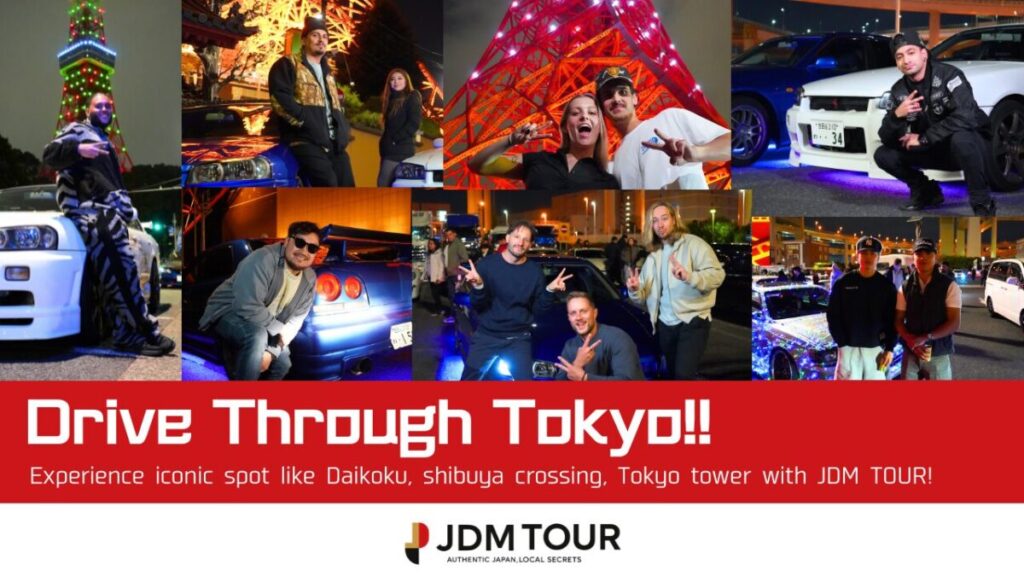
While standard rentals are practical, a new trend has exploded among car enthusiasts visiting Japan: renting “JDM” (Japanese Domestic Market) cars through specialized services like JDM TOUR.
The New Standard of Japan Travel: Public Roads in the Movie
The experience of being able to rent sports car japan is no longer just about driving; it has evolved into an "attraction" that transforms Japan's public roads into a real-life game world. In recent years, an exploding trend among international travelers is enjoying the act of driving through Japanese cities itself as a form of entertainment.
Specifically, commanding JDM machines such as the Nissan GT-R or Toyota Supra against the backdrop of Tokyo’s iconic landmarks is no longer just transportation; it is positioned as a participatory "activity." Just as cosplay driving tours have emerged, this integrated experience of car and city overturns conventional tourism, offering unforgettable, highly shareable memories that light up social media feeds.
This new style of journey, facilitated by exotic car rental tokyo services, has transformed from merely pursuing speed into a means of experiencing unforgettable "play." It allows you to deeply engage with Japan's unique culture and landscapes, creating an adventure that goes beyond traditional sightseeing.
Why is JDM So Popular Right Now?
Legendary sports cars manufactured in Japan during the 1990s and early 2000s—such as the Nissan Skyline (R34), icons for fans worldwide. For many, driving these cars on the actual roads they were designed for is a bucket-list experience that surpasses any standard sightseeing tour.
The Unique Charm of a JDM TOUR
JDM TOUR offers more than just a “car rental”; it provides a deep dive into Japanese car culture.
- The Pilgrimage to Daikoku PA: The highlight of many tours is driving to the Daikoku Parking Area on the Shuto Expressway. At night, this spot transforms into a gathering place for hundreds of beautifully customized cars, creating a vibrant atmosphere that is world-famous.
- Professional Guided Convoys: Driving a right-hand-drive manual car through the complex Shuto Expressway can be daunting. JDM TOUR offers plans where a professional guide leads the way in a lead car, ensuring you stay on the right path safely.
- Photography and Content Creation: The guides know the best “insta-worthy” spots, such as the Shibuya Crossing, Tokyo Tower, and Rainbow Bridge, allowing you to capture professional-quality memories with your dream car.
What to Prepare If You Plan to Drive
Check your license status and required documents first
If you want to drive in Japan, the first thing to confirm is not which car you want—it is whether you are legally allowed to drive. Depending on your country, you may need an International Driving Permit under the correct treaty format, or you may need a Japanese translation of your home license instead. This is the kind of detail that can derail an otherwise carefully planned trip if you leave it until the last minute. Many travelers focus on vehicle selection and route planning before checking the legal side, but that order is backwards. Make sure your documents are fully in order before building the rest of the experience.
Tokyo expressway driving is more mentally demanding than many visitors expect
The Shuto Expressway is not difficult because it requires extreme speed. It is difficult because it requires constant judgment in a compact, fast-moving road environment. The challenge often comes from short merge zones, quick route splits, dense signage, and the need to make lane decisions faster than you might in a more spacious road system. That means your most important goal is not to drive aggressively—it is to remain calm and in control. For many travelers, choosing an automatic transmission, avoiding the most stressful hours, or using a guided or escorted plan makes the experience far more enjoyable.
If photography matters to you, plan around stopping points rather than only routes
Many visitors think only about the driving route, but photography-focused travelers often get more satisfaction by planning around where they can safely stop and actually capture the car and setting together. You cannot simply pull over anywhere on Tokyo expressways, which means service areas, organized stop points, or guided itineraries can be far more valuable than a dramatic-sounding route on paper. If your goal includes content creation, memory-making, or simply beautiful photos of the car against Tokyo’s night backdrop, stop opportunities are just as important as driving time.
Etiquette and Safety Matter at Tokyo JDM Spots
Service areas are not theme parks for car tourism
This point is worth emphasizing. Places like Daikoku PA and Tatsumi First PA may be famous online, but they are still highway facilities designed for road users first. That changes how they should be approached. Visitors who understand this usually have a much better experience because they do not arrive with unrealistic expectations. They recognize that conditions may change, staff priorities are focused on safety and operations, and the environment depends on respectful behavior from everyone present.
Loud, disruptive, or invasive behavior damages the atmosphere
One of the fastest ways to ruin the experience—for yourself and for others—is to behave as though the location exists purely for spectacle. Excessive revving, blocking access lanes, surrounding owners without permission, and photographing people or their cars in an intrusive way all make the environment worse. Tokyo’s car culture is often more restrained and community-based than outsiders expect. Respect is one of the reasons the experience feels authentic. If you approach the scene as something to observe and appreciate rather than consume aggressively, you usually come away with much more.
Do not view the real scene only through movie stereotypes
Many overseas visitors arrive with a mental image shaped by movies, video games, and internet edits. While those influences are part of the appeal, they can also distort expectations. Real Japanese car culture is not defined only by wild street action. It often places enormous value on craftsmanship, condition, conversation, shared knowledge, and subtle atmosphere. The most rewarding JDM experiences in Tokyo usually come from paying attention to those details rather than expecting a nonstop action sequence. The reality is often quieter, more nuanced, and more interesting.
Model Itineraries for a Smooth Tokyo JDM Day
A half-day route: Ginza, Shinonome, and bayside night views
If your schedule is tight, a simple but effective plan is to start in central Tokyo with NISSAN CROSSING, move to A PIT AUTOBACS SHINONOME in the late afternoon or early evening, and then finish with a night-oriented bayside route. This works especially well for travelers who want a taste of Tokyo’s automotive culture without building their whole trip around it. It combines accessibility, atmosphere, and a sense of progression from polished city presentation to enthusiast energy.
A full-day route: shops during the day, guided experience at night
If JDM is a major reason for your trip, a stronger itinerary is to use the daytime for shops and brand-oriented stops, then join a guided experience after sunset. This structure creates contrast and depth. During the day, you can absorb the retail and manufacturer side of Japanese car culture. At night, you shift into the emotional side—expressway views, famous parking areas, city lights, and real-world enthusiast spaces. For many visitors, this is the format that feels most complete.
Seasonal upgrade: add a major event when timing lines up
If your dates happen to align with a major car event such as Tokyo Auto Salon, your experience can become even richer. Large-scale shows bring together custom builds, aftermarket brands, new trends, and crowds of enthusiasts in a way that everyday sightseeing cannot. These events operate differently from ordinary tourist activities and usually require more planning, but they can offer one of the most concentrated views of Japanese tuning culture available anywhere near Tokyo.
Conclusion
There is no single answer to the question of what the best JDM experience in Tokyo looks like. The right version depends on what kind of traveler you are. Some people want the atmosphere of legendary spots such as Daikoku PA. Others want to understand Japanese automotive culture through shops, manufacturer hubs, and conversation-friendly environments. Others dream of driving a JDM car themselves through Tokyo’s illuminated expressways. Each of those choices can be the right one if it matches your trip, your comfort level, and your expectations.
For most first-time visitors, the most reliable path is to start by observing, go deeper with a guided experience, and only then consider self-driving if it genuinely suits your skill and preparation. Tokyo’s JDM world is built on real roads, real communities, and places that still have practical functions beyond tourism. The more you respect that reality, the more rewarding the experience becomes. Instead of chasing only the most famous clip or viral location, build a day that fits your travel style and lets you feel that you truly connected with Japanese car culture.