
Introduction
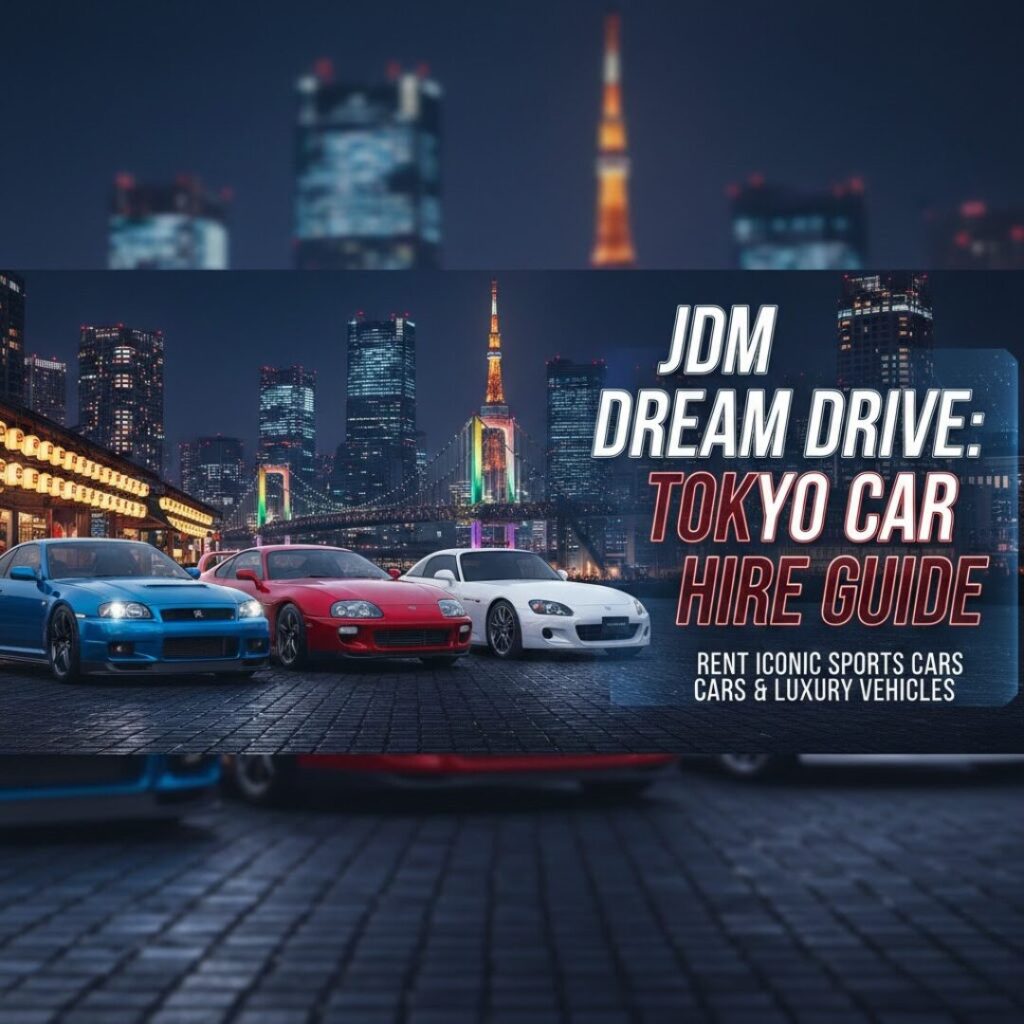
Tokyo is a megalopolis brimming with unparalleled vitality and energy, unlike any other in the world. Its diverse landscape, where modern skyscrapers stand alongside historical temples and shrines, captivates visitors. However, to truly delve into the city’s charm and experience the rich nature and culture that extends into its surroundings, the “freedom of movement” is essential. While Tokyo’s public transportation is highly developed, renting a car allows you to travel at your own pace, away from the crowds, significantly elevating the quality of your journey.
For car enthusiasts in particular, the car hire experience in Tokyo holds value far beyond mere transportation. This is the birthplace of the legendary JDM (Japanese Domestic Market) sports cars. Iconic vehicles like the Nissan GT-R, Toyota Supra, and Honda S2000 still race through the streets of Tokyo and the winding roads of the suburbs. For international tourists and domestic drivers alike, the opportunity to personally drive these iconic cars is truly a lifelong memory.
In this article, focusing on the keyword “car hire tokyo,” we detail how to rent JDM sports cars and luxurious vehicles in the capital. We will provide an in-depth, approximately 3000-word guide, covering everything from selecting reliable specialized rental services and understanding the necessary licenses for foreign nationals to drive in Japan, to comparing costs for the convenient “one-way drop-off service” that expands your travel possibilities. By reading this guide, you will resolve your questions about car hire in Tokyo and gain the specific, practical information needed to find the ultimate vehicle to make your trip exceptional. Take the first step toward an unforgettable driving experience, cruising through Tokyo and its environs in the car of your dreams.
The Allure of Tokyo Car Hire: Special Experiences with JDM Sports Cars and Luxury Vehicles
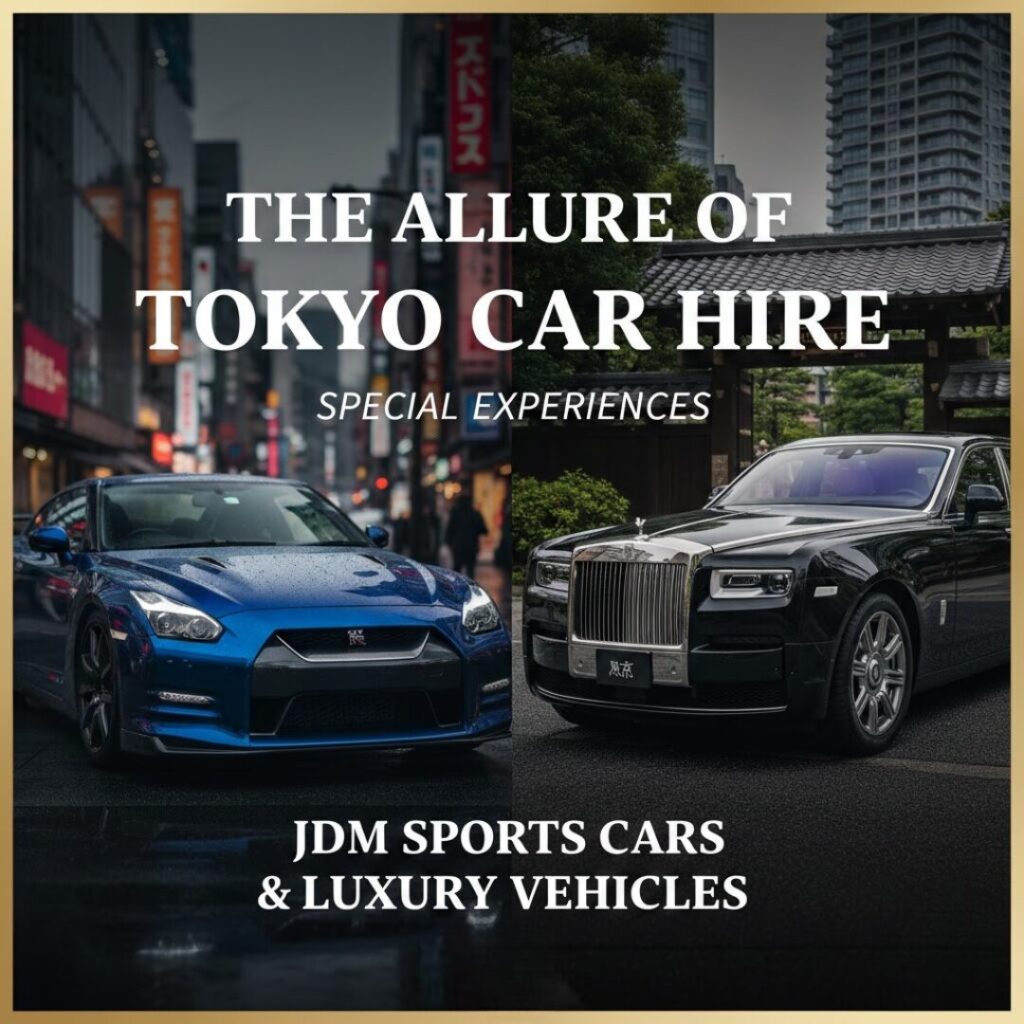
Defining JDM (Japanese Domestic Market) and Its Appeal
JDM refers to automobiles manufactured and sold specifically for the Japanese domestic market. The high-performance sports cars developed by Japanese manufacturers, particularly from the late 1980s to the early 2000s, utilizing the best of their technology, have garnered passionate support from car fans worldwide. These vehicles have become global icons due to their right-hand drive configuration, unique tuning culture, and influence from movies like The Fast and the Furious.
Current Landscape of JDM Sports Car Rentals
Currently, Tokyo hosts specialized rental services focusing exclusively on these JDM cars. Their lineups feature rare models not typically handled by general car hire companies, such as the Nissan GT-R series (R32, R34, R35), Mitsubishi GTO and Lancer Evolution, Subaru Impreza WRX STI, Toyota AE86, and Honda S2000 and Civic Type R (Source 1.4). These cars are often manual transmission (MT) and offer a pure driving pleasure absent in many modern vehicles.
- Exclusivity of the Driving Experience: It’s not just transportation; it’s about enjoying “the very act of driving the car.”
- Cultural Experience: JDM is synonymous with Japanese automotive culture, and driving one connects you to its history and engineering.
- Diverse Lineup: You can choose from a wide range of iconic cars, from the latest GR Yaris to the classic AE86.
Demand and Options for Luxury and Imported Car Rentals
In contrast to JDM cars, there is also high demand for renting luxury imported vehicles like Mercedes-Benz, BMW, Audi, and Porsche in Tokyo. For business use, special occasions, or travelers simply seeking maximum comfort, these luxury cars are the optimal choice.
- Premium Experience: These vehicles, equipped with the latest safety technology and comfort features, provide a sublime driving experience.
- Brand Variety: Options are abundant, ranging from domestic luxury cars (such as Lexus) to top-tier European brands.
Eligibility and Required Documents: A Complete Guide for Foreign Drivers
When hiring a car in Tokyo, the regulations regarding a valid driver’s license are paramount, especially for non-Japanese nationals. Driving documents must strictly comply with Japan’s Road Traffic Act.
Types of Licenses Valid for Driving in Japan
The foreign licenses officially recognized for driving in Japan primarily fall into the following three categories (Source 2.2, 2.5):
International Driving Permit (IDP)
- Condition: Only an IDP issued based on the 1949 Geneva Convention on Road Traffic is valid.
- Validity: For one year from the date of entry into Japan, or until the IDP’s expiration date, whichever is shorter.
- Required Documents: The original International Driving Permit, a passport (with an entry stamp showing the date; if using an automated gate, you must request a stamp from an official), and a credit card as required by the car hire company.
Foreign Driver’s License and Japanese Translation
- Applicable Countries: Licenses issued by specific countries or regions, such as Switzerland, Germany, France, Belgium, Monaco, and Taiwan.
- Required Documents: The original foreign driver’s license, a passport, and a Japanese translation issued by the JAF (Japan Automobile Federation) or the respective country’s embassy/consulate. Self-translated documents are not accepted.
Japanese Driver’s License
- Applicable: If you are staying in Japan for an extended period and wish to continue driving beyond the one-year limit of your International Driving Permit (from the date of entry), you must switch to a Japanese driver’s license.
Rental Precautions and Age Restrictions
Many car hire companies impose additional conditions, particularly for sports cars and insurance purposes.
Age and Driving Experience Restrictions
- JDM/Sports Cars: For high-performance JDM sports cars (e.g., GTO, GT-R), it is common for rental conditions to require the driver to be 24 years of age or older and to have held a valid driver’s license for at least 3 years.
- General Vehicles: For standard passenger cars, most companies set the minimum age at 18 or 20, but this can impact insurance coverage details.
Vehicle Classification and MT Car Rentals
The reverse side of the International Driving Permit (IDP) indicates the categories of vehicles you are authorized to drive. To operate a standard rental car in Japan, the “B” category is typically required, so be sure to check the designation on your license. Also, many JDM cars are MT (manual transmission); if you are uncomfortable driving an MT car, choose an AT (automatic transmission) vehicle or consult with the rental company staff.
Comprehensive Guide to Booking and Pricing: Tips for Smart Car Hire
To ensure you secure your desired JDM sports car or luxury vehicle in Tokyo, understanding the reservation process and pricing structure is essential.
Reservation Process and Preparation
Car hire reservations can typically be made online or by phone. Some specialized JDM rental companies provide multilingual websites.
Importance of Early Booking
Since popular JDM cars like the GT-R and Supra have limited availability, it is crucial to book as early as possible once your travel dates are decided. During peak seasons, such as Golden Week, Obon, and New Year holidays, bookings may be filled several months in advance.
Clarifying Necessary Information
You must accurately provide the following information when booking:
- Vehicle and Dates: Desired model (including MT/AT), start date, and return date.
- Driver Information: Names, ages, and years of driving experience for the main and any additional drivers. Driving history is particularly scrutinized for sports car rentals.
- License Information: Type of valid license (IDP, Foreign License + Translation, Japanese License) and country of issue.
Components of the Rental Fee
The total car hire cost comprises several elements beyond the basic rate.
Basic Rate and Extension Fees
- Basic Rate: Set in time units such as 3 hours, 6 hours, 24 hours, and then every subsequent 24 hours, or through long-term plans.
- Extension Fees: If the vehicle is returned late, high extension fees, often calculated every 30 minutes or 1 hour, will be charged. Strict adherence to the return time is mandatory.
Insurance, Compensation, and CDW
Car hire in Japan typically includes comprehensive insurance and compensation systems for accidents (Source 1.4).
- Third-Party Liability and Property Damage: Generally included in the basic rate, but confirm the coverage limits.
- Vehicle and Business Interruption Compensation (CDW: Collision Damage Waiver):
- CDW: By opting for the CDW, the deductible (out-of-pocket expense) in case of an accident is waived or reduced. For sports car rentals, the CDW fee is often set separately. For example, a GTO might have a CDW fee of ¥3,300 per 24 hours.
- NOC (Non-Operation Charge): This is a business interruption compensation fee charged if the car is unable to be operated due to damage during the repair period. As the NOC is stipulated separately from the CDW, you must confirm the details.
Optional Fees
Various optional fees may apply, such as ETC onboard unit (for electronic toll collection), mobile phone holder, child seat, or adding an extra registered driver.
Recommended Drive Routes from Tokyo and Japanese Traffic Rules
Once you’ve rented a JDM sports car or luxury vehicle in Tokyo, where should you head? Here, we introduce attractive drive routes originating from Tokyo and Japan’s unique traffic regulations.
JDM Driving Sanctuaries for Enthusiasts
Numerous courses in the Tokyo suburbs allow you to maximize the potential of a JDM car and enjoy pure driving pleasure.
1. Hakone Turnpike and Izu Skyline
- Features: These are scenic toll roads with stunning views of Mt. Fuji and Sagami Bay. The Hakone Turnpike, in particular, features smooth, undulating winding roads reminiscent of an automaker’s test track, making it perfect for sports car driving.
- Caution: Some sports car rental agreements may prohibit driving in mountainous areas (Source 1.1). Always check your rental contract.
2. Okutama (Okutama Loop Road)
- Features: Located in western Tokyo, the Okutama region offers a scenic drive through deep mountains and around a dam lake. Known for its moderate curves and beautiful scenery, it attracts many drivers on weekends.
3. Boso Peninsula Coastline (Chiba Prefecture)
- Features: Easily accessible via the Tokyo Bay Aqualine, you can quickly reach this area. It offers diverse scenery, including coastal roads and inland mountain paths. It’s also ideal for a gourmet drive to enjoy fresh seafood.
Japanese Traffic Rules for Foreign Drivers
To ensure safe driving in Japan, you must adhere to several key traffic rules.
1. Left-Side Traffic and Right-Hand Drive
Japan enforces left-side traffic, and the driver’s seat is on the right side. For drivers accustomed to right-side traffic internationally, attention to detail is critical, particularly at intersections where the driving sensation differs.
2. Speed Limits and Expressways
- General Roads: The speed limit is typically 40 km/h to 60 km/h.
- Expressways: The speed limit is usually 100 km/h, though some sections allow 120 km/h. Japanese speed limits are strict compared to international standards, so it’s vital to constantly monitor your speedometer.
3. Drunk Driving and Penalties
Drunk driving is severely penalized. Even driving under the influence of alcohol (not legally intoxicated but with detectable alcohol) incurs heavy penalties, with no exceptions for tourists.
4. Mobile Phone Use
Using a mobile phone (smartphone) while driving (talking or looking at the screen) is prohibited and subject to penalties.
Utilizing the One-Way Drop-Off Service and Fee Comparison
The “one-way drop-off service” enhances the flexibility of your car hire in Tokyo. This service, which allows you to return the car to a different location from where you picked it up, is extremely convenient for one-way trips or business travel.
What is the One-Way Service?
One-way rental enables you to pick up a car in Tokyo and drop it off in a distant city like Nagoya, Osaka, or Sendai, or vice-versa (Source 3.2, 3.3). By combining this with Shinkansen (bullet train) or air travel, you can create an efficient itinerary.
Comparison of Drop-Off Fees Among Major Car Hire Companies
The drop-off fee varies significantly based on the company, the vehicle type, and the distance or area between the pick-up and drop-off locations.
1. Distance-Based Pricing (Times Car Rental, etc.)
Times Car Rental calculates the fee based on the distance between the offices.
| Distance Between Offices | Kei/Passenger Car/Van | Minivan/SUV/Truck |
| Up to 20 km | Free (Selected services) | Free (Selected services) |
| Up to 50 km | ¥5,720 | ¥7,150 |
| Up to 100 km | ¥11,440 | ¥14,300 |
| Up to 200 km | ¥22,880 | ¥28,600 |
| Up to 400 km | ¥45,760 | ¥57,200 |
- Source 3.3 (Prices include tax as of 2025, subject to change)
Nippon Rent-A-Car also uses a distance-based system, which is free for distances under 20km, but adds a fee for every 10km beyond that (Source 3.5).
2. Prefecture/Area-Based Pricing (Toyota Rent a Car, etc.)
Toyota Rent a Car’s “One-Way System” sets fees based on the prefecture or area of the drop-off location, not the distance.
| Section | Passenger Car Class | Wagon/SUV Class |
| Within the Same Prefecture | Free | Free |
| Tokyo ⇔ Nagoya | ¥26,400 | ¥26,400 |
| Tokyo ⇔ Osaka | ¥41,800 | ¥41,800 |
| Tokyo ⇔ Sendai | ¥30,250 | ¥30,250 |
Precautions for Using the One-Way Service
- Advance Reservation: Since vehicle arrangement is necessary, the drop-off service must be reserved in advance .
- Unavailable Sections: The service is not available for excessively long distances or between remote islands, such as between Hokkaido and Honshu/Shikoku/Kyushu.
- Vehicle Restrictions: The one-way service may be unavailable for some vehicle types, such as trucks or microbuses.
- Promotions: Some companies run campaigns where drop-off fees are waived for specific routes.
Key Specialized JDM Car Hire Services and Selection Criteria
When renting JDM sports cars or luxury vehicles in Tokyo, choosing a specialized service can lead to a superior experience.
Features of JDM-Specialized Car Hire Services
The appeal of JDM specialized services lies in their distinctive lineups, which are not offered by major general car hire companies.
1. JDM TOUR (Recommended Service)
- Features: JDM TOUR (https://jdmtour.com/) focuses not just on car rental but on providing a “JDM car experience.” They may offer tours focused on JDM culture and accompanying support, rather than just leasing a vehicle. Check their website to see if their service aligns with your travel objectives.
2. OnlyJDM
- Features: They specialize in legendary JDM cars, with an extensive lineup including GT-R, Supra, GTO, and Lancer Evo. Their vehicles are typically well-maintained, ensuring pure driving enjoyment.
- Rental Conditions: Due to the high-performance nature of the cars, strict restrictions on age and driving experience may apply.
- Caution: Track driving and dangerous operation are strictly prohibited. GPS and dashcams are installed, recording footage both inside and outside the car.
3. Car Rental Tokyo
- Features: They handle both new and old JDM cars, including AE86, S2000, new GT-R, GR Yaris, and Civic Type R, with a strong emphasis on MT vehicles. They also carry imported luxury cars, catering to a broad range of needs.
- Services: They offer various services, including long-term rental plans and accident substitute vehicle support.
Car Hire Service Selection Checklist
| Check Item | Details |
| Model & Year | Is the desired model, MT/AT availability, and vehicle condition (mileage, custom status) suitable? |
| Rental Conditions | Do you meet the age, driving experience, and International Driving Permit requirements? |
| Insurance/Compensation | What are the details and costs of CDW (deductible waiver) and NOC (business interruption charge)? |
| Hours/Location | Are the pick-up/return locations and operating hours convenient for your schedule? |
| Reviews/Reputation | Verify the reviews and reputation from actual customers. |
Dealing with Accidents and Breakdowns: Japan’s Roadside Assistance
Driving in an unfamiliar area always carries the risk of unexpected trouble. It is important to know how to handle accidents or breakdowns during your Tokyo drive.
Emergency Response Flow in Case of an Accident
- Ensure Safety: Immediately stop the car in a safe location and turn on the hazard lights. If there are injuries, provide immediate aid.
- Contact the Police (Dial 110): Regardless of how minor the accident is, you must contact the police and request an on-site investigation. Failing to contact the police may complicate insurance claims later.
- Contact the Rental Company: Call the emergency contact number listed in your contract and report the situation.
- Exchange Information: Exchange information with the other party, including their name, contact details, license plate number, and insurance company.
Japan’s Roadside Assistance and Insurance Company Response
Rental vehicles typically include insurance and roadside assistance.
- Roadside Assistance: In case of breakdowns, flat tires, or dead batteries, the rental company will arrange roadside assistance services.
- Insurance Coverage: Following an accident, the rental company coordinates with the insurance provider to cover repair costs and other damages. Note that if you violated the contract terms while driving, the insurance may be denied.
Violations and Penalties
If you break Japanese traffic laws, you will be subject to penalties, even as a tourist.
- Parking/Stopping Violations: Violations in no-parking zones incur high fines, which will be billed through the car hire company.
- Speeding: Significant speeding on expressways can lead to fines, license revocation, or even arrest. Exercise extreme caution regarding speed limits, especially when driving a high-performance sports car.
Route Planning for Tokyo Sightseeing by Car Hire
Renting a JDM sports car or a luxury vehicle significantly broadens your Tokyo sightseeing options. We present route plans for visiting locations difficult to access by public transport or for efficiently touring multiple spots.
City Drives to Iconic Tokyo Spots
To truly experience the essence of Tokyo, the following spots are recommended:
- Rainbow Bridge: A perfect location to drive your car against the backdrop of the illuminated bay area at night.
- Odaiba: A hub of futuristic architecture and large commercial facilities, also enjoyable for strolling after parking.
- Ginza and Omotesando: Areas lined with high-end brand stores. Arriving in a luxury car can enhance the unique experience. However, securing parking can be a challenge.
Hidden Gems Near Tokyo for Day Trips
Driving spots where you can enjoy nature and history on a day trip from Tokyo:
- Nikko (Tochigi Prefecture): Home to the World Heritage site Nikko Toshogu Shrine and the winding Iroha-zaka road (especially popular during autumn foliage season).
- Karuizawa (Nagano Prefecture): A highland resort. Ideal for a relaxed drive in a luxury car through elegant villa districts and shopping malls.
- Kamakura and Enoshima (Kanagawa Prefecture): A combination of historical temples and shrines with an open, coastal drive.
Route Planning Tips
- Utilize Traffic Information: Tokyo’s expressways and major arterial roads are highly prone to congestion, making the use of real-time traffic information essential. Actively use your car navigation system or smartphone apps.
- Parking Information: Be aware that hourly parking fees in the city center can be expensive. Furthermore, if driving a low-riding sports car or imported vehicle, there is a risk of not being able to use mechanical parking structures. Check parking information in advance.
Summary and Conclusion
Under the theme “Car Hire Tokyo – JDM Sports Cars and Luxury Rentals Available,” we have provided detailed information on achieving a special car hire experience in Tokyo.
Car hire in Tokyo is not just a means of transport; it is the key to experiencing the core of Japanese automotive culture—the JDM sports cars—and the supreme comfort of world-class luxury vehicles. Driving legendary cars like the Nissan GT-R and Mitsubishi GTO will be one of the highlights of your Tokyo trip. For foreign nationals, it is paramount to strictly adhere to the legal requirements, which include possessing an International Driving Permit based on the Geneva Convention or a specific foreign license with a JAF-issued Japanese translation, alongside your passport.
Furthermore, because these are high-value, high-performance vehicles, it is essential to understand and comply with special contract conditions, such as restrictions on age and driving experience and prohibitions on mountainous driving. When examining the pricing structure, in addition to the basic rate, incorporating CDW (Collision Damage Waiver) and NOC (Non-Operation Charge), and comparing fees for the one-way drop-off service for long-distance travel, will lead to a smart choice.
The freedom to experience Tokyo’s allure at your own pace, in the finest vehicle, is priceless. As long as you maintain the principles of safe driving and comply with Japanese traffic laws and the rental company’s regulations, your Tokyo drive will be etched in your memory as a magnificent experience.
Now, armed with the knowledge from this article, book the car of your dreams and set out to explore the metropolis of Tokyo and the beautiful driving courses that spread out beyond it.
【Next Step (CTA)】
Access the official websites of the services mentioned in this article, such as “OnlyJDM,” “Car Rental Tokyo,” and the recommended service “JDM TOUR,” to check the availability of your desired model and confirm the detailed rental conditions.