
Introduction
When people start looking for exotic cars in Tokyo, they usually run into the same questions first: where can you actually see them, can travelers experience them too, and is walking around the city enough to make it worthwhile?
Tokyo is one of the world’s biggest cities, and it naturally has neighborhoods where supercars, luxury cars, and exotic vehicles feel right at home. That said, if you approach it without a plan, it is easy to end up disappointed. You may spend hours moving around the city and still feel like you never really found the Tokyo exotic car experience you were hoping for.
The good news is that there are three practical ways to enjoy exotic cars in Tokyo.
The first is to focus on upscale districts such as Roppongi, Ginza, and Aoyama, where your chances of spotting high-end cars are better.
The second is to book a rental or driving experience and enjoy the cars directly instead of relying on luck.
The third is to use events and car culture destinations to make the experience more certain and more immersive.
This article explains how to enjoy exotic cars in Tokyo from every angle:
where to go if you want to spot them, how to choose a driving experience, what overseas visitors need to know before getting behind the wheel, and how events can make the whole trip far more memorable.
If your goal is simply to see Ferraris and Lamborghinis in the city, your best strategy is different from someone who wants to drive one. By the end of this guide, you should have a much clearer idea of the best way to enjoy exotic cars in Tokyo based on the kind of experience you actually want.
What to Know Before Looking for Exotic Cars in Tokyo
Tokyo is both a city for spotting cars and a city for buying the experience
Tokyo is not just a place with a strong car scene. It is also a city where luxury consumption, tourism, nightlife, premium hotels, and major events overlap. That combination makes it a particularly interesting place for exotic cars. In neighborhoods known for their upscale atmosphere, high-end vehicles often fit naturally into the streetscape.
At the same time, Tokyo is not only a city where you wait and hope to see something special go by. It is also a place where the experience itself can be purchased. Today, you can find supercar driving experiences and luxury car rentals that let you move beyond passive sightseeing.
That means the Tokyo exotic car experience can be approached in two very different ways:
you can either chase the atmosphere and enjoy the thrill of spotting rare cars in the city, or you can create a guaranteed memory by booking time behind the wheel.
People who want to walk and watch need different information from people who want to drive
Many people searching for exotic cars in Tokyo seem similar at first, but they usually fall into two different groups.
The first group wants to walk around the city and see exotic cars naturally. They want to enjoy the scenery, take photos, and feel the atmosphere of Tokyo while keeping their plans flexible.
The second group wants to actually drive or ride in one. For them, the dream is not just seeing a Ferrari or Lamborghini parked outside a hotel. It is sitting in the driver’s seat, hearing the engine, and turning that into a real part of the trip.
If you mix these goals together, it becomes harder to plan well.
If you only want to spot cars, you do not need to spend much time reading about driving documents or rental conditions.
If you want to drive, however, you should check the license requirements, reservation flow, insurance, and support options first.
If you want a reliable experience, do not depend entirely on chance
You absolutely can see exotic cars on Tokyo’s streets. But if that is the centerpiece of your trip, relying only on luck can be risky. Your experience will depend on the day, the time, the weather, and whether anything special is happening nearby.
That is why the best approach is usually to combine city walking with something more intentional, such as a driving experience, a rental, an event, or a car-focused destination. This is especially important for short-term visitors who do not have time to gamble on random sightings.
The Best Areas in Tokyo to Spot Exotic Cars
Roppongi works especially well if you want luxury and nightlife together
Roppongi is one of the strongest candidates for anyone hoping to see exotic cars in Tokyo. The area is known for its combination of luxury hotels, upscale restaurants, nightlife, and premium commercial spaces, which naturally attracts high-end vehicles.
What makes Roppongi appealing is not just the chance of seeing a supercar. It is the way those cars fit into the atmosphere. If you want to pair exotic cars with neon lights, sleek architecture, and a recognizably upscale Tokyo night scene, Roppongi is one of the most photogenic places to do it.
For many visitors, the appeal of exotic cars in Tokyo is not just the vehicle itself but the full visual experience. Roppongi delivers that better than most places.
Ginza is ideal if you prefer elegance over flashiness
Ginza offers a different kind of experience. It is less about loud nightlife and more about polished, refined luxury. The district is lined with flagship stores, department stores, luxury brands, and elegant streets, which makes it a natural setting for premium vehicles.
In Ginza, the exotic car experience feels more understated. Instead of focusing on drama or noise, the neighborhood lets you appreciate how cars like Ferrari, Bentley, Rolls-Royce, or Aston Martin blend into an already sophisticated environment.
If Roppongi feels cinematic, Ginza feels curated.
For travelers who want to enjoy exotic cars in a more graceful and upscale setting, Ginza is one of the easiest places to include in a broader Tokyo itinerary.
Aoyama and Omotesando are a good match for style-conscious car lovers
Aoyama and Omotesando are especially appealing for people who care about design, fashion, and atmosphere as much as the cars themselves. This is a part of Tokyo where architecture, high-end retail, cafés, and visual taste all come together.
That matters because exotic cars in these neighborhoods often feel less like flashy trophies and more like part of a larger aesthetic. You may not come here solely to hunt for supercars, but if you enjoy stylish urban environments, it is one of the best areas in Tokyo to casually experience them.
This also makes Aoyama and Omotesando easier to visit with travel companions who are not hardcore car enthusiasts. Even if they are not especially interested in exotic cars, the neighborhood still works as a high-quality Tokyo destination.
How to Make “Just Looking” Feel Like a Real Exotic Car Experience
Late afternoon and evening usually work better than midday
If your goal is to spot exotic cars in Tokyo, late afternoon into evening is usually more rewarding than the middle of the day.
That is because many of the places associated with luxury cars are tied to dinner reservations, hotel arrivals, nightlife, and evening social movement. As the city shifts into nighttime mode, the atmosphere becomes more aligned with the kind of premium vehicles people hope to see.
This does not mean there is a guaranteed magic hour. But compared with wandering around at random during the day, focusing on the evening generally gives the experience a stronger mood and a better sense of payoff.
Look for destinations that create movement, not just busy roads
One mistake beginners often make is standing near a wide road and waiting. But heavy traffic does not automatically mean better sightings.
A better strategy is to think about where exotic cars make sense to arrive. Hotel entrances, luxury shopping areas, valet zones, premium restaurants, and stylish commercial hubs often produce more meaningful sightings than a road with lots of ordinary traffic.
In other words, do not just ask where cars drive.
Ask where these kinds of cars are likely to be going.
That is one reason neighborhoods like Roppongi and Ginza are so effective. They are not just roads on a map. They are places that naturally attract the lifestyle associated with high-end vehicles.
Good photo etiquette matters
If you spot an exotic car in Tokyo, it is easy to get excited. But it is important to stay respectful. Do not block entrances, crowd hotel driveways, step into the road, or hover around someone else’s vehicle for too long.
Luxury hotels, restaurants, and stores are still functioning spaces first. Their traffic flow and guest experience take priority.
The best mindset is not to treat the city like an open-air car museum. Instead, think of it as a place where car culture and urban culture overlap. That perspective tends to lead to better behavior and, ultimately, a better experience.
How to Ride or Drive Exotic Cars in Tokyo
Driving experience packages are a great entry point
If seeing exotic cars is not enough, the most approachable next step is a supercar driving experience. This is one of the easiest ways for travelers to turn Tokyo from a sightseeing destination into a genuine motoring memory.
Short driving experiences are especially useful because they do not consume the entire day. You can fit them into a wider Tokyo trip without restructuring everything else around the car.
For many people, this is the ideal first step. It answers a very specific desire:
you may never own a Ferrari, Lamborghini, or McLaren, but in Tokyo, you can still spend real time driving one.
Rentals give you a stronger feeling of ownership and freedom
If you want something closer to a private experience, luxury car rental is the stronger option.
The main advantage of renting is freedom. A driving experience is designed and guided. A rental, by contrast, lets the car become part of your day. You can leave your hotel, drive to a destination of your choice, stop for photos, and build your own route around the vehicle.
That creates a much more personal memory. Instead of sampling the car, you live with it for several hours.
The trade-off is that rentals require more planning. You need to confirm license validity, deposits, insurance coverage, experience requirements, handover logistics, and any limitations that apply to the vehicle or the booking. It is important not to choose based only on the model you want. The booking conditions matter just as much.
Support for overseas visitors can make a big difference
For international travelers, one of the most important factors is not the car itself but the level of support behind the booking.
Japan’s roads are left-hand traffic, central Tokyo can be busy and confusing, and even experienced drivers may find the city mentally demanding in a supercar. That is why services aimed at overseas visitors can be especially valuable. Options such as bilingual assistance, route support, and briefings on Japanese road rules can significantly improve the experience.
This is not just a convenience issue. It has a direct impact on enjoyment. If you spend the first half of the drive feeling tense, confused, or worried about making a mistake, the exotic car experience becomes less memorable for the right reasons.
For many travelers, choosing a support-friendly provider is smarter than simply picking the most dramatic car on the list.
[The Hottest Experience] Driving Dream Sports Cars in Japan with JDM TOUR
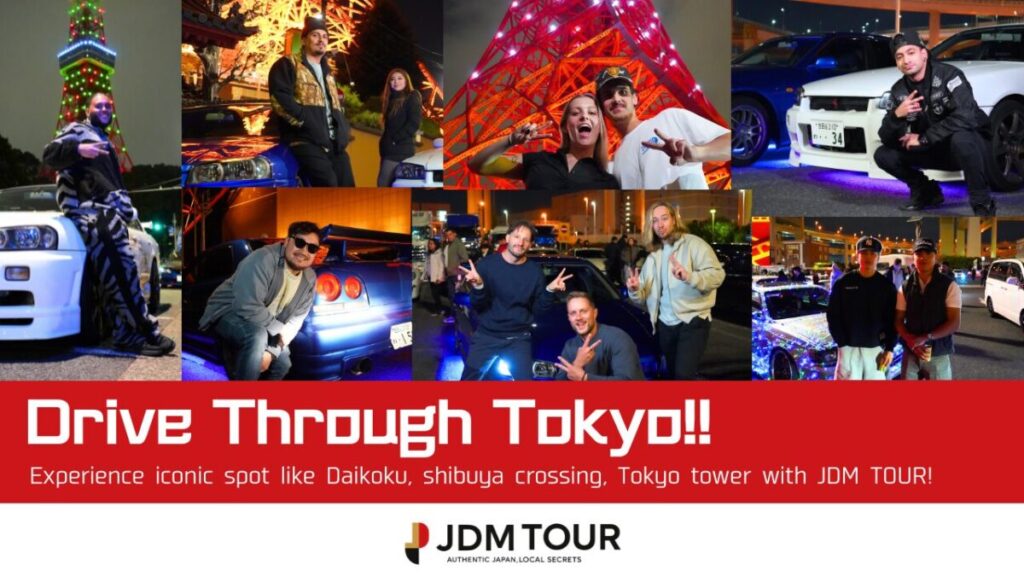
While standard rentals are practical, a new trend has exploded among car enthusiasts visiting Japan: renting “JDM” (Japanese Domestic Market) cars through specialized services like JDM TOUR.
The New Standard of Japan Travel: Public Roads in the Movie
The experience of being able to rent sports car japan is no longer just about driving; it has evolved into an "attraction" that transforms Japan's public roads into a real-life game world. In recent years, an exploding trend among international travelers is enjoying the act of driving through Japanese cities itself as a form of entertainment.
Specifically, commanding JDM machines such as the Nissan GT-R or Toyota Supra against the backdrop of Tokyo’s iconic landmarks is no longer just transportation; it is positioned as a participatory "activity." Just as cosplay driving tours have emerged, this integrated experience of car and city overturns conventional tourism, offering unforgettable, highly shareable memories that light up social media feeds.
This new style of journey, facilitated by exotic car rental tokyo services, has transformed from merely pursuing speed into a means of experiencing unforgettable "play." It allows you to deeply engage with Japan's unique culture and landscapes, creating an adventure that goes beyond traditional sightseeing.
Why is JDM So Popular Right Now?
Legendary sports cars manufactured in Japan during the 1990s and early 2000s—such as the Nissan Skyline (R34), icons for fans worldwide. For many, driving these cars on the actual roads they were designed for is a bucket-list experience that surpasses any standard sightseeing tour.
The Unique Charm of a JDM TOUR
JDM TOUR offers more than just a “car rental”; it provides a deep dive into Japanese car culture.
- The Pilgrimage to Daikoku PA: The highlight of many tours is driving to the Daikoku Parking Area on the Shuto Expressway. At night, this spot transforms into a gathering place for hundreds of beautifully customized cars, creating a vibrant atmosphere that is world-famous.
- Professional Guided Convoys: Driving a right-hand-drive manual car through the complex Shuto Expressway can be daunting. JDM TOUR offers plans where a professional guide leads the way in a lead car, ensuring you stay on the right path safely.
- Photography and Content Creation: The guides know the best “insta-worthy” spots, such as the Shibuya Crossing, Tokyo Tower, and Rainbow Bridge, allowing you to capture professional-quality memories with your dream car.
Location for JDM TOUR
What Travelers Need to Know Before Driving in Tokyo
Not every international driving permit is valid in Japan
This is one of the most important points in the entire process.
Many travelers assume that if they have an international driving permit from their home country, they are automatically allowed to drive in Japan. That is not always true. What matters is whether the document is the correct type recognized under Japan’s legal framework.
Because of this, anyone planning to drive exotic cars in Tokyo should confirm the validity of their documents before making a reservation. Doing it afterward can lead to the worst-case scenario: arriving excited for the booking and being unable to take the car.
Some countries can drive with a translated domestic license instead
There are also cases where travelers from specific countries or regions may be able to drive in Japan using their original license together with an official Japanese translation.
This can be very helpful, but it is not universal. The rule depends on where your license was issued. That is why it is important to confirm your exact eligibility rather than relying on general advice from other travelers.
If you get this part right early, planning the rest of your Tokyo exotic car experience becomes much easier.
Legal eligibility and actual comfort are not the same thing
Even if your documents are valid, that does not automatically mean driving in Tokyo will feel easy.
Tokyo traffic can be dense and stressful. Lane changes happen quickly, pedestrians are everywhere, taxis stop unexpectedly, and urban signage can be mentally tiring if you are not used to it. On top of that, exotic cars often come with wider bodies, lower ride heights, limited visibility, and more pressure from the driver’s seat.
That is why people who are new to left-hand traffic, unfamiliar with Japanese road conditions, or not fully comfortable driving in large cities should be realistic about their skill level.
Starting with a shorter, guided, or support-heavy experience is often the better choice. The smartest way to enjoy exotic cars in Tokyo is not to overestimate yourself. It is to choose the format that lets you actually relax and enjoy the moment.
If You Want More Certainty, Use Car Events Too
Tokyo Auto Salon offers an extremely dense car experience
If your travel dates line up, car events can be one of the best ways to enjoy exotic cars in and around Tokyo.
Tokyo Auto Salon is especially powerful because it delivers a concentrated automotive atmosphere. Instead of hoping to spot a few interesting cars in the city, you are stepping into a place where the entire environment is built around vehicles, enthusiasts, builders, and brands.
This matters because the value of Tokyo Auto Salon is not limited to exotic cars alone. It also introduces you to the broader Japanese tuning and customization scene, which gives the whole trip much more depth.
For travelers who want a high-density automotive experience rather than random sightings, events like this can outperform street hunting by a wide margin.
Japan Mobility Show is better for new technology and the future of the industry
Another strong option is the Japan Mobility Show, especially if your interest extends beyond supercars and into the wider automotive future.
This event is useful for people who want to understand how Tokyo presents mobility, innovation, concept vehicles, and the direction of the industry itself. It is less about chasing a Ferrari moment on the street and more about seeing the bigger picture.
That makes it a good fit for travelers who are interested in both luxury vehicles and Japan’s broader automotive identity.
Odaiba becomes much more interesting when events are happening
Odaiba, Ariake, and nearby waterfront areas become especially relevant when large auto or mobility events are scheduled.
On a normal day, they are not necessarily the most reliable places to spot exotic cars casually. But when major shows are taking place, the area becomes far more active and much more rewarding for car enthusiasts.
If your trip dates match the event calendar, building a day around this part of Tokyo can dramatically improve the overall experience.
How to Explore Tokyo More Deeply as a Car Enthusiast
Add car lifestyle destinations to your itinerary
Some people are not satisfied with simply seeing a few supercars on the street. They want to understand the broader culture around cars in Tokyo.
For that kind of traveler, it helps to include places that reflect how car enthusiasts actually spend time in the city. A large car lifestyle destination can add another layer to the trip by showing how automotive enthusiasm connects with retail, coffee culture, media, and everyday leisure.
This is valuable because it shifts the experience from isolated sightings to a more complete understanding of Tokyo’s car scene.
Separate “luxury car tourism” from “JDM tourism”
When people search for exotic cars in Tokyo, they often imagine Ferraris, Lamborghinis, McLarens, Bentleys, and Rolls-Royces. That is a valid part of the experience, but it is not the whole story.
Tokyo also connects to the world of Japanese performance culture in a major way. The city and its surrounding event ecosystem can expose you not only to imported luxury brands but also to JDM identity, tuner culture, and the uniquely Japanese side of car enthusiasm.
That is why it helps to make a clear distinction between two different types of trip:
One is a trip focused on ultra-premium foreign cars in upscale Tokyo neighborhoods.
The other is a trip focused on Japanese car culture and enthusiast identity.
Both are rewarding, but they are not the same. Once you separate them, planning gets much easier.
Do not try to do everything in one day
Car enthusiasts often make the same mistake: trying to fit every idea into a single schedule.
It is tempting to do Ginza during the day, Aoyama in the afternoon, Roppongi at night, and then squeeze in a rental or event on top of that. In practice, that usually leads to fatigue and a less memorable experience.
A better plan is to separate your trip into different moods.
For example:
Spend one day on city walking and spotting cars.
Spend another day on driving, rentals, or events.
That gives each part of the experience more room to breathe and makes the whole Tokyo exotic car trip feel more intentional.
The Best Way to Choose Your Tokyo Exotic Car Experience
If you mainly want to see cars, start with Roppongi and Ginza
For first-time visitors, Roppongi and Ginza are the easiest starting points.
They are both strong sightseeing districts in their own right, so even if the car spotting is less dramatic than expected, the visit still feels worthwhile. That makes them low-risk and high-reward areas for travelers who want to experience exotic cars in Tokyo without building the whole trip around cars alone.
If you want to drive, start with a short experience
If your dream is to get behind the wheel, it is usually smarter to begin with a short driving experience rather than jumping immediately into an expensive half-day rental.
A shorter session lets you learn how comfortable you feel with the car, the roads, the provider, and the overall environment. Once you understand that, it becomes much easier to decide whether a longer rental is really worth it.
Starting smaller often leads to a better decision, not a less exciting one.
If you are visiting from overseas, check your driving eligibility first
For international visitors, the most important part of the plan is not choosing between Ferrari and Lamborghini. It is confirming whether you can legally drive at all.
Once that part is clear, everything else becomes far more realistic. You can compare providers properly, choose between experience formats, and avoid wasting time on options that would never have worked for you.
For many travelers, this single step is what turns the idea of driving exotic cars in Tokyo from a fantasy into an achievable part of the trip.
Conclusion
Enjoying exotic cars in Tokyo is not just about asking where you might see one. To get the most out of the experience, it helps to separate the idea into three different approaches: spotting them, driving them, and immersing yourself through events or car culture destinations.
If you want to enjoy the atmosphere of Tokyo while seeing luxury cars naturally, neighborhoods such as Roppongi and Ginza are among the strongest choices.
If you want something more memorable and hands-on, driving experiences and high-end rentals are the logical next step.
And if you want the highest concentration of automotive excitement, major events can transform the entire trip.
The key question is simple:
Are you planning a trip to see exotic cars in Tokyo, or are you planning a trip to drive them?
Once you answer that, everything else becomes easier. Your route, your schedule, your budget, and your expectations all start to align.
If you are coming to Tokyo anyway, do not leave the experience to chance alone. With the right plan, exotic cars in Tokyo can become one of the most memorable parts of your trip.