Introduction
If you want a JDM experience in Tokyo, it is easy to get stuck on questions like these: where can you actually experience the real atmosphere, can you reach Daikoku PA on your own, and is it better to rent a car or join a guided tour? A lot of information online is fragmented. Social media is full of dramatic photos, but there are surprisingly few articles that explain access, local rules, and how to behave on site in a practical way.
The conclusion is simple: if you want to fully enjoy a JDM experience in Tokyo, it is not enough to just visit famous spots. What matters is understanding where to go, how to get there, how to join, what time to go, and what kind of manners are expected. Classic locations like Daikoku PA are absolutely worth knowing, but they do not represent the entire car culture around Tokyo. When you combine daytime manufacturer culture, the stronger night atmosphere around the bayside expressways, event-season energy, and the practical driving rules international visitors should know, the experience becomes much richer.
In this article, I will explain what a “real” JDM experience in Tokyo actually means, then walk through the best ways to enjoy it, the key spots to know, which transport style fits which traveler, and the practical points that help you avoid disappointment. This is not just a flashy overview. It is meant to help both travelers who want to add JDM culture to a Tokyo trip and car-focused visitors who want to build part of their itinerary around it.
What makes a JDM experience in Tokyo special
A JDM experience in Tokyo is special not simply because you can see Japanese cars. What makes it unique is that the cars themselves, the roads, the people, the manufacturers, and the tuning history all exist together in the same environment. Outside Japan, “JDM” is often treated as a style category or a shorthand for popular Japanese performance cars. Around Tokyo, however, what you experience is much closer to a living culture.
For example, the nighttime atmosphere on the Shuto Expressway and in the bayside areas is not just a movie or video game fantasy. In reality, you will see a mix of sports cars, classics, European cars, supercars, and more. It is not always a pure “JDM-only” scene. Daikoku PA became famous not because it is an official event venue, but because it naturally became a place where car enthusiasts gather. Since it is not a formal scheduled event space, the atmosphere changes from night to night depending on weather, enforcement, traffic, and crowd size.
Tokyo’s JDM appeal also does not stop at driving. Places like NISSAN CROSSING in Ginza let visitors experience modern Japanese automotive branding in a way that is easy to fit into a daytime sightseeing route. It is centrally located, accessible, and much easier to enjoy even if someone in your group is not deeply into cars.
In other words, the real appeal of a JDM experience in Tokyo is not just “seeing famous cars.” It is feeling how Japanese car culture lives inside everyday life, city travel, events, and the road environment itself. Once you understand that, the experience becomes much more meaningful than a simple photo stop.
The main ways to enjoy JDM culture in Tokyo
There are four major ways to enjoy JDM culture in Tokyo: joining a tour, driving yourself, visiting display spots, and attending events. Each approach suits a different type of traveler, so the best choice depends on your travel style.
The most practical option for many visitors is a guided JDM tour. Places like Daikoku PA and the bayside routes can be difficult to access smoothly without a car, and public transportation alone does not make the experience easy. Parking areas on the expressway are fundamentally designed for road users, not for casual walk-in sightseeing.
The second option is renting a car and driving yourself. This is attractive if you love driving and want full control over your route and timing. However, international visitors need to check whether they are legally allowed to drive in Japan. Depending on your country or region, you may need a Geneva Convention international driving permit, or your domestic license plus an official Japanese translation.
A third option is visiting car-related display locations without driving. This is ideal for travelers who want the atmosphere without the stress of navigating Tokyo roads. Places like NISSAN CROSSING are easy to add to a normal city itinerary and work well even in bad weather. It is also worth noting that some older attractions often mentioned in old blog posts are no longer operating, so relying on outdated travel articles can lead to disappointment.
The fourth option is planning your trip around a major event. If your dates line up, attending something like Tokyo Auto Salon can be one of the highest-density JDM experiences possible. You get tuning culture, aftermarket parts, concept builds, and manufacturer presence all in one place.
For first-time visitors, the safest formula is often this: daytime showroom or city sightseeing, followed by a night tour or ride-along experience. Self-driving gives you freedom, but it also comes with legal, logistical, and mental stress. It is often better suited to travelers whose main goal is the driving itself.
The must-know spots and how to enjoy them
If you are talking about JDM around Tokyo, Daikoku PA is the name most people know first. Strictly speaking, it is in the Yokohama area rather than central Tokyo, but it is still one of the most common places included in Tokyo-based JDM experiences. Its global reputation is huge, especially among overseas car fans.
What makes Daikoku PA appealing is the variety. On a good night, you might see R34 GT-Rs, Supras, Civics, Evos, Imprezas, older classics, VIP builds, imported sports cars, and things you were not expecting at all. But one important point is that Daikoku PA is not a guaranteed official scheduled car meet venue. It is a naturally occurring gathering point. That means you should not expect the exact same level of activity every time. Some nights are incredible, while others are quieter or affected by police presence, traffic control, or weather.
Another important stop is NISSAN CROSSING in Ginza. Its appeal is very different. This is not a raw enthusiast gathering point. It is a polished manufacturer showcase, but that is exactly why it works well during the daytime. You can enjoy the design, branding, and rotating displays in a comfortable central location.
If your dates match, Tokyo Auto Salon is another standout. It is held at Makuhari Messe, so it takes more effort to reach than a central Tokyo stop, but it offers one of the best ways to understand the scale and breadth of Japanese tuning culture in a short time. You can see not just iconic sports cars, but also aftermarket trends, custom concepts, factory-backed builds, and the broader direction of the scene.
The key to enjoying these places is not expecting one place to give you everything. Daikoku PA gives you raw energy. NISSAN CROSSING gives you modern brand culture. Tokyo Auto Salon gives you the big-picture view of the scene. When you understand these roles and combine them properly, your JDM experience becomes much deeper.
What to know before going to Daikoku PA
Daikoku PA is often treated like a dream destination, but in reality it is a high-difficulty access spot. It is designed as an expressway parking area, not a normal tourist destination. That means you should not think of it like a typical sightseeing location where you can simply walk in from a nearby station.
One of the biggest mistakes travelers make is assuming that because it looks easy on social media, it will be easy in real life. In practice, it is a facility for expressway users, not a public square designed for tourism. At busy times, being considerate matters even more, and taking photos without obstructing traffic or walkways is essential.
There are three especially important points of etiquette.
The first is do not touch cars or get too close without permission. The cars that gather there are often highly customized and deeply personal to their owners. Leaning on them, crowding around doors, or taking overly intrusive photos is disrespectful.
The second is do not behave like it is a party venue. Daikoku PA is still a public parking area, not an event hall. Loud groups, blocked walkways, and behavior that encourages reckless driving or attention-seeking ruins the atmosphere for everyone.
The third is do not expect to see specific hero cars every time. Yes, icons like the R34 GT-R, FD RX-7, or A80 Supra are part of the image. But the real charm of the place often comes from unexpected finds: kei sports cars, wagons, vans, classic builds, or niche Japanese models you rarely see outside Japan.
Once you understand access difficulty and etiquette, Daikoku PA starts to feel less like a mythical shrine and more like a real intersection of car culture that depends on mutual respect and shared rules. That mindset makes the visit much more rewarding.
The reality of renting a car and driving yourself
Driving yourself can be one of the most exciting ways to deepen your JDM experience in Tokyo. The freedom to leave when you want and move beyond the usual routes is a real advantage. Still, for international travelers, the first question should not be “can I rent one?” but “can I legally and comfortably drive here?”
Legally, foreign visitors must meet Japan’s driving requirements. Depending on nationality, that may mean carrying a 1949 Geneva Convention international driving permit along with your home license, or using a domestic license with an official Japanese translation if you are from a country or region covered by that system.
There are also limits on how long you can drive in Japan under those arrangements, and some cases become more complicated depending on travel history, residency status, or re-entry patterns. Because these details can matter, checking official guidance before travel is essential.
Then there is the practical side. Driving in Tokyo can be more stressful than many visitors expect. Right-hand-drive cars, left-side traffic, complex urban expressway splits, and nighttime highway navigation can turn what was supposed to be a dream drive into a tense experience. On top of that, the most desirable sports car rentals may come with stricter age requirements, experience requirements, and insurance conditions.
For that reason, self-driving is best suited to travelers who already have strong driving confidence, meet the paperwork requirements, and have enough time in the itinerary to avoid rushing. If your main goal is simply to feel the atmosphere, see the cars, and experience the bayside roads once, a ride-along or guided option may actually deliver a better result than handling everything yourself.
Why event timing can make the experience much better
If you want a more intense JDM experience around Tokyo, one of the smartest things you can do is plan around the event calendar. Regular weekends can still be enjoyable, but event periods increase the density of cars, builders, brands, and enthusiasts dramatically.
The obvious example is Tokyo Auto Salon. It remains one of the biggest custom car events in the world and gives visitors a compressed look at Japanese tuning culture in all its forms. If your trip overlaps with it, it can become the centerpiece of your itinerary.
The advantage of going during event season is not just seeing more cars. It is that you can better understand where Japanese car culture is heading right now. It is not limited to classic tuner icons. You also see trends in SUVs, kei car customization, overlanding, manufacturer-backed performance sub-brands, and the broader commercial ecosystem around customization.
Another advantage is contrast. A show gives you a curated, high-energy, highly visible version of the culture. A normal night around the bayside roads gives you the more organic version. When you do both in the same trip, you begin to understand the difference between “display culture” and “lived culture.”
The main downside is that event periods can bring higher hotel prices, more crowded transport, and a busier atmosphere overall. That is why one of the best strategies is one event day plus one regular night. Spend a day absorbing the broader scene, then spend another evening experiencing the real roads and gathering points. That combination creates a fuller and more memorable trip.
[The Hottest Experience] Driving Dream Sports Cars in Japan with JDM TOUR
While standard rentals are practical, a new trend has exploded among car enthusiasts visiting Japan: renting “JDM” (Japanese Domestic Market) cars through specialized services like JDM TOUR.
The New Standard of Japan Travel: Public Roads in the Movie
The experience of being able to rent sports car japan is no longer just about driving; it has evolved into an "attraction" that transforms Japan's public roads into a real-life game world. In recent years, an exploding trend among international travelers is enjoying the act of driving through Japanese cities itself as a form of entertainment.
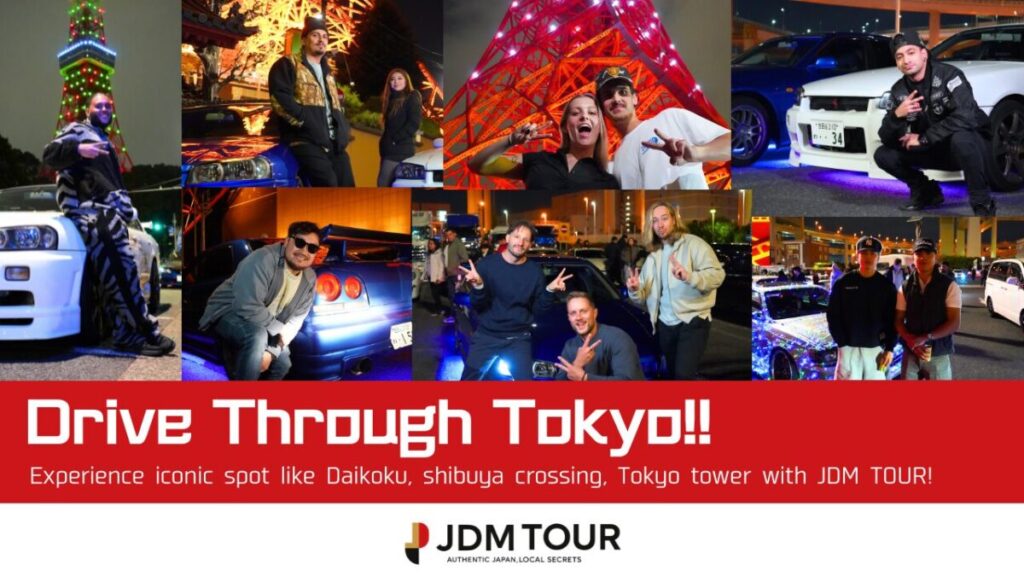
Specifically, commanding JDM machines such as the Nissan GT-R or Toyota Supra against the backdrop of Tokyo’s iconic landmarks is no longer just transportation; it is positioned as a participatory "activity." Just as cosplay driving tours have emerged, this integrated experience of car and city overturns conventional tourism, offering unforgettable, highly shareable memories that light up social media feeds.
This new style of journey, facilitated by exotic car rental tokyo services, has transformed from merely pursuing speed into a means of experiencing unforgettable "play." It allows you to deeply engage with Japan's unique culture and landscapes, creating an adventure that goes beyond traditional sightseeing.
Why is JDM So Popular Right Now?
Legendary sports cars manufactured in Japan during the 1990s and early 2000s—such as the Nissan Skyline (R34), icons for fans worldwide. For many, driving these cars on the actual roads they were designed for is a bucket-list experience that surpasses any standard sightseeing tour.
The Unique Charm of a JDM TOUR
JDM TOUR offers more than just a “car rental”; it provides a deep dive into Japanese car culture.
- The Pilgrimage to Daikoku PA: The highlight of many tours is driving to the Daikoku Parking Area on the Shuto Expressway. At night, this spot transforms into a gathering place for hundreds of beautifully customized cars, creating a vibrant atmosphere that is world-famous.
- Professional Guided Convoys: Driving a right-hand-drive manual car through the complex Shuto Expressway can be daunting. JDM TOUR offers plans where a professional guide leads the way in a lead car, ensuring you stay on the right path safely.
- Photography and Content Creation: The guides know the best “insta-worthy” spots, such as the Shibuya Crossing, Tokyo Tower, and Rainbow Bridge, allowing you to capture professional-quality memories with your dream car.
Location for JDM TOUR
A model itinerary that works well for travelers
For first-time visitors, the best plan is usually a one-day or two-day structure that is not overloaded. With JDM travel, the number of cars you see matters less than how smoothly the day flows and how much room you have to actually enjoy it.
If you want to keep it to one day, a good approach is to spend the daytime in central Tokyo with a stop such as NISSAN CROSSING in Ginza. That adds a car element to your trip without taking over the entire day, and it also works well if you are traveling with someone who is not heavily into cars.
At night, a JDM tour or ride-along experience is usually the safest choice if you are not confident about self-driving. The biggest challenge with Daikoku PA is access, so removing that problem often raises your chances of having a successful night immediately.
If you have two days, the trip becomes much easier to balance. One day can focus on central Tokyo and showroom-style experiences, while the second day can be reserved for a car event or a nighttime car-culture outing. If you are traveling in early January, Tokyo Auto Salon can easily become the anchor of the itinerary, with a separate evening experience added before or after.
The most reliable way to plan is to think in terms of “certainty in the daytime, atmosphere at night.” Daytime is better for official venues and predictable schedules. Nighttime is better for the more emotional side of the culture, even though it is less predictable. If you place all your hopes on one single night, the result can depend too much on weather, traffic, and who happens to show up.
Summary and final thoughts
If you want a JDM experience in Tokyo, the most important thing is not to chase a single viral image from social media. The real value comes from understanding that JDM culture around Tokyo includes famous spots like Daikoku PA, manufacturer showrooms, large-scale events, road atmosphere, and the local rules and etiquette that hold everything together.
For first-time travelers in particular, it is usually better to build a plan that is easy to enjoy rather than forcing your way into difficult-access spots with no structure. A strong combination is simple: enjoy a car-related stop in the city during the day, then experience the energy of the scene at night through a tour or ride-along approach. That way, you can combine Tokyo sightseeing with car culture without wasting time or creating unnecessary stress.
If you are building your itinerary now, start by checking your travel dates, event timing, driving document requirements, and the transport style that suits you best. Once those basics are set, your Tokyo JDM trip stops being a fantasy built around photos and becomes a real, memorable experience you will actually enjoy.