Introduction
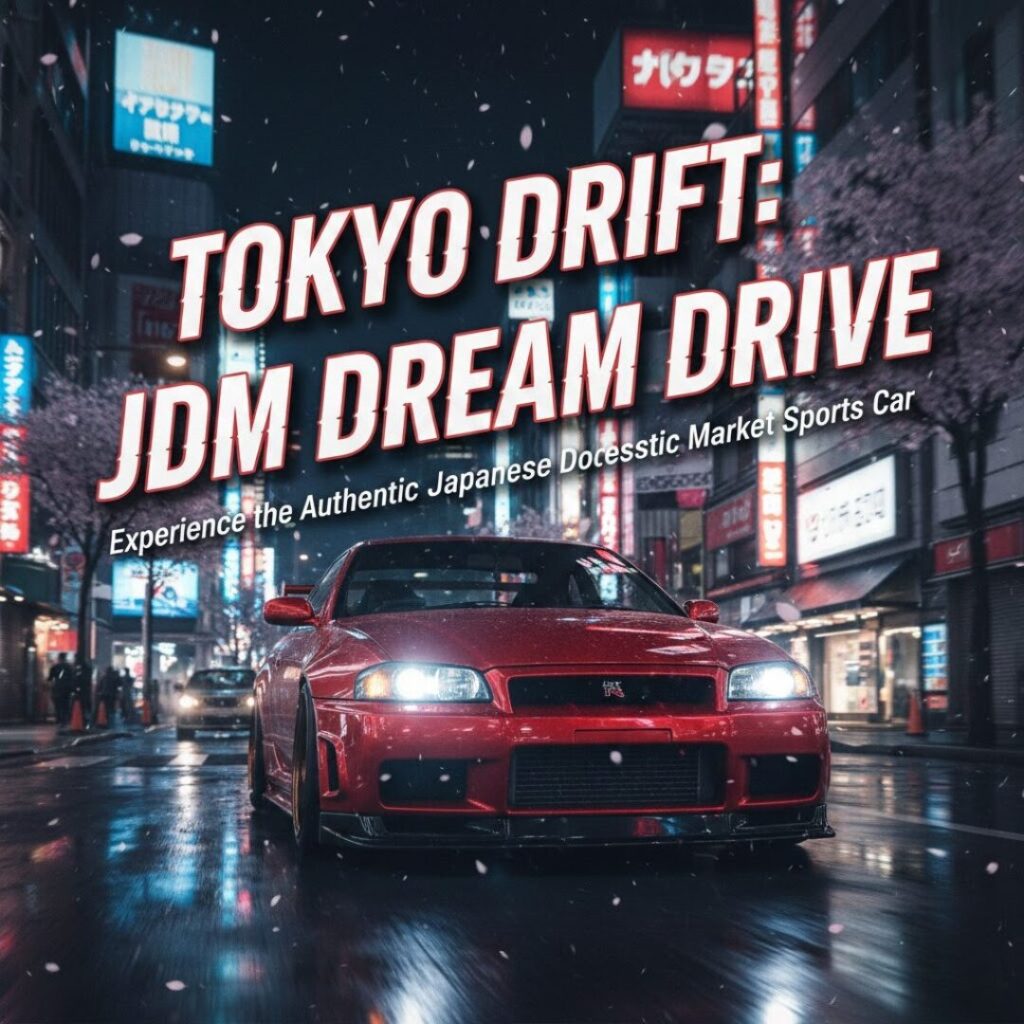
Driving through the streets of Tokyo is an exhilarating experience in itself, but what if that drive involved an authentic JDM (Japanese Domestic Market) sports car—a machine that ignites the passion of car enthusiasts worldwide?
The legendary Japanese sports cars, globally recognized through works like “Initial D” and “The Fast and the Furious,” are far more than just modes of transportation. They are cultural icons that embody the precise engineering, unique tuning culture, and, above all, the sheer “Joy of Driving” that Japan is famous for.
In recent years, the demand for “JDM car rentals” has exploded among both international travelers and domestic car fans. These special vehicles, once difficult to access, can now be easily rented in Tokyo and other major cities. However, many prospective drivers have questions: “Where can I rent one?”, “How much does it cost?”, and “Can foreign visitors legally use these services?”
This article provides the complete guide to transforming your Tokyo stay into the ultimate JDM experience. We will offer an in-depth, comprehensive look at the concrete steps, necessary procedures, and critical considerations for renting iconic vehicles—such as the Nissan Skyline GT-R (R32, R33, R34), Toyota Supra (A80, A90), Mazda RX-7 (FD3S), and Honda NSX (NA1)—to tour Tokyo’s landmarks and hallowed car enthusiast spots. Our information is meticulously sourced from reliable Japanese rental companies and related Japanese websites.
By the time you finish reading this article, you will have a solid plan to grasp the steering wheel of your dream JDM car and cruise effortlessly through Tokyo’s stunning nightscapes and bay-side highways. Get ready to launch your unforgettable Japanese trip and driving adventure!
The Allure and Popularity of JDM Rentals
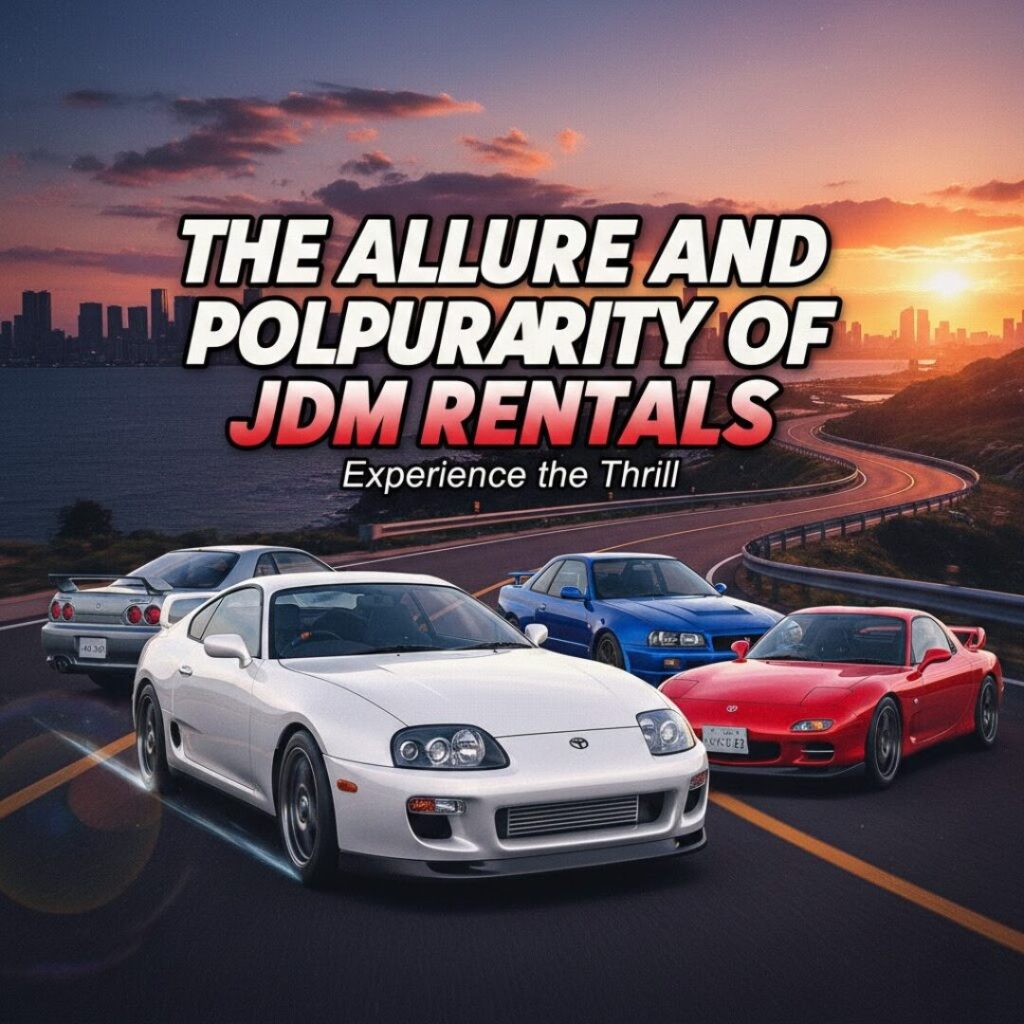
Why do JDM rental cars attract car aficionados from all corners of the globe? The reason goes beyond mere vehicle performance, deeply intertwined with Japanese car culture and evolving global trends.
The Global Influence of JDM Culture
Japanese sports cars from the 1990s and early 2000s set benchmarks in automotive history with their innovative technology and driving performance that rivaled European supercars. Unique technologies, such as Nissan’s “RB26DETT” engine, Mazda’s Rotary engine, and Honda’s VTEC, continue to influence engineers and tuners worldwide.
- Image Established by Movies and Games: The “Fast and the Furious” franchise and popular video games like “Gran Turismo” and “Need for Speed” have cemented the image of JDM cars in the minds of young people globally as cool, endlessly customizable, and possessing vast tuning potential.
- The “25-Year Rule” and Export Boom: The United States’ “25-Year Rule,” which exempts vehicles manufactured more than 25 years ago from certain import regulations, has allowed legendary JDM cars like the R32 and R33 to be legally imported and registered. This has further boosted their value and popularity.
Expansion of Rental Demand and Service Evolution
Against this backdrop, the desire to “drive a JDM car in its homeland” surged, leading to a rapid increase in rental demand.
- Emergence of Specialty Operators: Rental companies specializing in these unique vehicles—previously unavailable at standard rental agencies—have emerged in major cities like Tokyo and Osaka. These operators provide services that deeply understand and embrace JDM culture, offering more than just a key exchange.
- Adaptation for Foreign Tourists: The environment for international visitors has been enhanced, with services accommodating International Driving Permits (IDP), providing English support, and offering comprehensive insurance plans, ensuring a worry-free experience for travelers from abroad.
Iconic JDM Models Available for Rent and Their Characteristics
The thrill of JDM rental lies in the ability to choose your dream model from a lineup of legendary cars. Here, we introduce the most popular models in the rental market, guaranteed to enhance your driving experience in Tokyo.
Nissan Skyline GT-R (R32 / R33 / R34)
The GT-R is arguably the ultimate symbol of JDM. Known by the nickname “Godzilla,” this car is famous for its dominant performance and countless legends in the history of Japanese motorsports.
- R32 (1989-1994): Developed to dominate Group A racing, its outstanding performance remains highly respected globally. It is characterized by its relatively light weight and pure driving feel.
- R34 (1999-2002): Gained immense popularity, especially overseas, due to its role in the “Fast and the Furious” movies. Its appeal lies in its sophisticated design and the matured electronic control system, “ATTESA E-TS.”
Toyota Supra (A80 / A90)
Toyota’s flagship sports car, the 4th generation A80 model in particular, is famous worldwide as a tuning platform.
- A80 (1993-2002): Earned legendary status due to the incredible durability and tuning potential of its “2JZ-GTE” inline-six engine. Its sleek, flowing design is also a hallmark.
- A90 (2019-): The modern iteration, resurrected through collaboration with BMW. It offers contemporary performance and comfort, allowing drivers to experience the latest evolution of JDM engineering.
Mazda RX-7 (FD3S)
A pure sports car powered by the rare Wankel rotary engine.
- FD3S (1991-2002): The key attractions are its sharp handling, enabled by a lightweight, low-center-of-gravity chassis, and the unique sound and torque characteristics of the rotary engine. It truly embodies the concept of “Jinba Ittai” (Rider and Horse as One).
Honda NSX (NA1 / NA2)
Dubbed the “Japanese Supercar,” it is a culmination of Honda’s technology, developed with expertise gained from Formula 1.
- NA1/NA2 (1990-2005): Featured the world’s first all-aluminum monocoque body, achieving exceptional rigidity and lightness. Known for the involvement of F1 driver Ayrton Senna in its development, its high level of perfection maintains a passionate fanbase to this day.
JDM Rental Procedures and Required Documents
To rent your dream JDM car, several crucial procedures and documents are necessary. For foreign tourists, preparation based on Japanese law is mandatory.
Driver’s License Requirements
The most critical and strictly enforced requirement for renting a car in Japan is the driving license.
- Japanese Nationals and Residents:
- A valid Japanese driving license is required.
- Travelers from Overseas:
- International Driving Permit (IDP): An IDP, recognized as valid in Japan under the Geneva Convention, is essential. It is extremely important to confirm that your country’s IDP is based on the Geneva Convention, as IDPs based on other conventions (e.g., Vienna Convention) are invalid in Japan.
- Passport: Presentation of a valid passport is also mandatory.
- Specific Country Licenses and Translations: Travelers from certain countries (e.g., Switzerland, Germany, France, Belgium, Taiwan, Monaco) are permitted to drive by carrying both their domestic license and a Japanese translation issued by a designated organization (such as JAF).
General Rental Flow
- Reservation: Popular JDM cars book up quickly, so early reservation (several months in advance) is essential, especially during high season. Booking is typically done via the website, where you select the model, dates, and insurance plan.
- In-Store Check-in: Arrive at the rental office at the scheduled time and present necessary documents like your license and passport. Confirm the payment method (credit card is common).
- Vehicle Inspection and Explanation: Confirm the car’s exterior and interior for any existing damage with the staff and record it for documentation. You will receive explanations on any specialized operations (e.g., manual transmission, specific driving precautions for turbocharged cars).
- Departure: Begin your rental period. Adhere strictly to Japanese traffic laws and practice safe driving.
- Return: Return the car by the contract end time. It is standard to return the car with a full tank of fuel (“Mantan Gaeshi”). A final check of the exterior and interior with the staff completes the procedure.
Age Restrictions and Insurance
- Age Restriction: Due to the high-performance nature of the vehicles, JDM specialty rental services often impose stricter age limits (e.g., 25 years or older) and minimum required years of driving experience (e.g., 3 years or more) than general rental companies. Confirmation is required beforehand.
- Insurance: In addition to standard voluntary insurance, it is highly recommended to check for coverage related to the Collision Damage Waiver (CDW) and Non-Operation Charge (NOC), and to enroll in the most comprehensive insurance plan possible.
Pilgrimage Routes to Maximize Your JDM Experience in Tokyo
If you are renting a JDM car, don’t limit yourself to regular tourist spots. Here are recommended driving routes and “sacred grounds” in and around Tokyo deeply rooted in JDM culture.
The Appeal of the Shuto Expressway (Shutoko)
The Shuto Expressway (Shutoko) is synonymous with Tokyo driving. The experience of driving through the city under the night sky especially highlights the thrill of a JDM car.
- Tatsumi Dai-ichi PA (Parking Area): Located in Tokyo’s bay area, it is one of the most famous spots for car enthusiasts, offering a superb view of the Shutoko nightscape. On weekend evenings, various sports cars gather, creating an informal meeting spot.
- Daikoku PA (Parking Area): A “sacred ground” of the Shutoko, alongside Tatsumi PA. On weekends, it becomes a hub for diverse vehicles, from classic and supercars to, naturally, JDM cars. It feels like a moving automobile museum.
Legendary Stages
Visiting the legendary stages depicted in manga and movies is a popular objective for JDM fans.
- Daikoku Pier / Yokohama Bay Area: Easily accessible from the Bayshore Route, the area features the beautiful Yokohama Bay Bridge and industrial night scenery, making it an excellent photo spot, especially at night.
- Hakone Turnpike (Aneto Iwata Turnpike Hakone): A toll road, but the drive itself is considered one of Japan’s best driving courses. The stunning views overlooking the mountains and the sea, coupled with appropriate curves and gradients, make it an ideal place to test the performance of a JDM sports car (strict adherence to the speed limit is mandatory).
Hubs of JDM Culture
Beyond just driving, there are places to immerse yourself in the depths of JDM culture.
- Akihabara / UDX Parking Lot: Various car meetings are sometimes held here on weekend nights. The urban atmosphere of the UDX underground parking lot has also been featured in movies and anime.
- Tuning Shop Tour: The vicinity of Tokyo is home to the headquarters of world-famous tuning parts manufacturers like HKS and TRUST (GReddy), as well as numerous highly reliable specialty tuning shops. Even a glance from the outside allows you to feel the intensity of JDM culture.
Japanese Traffic Rules and Driving Manners Foreign Visitors Must Know
To fully enjoy your JDM drive, it is essential to understand and comply with Japan’s strict traffic laws and unique driving manners. Paying close attention to the following points is crucial for safety and respecting Japanese car culture.
Strict Japanese Traffic Laws
- Left-Hand Traffic, Right-Hand Drive: Japan drives on the left side, and the steering wheel is on the right. Drivers from right-hand traffic countries must be extremely careful, particularly when turning right (crossing opposing traffic lanes) and when making left turns (to avoid clipping pedestrians/cyclists).
- Adherence to Speed Limits: Japanese speed limits are generally strict compared to international standards. The maximum speed on expressways is usually 100 km/h (with a few 120 km/h sections), and general roads are typically 40 km/h to 60 km/h. Even with a high-performance JDM car, speeding is strictly enforced.
- Strict Observance of No-Parking Zones: Enforcement by parking surveillance officers is extremely strict, especially in urban areas. You must absolutely avoid parking anywhere outside of designated Parking Areas (PA), Service Areas (SA), or paid parking lots (coin-operated parking). The risk of tow-away and heavy fines is significant.
- Penalties for Drunk Driving: Penalties for drunk driving in Japan are extremely severe, and the rule is strictly enforced: “If you drink, do not drive; if you drive, do not drink.” Driving after consuming even a small amount of alcohol is absolutely forbidden.
Unique Japanese Driving Manners
- Spirit of Yielding: Japanese drivers often emphasize “yielding.” By using your turn signal early when merging or changing lanes and making eye contact with the following driver, you are more likely to be smoothly let into the lane.
- Use of Hazard Lights:
- “Thank You Hazards”: It is customary to flash the hazard lights a few times to show gratitude after being yielded the right of way by another car or after successfully merging.
- Hazards at the End of Traffic Jams: It is also common practice to flash hazard lights when pulling up to the back of a traffic jam on an expressway to alert the drivers behind you.
- Absolute Priority for Pedestrians: Japanese traffic law prioritizes pedestrians above all else. If pedestrians are at a crosswalk, you must come to a complete stop and wait for them to pass.
By observing these rules and manners, you ensure your safety, achieve a smoother and more comfortable driving experience, and deepen your appreciation for Japan’s driving culture.
JDM Car Rental Cost Estimates and Money-Saving Tips
Renting a JDM sports car is more expensive than renting a standard compact car. However, you can control costs through careful planning and selection of services.
Cost Estimates (By Model and Duration)
Costs vary significantly depending on the model, year, tuning specifications, and rental period.
- High-Performance/Rare Models (R34 GT-R, FD3S, NSX, etc.):
- 6-hour rental: Approx. ¥35,000 to ¥60,000
- 24-hour rental: Approx. ¥50,000 to ¥100,000
- Note: Extremely rare or specially tuned vehicles may cost significantly more.
- Popular Sports Models (S2000, 86/BRZ, Roadster, etc.):
- 6-hour rental: Approx. ¥15,000 to ¥30,000
- 24-hour rental: Approx. ¥25,000 to ¥50,000
Cost Breakdown and Caution on Additional Fees
- Basic Rental Fee: Determined by the car model and rental duration.
- Insurance and Compensation Fees:
- Collision Damage Waiver (CDW): Highly recommended. The market rate is around ¥2,000 to ¥3,000 per day. Joining this waives your self-pay deductible (excess amount) in case of an accident.
- NOC (Non-Operation Charge): A fee charged as compensation for the loss of business if the car is rendered unusable due to an accident or breakdown. This is separate from insurance, and some companies offer an option (approx. ¥1,000 to ¥2,000 per day) to waive this payment.
- Fuel Costs: Returning the car with a “full tank” is the standard policy. Note that high-performance cars are not fuel-efficient, so gasoline costs will accumulate based on your mileage.
- Toll Fees: You will need to rent an ETC card or pay cash/credit card at toll booths. When traveling extensively in and around Tokyo, expressway tolls can be a major expense.
Tips for Controlling Costs
- Use Early Bird Reservations: Many rental companies offer “Early Bird” discounts for booking well in advance.
- Consider Weekday Rentals: Prices are often higher on weekends and holidays, so utilizing weekdays when possible can significantly reduce the cost.
- Optimize Rental Duration: Opting for a single day (6 or 12 hours) instead of an overnight stay (48 hours) can make the per-day cost more efficient.
JDM Rental Successes and Failures: Lessons from Renters
To ensure your JDM rental experience becomes a cherished memory, let’s learn from the success stories and cautionary tales of those who have already driven these machines.
Success Stories: Preparation and Planning are Key
- “Maximum Use of Time with Perfect Route Planning”: “I rented an R34 GT-R for 6 hours. Thanks to meticulous planning of the Shutoko route, including Tatsumi PA and Daikoku PA, there was no wasted time, and I efficiently enjoyed the drive and photography. The R34’s presence in the night lights was incredible.” (American Traveler)
- “Full Insurance Coverage Provides Peace of Mind”: “I was a bit nervous renting a manual car for the first time, but paying for the full CDW and NOC waiver allowed me to concentrate on driving without worrying about minor mistakes. Fortunately, nothing happened, but the mental security greatly enhanced the driving enjoyment.” (Japanese Renter)
- “Thorough Support from Specialty Operators”: “I was uneasy about Japanese traffic rules, but the JDM specialist rental company provided detailed explanations, using maps and videos, on cautionary points for typical Japanese intersections, especially complex multi-lane ones. This allowed me to drive without confusion.” (French Traveler)
Failure Stories: Never Underestimate Japanese Rules
- “Rental Denied Due to International Permit Oversight”: “I brought my IDP issued in my home country, but upon arrival, I found out it was based on a treaty not recognized in Japan (e.g., based on the Vienna Convention). I couldn’t drive. I regretted my lack of prior verification.” (British Traveler)
- “Tow-Away Due to Disregard of Parking Rules”: “I parked in a city backstreet for a short time, but it turned out to be a no-parking zone, and the car was towed when I returned. The fine and towing fee ended up being more expensive than the rental cost. I underestimated the strictness of Japanese parking regulations.” (Australian Traveler)
- “Unexpectedly High Fuel Costs”: “I rented a highly tuned, high-power car, and its fuel consumption was much worse than I imagined, requiring frequent refueling. High-octane gasoline is expensive, which strained my overall travel budget.” (Domestic Traveler)
Lesson Learned: Renting a JDM car, given its high performance, requires more careful preparation than a standard rental. Verifying the validity of your license, thoroughly understanding Japanese traffic and parking rules, and purchasing comprehensive insurance should be viewed as an “investment” in achieving the best possible experience.
The Future of JDM Rentals and Contribution to Sustainable Tourism
The popularity of JDM rentals is not a passing trend; it is expected to grow as a vital means of experiencing Japanese automotive culture. This growth not only creates business opportunities but also has the potential to contribute to Japanese culture and tourism.
Outlook for the JDM Rental Market
- Diversification and Vintage Appeal: Iconic models like the R32 and A80 are expected to become even rarer, potentially driving up rental prices. Conversely, in an era of advancing EV (Electric Vehicle) technology, the value of experiencing a pure Internal Combustion Engine (ICE) sports car will only increase.
- Evolution of Experiential Services: Services will likely offer more added value than simple car lending, such as lectures by professional drivers, test drives on closed courses, and guided tours focused on JDM culture.
- Enhanced Services for Foreign Visitors: Service quality is anticipated to improve to meet inbound demand, with strengthened English/multilingual support, provision of the latest information on international licenses, and dedicated insurance plans for tourists.
Contribution to Sustainable Tourism
For JDM rentals to contribute positively to Japanese tourism, both users and operators must act responsibly.
- Preservation of Vehicles as Cultural Assets: JDM masterpieces are cultural assets that the Japanese automotive industry proudly presents to the world. Rental operators bear the responsibility of maintaining and managing these vehicles in peak condition. Users, in turn, contribute to preserving these cars for future generations by treating them with care and avoiding reckless driving.
- Contribution to Local Economies: Driving a JDM car often encourages travelers to venture beyond the city center to regional tourist destinations like Hakone or the areas around Mount Fuji. This directly benefits local economies, including gas stations, restaurants, and accommodation facilities.
- Environmental Consideration: While high-performance cars tend to be less fuel-efficient, adopting a conscious approach to minimize environmental impact—through modern tuning technologies or participation in carbon offset programs—is essential for sustainable tourism.
The future of JDM rentals goes beyond the mere role of transportation; it is poised to serve as a “mobile showroom” that transmits the passion and culture of Japanese automobiles to the world.
Conclusion
This article has provided a comprehensive guide to turning the dream of “cruising Tokyo in a JDM rental car” into a reality.
The experience of renting a legendary JDM car and driving the Tokyo Bayshore Route, the Shutoko, or the winding roads of Hakone is an immersive journey into Japan’s profound automotive culture—an experience that simple sightseeing cannot offer. It represents the thrill of the high-performance engine’s pulse, the responsiveness of the perfectly tuned chassis, and, above all, the unparalleled joy of “driving your dream car in the land of its birth.”
The key to success is prior preparation. Specifically, confirming the validity of your International Driving Permit, thoroughly understanding Japan’s strict traffic rules and parking etiquette, and securing comprehensive insurance coverage against unforeseen circumstances are indispensable steps to guarantee the best possible driving adventure.
Now is the time to unleash the JDM passion in your heart. Use this guide to formulate your perfect JDM driving plan and speed through the streets of Tokyo and the roads of Japan with your dream companion.
Recommended Services
- JDM TOUR (https://jdmtour.com/): A popular service offering JDM vehicle rentals and experience tours.
- Orix Rent-A-Car: A standard rental company; some branches may handle sports cars.
- Times Car RENTAL: Has a nationwide network and sometimes offers sports car class vehicles.