
Introduction
For JDM fans, the idea of driving a real JDM car in Japan is not just another sightseeing activity. It can easily become the main purpose of the trip itself. People who search for “jdm self drive japan” are usually not looking to simply admire cars from the outside. They want to get behind the wheel, drive on real Japanese roads, and experience the culture through iconic locations such as the Shuto Expressway, mountain roads, and famous car gathering spots. In recent years, self-drive experiences in Japan have become much easier to access, with guided convoy tours through Tokyo at night and English-friendly driving tours around Hakone and Mt. Fuji now widely available.
That said, this kind of experience is also easy to get wrong if you book based on excitement alone. Many travelers assume that any international driving permit will work in Japan, but that is not the case. In Japan, only international driving permits issued under the 1949 Geneva Convention are generally accepted, while some countries and regions such as Switzerland, Germany, France, Belgium, Monaco, and Taiwan follow a different system using an original license plus an official Japanese translation. On top of that, places like Daikoku PA are not locations you can casually walk into from ordinary roads, so even famous destinations require some planning.
This guide explains everything you need to know to make your jdm self drive japan experience a success: license requirements, the difference between guided tours and rentals, how Tokyo and Hakone compare, what to prepare before the day, common mistakes to avoid, realistic cost expectations, and how to choose the right experience for your travel style. By the end, you should have a much clearer idea whether you want a Tokyo-based guided night drive, a Hakone-focused mountain road experience, or a more independent rental-style approach.
What “JDM Self Drive Japan” Really Means
It is not just car rental, but a curated driving experience
“JDM self drive japan” is often used to describe more than simply renting a Japanese sports car. In practice, it usually refers to the entire experience of driving a JDM car in Japan, including route planning, cultural context, photo opportunities, and the type of road you drive on. Most services fall into two broad categories: guided self-drive tours, where you follow a lead car, and rental-based options, where the vehicle is handed over and you manage the journey yourself.
For international travelers, guided self-drive tours are currently much more common and easier to book. That makes sense, because driving in Japan involves challenges that many visitors are not used to: left-hand traffic, complex urban expressway junctions, toll roads, restricted parking, and access rules for certain service areas. As a result, many JDM experience providers are not just renting out cars. They are selling a managed, safer, and more memorable automotive experience.
Travelers are not only looking for a car, but also for the right setting
Most people searching this keyword are drawn to the cars themselves: GT-R, Supra, RX-7, NSX, Evo, WRX, and so on. But in reality, where you drive matters almost as much as what you drive. In Tokyo, the appeal lies in neon-lit expressways, bridges, city views, and the atmosphere around car culture spots like Daikoku PA. In Hakone and the Fuji area, the roads themselves are the attraction: curves, elevation changes, scenic viewpoints, and the feeling of driving a JDM machine where it actually feels alive.
That means choosing a JDM self-drive experience based only on vehicle availability is only half the decision. Tokyo-style experiences are about atmosphere, visuals, and culture. Hakone-style experiences are about driving quality and road enjoyment. Understanding that difference early will immediately help you choose more accurately.
It is a legal and structured tourism product, not a fantasy of reckless driving
The words JDM, mountain passes, and expressways often create a dramatic image in people’s minds. But what is being sold here is still a legal tourism experience operating within Japanese traffic laws and provider rules. Reputable operators emphasize guided routes, safety, and controlled pacing. These experiences are about getting close to Japanese car culture in a legitimate and enjoyable way, not about racing or reckless behavior.
The people who come away happiest are usually not those chasing outright speed. They are the ones who value the full experience: driving a dream car in its home country, connecting famous roads and landmarks, and immersing themselves in the Japanese car scene in a way that feels authentic. That is the real appeal of JDM self drive Japan.
What You Need in Order to Drive a JDM Car in Japan
Not every international driving permit is valid in Japan
This is the most important point of all. Many foreign visitors assume that any international permit is acceptable, but Japan does not recognize all formats. In general, you need one of the following: a Japanese driver’s license, an international driving permit based on the 1949 Geneva Convention, or a license from certain countries and regions accompanied by an approved Japanese translation.
That means broad statements such as “you just need an IDP” can be misleading. Before you even think about choosing a car, you need to confirm whether your permit is actually valid for use in Japan. Getting this wrong can mean being refused the vehicle on the day of the booking.
Some countries and regions use a translation-based system instead
Drivers from Switzerland, Germany, France, Belgium, Monaco, and Taiwan usually do not rely on a Geneva-style international permit in Japan. Instead, they generally need to carry their original license together with an official Japanese translation. This is a crucial detail because travelers sometimes assume they can follow the same process as everyone else, only to discover they fall under a separate rule set.
In practical terms, travelers should think in terms of three essentials: their original license, the required translation or valid international permit, and their passport. Keeping those together and ready is the safest way to avoid problems during the trip.
Legal eligibility is only the first step, because providers also have their own conditions
Being legally allowed to drive in Japan does not automatically mean you can join every tour or rental service. Providers may impose their own requirements around minimum age, years of driving experience, manual transmission eligibility, deposits, passenger rules, and insurance coverage.
That is why the right booking order is not “find the coolest car first.” The better order is this: confirm your legal driving status in Japan, check the provider’s participation conditions, and then compare vehicle options and dates. If you start from the car alone, you may end up disappointed later when practical conditions get in the way.
Should You Choose a Guided Tour or a Rental?
If it is your first time driving in Japan, guided self-drive tours are usually the smarter choice
For first-time visitors or anyone driving in Japan for the first time, a guided self-drive tour is usually the safest and most satisfying option. The reason is simple: roads in Tokyo and Hakone can be enjoyable, but they can also be mentally demanding when you are unfamiliar with the environment. Instead of focusing on the experience, you may end up focusing on not getting lost.
Guided tours remove much of that stress. You follow a lead car, the route is already planned, and the provider usually builds in stopping points, timing, cultural highlights, and a smoother overall flow. This also tends to improve the emotional side of the experience. The result feels less like “I rented a fast car” and more like I had a complete JDM day in Japan.
Rentals offer freedom, but that freedom also comes with more difficulty
There are of course drivers who want maximum independence. They want to stop whenever they like, build their own route, take their own photos, and enjoy the car at their own pace. For those people, a rental-style option is attractive. But it is important to be honest about what that means in practice.
Freedom means handling everything yourself: navigation, toll roads, ETC, parking, fuel, route timing, and access limitations for locations like Daikoku PA. It also means taking full responsibility for any confusion around urban expressways or mountain roads. Many rare, high-value, or enthusiast-oriented vehicles are also easier for providers to manage under guided formats rather than fully open-ended rentals.
For short-term visitors especially, a guided experience often leads to a better result because it reduces the risk of wasting time or mental energy on logistics.
If you are undecided, choose based on what you want most from the day
The best way to decide is to ask yourself what matters most.
If you want Tokyo night views, expressways, Daikoku atmosphere, and cinematic visuals, a Tokyo-style guided experience is usually the best fit.
If you want driving feel, mountain roads, scenery, and a stronger connection with the car itself, Hakone is usually the better choice.
If you want complete scheduling freedom, overnight flexibility, and spontaneous detours, then rental-style options make more sense.
Many people regret choosing pure freedom on their first trip because they underestimate how tiring and unfamiliar driving in Japan can feel. For most first-timers, a well-managed, high-density experience delivers more satisfaction than absolute flexibility.
The Appeal and Challenges of JDM Self Drive in Tokyo
Tokyo is about atmosphere, city scenery, and car culture density
Tokyo-style JDM driving is not primarily about attacking mountain roads. It is about the visual energy of the city. Expressway lights, dense urban views, bridges, nighttime reflections, and famous car culture landmarks all come together to create something that feels uniquely Japanese.
That is what makes Tokyo such a strong choice for visitors who want that iconic “Japan car culture” feeling. Even a relatively short drive can feel dramatic because the city itself becomes part of the experience.
Daikoku PA is not a place you can casually walk into
One of the most misunderstood parts of planning a Tokyo JDM trip is Daikoku PA. Many people imagine they can simply take a taxi nearby and walk in. That is not how it works. Daikoku PA is a service area accessed through the expressway system, and it cannot be treated like a normal roadside destination.
This matters a lot. If Daikoku is one of the main reasons for your trip, then you need to choose a plan that is designed around actual expressway access. This is one of the biggest reasons guided Tokyo tours make sense for many travelers. They remove guesswork from one of the most iconic but logistically awkward parts of the experience.
Time of day changes the experience dramatically
Tokyo’s expressway environment feels very different depending on when you drive. Daytime can be easier from a practical standpoint, while nighttime tends to deliver the strongest visuals and emotional impact. Those two things do not always align. A drive that is easiest to manage may not be the most atmospheric, and vice versa.
For first-time visitors, especially those adjusting to left-hand traffic, this is worth thinking about carefully. Night drives can be unforgettable, but they also increase the mental load. That is why a guided night drive is often the ideal way to enjoy Tokyo without turning the evening into a stressful navigation exercise.
The Appeal and Challenges of Hakone and the Mt. Fuji Area
Hakone is where the joy of driving itself becomes the main attraction
If Tokyo is about urban mood and car culture atmosphere, Hakone is about the act of driving. Curves, elevation changes, open scenery, and roads that better showcase steering feel and balance make Hakone especially rewarding for enthusiasts who care deeply about the driving side of the experience.
For many people, this is where a dream JDM car truly starts to make sense. The difference between cars becomes easier to feel on a route with actual rhythm and flow. If your priority is not just being seen in a JDM car, but actually understanding what makes it special, Hakone often delivers that better than Tokyo.
Toll roads and route design affect both cost and quality
Driving around Hakone and nearby areas often involves a mix of regular roads, expressways, and scenic toll roads. These toll roads can significantly improve the quality of the route, but they also add to the total cost. That means you should not evaluate a Hakone drive based only on the base rental or tour fee.
A realistic budget should include vehicle cost, tolls, ETC-related charges, fuel, parking, and extra road fees. On the other hand, tour-style products may seem more expensive at first glance, yet they often offer strong value once you factor in route quality, guidance, timing, and language support.
Weather has a bigger impact here than in Tokyo
Hakone and the Fuji area are much more sensitive to weather conditions than central Tokyo. Rain, fog, or low visibility can directly change both the scenery and the driving feel. Tokyo still works well even in less-than-perfect weather because city lights and atmosphere remain part of the appeal. Hakone, by contrast, often depends much more on clear conditions and road visibility.
That does not mean Hakone is risky. It simply means that weather should play a bigger role in your expectations. If your travel window is tight and conditions are uncertain, Tokyo can be the safer emotional bet. If the weather is good, however, Hakone can become the more unforgettable driving memory.
How the Day Usually Goes and How to Prepare Properly
What you should have ready before the booking
Before the actual drive day, make sure you have the basics fully sorted: a valid driver’s license, the required translation or valid international permit, your passport, booking confirmation, and payment method. This sounds obvious, but many booking problems start because travelers focus on the car and forget the paperwork.
If you are thinking about a manual transmission car, also be realistic about your comfort level. Driving a manual in Japan is not just about using a stick shift. It also means adapting to left-side traffic, unfamiliar signage, and a different road rhythm. For some people, an automatic makes much more sense on a first trip, even if a manual sounds more exciting in theory.
Do not underestimate expressway systems, ETC, and parking areas
JDM driving in Japan often involves more expressway use than ordinary tourism. That makes toll systems and route planning more important than many visitors expect. For longer road trips, expressway pass options may be worth considering. For short, high-impact driving experiences, however, the bigger issue is usually not discounting the tolls. It is understanding which roads are covered, how access works, and whether your route is actually realistic.
This is another reason guided experiences tend to feel smoother. The provider has already solved the route logic for you.
The best plan is the one that leaves some breathing room
Car enthusiasts often try to pack too much into a single day. Tokyo, Hakone, Daikoku, mountain roads, city photos, multiple stops, maybe even shopping afterward. In reality, overloading the itinerary usually lowers satisfaction. Traffic, weather, and road conditions can all change the pace of the day.
It is much better to leave some margin. A JDM experience is already mentally intense in a good way. You are driving a dream car in a foreign country. That alone takes attention and energy. A more relaxed schedule usually leads to a better memory.
Cost, Satisfaction, and How to Choose Wisely
Do not judge the experience by price alone
A JDM self-drive day in Japan is not priced like ordinary economy car rental. You are paying not just for transport, but for some combination of rare vehicles, insurance, support, route planning, English communication, filming, and a curated overall experience. That is why pure hourly comparison often misses the point.
Instead of asking which option is cheapest, ask what you are actually paying for. Tokyo-style products often offer atmosphere, visuals, and culture. Hakone products often deliver road quality and driving depth. Rental products offer freedom. The right choice depends on which of those matters most to you.
Different travelers should choose differently
If you are a first-time visitor who values English support and low stress, guided tours are usually the strongest option.
If you want photos, video, and a memorable visual story, choose an operator that clearly emphasizes those extras.
If you care most about how the car feels on the road, Hakone-style experiences tend to be more rewarding.
If you are traveling with someone who is not deeply into cars, Tokyo’s scenery and atmosphere may be easier for both of you to enjoy.
And if Daikoku PA is high on your wish list, Tokyo-oriented plans usually make much more sense than trying to force it awkwardly into a fully independent rental day.
In the end, choose based on the success of the whole day, not only the car model
Yes, the car matters. For enthusiasts, it matters a lot. But in travel terms, what matters even more is whether the entire day feels successful. Did you enjoy it without getting overwhelmed? Did you get the photos and moments you wanted? Did the route feel satisfying? Did the day flow naturally?
A slightly different car on a perfectly designed day often creates a better memory than the dream car on a stressful, poorly planned one. Especially for a first experience, it is smarter to choose based on overall experience quality, not on vehicle name alone.
[The Hottest Experience] Driving Dream Sports Cars in Japan with JDM TOUR
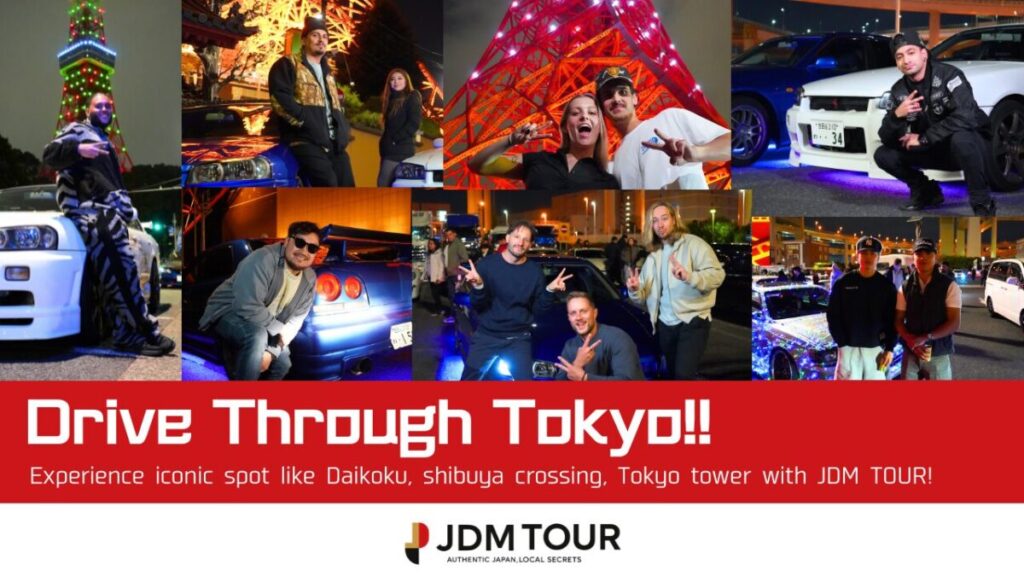
While standard rentals are practical, a new trend has exploded among car enthusiasts visiting Japan: renting “JDM” (Japanese Domestic Market) cars through specialized services like JDM TOUR.
The New Standard of Japan Travel: Public Roads in the Movie
The experience of being able to rent sports car japan is no longer just about driving; it has evolved into an "attraction" that transforms Japan's public roads into a real-life game world. In recent years, an exploding trend among international travelers is enjoying the act of driving through Japanese cities itself as a form of entertainment.
Specifically, commanding JDM machines such as the Nissan GT-R or Toyota Supra against the backdrop of Tokyo’s iconic landmarks is no longer just transportation; it is positioned as a participatory "activity." Just as cosplay driving tours have emerged, this integrated experience of car and city overturns conventional tourism, offering unforgettable, highly shareable memories that light up social media feeds.
This new style of journey, facilitated by exotic car rental tokyo services, has transformed from merely pursuing speed into a means of experiencing unforgettable "play." It allows you to deeply engage with Japan's unique culture and landscapes, creating an adventure that goes beyond traditional sightseeing.
Why is JDM So Popular Right Now?
Legendary sports cars manufactured in Japan during the 1990s and early 2000s—such as the Nissan Skyline (R34), icons for fans worldwide. For many, driving these cars on the actual roads they were designed for is a bucket-list experience that surpasses any standard sightseeing tour.
The Unique Charm of a JDM TOUR
JDM TOUR offers more than just a “car rental”; it provides a deep dive into Japanese car culture.
- The Pilgrimage to Daikoku PA: The highlight of many tours is driving to the Daikoku Parking Area on the Shuto Expressway. At night, this spot transforms into a gathering place for hundreds of beautifully customized cars, creating a vibrant atmosphere that is world-famous.
- Professional Guided Convoys: Driving a right-hand-drive manual car through the complex Shuto Expressway can be daunting. JDM TOUR offers plans where a professional guide leads the way in a lead car, ensuring you stay on the right path safely.
- Photography and Content Creation: The guides know the best “insta-worthy” spots, such as the Shibuya Crossing, Tokyo Tower, and Rainbow Bridge, allowing you to capture professional-quality memories with your dream car.
Location for JDM TOUR
Conclusion
To truly enjoy jdm self drive japan, the first thing you need to get right is legal eligibility to drive in Japan. That means confirming whether your license arrangement is valid, whether you need an official Japanese translation, and whether the provider’s own requirements match your situation. This is the foundation everything else depends on.
After that, the key decision is what kind of day you want. Tokyo is best for night views, expressways, Daikoku, and immersion in car culture atmosphere. Hakone is best for scenic roads, mountain driving, and the pleasure of actually working the car through great roads. For most first-time visitors, guided self-drive tours offer the best balance between safety, simplicity, and emotional payoff.
Most importantly, do not choose only by car model. Choose by the kind of memory you want to create. Do you want skyline views and neon? Do you want Fuji scenery and mountain roads? Do you want cinematic photos, or pure steering feel? Once you answer that, the right JDM self-drive experience in Japan becomes much easier to choose.