
Why JDM Engines Captured the World’s Heart
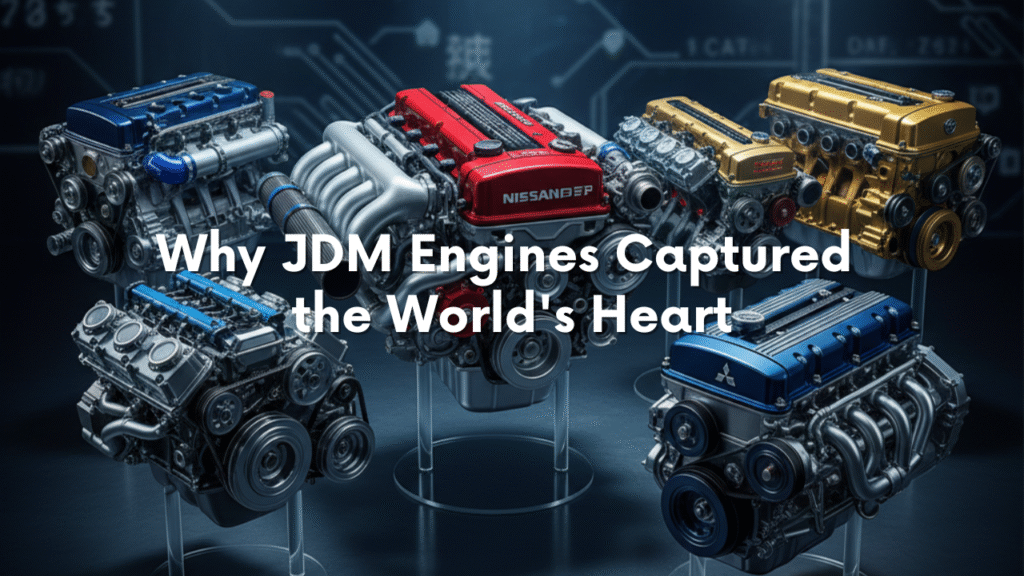
Among the countless marvels that emerged from Japan’s golden era of motoring, none stir the soul quite like JDM Engines.
They were more than lumps of metal — they were the beating hearts of machines that defined a generation.
From the wailing scream of a Honda four-cylinder chasing its 9,000 rpm redline, to the thunderous spool of a twin-turbo RB26, to the almost regal hum of Toyota’s V12, these engines told stories long after their exhausts fell silent.
An engine, after all, is not just hardware. It’s a translator of emotion — the point where man, metal, and motion become one.
Give an average chassis the right JDM Engine, and it feels alive.
Take away that heart, and even the most exotic car feels strangely hollow.
This feature pays tribute to seven legends of Japan’s mechanical art — engines that married precision with passion, technology with soul.
Each of them is more than a spec sheet; each carries the fingerprints of engineers who chased perfection not for profit, but for pride.
The Roots of Japan’s Engine Obsession
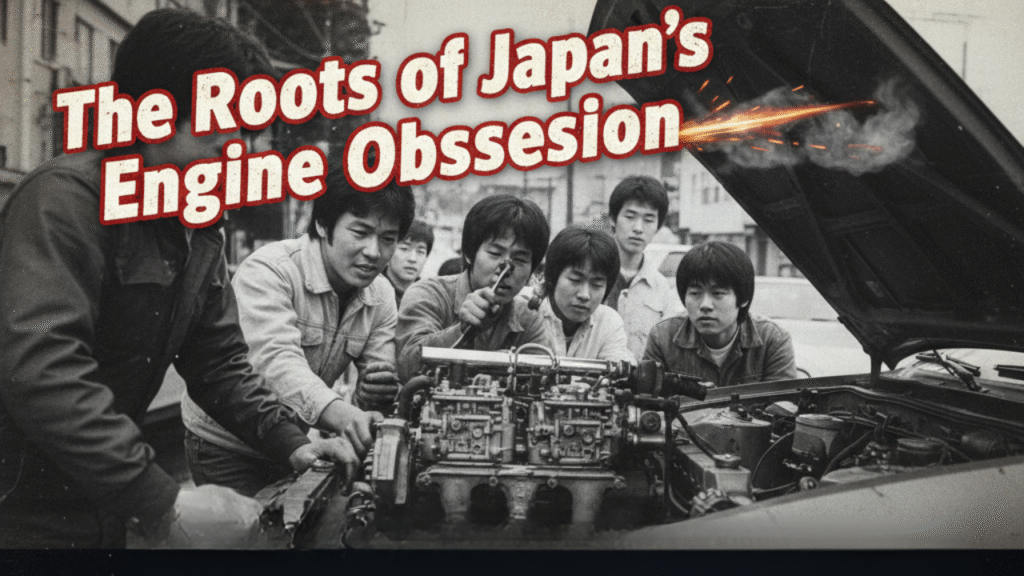
The phrase JDM — “Japanese Domestic Market” — started as a dry industry label in the 1980s. But long before that, Japan’s backroads were echoing with the birth of JDM Engine culture.
In the 1970s, street racers and weekend tuners — the hashiriya — began tinkering with carburetors, camshafts, and exhaust manifolds, searching for the perfect sound and feel.
They didn’t just want speed; they wanted connection. That obsession, fed by decades of craftsmanship, became the DNA of the engines we now worship.
By the 1980s and ’90s, the country’s automakers had entered an arms race of innovation.
Fuel injection replaced carburetors. Turbos grew sharper, electronics smarter, tolerances tighter.
Engines like Nissan’s RB26DETT, Toyota’s 2JZ-GTE, Honda’s B- and F-series, and Mazda’s 13B rotary turned ordinary production cars into engineering statements.
Japan was no longer following Europe — it was rewriting the rulebook.
As the Toyota Automobile Museum notes, this was the age when engineering became emotion.
The best JDM Engines weren’t just efficient or powerful; they were beautifully over-engineered, built to survive both the daily commute and the Nürburgring.
And that duality — strength and grace — became Japan’s signature.
What Made JDM Engines Irresistible
1. Relentless Innovation
Japanese engineers didn’t rest. They chased balance, response, and feel with almost artistic obsession.
Honda’s VTEC system gave small engines the lungs of giants.
Nissan’s ATTESSA and RB26 combination blurred the line between mechanical and mythical.
As Best Car Web later observed, Japan’s race to innovate wasn’t about showing off — it was about showing up on the world stage.
2. Durability Meets Freedom
Many JDM Engines were so overbuilt they became legends in the tuning scene.
The 2JZ-GTE’s iron block and the RB26’s closed-deck design could handle power figures that their creators never dared to advertise.
To tuners from Osaka to Los Angeles, these engines were blank canvases, begging to be pushed, boosted, and celebrated.
3. Soundtracks of a Generation
No two JDM Engines sound alike.
The rotary’s shriek, the inline-six’s howl, the four-banger’s rasp — together they formed the soundtrack of Japan’s automotive youth.
Every downshift, every turbo flutter, every rev cut carried emotion you could feel in your chest.
4. Culture and Legacy
These engines didn’t just power cars; they powered movements.
From Group A victories to drift scenes, from Daikoku PA nights to Initial D dreams, JDM Engines became cultural ambassadors.
They symbolized not only speed, but identity — proof that technology could have a soul.
The Spirit Lives On
Even decades later, the world still gathers around the echo of these engines.
At car meets in Tokyo or track days in California, the reverence is the same: a nod, a smile, a memory of a sound once heard at full throttle.
Because the beauty of JDM Engines isn’t just in their horsepower or heritage.
It’s in their humanity — in the way they reflect the patience, precision, and pride of the people who built them.
Every bolt tightened with care, every casting machined to perfection, every test run done not just for data, but for feel.
That’s monozukuri — Japan’s craftsmanship philosophy — humming through every piston stroke.
These engines taught the world that a machine can have a soul.
And even as the automotive future goes silent, the legends of JDM Engines will keep roaring in our hearts — forever chasing that perfect redline.
JDM Engines
Mitsubishi 4G63 Turbo
The Iron-Block Warrior That Battled Subaru for WRC Supremacy
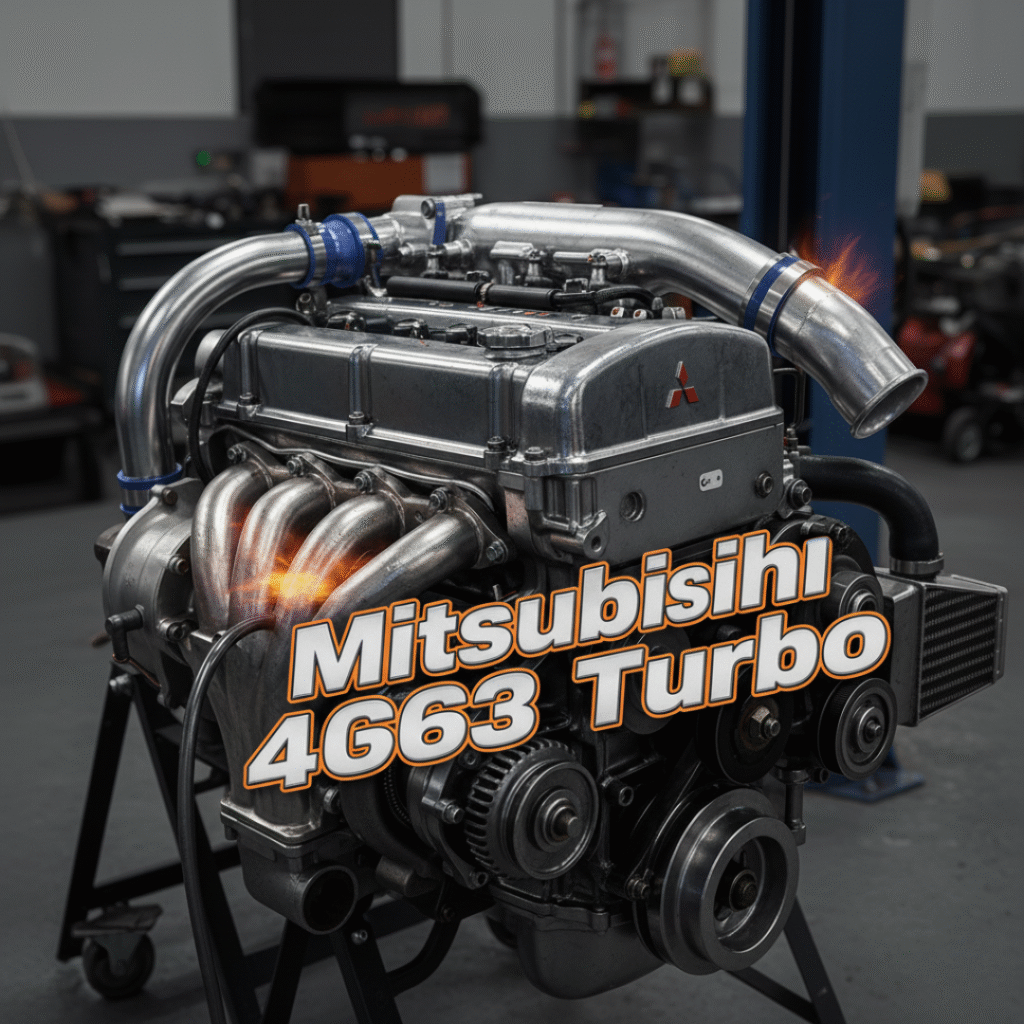
Among all JDM Engines, few symbolize endurance and aggression like Mitsubishi’s 4G63 Turbo.
Born in the late ’80s, this 2.0-liter inline-four became the heart of the Lancer Evolution and the weapon that took on Subaru in the ’90s rally wars.
Its cast-iron block made it heavier than Subaru’s aluminum boxer, yet nearly indestructible.
Tuners soon discovered its appetite for boost — 400, 500, even 600 horsepower on factory internals — proof of how brutally strong this JDM Engine was.
With a long-stroke layout, it delivered explosive torque from low revs, perfect for gravel launches and tight corners.
In WRC competition, it powered Tommi Mäkinen to multiple world titles, proving Japan’s JDM Engines could conquer Europe’s best.
Decades later, the 4G63 remains a cult hero — a symbol of mechanical resilience and JDM spirit that refuses to fade.
Its sharp, metallic exhaust note still echoes through tuning shops and mountain passes, reminding the world why the 4G63 Turbo stands among the greatest JDM Engines ever built — forged in competition, and immortalized by obsession.
Toyota 1GZ-FE
The Silent Majesty of the Only JDM V12
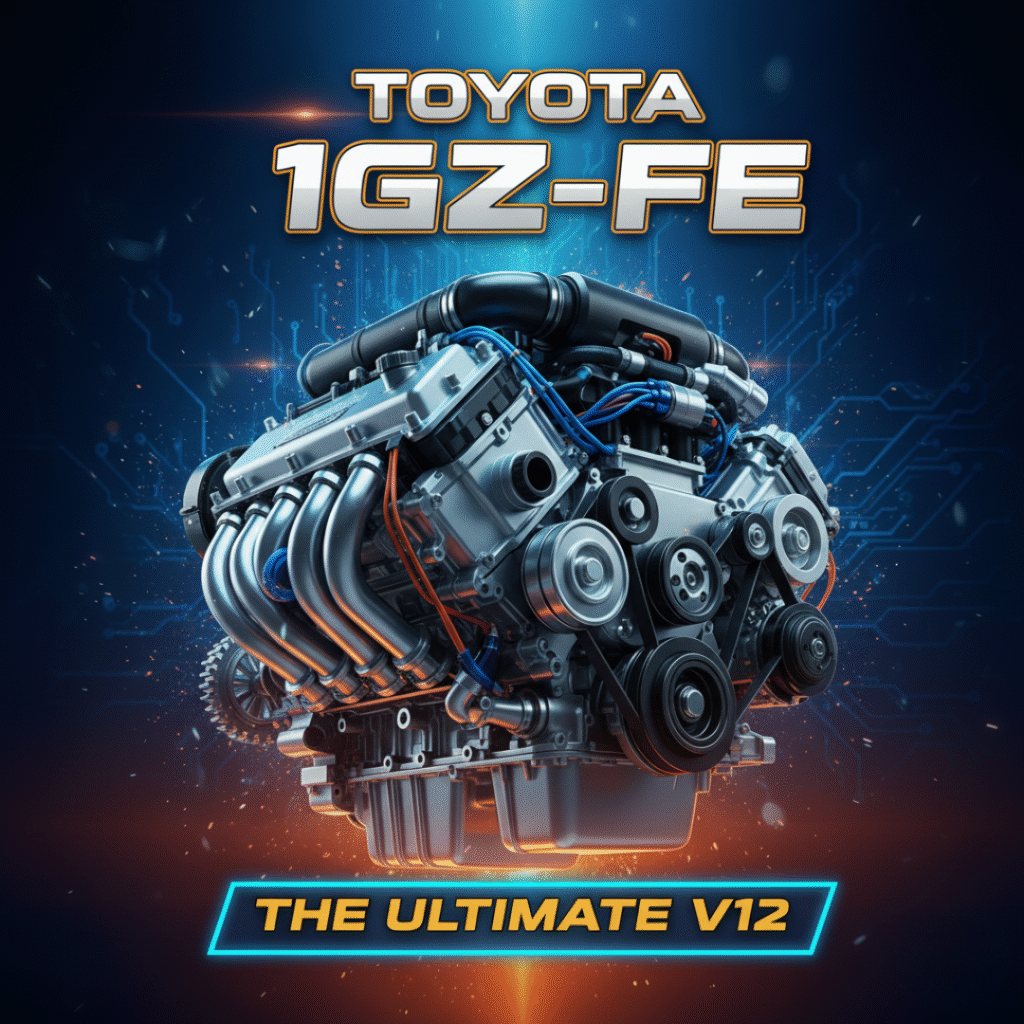
Among all JDM Engines, none are as mysterious or majestic as Toyota’s 1GZ-FE — the one and only V12 ever built for a Japanese domestic car.
Where other JDM Engines roar with boost and fury, this one whispers.
Created solely for the Toyota Century, it represents refinement taken to a spiritual level, a celebration of silence and precision over brute power.
Each bank of six cylinders runs its own ECU, allowing one side to function even if the other fails — a quiet lesson in Japanese reliability.
Its combustion is flawlessly balanced, its idle smoother than silk.
Instead of an exhaust note, the 1GZ-FE delivers a heartbeat, a calm pulse beneath layers of luxury.
This was never about track times or horsepower bragging rights.
It was about grace, dignity, and the kind of mechanical serenity that defines Japan’s most revered JDM Engines.
Reserved for emperors, diplomats, and visionaries, the 1GZ-FE showed that true power can exist without noise.
Decades later, it remains a symbol of Toyota’s perfectionism — a zen interpretation of engineering mastery, and proof that even among JDM Engines, silence can be the loudest statement of all.
Subaru EJ20 Turbo
The Boxer That Made Subaru a WRC Legend
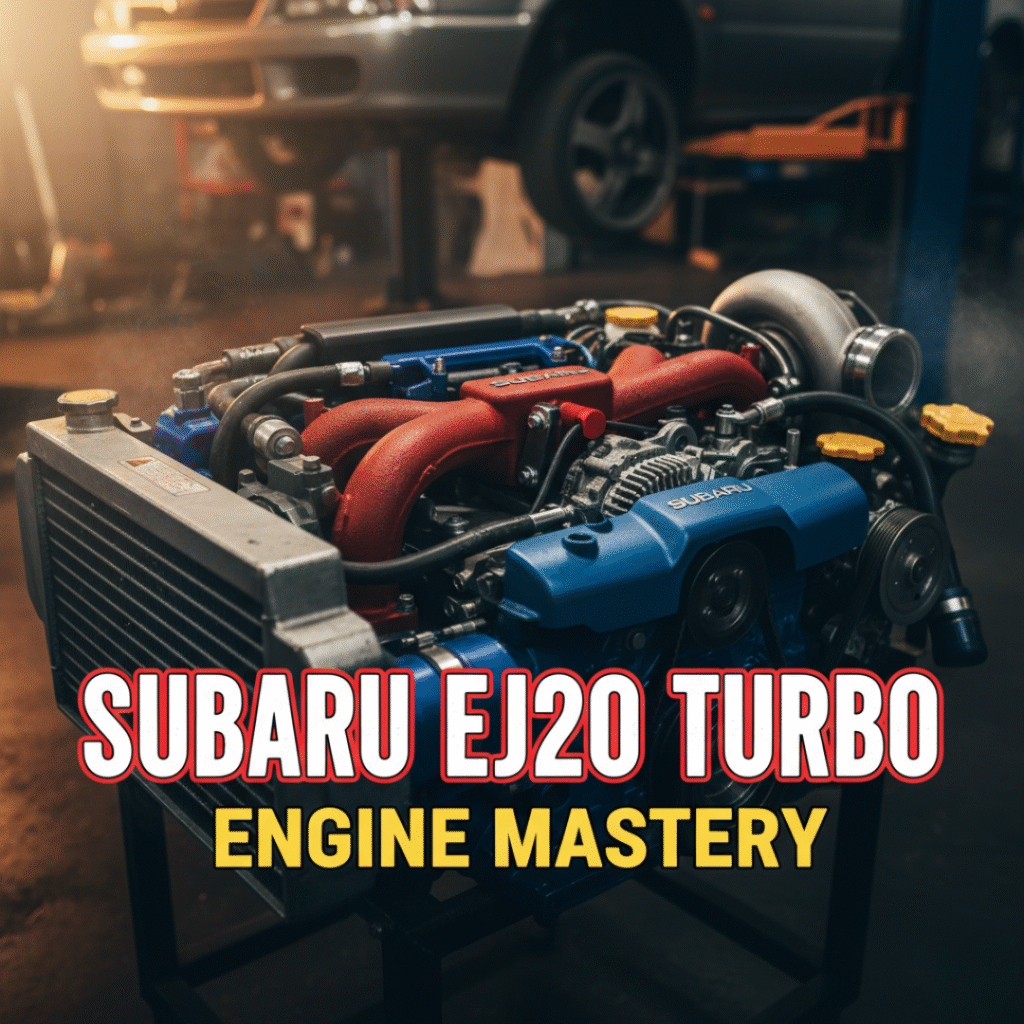
Among the pantheon of JDM Engines, few have a heartbeat as distinctive as Subaru’s EJ20 Turbo.
Born in 1989, this 2.0-liter horizontally opposed boxer became the brand’s soul for more than thirty years — a mechanical signature that defined both Subaru and an era of Japanese performance.
The low-slung boxer layout gave Subaru’s symmetrical AWD its magic: balance, traction, and poise.
While official figures obeyed Japan’s 280-PS gentleman’s agreement, the real-world punch of this JDM Engine told another story.
It delivered torque that clawed out of corners and a rumbling rhythm that made enthusiasts fall in love long before they saw the car.
Under Colin McRae, Richard Burns, and Petter Solberg, EJ20-powered machines stormed the World Rally Championship, turning the blue-and-gold Impreza into legend.
The “boxer rumble” became not just a sound, but a national anthem for JDM Engines — raw, imperfect, and deeply human.
Even after production ended in 2020, the EJ20 Turbo remains a symbol of authenticity and endurance — proof that the greatest JDM Engines aren’t measured by power alone, but by the emotion they ignite every time they fire to life.
Mazda 13B Rotary
The Tiny Engine with an Infinite Soul
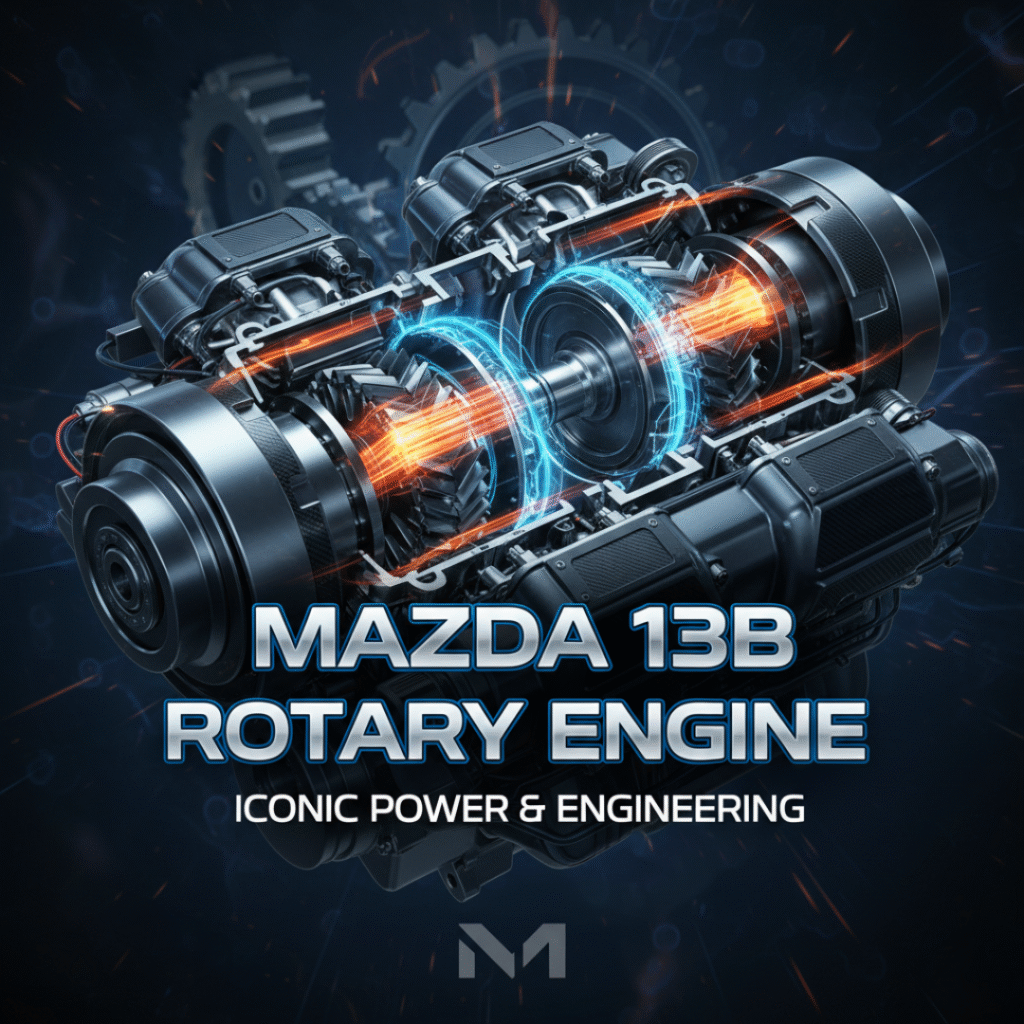
Among the most daring JDM Engines ever created, none capture Japan’s inventive spirit quite like Mazda’s 13B rotary.
Compact, unconventional, and endlessly fascinating, this twin-rotor 1.3-liter masterpiece (654 cc × 2) delivered up to 280 PS in the RX-7 FD3S — while weighing less than most four-cylinder JDM Engines.
Instead of pistons, it used triangular rotors spinning in an epitrochoid housing, creating seamless, turbine-like power and that unforgettable high-rev wail.
Its lightness and size let Mazda mount it low and far back, giving the RX-7 its almost telepathic handling — a dynamic balance that became the envy of the sports-car world.
The rotary’s lineage reached its pinnacle in 1991, when the four-rotor R26B, a direct descendant of the 13B, powered the Mazda 787B to victory at Le Mans — the first and only overall win by a JDM Engine manufacturer.
That triumph sealed the rotary’s place among legends, proving that brilliance sometimes defies convention.
Though emissions rules ended its production, the 13B’s legacy burns bright.
It remains a symbol of courage, creativity, and the boundless imagination behind JDM Engines — small in size, but infinite in soul.
Honda F20C VTEC
The Naturally Aspirated 9000 rpm Miracle
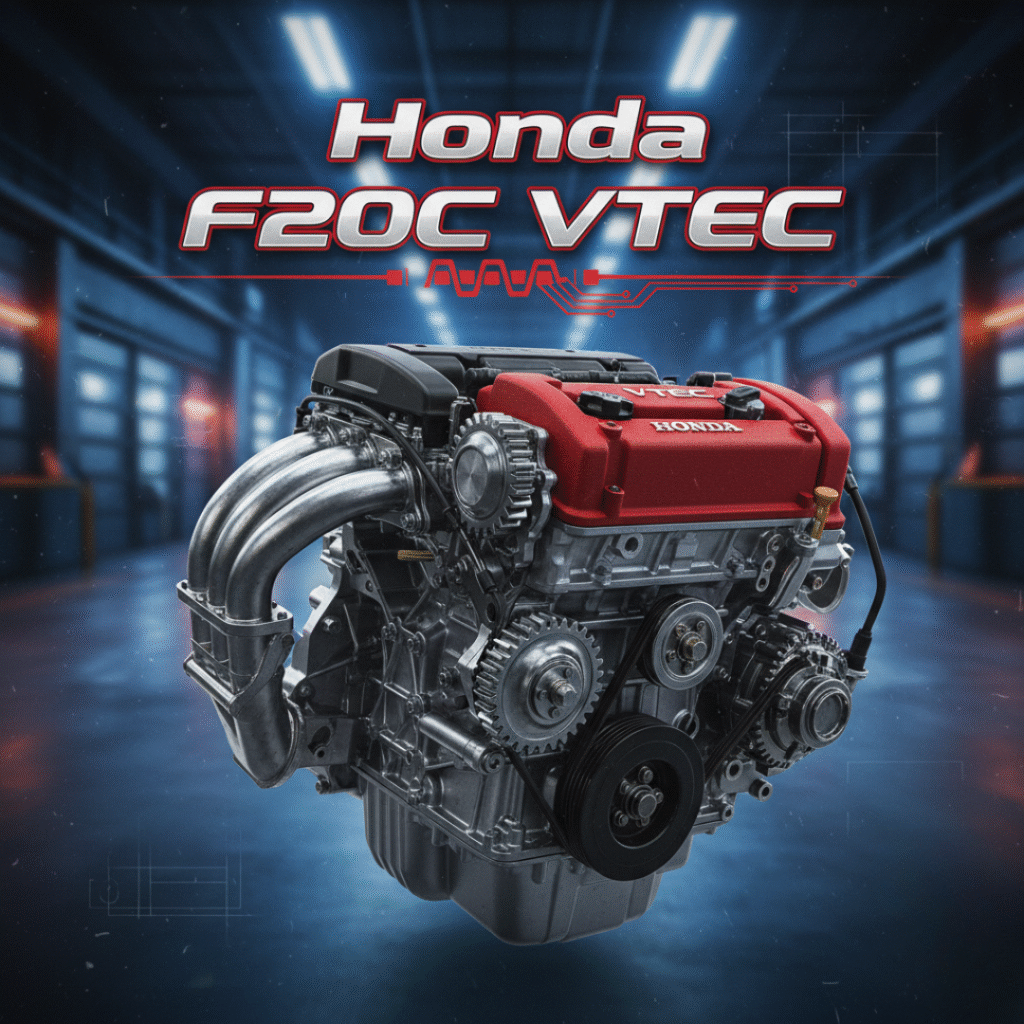
Among the pantheon of JDM Engines, few inspire such reverence as Honda’s F20C.
Built exclusively for the S2000, it redefined what a naturally aspirated 2.0-liter could be — raw, precise, and unfiltered.
With 125 horsepower per liter and a 9000 rpm redline, it stood as a mechanical love letter to high revs and human connection.
Every detail of this JDM Engine reflected Honda’s racing DNA.
Lightweight forged rods, fiber-reinforced pistons, and the iconic VTEC system gave it two faces — gentle and refined below 6,000 rpm, ferocious and alive above it.
The transformation wasn’t just mechanical; it was emotional.
The tone shifted from a polished hum to a spine-tingling wail that begged drivers to chase the limiter, lap after lap.
More than numbers or specs, the F20C represented the soul of JDM Engines — precision, balance, and an almost spiritual pursuit of perfection.
Even decades later, it remains the benchmark for naturally aspirated brilliance, a reminder that great JDM Engines don’t just deliver speed — they forge a dialogue between driver and machine, one glorious 9000-rpm heartbeat at a time.
Toyota 2JZ-GTE
The Indestructible Straight-Six That Ruled the Tuning World
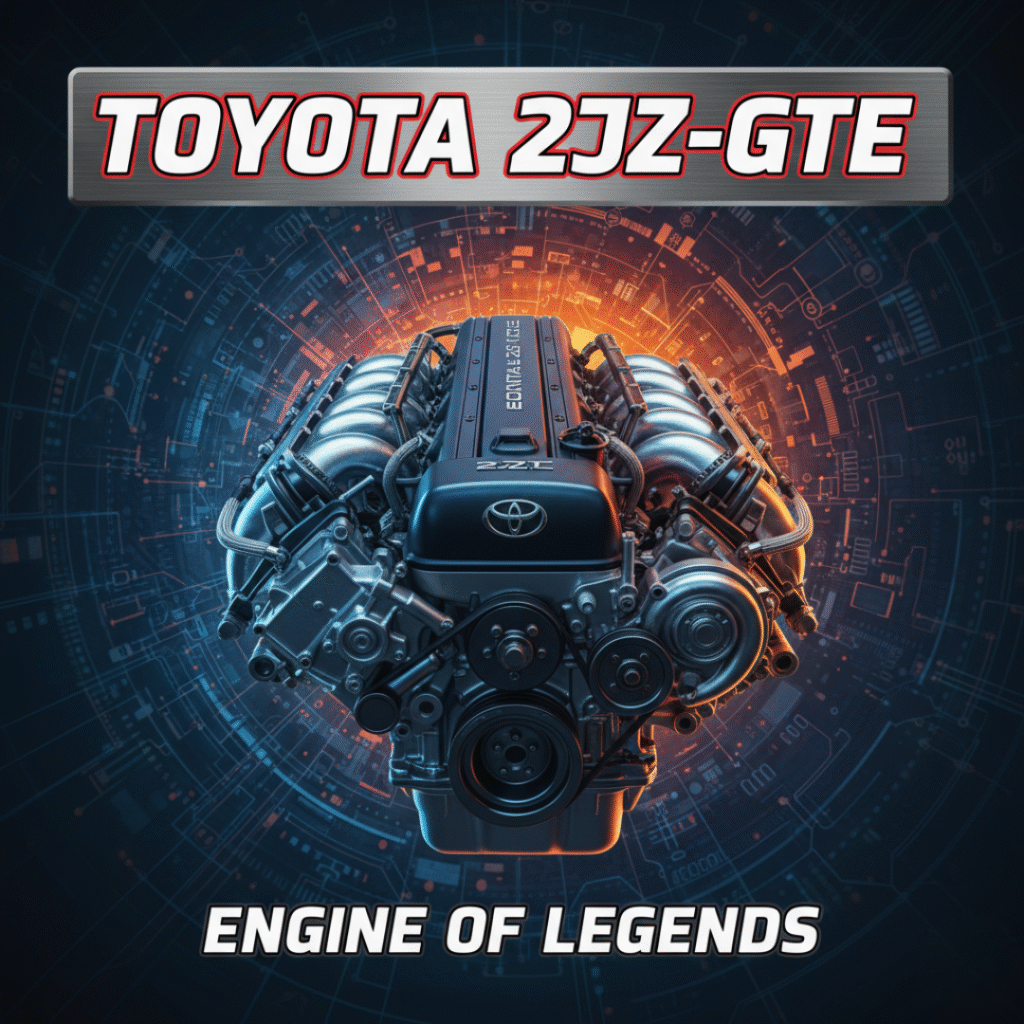
Among all JDM Engines, none have achieved mythical status quite like Toyota’s 2JZ-GTE.
Born inside the Mk IV Supra (JZA80), this 3.0-liter twin-turbo straight-six became the ultimate symbol of Japanese performance engineering — a blend of precision, balance, and brute force that defined an era of JDM Engines.
Officially limited to 280 PS under Japan’s “gentlemen’s agreement,” its true potential was anything but restrained.
Thanks to a cast-iron block, forged internals, and a race-grade oiling system, the 2JZ could shrug off abuse that would destroy lesser motors, reliably producing more than 1,000 horsepower with the right tuning.
Its smooth delivery, bulletproof construction, and endless mod potential made it the canvas on which tuners painted their wildest dreams.
From quarter-mile Supras to drifting monsters, the 2JZ proved why JDM Engines dominated global tuning culture.
Cinema sealed its legend: The Fast and the Furious turned the 2JZ into a cultural icon, the roaring heartbeat of JDM Engines everywhere.
Decades later, it remains the gold standard — proof that reliability, refinement, and limitless power can coexist in one perfectly engineered symphony of steel and boost.
Nissan RB26DETT
The Heart of Godzilla — The Engine That Built a Dynasty
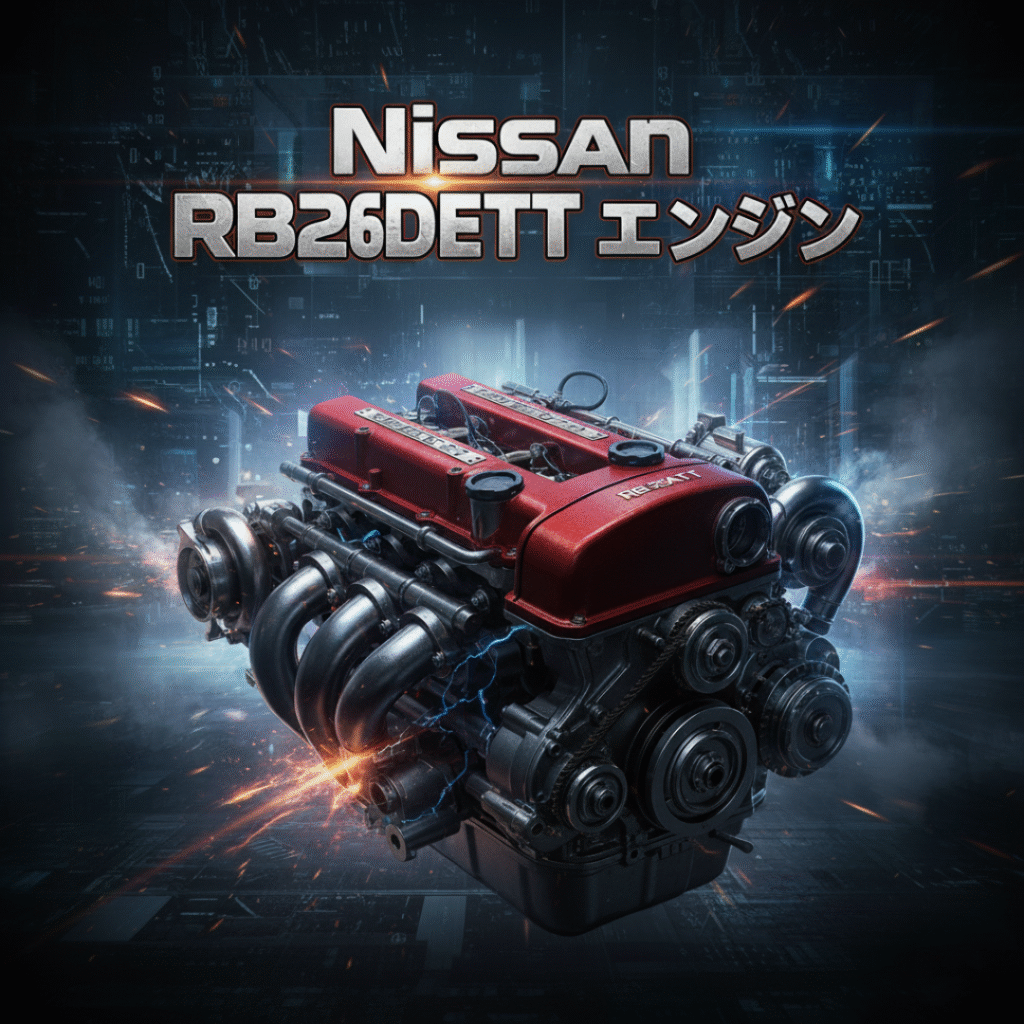
Every era of JDM Engines has its champion — and none roared louder than Nissan’s RB26DETT.
Forged in the crucible of Group A racing, this twin-turbo 2.6-liter inline-six wasn’t designed merely to compete; it was engineered to conquer.
Beneath the hood of the Skyline GT-R, it transformed a car into a legend — the monster the world came to call “Godzilla.”
The RB26’s brilliance lay in its duality.
Six independent throttle bodies and twin parallel turbos delivered razor-sharp response, while its iron block provided the unshakable backbone that tuners dreamed of.
Officially limited to 280 PS, true output hovered higher — and a properly built RB26 could summon over 1,000 hp, still singing that signature straight-six harmony that defines great JDM Engines.
On track, it rewrote history with 29 consecutive touring-car victories.
On the street, it became the heartbeat of Japan’s tuning revolution.
The RB26DETT wasn’t just an engine — it was a manifesto of Japanese precision and mechanical pride.
Decades later, its sound still echoes across circuits and city tunnels alike — a timeless reminder that some JDM Engines aren’t just built; they’re born to rule.
Honorable Mention — Honda B18C
The Engine That Defined Type R Purity
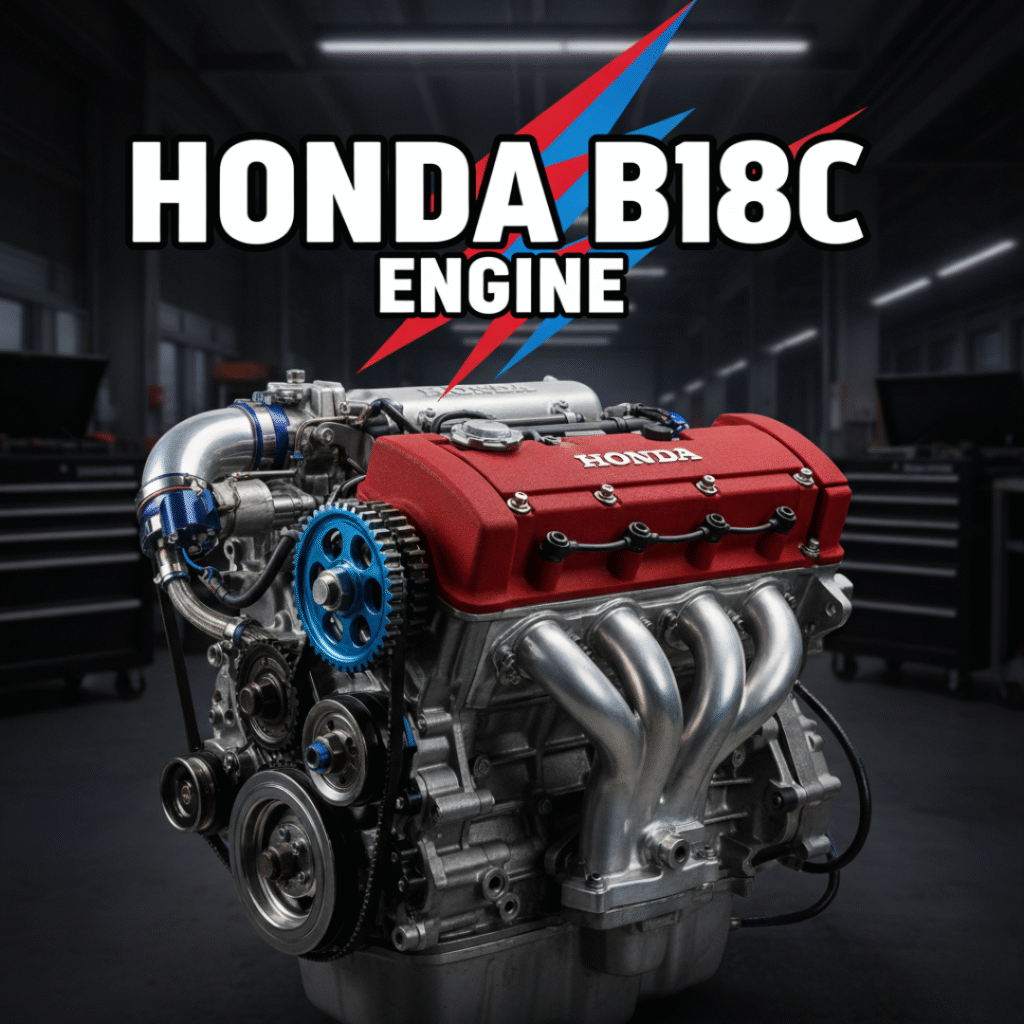
Some JDM Engines shout; others simply sing in perfect harmony. Honda’s B18C belongs to the latter. Long before the F20C made headlines, this 1.8-liter VTEC inline-four defined what purity in performance truly meant. It powered the Integra Type R (DC2) and became a benchmark for naturally aspirated excellence among JDM Engines.
Producing more than 100 horsepower per liter in the mid-1990s, the B18C was a marvel of hand-crafted precision. Each engine was blueprinted and polished by Honda technicians: intake ports hand-finished for optimal flow, cranks micro-balanced for race-car smoothness. When VTEC engaged, it didn’t just change cam profiles — it changed moods, erupting into a raw mechanical chorus that defined a generation of JDM Engines.
Light, rev-hungry, and perfectly responsive, the B18C embodied Honda’s core philosophy: performance through simplicity and discipline. No turbos, no tricks — just pure engineering honesty. Behind the wheel of a Type R, every gear change felt sacred, every 7,000-rpm climb a conversation between driver and machine.
Decades later, the B18C remains a touchstone for purists — a reminder that true brilliance in JDM Engines isn’t measured by boost pressure or horsepower, but by the clarity of the connection it creates between heart, hand, and high-revving soul.
Comparative Table — Icons of the JDM Engines Era
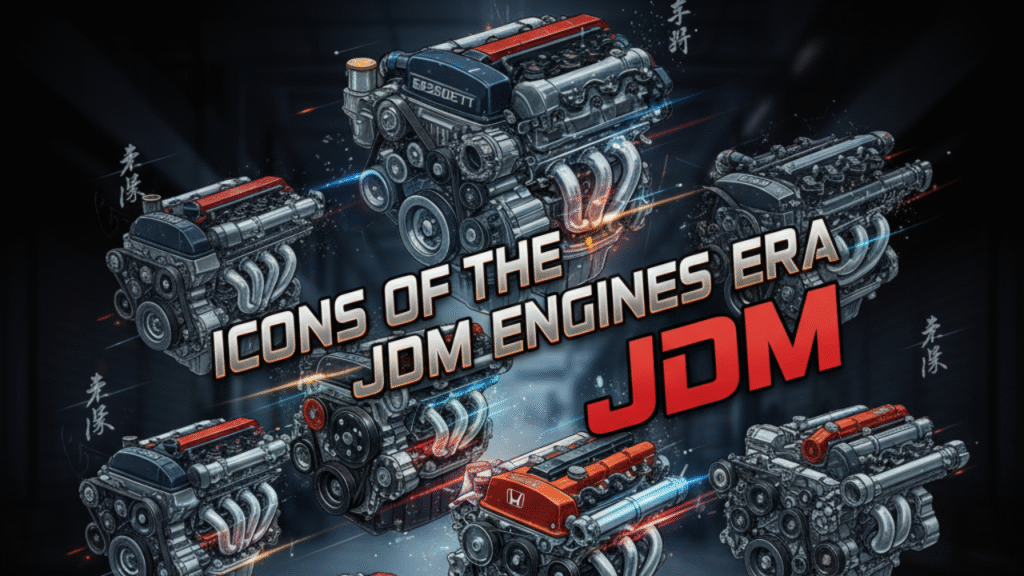
| Rank | Engine | Layout | Displacement | Aspiration | Factory Output | Key Models | Defining Traits |
|---|---|---|---|---|---|---|---|
| 1️⃣ | Nissan RB26DETT | Inline-6 Twin Turbo | 2.6 L | Turbocharged | 280–320 PS | Skyline GT-R (R32-R34) | Godzilla’s heart; limitless tuning; Group A champion |
| 2️⃣ | Toyota 2JZ-GTE | Inline-6 Twin Turbo | 3.0 L | Turbocharged | 280 PS | Supra JZA80, Aristo | Indestructible iron block; global tuning icon |
| 3️⃣ | Honda F20C | Inline-4 NA | 2.0 L | Naturally Aspirated | 250 PS @ 8,300 rpm | S2000 | 9000 rpm redline; razor throttle; 125 hp/L |
| 4️⃣ | Mazda 13B-REW | Twin Rotor | 1.3 L | Twin Turbo | 280 PS | RX-7 FD3S | Lightweight; rotary uniqueness; Le Mans heritage |
| 5️⃣ | Subaru EJ20 | Flat-4 Turbo | 2.0 L | Turbocharged | 280 PS | Impreza WRX STI | Boxer rumble; WRC titles; balance & stability |
| 6️⃣ | Toyota 1GZ-FE | V12 NA | 5.0 L | Naturally Aspirated | 280 PS | Toyota Century | Only JDM V12; supreme refinement & craft |
| 7️⃣ | Mitsubishi 4G63 | Inline-4 Turbo | 2.0 L | Turbocharged | 280 PS | Lancer Evolution | Rally heritage; iron-block durability |
| 🏅 | Honda B18C (HM) | Inline-4 NA | 1.8 L | Naturally Aspirated | 200 PS | Integra Type R (DC2) | VTEC purity; lightweight precision |
The Soul of the JDM Era
FromFrom the scream of a Honda VTEC at 9,000 rpm to the deep burble of a Subaru boxer, from the turbine surge of a Supra to the serene whisper of a Toyota V12 — these JDM Engines were more than machines. They were symphonies of steel, instruments that turned combustion into emotion.
Each JDM Engine told a story of Japan itself.
Mazda’s rotary embodied innovation and rebellion.
Honda’s VTEC units preached discipline and precision.
Nissan and Toyota’s iron-block sixes stood for endurance and strength.
Subaru’s flat-four brought balance and control, while Toyota’s 1GZ-FE offered elegance in motion.
Together, they defined an age when engineers built from the heart as much as the mind. As the world moves toward electrification, enthusiasts still look back to JDM Engines as symbols of passion and individuality — proof that technology can feel human.
The silence of the future may be efficient, but the echoes of these JDM Engines still resonate through tunnels and memories alike. They remind us that perfection isn’t sterile; it’s alive, imperfect, and deeply personal. In their roar lives the eternal heartbeat of Japan’s mechanical soul — the immortal spirit of JDM Engines.