
Introduction
When you start looking into renting a luxury car in Tokyo, the process can become surprisingly confusing. Some people want to drive a Ferrari or Lamborghini themselves and enjoy a true supercar experience. Others are looking for a refined and comfortable way to move around the city in something like a Lexus or Mercedes-Benz. And for international visitors, questions such as whether an international driving permit is accepted, which companies offer English support, and how deposits and insurance work can easily stop the booking process right before the finish line. In reality, Tokyo’s luxury car rental market is made up of several different categories: specialist supercar rental companies, JDM and sports car-focused providers, and chauffeur-driven premium transportation services.
What people searching for this keyword usually want is not just a simple yes-or-no answer to whether luxury cars can be rented in Tokyo. They want to know which service fits their purpose, what the pricing looks like, what kind of vehicle is practical in Tokyo, and what booking conditions matter most. Once those points are clear, the rental experience becomes much more satisfying. Tokyo is a city where expressways, central-city parking, English support, age requirements, and license rules all have a major effect on the quality of the experience.
In this article, we will explain the different types of luxury car rental options available in Tokyo, the situations each one is best suited for, how to read pricing properly, what international visitors need to confirm about licenses and eligibility, and how to book without making common mistakes. At the end, we will also summarize recommended services. If you want your Tokyo driving experience to feel rewarding not only in appearance but also in substance, keep reading.
The First Things to Understand About Luxury Car Rental Tokyo Japan
Luxury car rental in Tokyo can be divided broadly into three categories. The first is self-drive specialist rental services focused on experience, offering cars such as Ferrari, Lamborghini, McLaren, and GT-R. For example, Tokyo Supercars promotes a fleet of more than 40 vehicles, including models such as the Ferrari 488, Lamborghini Performante Spyder, and McLaren 600LT Spider, with half-day rental options. The key point with these providers is that they are not simply selling transportation. They are selling a non-everyday driving experience.
The second category is enthusiast-oriented rental services that offer a wider selection of sports cars and imported premium vehicles. Omoshiro Rent-a-Car, for instance, operates in multiple areas including Tokyo and features sports cars, convertibles, and luxury-oriented models. Compared with a pure supercar specialist, this type of provider tends to offer a broader and more flexible range. It works especially well for travelers who want something special without going all the way into extreme supercar territory.
The third category is chauffeur-driven luxury transportation. Instead of driving yourself, you use a premium vehicle for elegant city travel, airport pickup, or a special occasion. Tokyo MK offers Rolls-Royce chauffeur services with English support, designed for airport transfers and upscale outings. Tokyo traffic can be demanding and unfamiliar, so for some travelers, the best luxury experience is not self-driving at all, but being driven in style and comfort.
That means the key to getting Luxury Car Rental Tokyo Japan right is not to think only in terms of “renting an expensive car.” You need to decide whether your priority is the joy of driving, the visual impact, or the overall quality of movement and presentation. If that part remains vague, the actual experience can feel different from what you imagined.
Who Self-Drive Rentals Are Best For
Self-drive rentals are ideal for people who genuinely want to be behind the wheel and make the car itself the centerpiece of the trip. If you are thinking about driving on the Shuto Expressway, along the bay area, or even toward routes outside central Tokyo, a driving-experience-focused specialist is often the better fit. Some companies, including Tokyo Supercars, offer city driving experiences and Daikoku PA-oriented packages.
Who Chauffeur-Style Luxury Services Are Best For
If the goal is an anniversary date, proposal, VIP transport, or a smooth trip from the airport to a hotel, a chauffeur-style service may be the better match. One major advantage in Tokyo is avoiding parking stress and central-city traffic pressure.
The Key Decision Factors in Tokyo
In Tokyo, you need to think about more than the car model and the price. Pickup location, return time, parking ease, English support, and age conditions matter as well. A spectacular car can still lead to a disappointing day if it is difficult to handle in central Tokyo. On the other hand, the right vehicle for your actual use can deliver value far beyond the price you paid.
Which Type of Luxury Car Rental Fits Sightseeing, Dates, and Special Days in Tokyo
Choosing a luxury rental by scenario is usually smarter than choosing purely by model name. Tokyo has major differences in road width, parking conditions, foot traffic, and route character depending on the area, so the same car can feel either perfect or inconvenient depending on how you plan to use it.
For Tokyo Sightseeing, Usability Often Matters More Than Showiness
If you mainly plan to use the car for sightseeing in central Tokyo, an extremely wide supercar may be less enjoyable than a premium car or a more manageable sports car. If you are starting from a hotel and planning to visit areas such as Omotesando, Ginza, Roppongi, or Odaiba, stopping and parking will matter a lot. The Tokyo Metropolitan Police also notes that time-limited roadside parking zones are not intended for long stays, and off-street parking should be used when appropriate. In Tokyo, parking should be part of the plan from the beginning.
For that reason, a luxury SUV, grand tourer, or refined sports car may actually deliver a better sightseeing experience than a top-end supercar. It is not just about visual impact. Passenger comfort and luggage space also matter more than many travelers first assume.
For Dates or Anniversaries, the Arrival Experience and Passenger Comfort Matter
For dates and celebrations, top speed and horsepower are often less important than ease of entry and exit, photo appeal, the atmosphere of the drive, and how enjoyable the car feels as a shared experience. If the plan involves high-end hotels or restaurants in the city center, a chauffeur-driven service can sometimes feel more elegant than driving yourselves. A Rolls-Royce, for example, is not mainly about driving excitement but about staging the entire arrival beautifully. Tokyo MK even offers English-support chauffeur plans, making it especially suitable when hosting overseas guests.
On the other hand, if the goal is to create private driving memories together, a convertible or sports car can be a strong option. A route that starts in central Tokyo during the day, moves toward the waterfront in the evening, and takes in the atmosphere around the Rainbow Bridge at night can make the car feel even more special. Providers such as Omoshiro Rent-a-Car, with strength in sports cars and open-top cars, fit that style well.
For Car Enthusiasts, Experience Packages Can Be the Better Choice
Luxury car rental in Tokyo is not always just about pure vehicle hire. Some services are sold as guided driving experiences. Tokyo Supercars, for example, offers city driving experiences and Daikoku PA-related driving packages, which can feel more approachable for first-timers than a fully independent rental. For visitors without local driving familiarity, these guided options may be the safer and more enjoyable route.
Pricing and How to Read the Cost of Luxury Car Rental Tokyo Japan
Pricing is one of the most misunderstood parts of luxury car rental. If you compare only the headline rental price, the real total can look very different once all conditions are taken into account. In Tokyo’s luxury rental market, you need to consider base price, deposit, insurance conditions, optional extras, ETC use, expressway tolls, and return requirements before you can make a fair comparison.
Supercars Often Start in the High Tens of Thousands of Yen for a Half Day
According to the public lineup shown by Tokyo Supercars, the Audi R8 V10 Plus is listed at 80,000 yen for a half day, the Mercedes AMG G63 at 60,000 yen, the Ferrari 488 at 169,000 yen, and the Lamborghini Performante Spyder at 188,000 yen. That means the self-drive high-end market in Tokyo often sits roughly in the 60,000 to 190,000 yen half-day range depending on the model. Supercars should not be viewed as an extension of ordinary rental cars. They are in an entirely different pricing category.
The same provider also displays separate “driving experience” prices for some vehicles, showing that certain products are priced more like curated experiences than straightforward long-duration rentals. That is a major difference from traditional rental companies.
Deposits and Age Rules Can Matter as Much as the Price
One of the biggest things people overlook is the security deposit. Tokyo Supercars notes that some vehicles require a refundable 100,000-yen deposit. Because these are high-value vehicles, you should also confirm your payment limit or available card balance in advance.
Age rules also differ by provider. Tokyo Supercars lists age 26+ for one of its Daikoku-area experience products, while Omoshiro Rent-a-Car notes a minimum age of 23 and at least three years since license issuance. In other words, your age and driving history can determine which companies are available to you. Younger travelers in particular should verify this early.
Expressway Tolls, ETC, and Parking Should Be Treated as Separate Costs
The driving experience in Tokyo can change dramatically depending on whether you use expressways. If you want to enjoy night routes or the bay area, ETC is almost essential. Times Car Rental’s English guidance explains that ETC card rental and expressway pass applications are possible. Even with specialist luxury car companies, it is wise to confirm ETC availability in advance, because tolls often become one of the main additional expenses when you leave central Tokyo.
Parking should also not be underestimated. Luxury cars and large SUVs may not fit some parking structures due to size restrictions. Around restaurants and commercial areas, parking stress can become more significant than many visitors expect, which means the right car choice often matters more than the sticker price itself.
What International Visitors Need to Confirm About Licenses and Driving Eligibility
For international travelers coming to Tokyo, this is the most important section. In Japan, not every foreign license allows you to drive automatically. Even if a booking page is in English, you still need to meet Japan’s legal driving requirements in order to use the rental.
Visitors From Many Countries Need an International Driving Permit
According to JNTO, foreign drivers in Japan generally need an International Driving Permit based on the 1949 Geneva Convention. It is only valid within one year of issue, and the one-year rule connected to the date of entry into Japan also matters. JAF and the Tokyo Metropolitan Police provide similar guidance, meaning international travelers normally need to obtain the permit in their home country before arrival.
Some Countries and Regions Use an Official Japanese Translation Instead
Drivers from Switzerland, Germany, France, Belgium, Monaco, and Taiwan are among those who can drive in Japan using their domestic license together with an official Japanese translation, rather than a Geneva Convention IDP. JAF and Toyota Rent a Car both explain this distinction. If you misunderstand whether your country uses the IDP system or the translation system, you may not be able to drive on the day of rental.
Passport Presentation and Entry Date Confirmation Also Matter
JNTO explains that proof of the date you entered Japan may be necessary, which is why passport handling matters. If you used an automated gate, it may also be wise to confirm how your entry record is documented. Some rental companies require not just the license itself but also the original passport. Toyota Rent a Car’s guidance likewise notes that a passport is required when presenting an international permit or foreign license.
Learn the Basic Rules of the Road Before Driving
Japan uses left-hand traffic, and JAF’s English guide also highlights basics such as seatbelt use, the ban on drunk driving, and the prohibition on mobile phone use while driving. Central Tokyo has heavy pedestrian activity, bicycles, taxis, and delivery vehicles, so even skilled drivers can feel tired if they are not used to Japanese traffic conditions. If it is your first time driving in Japan, choosing an extremely high-powered supercar right away may create stress instead of enjoyment.
How to Choose the Right Type of Vehicle in Tokyo
One of the most common mistakes in luxury rental is choosing purely by fame or aspiration. In Tokyo, the most eye-catching car is not always the one that gives the best day.
Supercars Deliver Maximum Drama, but They Are Best for Specific Uses
Ferrari, Lamborghini, and McLaren create extremely strong impressions in photos and video, and even a short drive can feel unforgettable. That is one reason companies like Tokyo Supercars attract so much attention. At the same time, low ground clearance, limited luggage space, wide body dimensions, and more difficult entry and exit can all work against convenience in central Tokyo. They are ideal for short, intense, memorable experiences, but not always the best fit for a full day of comfortable movement.
GT-R and High-Performance Coupes Sit Between Excitement and Practicality
High-performance coupes, including popular JDM models, often provide a very good balance. A GT-R in particular carries strong recognition among international visitors and is highly appealing in the JDM experience category. Specialist rental providers in and around Tokyo do offer GT-R rentals. For travelers who want both great performance and a more manageable city-driving experience, this category makes a lot of sense.
Luxury SUVs and Sedans Often Deliver the Best Passenger Satisfaction
If you are traveling with another person, carrying luggage, moving between hotels, restaurants, and shopping areas, a luxury SUV or premium sedan can be the strongest choice. Tokyo Supercars’ lineup includes vehicles such as the Lamborghini Urus and Mercedes AMG G63, showing that not every premium rental is about speed alone. In Tokyo, cars that combine presence with usability can be especially rewarding.
If You Are Unsure, Decide Based on Driving Time and Number of Stops
A simple way to choose is to think in terms of how the day will unfold.
If the driving time is short and the main goal is photos and memories, lean toward a supercar.
If the driving time is longer and you plan to visit multiple places, a high-performance coupe or SUV may be better.
If there will be many stops and passenger comfort matters most, a chauffeur service or premium sedan may suit the day better.
This way of thinking helps you choose based not just on dream appeal, but on overall satisfaction during the day itself.
What to Check Before Booking
Luxury car rental should not be booked as casually as a hotel room. Missing one condition can lead directly to trouble on the day.
Age and Years Since License Issue
The first thing to check is the age limit and driving history requirement. As mentioned above, some providers require drivers to be 26 or older, while others accept drivers from age 23 if they have held a license for at least three years. In some cases, the same rules also apply to any additional driver. If you expect to switch drivers during the day, you need to confirm eligibility for everyone who may drive.
Insurance, Liability, and Deposit
Because these are high-value cars, insurance details and deposit return conditions matter a great deal. Tokyo Supercars notes a refundable 100,000-yen deposit and also mentions insurance and personal insurance documentation in some product descriptions. More important than the rental price alone is understanding how much financial responsibility you may carry if something goes wrong.
Pickup Location and Operating Hours
In Tokyo, the quality of the experience is shaped not just by the car but also by where and how easily you can pick it up. Specialist companies are not always located in major central stations. The GT-R page on Car Rental Tokyo, for example, shows a location in Matsudo, Chiba. So even when the service name includes “Tokyo,” the actual departure point may not be in the heart of Tokyo. If you misread that part, you may lose valuable driving time before the experience even begins.
English Support and Booking Flow
For international visitors, it helps to confirm whether the booking can be made in English and whether the in-person explanation on the day is also available in English. Tokyo Supercars, Toyota Rent a Car, Times Car Rental, and Tokyo MK all have English pages, but the scope of support is not identical. An English website does not automatically mean the full on-site process will be effortless, so sending a quick inquiry ahead of time can reduce uncertainty.
[The Hottest Experience] Driving Dream Sports Cars in Japan with JDM TOUR
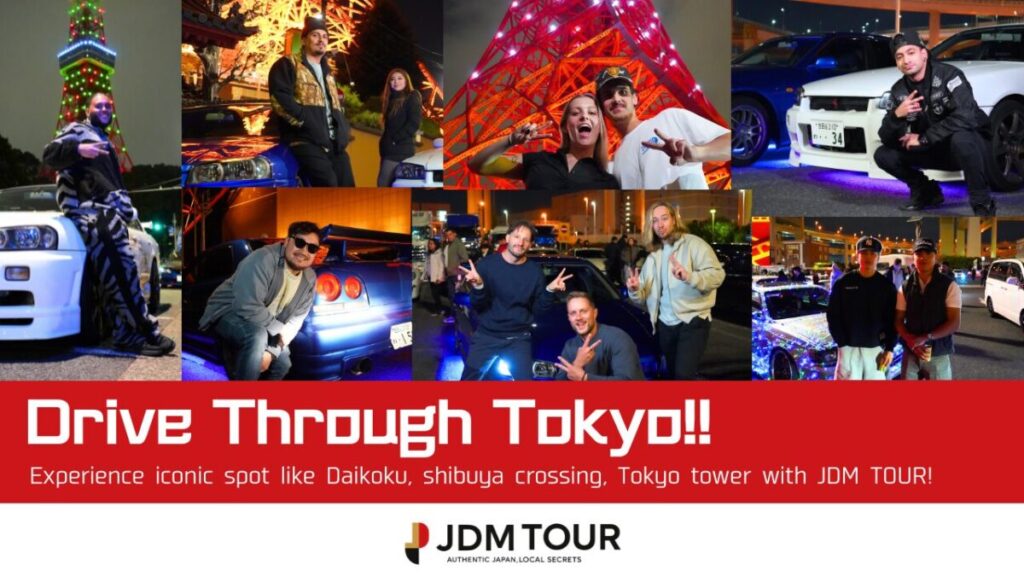
While standard rentals are practical, a new trend has exploded among car enthusiasts visiting Japan: renting “JDM” (Japanese Domestic Market) cars through specialized services like JDM TOUR.
The New Standard of Japan Travel: Public Roads in the Movie
The experience of being able to rent sports car japan is no longer just about driving; it has evolved into an "attraction" that transforms Japan's public roads into a real-life game world. In recent years, an exploding trend among international travelers is enjoying the act of driving through Japanese cities itself as a form of entertainment.
Specifically, commanding JDM machines such as the Nissan GT-R or Toyota Supra against the backdrop of Tokyo’s iconic landmarks is no longer just transportation; it is positioned as a participatory "activity." Just as cosplay driving tours have emerged, this integrated experience of car and city overturns conventional tourism, offering unforgettable, highly shareable memories that light up social media feeds.
This new style of journey, facilitated by exotic car rental tokyo services, has transformed from merely pursuing speed into a means of experiencing unforgettable "play." It allows you to deeply engage with Japan's unique culture and landscapes, creating an adventure that goes beyond traditional sightseeing.
Why is JDM So Popular Right Now?
Legendary sports cars manufactured in Japan during the 1990s and early 2000s—such as the Nissan Skyline (R34), icons for fans worldwide. For many, driving these cars on the actual roads they were designed for is a bucket-list experience that surpasses any standard sightseeing tour.
The Unique Charm of a JDM TOUR
JDM TOUR offers more than just a “car rental”; it provides a deep dive into Japanese car culture.
- The Pilgrimage to Daikoku PA: The highlight of many tours is driving to the Daikoku Parking Area on the Shuto Expressway. At night, this spot transforms into a gathering place for hundreds of beautifully customized cars, creating a vibrant atmosphere that is world-famous.
- Professional Guided Convoys: Driving a right-hand-drive manual car through the complex Shuto Expressway can be daunting. JDM TOUR offers plans where a professional guide leads the way in a lead car, ensuring you stay on the right path safely.
- Photography and Content Creation: The guides know the best “insta-worthy” spots, such as the Shibuya Crossing, Tokyo Tower, and Rainbow Bridge, allowing you to capture professional-quality memories with your dream car.
Location for JDM TOUR
How to Enjoy a Luxury Car Rental in Tokyo to the Fullest
If you are going to book Luxury Car Rental Tokyo Japan, it is worth planning the day well enough to make the most of it. Tokyo is a city where route design and timing can completely change the quality of the experience.
Daytime Works Well for Urban Scenery, Evenings for the Bay Area
During the day, areas such as Omotesando, Roppongi, Marunouchi, and Odaiba work well for enjoying the visual relationship between the car and the city. In the evening, the Rainbow Bridge and waterfront roads tend to bring out the atmosphere of a luxury car even more strongly. If you want good photo or video material, a schedule that includes a little of both day and night is ideal. The fact that Tokyo Supercars offers both city driving experiences and Daikoku-oriented experiences reflects the appeal of these different settings and time zones.
If You Use the Expressway, Plan Around ETC
If you want to move efficiently around Tokyo, confirming ETC use is essential. It helps not only with convenience at toll booths but also with overall time management. Times Car Rental explains ETC card rental and expressway pass options, showing how central ETC is to rental driving in Japan. Even with specialist luxury rental providers, it is worth confirming how ETC is handled and how charges are settled.
Prioritize Reliable Parking Over Pure Proximity
In Tokyo, waiting until you arrive near your destination to look for parking can waste more time than expected. Luxury cars and large vehicles may also face entrance restrictions at some parking facilities, so it often makes sense to check parking options before even finalizing restaurant or shopping plans. The Tokyo Metropolitan Police provides guidance on the limitations of time-controlled roadside parking and emphasizes using off-street parking for longer stays. This becomes especially important with luxury vehicles.
Beginners May Be Better Off Starting With a Guided Experience
If it is your first time driving in Japan, if you are uneasy about right-hand-drive vehicles or left-side traffic, but still want a special car experience, a guided or shorter experience product may actually be the smarter choice. With high-end cars, the value of the experience depends not only on the vehicle itself, but also on how confidently you can handle the environment around you.
Conclusion
The key to getting Luxury Car Rental Tokyo Japan right is not choosing based on an impressive badge alone. In Tokyo, luxury car rental includes very different categories, from self-drive supercar specialists to enthusiast-oriented sports car services and chauffeur-driven premium transport. The right answer changes depending on whether you care most about driving pleasure, sightseeing comfort, visual impact, or creating the right atmosphere for a date or celebration.
For international visitors in particular, international driving permits or official translations, passport presentation, entry date confirmation, age requirements, insurance, and deposits are all crucial. If you miss these details, you may be able to make a booking but still fail to use the service on the day. If you are not used to driving in Japan, prioritizing usability and support over maximum extravagance often leads to a better experience overall.
If you want to create a memorable day in Tokyo, start by defining your real goal. Sightseeing, a date, filming, a JDM experience, or VIP transportation. Once that purpose is clear, the right car and the right provider become much easier to identify.