Introduction
When people search for self drive jdm tokyo, they are not looking for an ordinary rental car. What they really want is the experience of driving a car with real history behind it—an R34, a GT-R, a Supra—through Tokyo’s night scenery and onto the Shuto Expressway with their own hands on the wheel. Around Tokyo, there are in fact JDM-focused rental services and self-drive experiences, with operators near Haneda and in areas like Adachi offering cars such as the GT-R, R34, RX-7, and Supra.
That said, this is not the kind of experience that is complete the moment you make a reservation. If you do not understand the legal requirements for driving in Japan, how to adapt to right-hand-drive cars and left-side traffic, how ETC works on the expressway, how Daikoku PA actually works, how manual transmission cars feel in Tokyo traffic, and what is or is not covered by insurance, your dream day can turn stressful very quickly.
In this article, for readers who seriously want to make self drive jdm tokyo happen, I will break down what kind of cars to target in Tokyo, what kind of route works best, what sort of budget you should expect, and how to book without making the most common mistakes. By the end, you should have a clear picture not only of how to rent the car you dream about, but also how to actually enjoy the experience properly in Tokyo.
Why Self Drive JDM Tokyo Feels So Special
In Tokyo, the real appeal is not just the car, but the setting around it
The magic of driving a JDM car in Tokyo is not something you can explain with a spec sheet alone. High-rise buildings in the city center, the openness of the bayside routes, the views from the Rainbow Bridge, and the glow of the expressway at night all amplify the presence of a GT-R, R34, or RX-7. That is why many self-drive experiences are designed around iconic locations such as Shibuya, Rainbow Bridge, Daikoku PA, and Tokyo Tower.
Tokyo works so well for this kind of experience because it is not simply “a place where you can rent a Japanese sports car.” It is a place where the Tokyo car-culture image people have built in their minds through films, games, YouTube, and social media overlaps with the real streets and highways in front of them. Especially around the bayside area and the Shuto Expressway, the city itself becomes part of the fantasy. Sitting in the driver’s seat there turns the experience into something that ordinary sightseeing never can.
It turns sightseeing into something you control, not just something you watch
Most Tokyo travel is built around trains and walking. The moment you rent a JDM car, the structure of the trip changes completely. In self drive jdm tokyo, the point is not transportation. Driving itself becomes the main event. The car you choose, the time you leave, the road you take, where you stop, and even how you take photos all become part of the experience.
That is why first-time drivers should not assume that a longer drive automatically means a better one. In Tokyo, a shorter route with more atmosphere often creates a much stronger memory than a long trip with too much dead time. Even a single well-planned run from central Tokyo toward the bayside area can deliver the full JDM feeling.
Why the middle ground between full freedom and guided touring works so well
In Tokyo, not every JDM experience is a traditional standalone rental. Some operators offer self-drive tours where you drive the car yourself while a guide vehicle leads the route. These experiences can reduce the stress of navigation, toll roads, and unfamiliar city driving while still giving you the satisfaction of saying, “I actually drove it.”
This style fits Tokyo especially well. The city has confusing highway branches, ETC-only entrances, and fast-moving night traffic that can feel overwhelming to first-time visitors. For people who want the thrill of driving a JDM car but are not yet comfortable handling urban expressways in Japan on their own, this hybrid format often gives the best balance between freedom and peace of mind.
What You Need in Order to Drive a JDM in Japan
Having an international permit is not always enough
To drive legally in Japan, foreign visitors need the correct documents. In general, that means either a valid International Driving Permit based on the 1949 Geneva Convention, or, for certain countries and regions, a valid domestic license together with an official Japanese translation. This is where many people go wrong: having something they believe is an “international license” is not the same as holding one that is valid in Japan.
That means the first thing you should confirm is not the car. It is your license status. Before you compare R34s, GT-Rs, or Supras, make sure your documents are actually accepted by both Japanese law and the rental provider. Relying only on social media or booking-site summaries is risky.
Validity periods and entry dates are easy to misunderstand
A lot of travelers assume that as long as their permit itself has not expired, they are fine. But in Japan, the period during which a foreign visitor may legally drive can also depend on the date of entry into Japan, not just the expiry date printed on the document.
This may not create issues for short vacations, but it can become important if you are on a long stay or have a more complicated entry history. If there is any uncertainty, it is always smarter to verify before booking. The worst possible outcome is arriving excited for your dream drive only to be told that your documents are not acceptable.
The “basic rules” are exactly where first-timers get caught
For experienced drivers, the obvious rules often feel too obvious to think about. But in Tokyo, those basics matter more than anything. Japan uses left-side traffic, all passengers must wear seatbelts, driving under the influence is strictly prohibited, and mobile phone use while driving is not allowed.
A lot of JDM fans are already confident behind the wheel. But the challenge in Tokyo is often not car control. It is adjusting to a different traffic language. Right-hand-drive may feel natural after a few minutes, but turning into intersections, reading lane positioning, and merging while staying on the left side of the road can still feel unfamiliar. The most dangerous part is often the first 15 minutes, when excitement is highest and your habits from home are still strongest.
Which JDM Cars to Target in Tokyo and How to Choose One
Choose the car that suits the experience, not just the poster on your wall
The JDM cars available in Tokyo vary a lot depending on the operator. Some services list cars such as the GT-R, R34, RX-7, Supra, and Impreza WRX STI. Others lean into highly recognizable builds and iconic halo cars.
But the most important point is this: the best-looking car is not always the best car for your Tokyo drive. Narrow streets, urban parking, ramps, traffic, nighttime visibility, and constant stop-and-go can make certain cars feel much more demanding than they look online. For a first-time self-drive experience in Tokyo, it is often better to choose a car you can enjoy with confidence than one you feel tense about the entire time.
R34s and GT-Rs are perfect for a once-in-a-lifetime dream
If your goal is to fulfill the fantasy of driving a legendary JDM in Tokyo, then the R34 and GT-R family are hard to beat. They carry huge symbolic weight, look incredible in photos, and instantly create the “this is really happening” feeling.
At the same time, these cars often come with a higher price tag and a higher level of pressure. A rare, older, manual-transmission GT-R is not always the sort of car you casually cruise through a busy city in. For some drivers, choosing the ultimate dream car immediately is the right move. For others, especially first-timers in Tokyo traffic, a slightly easier car can result in a better overall day.
Supras and newer GT-Rs are often better for simply enjoying the drive
Cars like the newer Supra or R35 GT-R can be a more realistic choice for drivers who want a strong JDM presence without the same level of stress that comes with a more fragile or demanding older car. They still look dramatic, still feel special, and usually leave more room for you to actually enjoy the city, the route, and the atmosphere.
If you love JDM culture but are not completely comfortable taking an older manual car into urban Tokyo, this type of choice can be a smarter one. Satisfaction does not come only from the badge on the hood. It also comes from whether you have enough mental space to enjoy the moment.
Manual transmissions are where fantasy can turn into frustration
Some self-drive experiences include manual cars such as a 5-speed R32 GT-R or a 6-speed R34 GT-R. On paper, that sounds like the ultimate enthusiast choice. In reality, Tokyo is not a circuit. It is full of lights, merges, ramps, parking maneuvers, navigation stress, and traffic.
If your manual experience is limited, choosing an older MT car purely because it sounds more authentic can backfire. You may spend the entire drive focusing on not stalling, not missing shifts, and not getting flustered, instead of enjoying the scenery and the car. A car that looks amazing in a video is not automatically the right car for the roads you will actually face that day.
[The Hottest Experience] Driving Dream Sports Cars in Japan with JDM TOUR
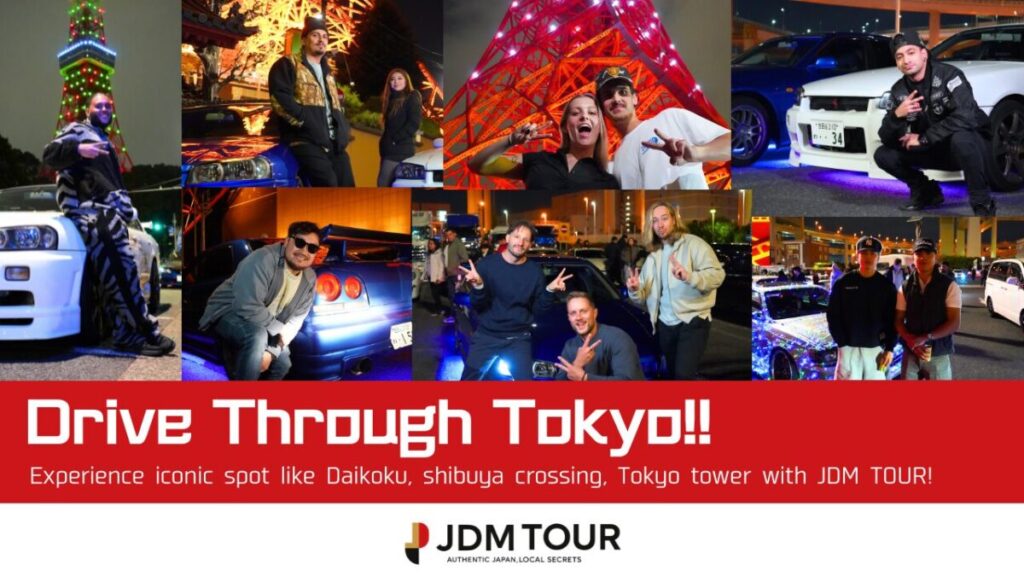
While standard rentals are practical, a new trend has exploded among car enthusiasts visiting Japan: renting “JDM” (Japanese Domestic Market) cars through specialized services like JDM TOUR.
The New Standard of Japan Travel: Public Roads in the Movie
The experience of being able to rent sports car japan is no longer just about driving; it has evolved into an "attraction" that transforms Japan's public roads into a real-life game world. In recent years, an exploding trend among international travelers is enjoying the act of driving through Japanese cities itself as a form of entertainment.
Specifically, commanding JDM machines such as the Nissan GT-R or Toyota Supra against the backdrop of Tokyo’s iconic landmarks is no longer just transportation; it is positioned as a participatory "activity." Just as cosplay driving tours have emerged, this integrated experience of car and city overturns conventional tourism, offering unforgettable, highly shareable memories that light up social media feeds.
This new style of journey, facilitated by exotic car rental tokyo services, has transformed from merely pursuing speed into a means of experiencing unforgettable "play." It allows you to deeply engage with Japan's unique culture and landscapes, creating an adventure that goes beyond traditional sightseeing.
Why is JDM So Popular Right Now?
Legendary sports cars manufactured in Japan during the 1990s and early 2000s—such as the Nissan Skyline (R34), icons for fans worldwide. For many, driving these cars on the actual roads they were designed for is a bucket-list experience that surpasses any standard sightseeing tour.
The Unique Charm of a JDM TOUR
JDM TOUR offers more than just a “car rental”; it provides a deep dive into Japanese car culture.
- The Pilgrimage to Daikoku PA: The highlight of many tours is driving to the Daikoku Parking Area on the Shuto Expressway. At night, this spot transforms into a gathering place for hundreds of beautifully customized cars, creating a vibrant atmosphere that is world-famous.
- Professional Guided Convoys: Driving a right-hand-drive manual car through the complex Shuto Expressway can be daunting. JDM TOUR offers plans where a professional guide leads the way in a lead car, ensuring you stay on the right path safely.
- Photography and Content Creation: The guides know the best “insta-worthy” spots, such as the Shibuya Crossing, Tokyo Tower, and Rainbow Bridge, allowing you to capture professional-quality memories with your dream car.
Location for JDM TOUR
What a Good Driving Route in Tokyo Actually Feels Like
Do not stay only in the city center—add some bayside openness
If you want a Tokyo JDM drive to feel memorable, it helps to include at least some bayside expressway driving, not just dense city traffic. Central Tokyo has energy, but the bayside sections bring that feeling of release that many people associate with night driving culture in Japan.
That is why many self-drive experiences combine urban scenery with more open roads. A route that moves from the intensity of the city toward the wider, cleaner flow of the waterfront tends to feel much more cinematic and complete.
Daikoku PA is not a place you “walk to”—you enter it from the expressway
Daikoku Parking Area is one of the most misunderstood places in Tokyo car culture. Many visitors assume they can simply get near it and walk in, or park nearby on normal roads. That is not how it works. Daikoku PA can only be accessed from the expressway network, and not from ordinary streets.
This matters a lot when planning self drive jdm tokyo. If Daikoku is one of your must-visit stops, then your route needs to be designed around expressway access from the start. You cannot treat it like a normal sightseeing destination. Understanding this single point already puts you far ahead of many first-time visitors.
On your first drive, a route with fewer goals is usually a better one
For a first self-drive JDM experience in Tokyo, trying to cram in too much often lowers the quality of the day. A better strategy is to focus on two or three memorable highlights and make sure you actually enjoy them. For example: the city at night, a flowing bayside run, and one strong rest stop. That is more than enough to create a top-tier experience.
Tokyo is not forgiving when you make a wrong turn or get delayed. Traffic, missed exits, and return-time pressure can quickly eat away at the mood. That is why the best route is usually not the one that covers the most ground. It is the one that reliably captures the moments you care about most.
How to Think About Pricing and Budget
Looking only at the car’s rental price will mislead you
JDM rental pricing in Tokyo varies dramatically by car. Some services list relatively accessible pricing for cars like the R34, while rarer or more elaborate self-drive experiences involving special GT-R builds can climb much higher.
But raw rental price is only part of the story. The real comparison point is what is included and what is not. Fuel, tolls, insurance, collision damage waiver, route support, mileage limits, and deposits can all change the final cost. A cheaper headline price does not always mean a cheaper experience.
Expressway tolls and ETC matter more than many travelers expect
The Shuto Expressway does not work like every highway system overseas. ETC compatibility, how tolls are charged, and the increasing number of ETC-only entrances all matter. If you are a traveler unfamiliar with Japanese toll roads, you should not assume that following a navigation app automatically means a smooth experience.
This is one of the biggest reasons guided self-drive tours can feel easier for first-timers. They remove a lot of uncertainty around entrances, tolls, and route execution so that you can focus on the driving itself.
Insurance, mileage limits, and deposits shape the real experience
One provider may include fuel, highway tolls, standard insurance, and CDW. Another may charge separately for excess mileage or operate with stricter payment conditions. On the surface, both might be labeled “self-drive,” but the ownership experience they create can feel very different.
Before booking, always check the mileage allowance, deductible or liability structure, whether CDW is included, what happens in the event of an accident, whether support is available in your language, and how payment and deposits are handled. For high-value cars, peace of mind often matters more than shaving a little off the rental fee.
The Most Common Ways People Mess Up Self Drive JDM Tokyo
Assuming Tokyo roads are easy at night
Nighttime can absolutely make Tokyo feel more atmospheric, and in some cases less crowded than the daytime. But that does not mean the roads become simple. Construction, lane splits, merges, event traffic, and road changes can all create stress when you least expect it.
The key to a successful experience is not forcing the drive later and later into the night. It is choosing a time that still feels manageable and leaving enough margin before the return time. The last part of the rental is often where drivers become rushed, and that is when mistakes happen.
Making Daikoku PA the entire point of the day
Daikoku PA is exciting, but it should not become the whole experience. If you become too focused on simply “reaching Daikoku,” you risk missing everything that makes the drive itself memorable. The way Tokyo feels when you first pull away, the transition from dense urban streets to wider expressway sections, and the reflections of city lights across the car’s interior all matter just as much.
Daikoku should be one chapter in the story, not the whole story.
Trying to recreate social-media driving videos
The videos online look amazing, but real roads come with real rules. The coolest way to do this is not to imitate reckless content. It is to handle a legendary car properly, safely, and confidently in the city it belongs to.
In fact, the calmer you drive, the more you notice. The sound of the engine, the reactions from people around you, the shape of the skyline, the rhythm of the road—all of that becomes clearer. The best Tokyo JDM day is not the one you perform for other people. It is the one that stays with you afterward.
How to Choose the Right Service Before You Book
Check whether the service is built for travelers or for hardcore enthusiasts
JDM rental services can look similar at first glance, but they are not all aimed at the same customer. Some clearly support international travelers and make the document process easier to understand. Others feel more selective, with stricter age or experience requirements.
This matters more than many people expect. The question is not just, “Do they have the car I want?” It is also, “Am I the kind of customer this service is actually designed for?” If you are visiting from overseas, clear document guidance, multilingual support, and understandable accident procedures matter a lot.
Decide whether you want full freedom or guided support
A fully independent rental gives you maximum flexibility. That is the dream for many enthusiasts. But in Tokyo, freedom also means more navigation stress, more toll-road uncertainty, and more chances to lose time.
A guided self-drive format can be the smarter first step. It still gives you the satisfaction of driving the car yourself, but it removes a lot of the friction that can make a first Tokyo drive harder than expected. For many people, the best move is to start with a more supported experience, then go fully independent on a later visit.
The best services let you imagine the whole day before you arrive
A strong service makes the day easy to picture in advance. You should be able to understand the pickup location, required documents, payment method, mileage limits, insurance structure, return time, and support contact before you ever show up.
That kind of clarity matters. The service with the flashiest photos is not always the best one. The best one is often the one that makes it easy to imagine driving, enjoying the route, and returning the car without stress. That is what turns a dream into a genuinely great day.
Conclusion
self drive jdm tokyo is not just about renting a car in Japan. It is about turning a cultural icon into a real memory on real roads. To do that well, you need more than excitement. You need to understand license validity, left-side traffic, expressway tolls and ETC, how Daikoku PA works, insurance coverage, and route planning.
In practical terms, the most important decisions are these:
Confirm your license documents first.
Choose a car you can genuinely handle, not just admire.
If Daikoku PA matters to you, plan the drive around expressway access.
Compare total cost and insurance terms, not just the headline rental fee.
Once those pieces are in place, driving a JDM in Tokyo becomes much more than a tourist activity. It becomes something personal. When you leave the city lights behind, flow out toward the bayside roads, and stop to look back at the car you just drove yourself, the feeling is no longer “I rented it.” It becomes “I actually lived that day.” In Tokyo, a legendary JDM experience is not made by hype alone. It is made by good preparation.