
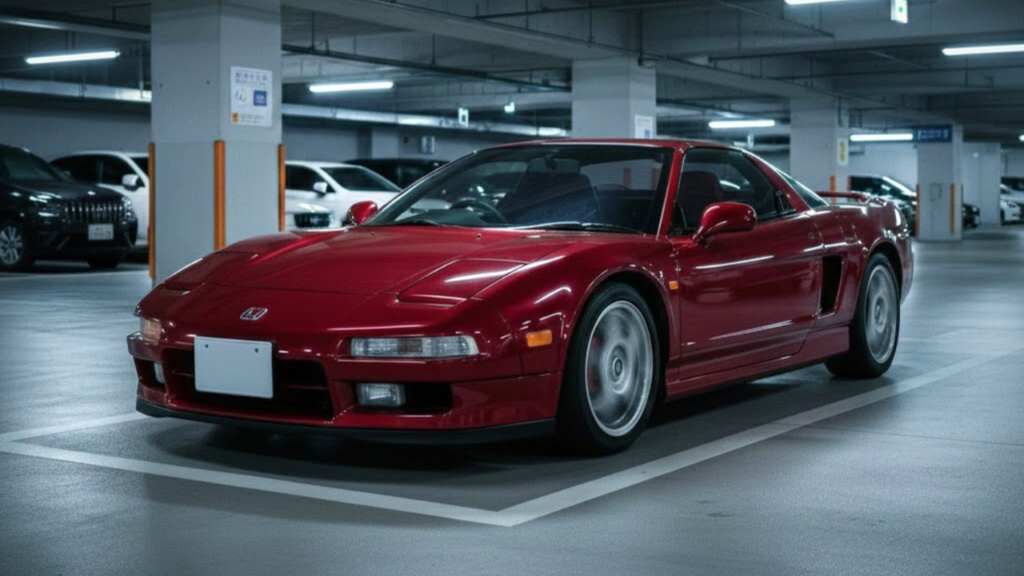
Overview
Led by a guide vehicle, you’ll visit notable sights like Shibuya Scramble Crossing, the scenic Rainbow Bridge along the Bayshore Expressway, the world-famous Daikoku Parking Area, and Tokyo Tower, perfect for photo ops.
This vehicle is a wide-body specification. Please refrain from booking if you have no experience driving a right-hand drive vehicle.
Drivers must hold an international driving license (issued under the 1949 Geneva Convention) (a foreign license with a Japanese translation is acceptable), as well as submit a passport and credit card. Digital copies and photographs are not accepted; only originals will be accepted.
・Drivers must be 23 years of age or older.
・If multiple drivers wish to drive, all drivers must meet the driving requirements.
・You must always follow the lead vehicle and only drive on the designated route. The route may change due to traffic, weather, regulations, etc.
Equipment/Conditions
Vehicle Style: Coupe
Transmission: MT
Seating Capacity: 2
Fuel: Included
Toll Fees: Included
Basic Insurance: Included
CDW (Collision Damage Waiver): Included
Multilingual Accident Response Support: Included
NOC (Non-Operation Charge, Charge for Incapacity of Operation): Not Included
Tour Hours
Monday – Wednesday: 6:00 PM – 9:00 PM
Thursday – Sunday: 5:00 PM – 10:00 PM
Please check in at least 15 minutes before the tour start time.
meeting place
Shibuya MIYASHITA PARK north
Tour Details
Duration: Approximately 3.5 to 4 hours
Route (Passing Through / Stopping)
Shibuya Scramble Crossing / Passing through (no stop)
Rainbow Bridge / Passing through (no stop)
Metropolitan Expressway Wangan Line / Passing through (no stop)
Daikoku Parking Area / 1-hour stop
Tokyo Tower / 5–10 min stop
Important Notes: Check-in must be completed at least 15 minutes before departure. If you are more than 10 minutes late, your reservation may be canceled without refund. The route, stops, and duration are subject to change due to weather, traffic restrictions, etc.
Cancellation Policy
14 days or more prior to scheduled departure date: Free of charge
4 to 13 days prior: 30% of rental fee
2 to 3 days prior: 50% of rental fee
Day before or on the day: 100% of rental fee (non-refundable)
*Applications received after 6:00 PM Japan Standard Time will be processed as the following day.
Other Important Notes
No refunds will be issued for late arrivals or failure to present a valid driver’s license (including International Driving Permits or official translations). Digital copies or photocopies are invalid.
Changes cannot be made within 24 hours of departure.
If the tour is canceled due to weather or other circumstances, a rescheduling to another date or a full refund will be provided. However, travel disruptions in other regions are not covered.
Participants must be experienced drivers. Supercars, classic cars, modified vehicles, etc., incur extremely high repair costs. Participants must be able to cover the cost of any damage or breakage.
Engine RPM (rev) must not exceed 3,000 RPM. Failure to follow the lead vehicle’s instructions may result in tour termination.
NOC (Non-Operation Charge) Amount
Scratches/Dents on Body/Rims: ¥150,000
Wheel Replacement due to Deep Scratches/Bends: ¥300,000
Damage to Mechanical Parts/Components Causing Immobilization: ¥1,000,000
The Origin of Legend
How the Honda NSX-R (92R) Defined the
“Essence of Speed” in Japanese Sports Car History
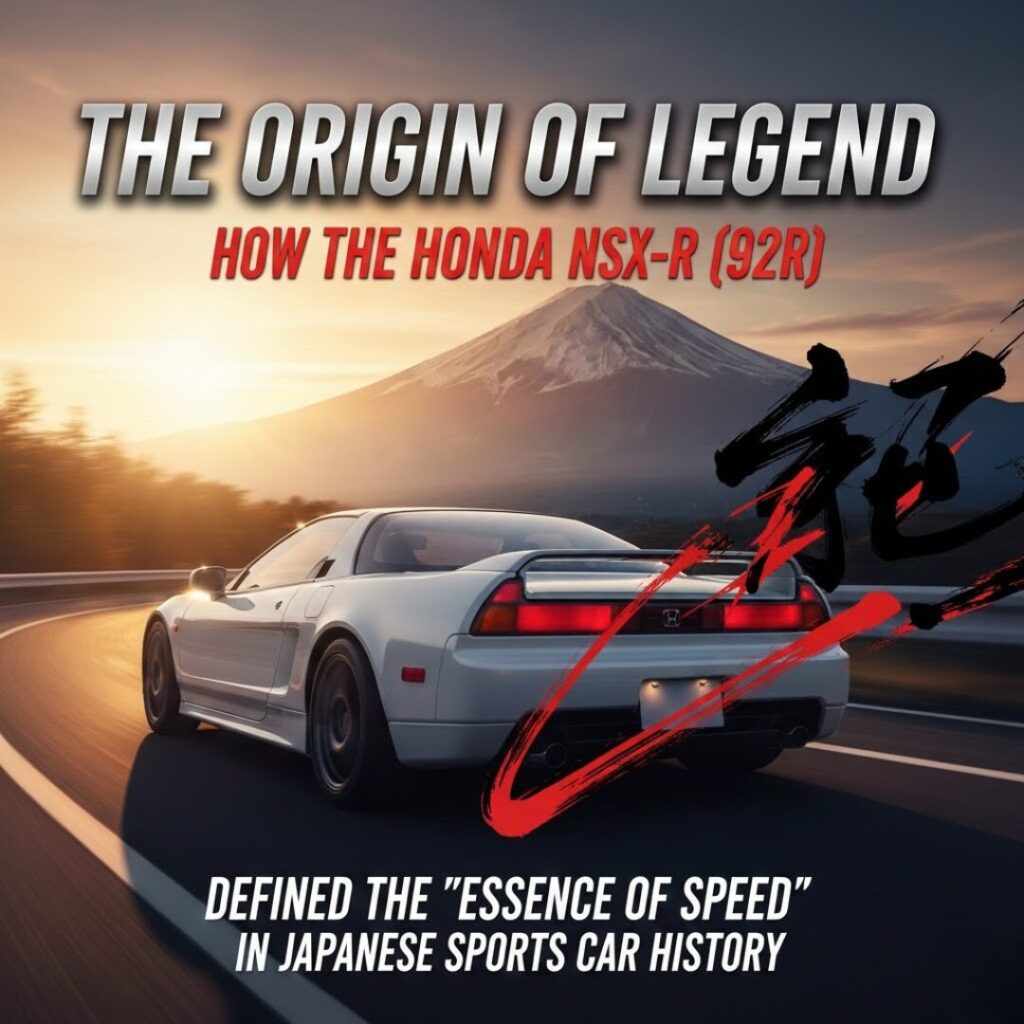
Introduction
In November 1992, the world-class mid-engine supercar, the Honda NSX, received its ultimate pure sports variant: the NSX Type R. Often referred to by its chassis code as the “92R,” this model was not merely a high-performance trim; it was the embodiment of the engineers’ philosophy that “lightness is the best tuning.” The 92R laid the legendary groundwork for the “Type R” badge, which would become the ultimate symbol of Honda’s sporting lineage.
The original NSX (NA1) redefined the supercar paradigm by proposing “ultra-high performance manageable by anyone,” contradicting the era’s norms. However, within Honda’s development team, dominant in the F1 scene at the time, there was a fervent contingent—dubbed the “Red Faction”—who passionately sought “the ultimate machine stripped of comfort and dedicated solely to driving.” The NSX-R was the manifestation of this very passion. Through relentless weight reduction and dedicated suspension tuning, it achieved handling dynamics far superior to its catalog specifications. The car famously conquered the German Nürburgring, the very circuit where Honda’s F1 car, the RA271, debuted, achieving a sub-eight-minute lap time. This feat unequivocally established the NSX-R’s standing among the world’s elite sports cars.
This article will deeply explore the genesis of the NSX-R (92R), the technical specifics of its extreme weight-saving measures and specialized tuning, and the lasting impact it continues to have on modern automotive culture, particularly the Japanese sports car market. Why does this rare model, limited to just 483 units, still command fervent support from enthusiasts worldwide and trade at staggering premium prices? Together, we will uncover the “Essence of Speed.” Understanding the true value of the NSX-R is synonymous with understanding the purest spirit of performance in Japanese automotive history.
The Birth of the NSX-R (92R): The Passionate Philosophy of the Developers’ “Red Faction”
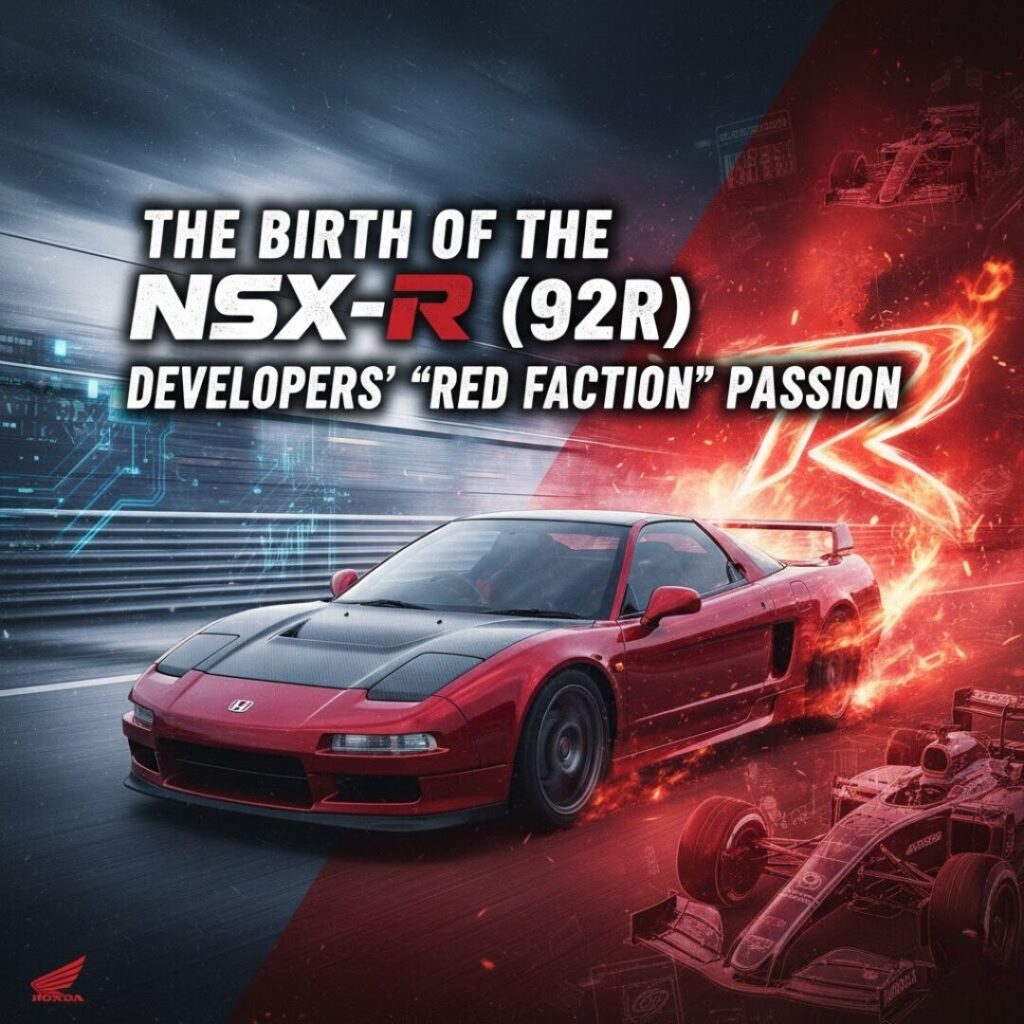
The creation of the NSX-R stemmed from the internal clash and eventual synergy of two contrasting development philosophies within the original NSX team. According to the testimony of Shigeru Uehara, the chief engineer of the original NSX, the team was split into the “Red Faction” and the “Silver Faction.”
The “Red Faction”‘s Passion for Ultimate Lightness
While the “Silver Faction” envisioned a comfortable supercar utilizing extensive electronic control, the “Red Faction” aimed to “strip everything away and build a thoroughly fast car.” At the time of the original NSX, achieving the VTEC engine’s commercialization was already a significant feat, making further substantial power increases difficult. The development team thus focused on “making the car lighter.” Uehara stated, “Making it light makes it fun. It improves dynamic performance, handling, and braking all at once.” He was convinced that weight reduction even enhanced body rigidity. To embody this philosophy that “lightness is the best tuning,” the NSX-R adopted a spartan approach, unusual for a production car, by deleting comfort features, sound-deadening material, and even parts of the air conditioning system.
F1 Technology Feedback into the Production Car
The design of the NSX-R heavily reflects Honda’s racing spirit, culminating in F1. In the late 1980s and early 1990s, Honda dominated F1 as McLaren-Honda. Feeding that technology and expertise into production cars was the mandate of the entire NSX project, and the NSX-R stands as its clearest example.
- Machined Titanium Shift Knob: Its shape was inspired by F1 car gear levers, balancing lightness with operational feel.
- Dedicated Carbon Parts: Specially developed carbon fiber reinforced plastic (CFRP) was used for the bonnet and rear wing, improving lightness and aerodynamic performance.
These elements elevated the NSX-R beyond a mere high-performance car to the status of a “street-legal clubman racer.”
Extreme Weight Reduction and Body Rigidity: The Challenge to Reach 1230 kg
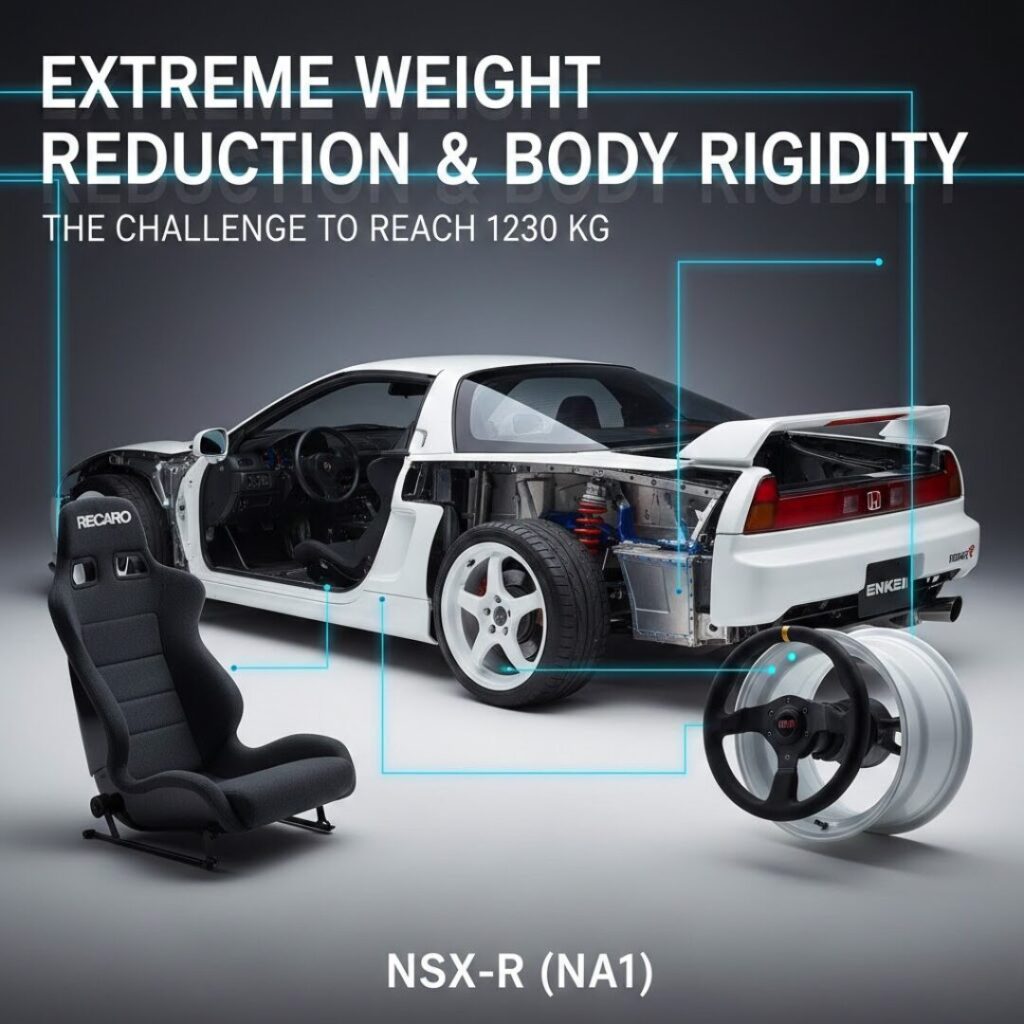
The NSX-R (92R)’s most striking feature is its extensive weight reduction. It successfully shed a phenomenal 120 kg from the standard NSX (1350 kg for the MT model), bringing the curb weight down to 1230 kg. This “gram-by-gram weight reduction” was based on meticulous design principles aimed at lowering the car’s center of gravity and centralizing its mass.
The Thorough Elimination of Comfort Features and the Adoption of Dedicated Lightweight Parts
The pursuit of lightness was exceptionally thorough, even for a supercar of that era.
- Reduction of Sound-Dampening and Vibration-Damping Materials: These heavy materials were significantly reduced, even at the expense of increased road noise.
- Abolishment of Comfort Features: Many features like air conditioning, audio systems, cruise control, power seats, and keyless entry were either made optional or removed entirely.
- Dedicated Lightweight Components:
- Recaro Full Bucket Seats: Jointly developed with Recaro, these ultra-lightweight carbon-fiber full bucket seats contributed significantly to the weight reduction.
- MOMO Steering Wheel: An Italian MOMO lightweight steering wheel was adopted.
- ENKEI Ultra-Lightweight Aluminum Wheels: Specially developed aluminum wheels, finished in the same color (Championship White), reduced unsprung weight.
- Aluminum Pipe Reinforcements: Bumper beams and door beams were also made of aluminum, balancing lightness with safety.
Body Rigidity Enhancement
Simultaneously with weight reduction, body rigidity was enhanced to ensure the performance expected of a pure sports model.
- Aluminum Pipe Reinforcements: Aluminum pipes were added and welded into various parts of the chassis, increasing rigidity—particularly at the suspension mounting points—without significantly adding weight.
- Clutch Damper Deletion: The clutch damper was removed to prioritize responsiveness, achieving a more direct and unadulterated operating feel.
This combination of weight reduction and rigidity enhancement was not merely about pursuing speed; it realized a reduction in “yaw moment of inertia and load transfer.” This led to a refined quality of control, allowing the driver to more acutely sense the vehicle’s movements, contributing to a sharper driving experience.
Dedicated Tuning of the C30A Engine and Driveability
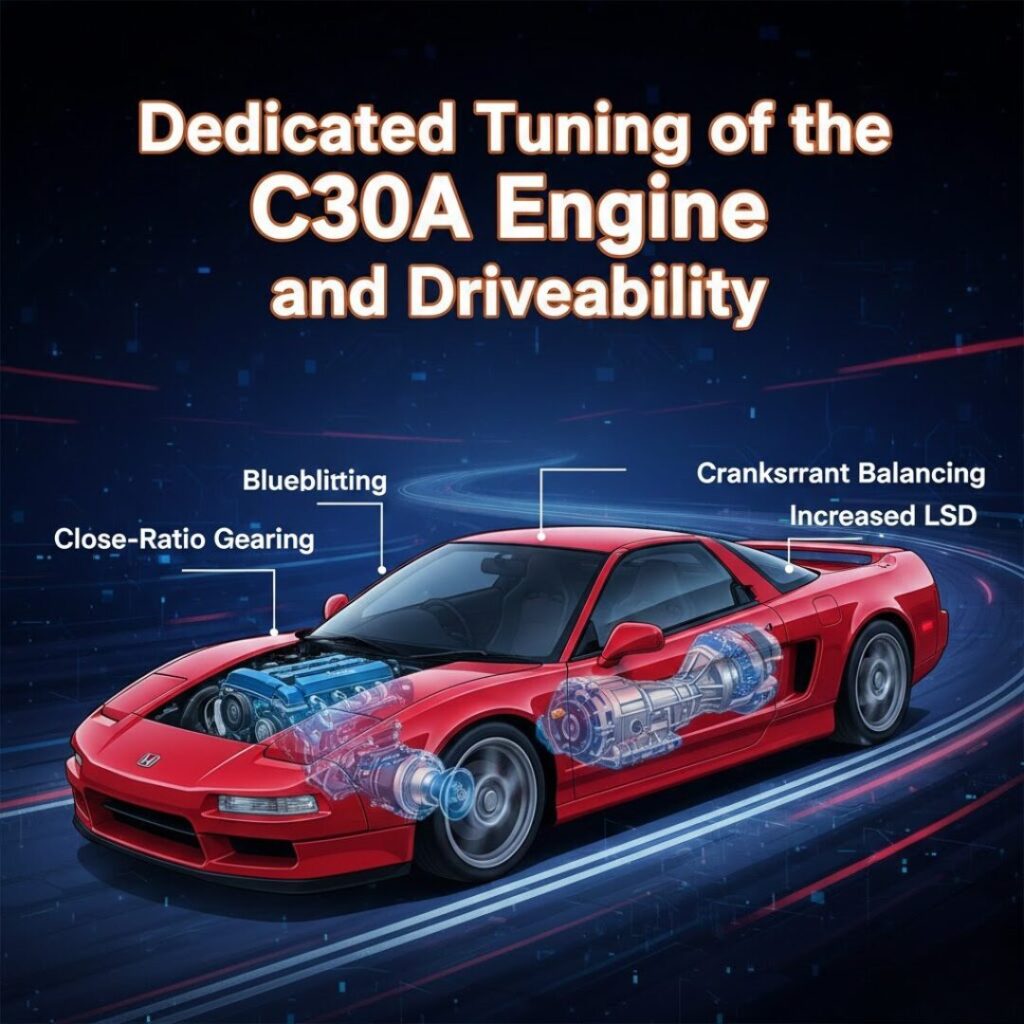
The engine in the NSX-R (92R) is the same C30A type 3.0L V6 DOHC VTEC engine as the standard NSX, but it received specific Type R tuning. The catalog specifications remained unchanged due to the prevailing domestic voluntary restrictions, with a maximum output of 280 PS at 7300 rpm and a maximum torque of 30.0 kg·m at 5400 rpm. However, its internal workings were distinctly different from the standard engine.
Engine “Blueprinting” and Response Improvement
The C30A engine in the NSX-R underwent thorough “blueprinting” to maximize component precision.
- Crankshaft Balancing: Rotating and reciprocating components, such as the crankshaft, connecting rods, and pistons, were precisely measured and adjusted for weight and balance before assembly. This reduced engine friction, resulting in smoother and sharper revving than the standard engine, with a noticeable improvement in high-RPM responsiveness.
- No Change to Rev Limit: Although the displacement remained 3.0L, this meticulous balancing significantly enhanced the engine’s “perceived speed” and “driveability.”
Dedicated Transmission and Final Gear Ratio
The NSX-R’s transmission was also specially modified to suit its character.
- Close-Ratio Gearing: The gear ratios, particularly for the lower gears, were adjusted to be closer together (close-ratio), making it easier to maintain the VTEC power band during circuit driving.
- Increased Limited-Slip Differential (LSD) Preset Load: The LSD’s effectiveness was increased, improving traction performance during cornering and allowing the driver to apply the throttle more aggressively.
As a result, the driver experienced a stronger sense of Jinba Ittai (rider and horse as one)—a more direct transfer of engine power to the road compared to the standard NSX, allowing the car to trace the intended line with greater precision.
Circuit-Dedicated Chassis and Suspension Settings
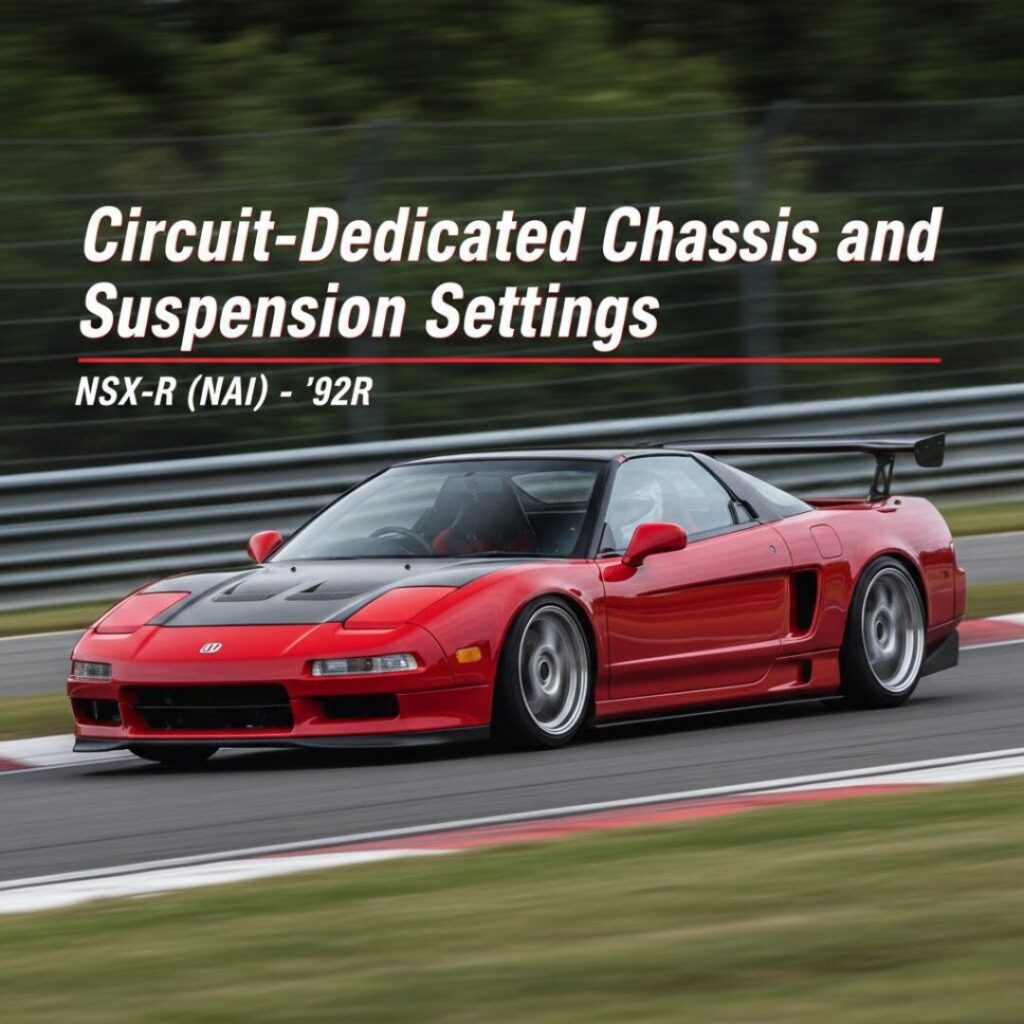
The “92R” was given a specialized chassis and suspension, fine-tuned through extensive testing on demanding circuits, including Germany’s Nürburgring.
Dedicated Suspension and Alignment
The NSX-R retains the same front and rear double-wishbone suspension as the standard model, but its setup was fundamentally altered.
- Reinforced Dampers and Springs: Spring rates and damper forces were substantially increased. This hard-core setting prioritized stability at the limit on the circuit over the standard NSX’s flexibility.
- Dedicated Alignment: Alignment settings, such as toe and camber angles, were specially adjusted to maximize grip and responsiveness on the circuit, notably improving front-end turn-in.
Aerodynamic Parts Achieving Negative Lift
Aerodynamic improvements significantly contributed to the NSX-R’s performance, complementing the weight reduction.
- Dedicated Bonnet Air Outlet: The air outlet on the bonnet vents incoming air upwards, achieving negative lift (downforce) at the front—a notoriously difficult task.
- Dedicated Carbon Rear Wing: The adoption of a large carbon-fiber rear wing and a subtle rear bumper diffuser (while the NA2 NSX-R’s diffuser was more pronounced, the NA1 92R also incorporated airflow optimization) generated powerful negative lift at the rear.
By generating front and rear negative lift proportional to the car’s weight distribution, high-speed road holding dramatically improved, allowing the driver to control the car with greater confidence.
Brakes and Tires
- Ventilated Disc Brakes: Four-wheel ventilated disc brakes were adopted with enhanced ventilation tuning to further improve fade resistance.
- Dedicated High-Performance Radial Tires and Wheels: Specially developed high-performance radial tires were paired with the dedicated ultra-lightweight aluminum wheels, contributing to superior grip.
“Championship White” and the Spartan Interior Design
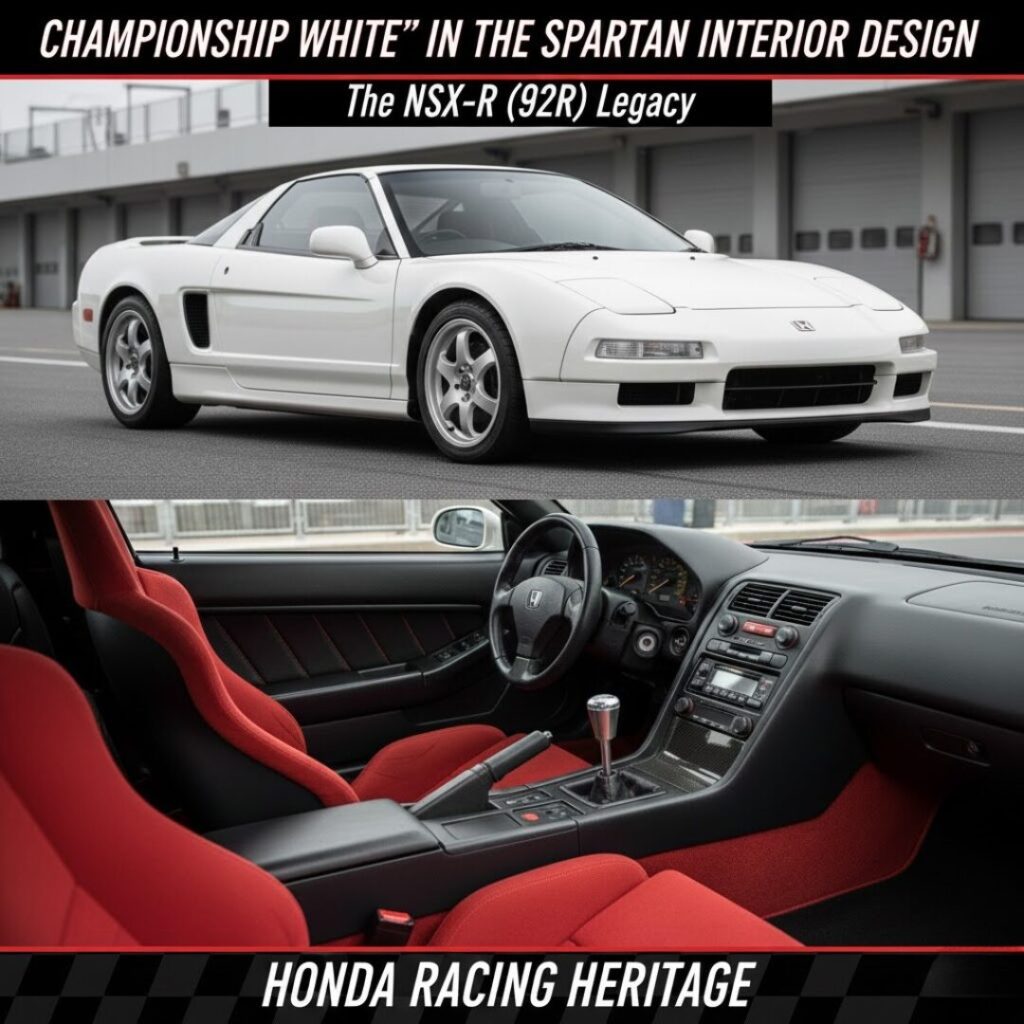
The NSX-R (92R) not only showcased high performance but also possessed a unique interior and exterior design that embodied Honda’s racing heritage.
The Legendary Color “Championship White”
The exclusive body color for the NSX-R was “Championship White.”
- A Nod to F1 Victory: This off-white color is reminiscent of the “RA272” car, which secured Honda’s first F1 victory at the 1965 Mexican GP, symbolizing Honda’s racing spirit.
- Special Presence: This color is strongly associated with the NSX-R, accentuating the vehicle’s special status alongside its rarity. A very small number of exceptions, such as Berlina Black, do exist.
A Cockpit Designed for Functional Beauty
The interior strictly adheres to the functional beauty of a pure sports model, eliminating any non-essential elements.
- Ultra-Lightweight Full Bucket Seats: Characterized by red upholstery, the Recaro full bucket seats balance strong bolstering—to withstand intense lateral G-forces—with lightweight construction.
- Black and Red Contrast: The interior trim uses black suede-like material to minimize reflections, accented with red stitching. This contrast was intended to enhance driver concentration and established the Type R identity.
- Carbon and Yellow Accents: The meter panel features a carbon-like finish, and yellow gauge needles are adopted to evoke a racing car ambiance.
- Machined Titanium Shift Knob: Sitting prominently in the center of the red shift boot, the titanium shift knob is one of the NSX-R’s most iconic parts.
Structure of Staggering Market Value and Premium Pricing
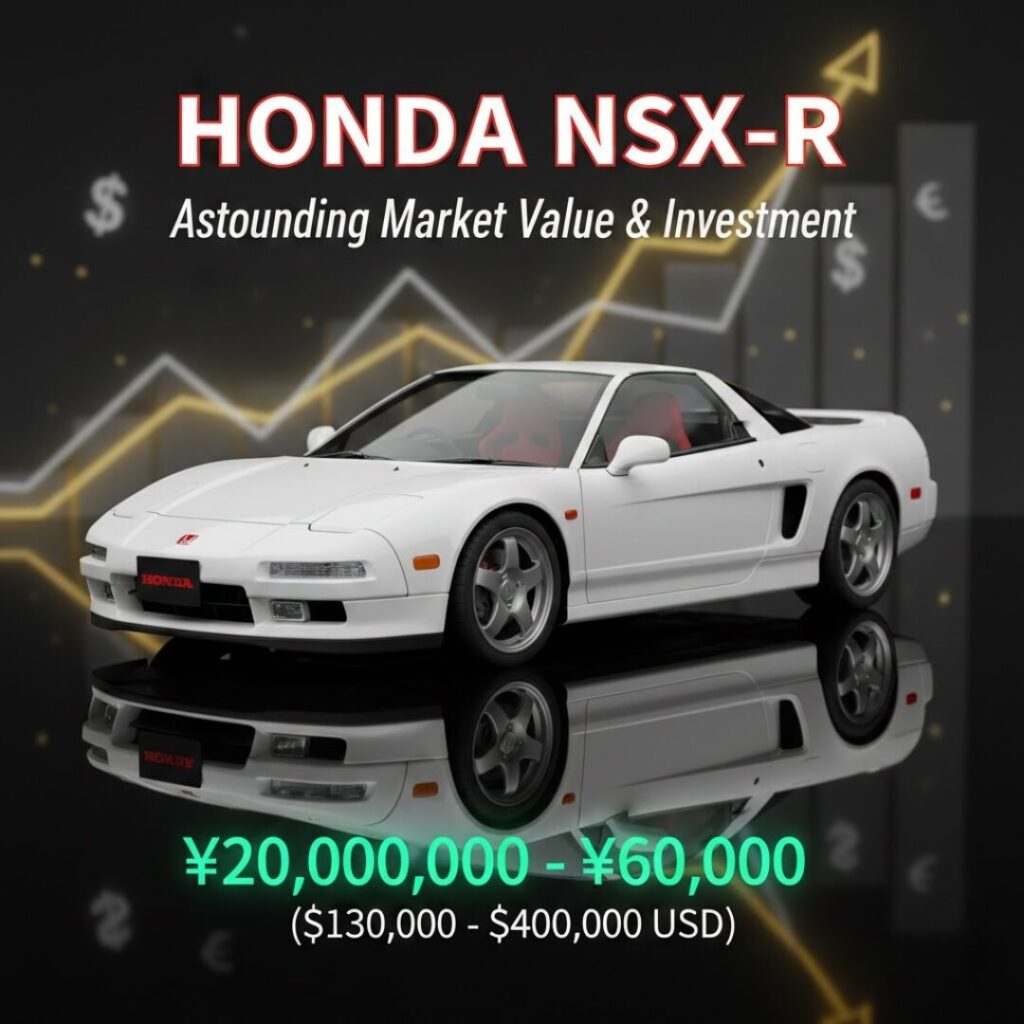
Due to its low production volume and historical importance to Honda, the NSX-R (92R / NA1 model) commands an astonishing market value today.
Extreme Rarity Creates Incredible Premium Prices
The production volume of the NSX-R (NA1 model) was limited to just 483 units. This extreme rarity is the primary factor driving up its modern market price.
- Current Market Price: Since the 2020s, prices for all first-generation NSX models have soared, but the NSX-R’s price has been particularly staggering, ranging from “20 million to 60 million Japanese Yen” (approximately $130,000 to $400,000 USD). Transactions at several times the original retail price (¥9.7 million to ¥12.55 million) are not uncommon.
- Reasons for the Surge:
- JDM (Japanese Domestic Market) Popularity: Demand for rare JDM models like the R34 GT-R, Supra, and NSX-R has exploded, especially in North America.
- Honda Brand Power: Honda’s strong global brand image, bolstered by its F1 participation, also fuels market demand.
- Originality Maintenance: Vehicles with low mileage and those maintaining original condition, or rare body colors like Berlina Black, tend to fetch particularly high prices.
Appeal as an Investment Asset
The NSX-R is viewed not just as a collector’s item but also as a form of “investment asset.” Its value is unlikely to decline, and it is seen by wealthy individuals globally as a culmination of Japanese automotive engineering excellence. This market surge is clear evidence that the NSX-R is globally recognized as one of the “greatest Japanese supercars in history.”
The NSX-R Lineage: Comparing the NA1 (92R) and NA2 Models
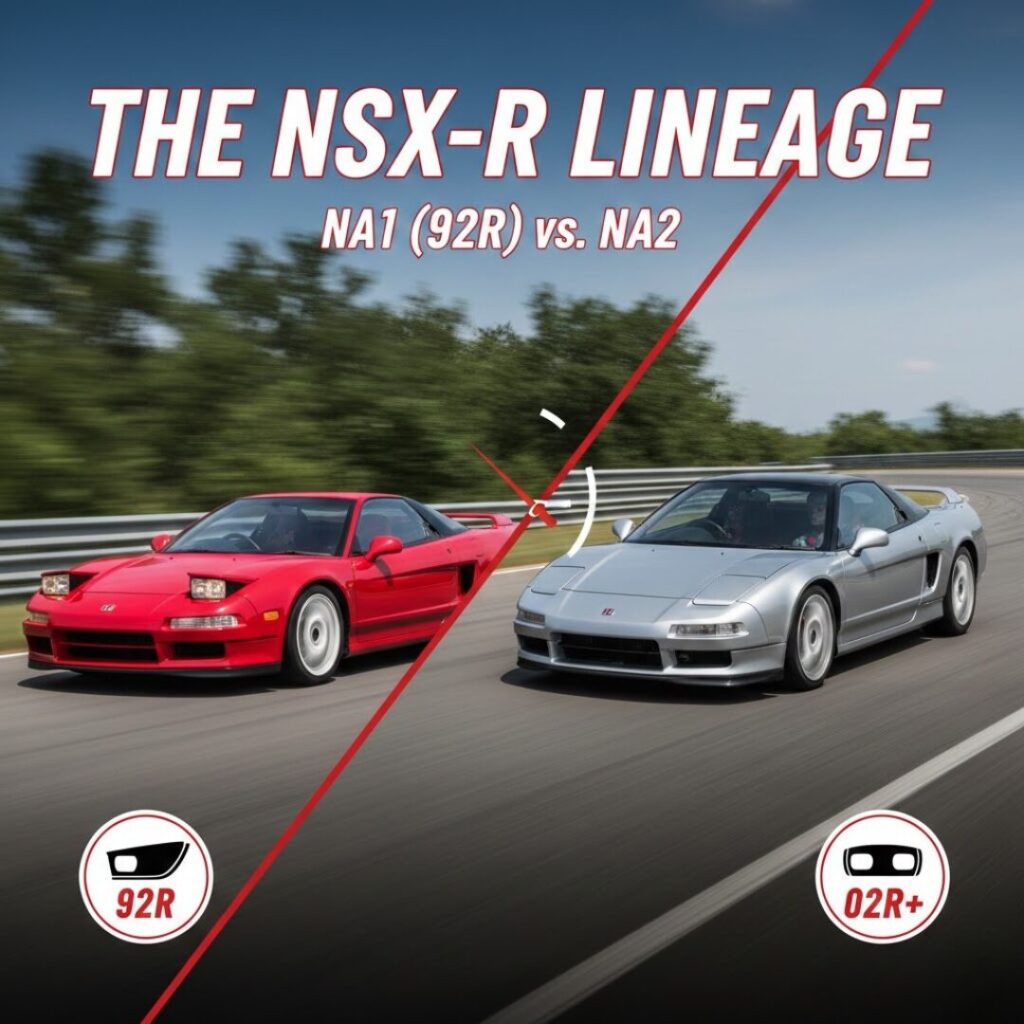
The first-generation NSX-R has two versions: the NA1 model (the 92R) and the model based on the minor-change NA2 NSX, introduced in 2002. Understanding the differences between the NA1 and NA2 is crucial for a deeper appreciation of the 92R’s specific characteristics.
Engine and Transmission Differences
- NA1 Model (92R): Equipped with the C30A type 3.0L V6 engine. Maximum output of 280 PS. Features a 5-speed manual transmission.
- NA2 Model: Equipped with the C32B type 3.2L V6 engine. Displacement was increased, boosting maximum torque to 31.0 kg·m while maintaining the maximum output of 280 PS. Features a 6-speed manual transmission.
While the NA2 model achieved more contemporary performance with its larger displacement and 6-speed gearbox, the 92R is prized for the “purity” achieved by relentlessly maximizing the potential of the 3.0L engine.
Exterior and Aerodynamic Differences
The most visually distinct difference is the headlights.
- NA1 Model (92R): Equipped with pop-up (retractable) headlights.
- NA2 Model: Switched to fixed headlights (projector type). This change aimed to prevent the deterioration of the drag coefficient (Cd value) when the headlights were in use.
- Rear Spoiler and Diffuser: The NA2 NSX-R’s rear spoiler was made of carbon and high-mounted, and the rear bumper skirt was adopted, enhancing the diffuser effect compared to the NA1 model.
The NA1 model (92R) retains the iconic design of the original NSX with its pop-up headlights and strongly embodies the “initial Type R philosophy” focused on extreme weight reduction.
Influence on the “Type R” Brand and Japanese Sports Car Culture
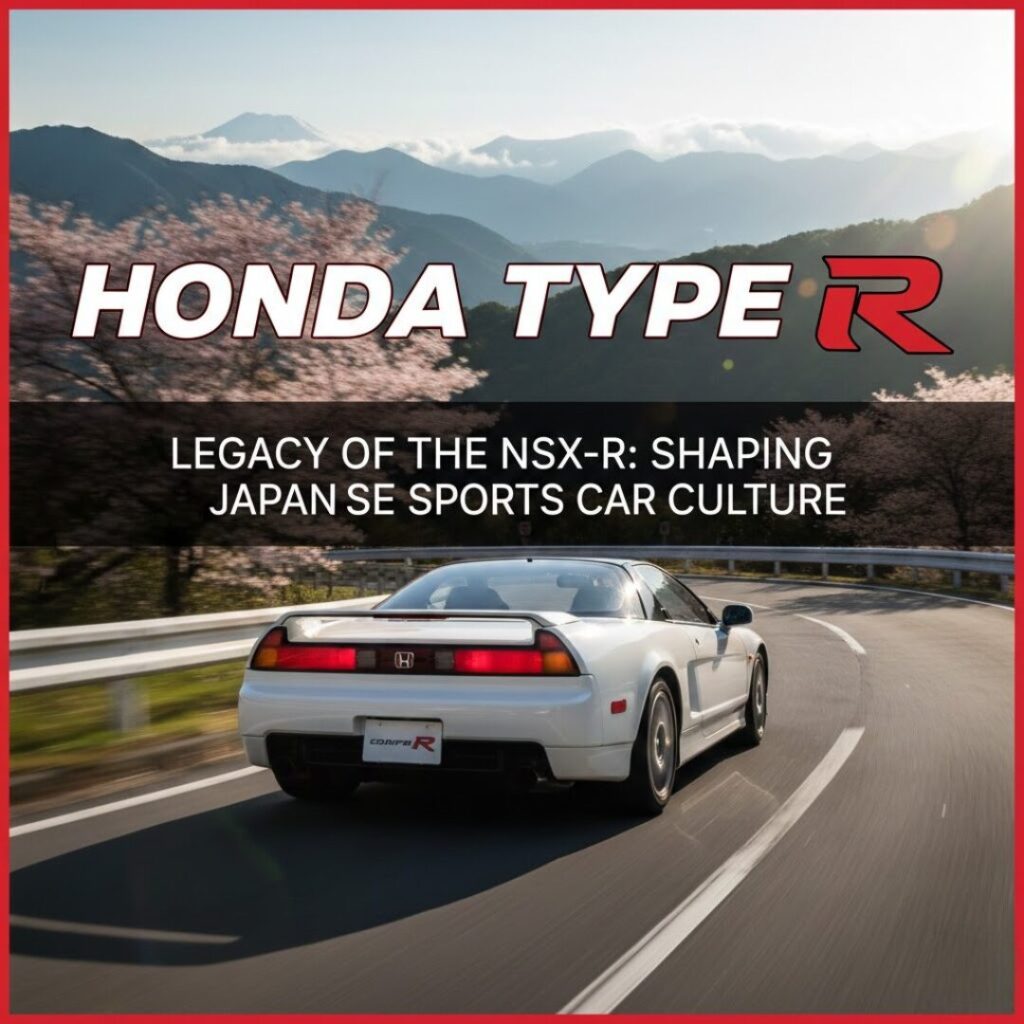
The NSX-R (92R) was more than just a single car; it had an immeasurable impact on the philosophy of Honda’s “Type R” performance brand and the overall Japanese sports car culture that followed.
The Establishment of the Type R Philosophy
The success of the NSX-R established the clear definition of the Type R as the “ultimate pure sports model achieved through lightweight design and tuning.”
- The Essence of Speed: The philosophy of enhancing dynamic performance through overall balance—specifically weight reduction and rigidity improvement—rather than solely relying on engine power, was subsequently inherited by legendary cars like the Integra Type R (DC2) and Civic Type R (EK9).
- The Enduring Championship White: The Championship White, exclusive to the NSX-R, became the symbolic color for all subsequent Type R models, serving as an icon of Honda’s commitment to motorsports.
Global Recognition and Proof of Japanese Engineering Prowess
The NSX-R proved that Japanese cars could fully compete with the world’s top-tier performance cars.
- Rivaling Porsche and Ferrari: While the original NSX challenged established European supercar brands like Porsche and Ferrari on usability and reliability, the NSX-R demonstrated the potential to surpass them in pure driving performance.
- Human-Centered Sports Car: The original NSX’s core philosophy of the “human-centered sports car” was maintained in the NSX-R through its ease of control. It was not a wild beast but was lauded as the pinnacle of sports cars, faithfully responding to the driver’s intentions.
The Contemporary Significance of Owning the NSX-R (92R)
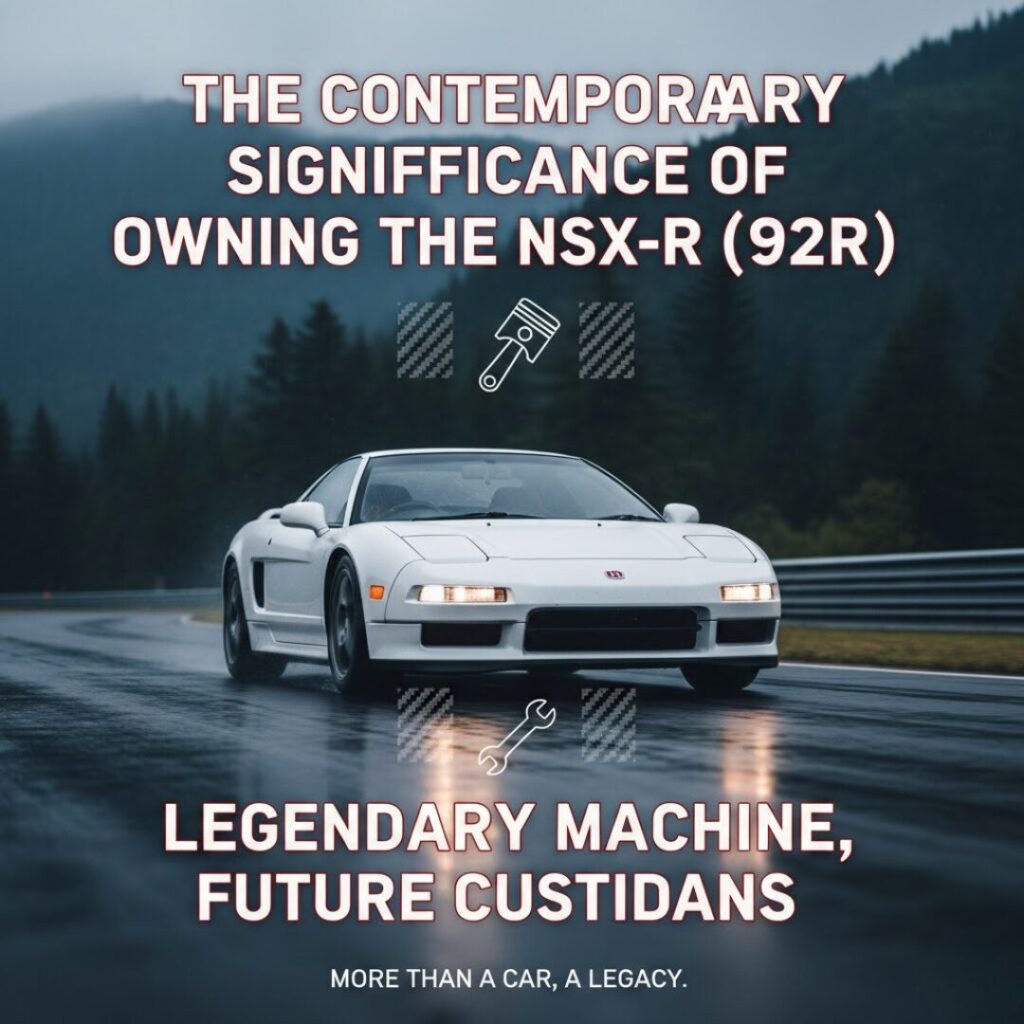
More than 30 years after its initial production, the value of the NSX-R (92R) continues to climb. Owning this legendary machine today carries a special significance.
Difficulty of Maintenance and Upkeep
As a rare car, its maintenance and upkeep demand considerable knowledge and cost.
- Availability of Dedicated Parts: Genuine 92R-exclusive parts—such as carbon components, interior trims, and specially tuned engine parts—are extremely difficult to source.
- Specialized Servicing: Regular maintenance is essential and must be performed by specialized shops deeply familiar with NSX servicing. High-level skills and experience are required, especially for repairing the aluminum monocoque body and maintaining the specially tuned engine.
The Role of Connecting the Legend to the Future
Owners of the NSX-R are not merely collectors; they are the “custodians” of a vital legacy in Japanese automotive history, tasked with preserving it for the future.
- The Driving Experience: The true value of the NSX-R lies not in its specifications but in the direct handling feel experienced when driven, and the “essence of speed” created by its ruthless weight reduction. Owners are the ones who experience this pure driving pleasure and pass the story on to future generations.
Conclusion
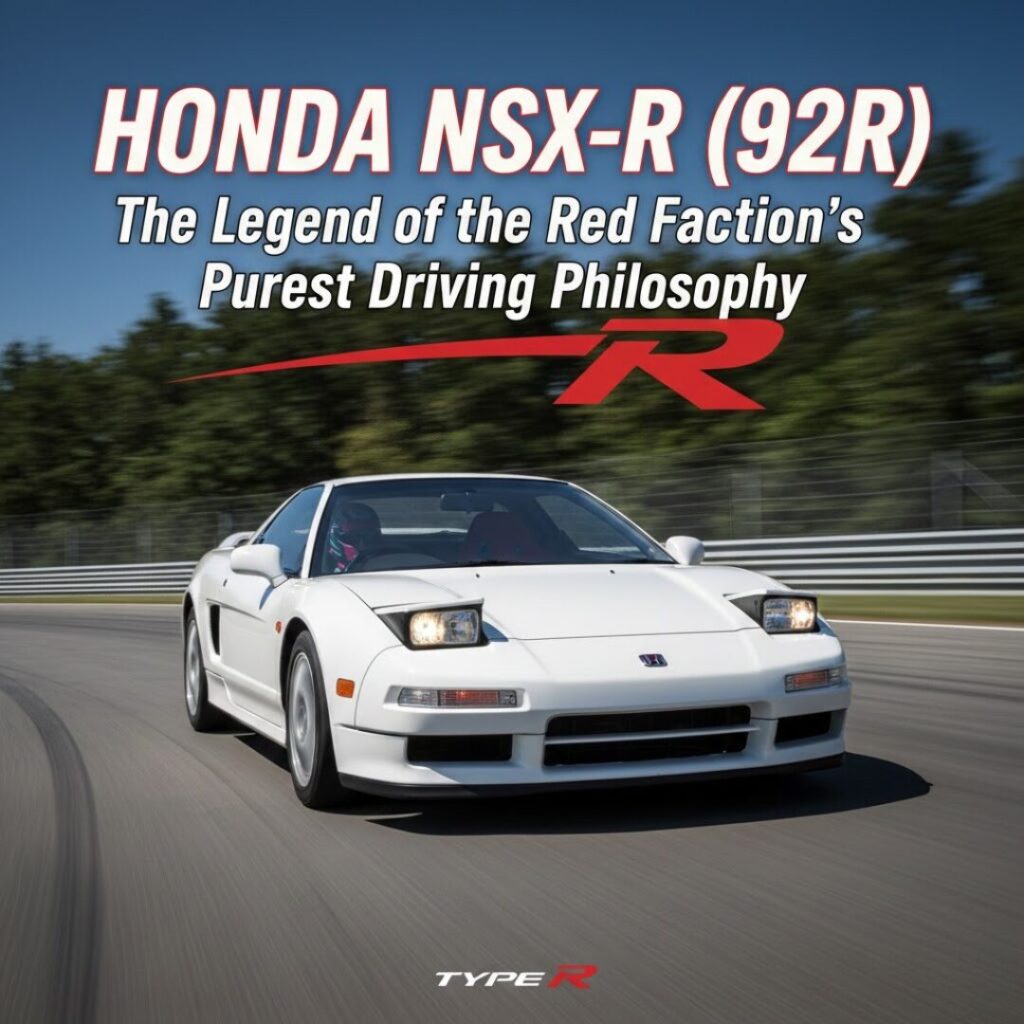
The Honda NSX-R (92R) was the purest and most passionate sports car unleashed by a Japanese automaker in 1992. Its greatest achievement was proving the “essence of speed”—a truth not found on a spec sheet—through obsessive weight reduction and meticulous blueprinting. Every element of the NSX-R—the spartan cockpit where even sound deadening was removed, the F1-derived titanium shift knob, and the Championship White that symbolized Honda’s racing spirit—existed solely for the act of driving, fueled by the “Red Faction” philosophy of Shigeru Uehara and his development team.
The limited production run of just 483 units has rendered the NSX-R’s value absolute, making it a global collector’s item trading today at premium prices reaching tens of millions of yen. Yet, the true worth of this car transcends its monetary value. Built upon the platform of the first-generation NSX, which was easy for anyone to drive, the NSX-R was endowed with the ultimate responsiveness and dynamic performance sought by professional racers. It is a masterpiece of Japanese engineering and passion, relentlessly pursuing the ideal of Jinba Ittai (man and machine as one).
The NSX-R (92R) gave birth to the Honda “Type R” legend and decisively influenced the direction of Japanese sports car development that followed. Even now, its pure driving philosophy continues to capture the hearts of countless enthusiasts. If you are deeply drawn to the philosophy of the NSX-R and wish to understand its true nature, your next step should be to learn the history of this surviving car and consider joining a specialist community dedicated to maintaining its rarity and legacy.