
Introduction
Choosing the best time for a Daikoku PA tour is not as simple as arriving as late as possible. Many foreign visitors ask whether more cars appear on Fridays and Saturdays, what happens in the rain, and how early they should leave a hotel in Shibuya or Shinjuku.
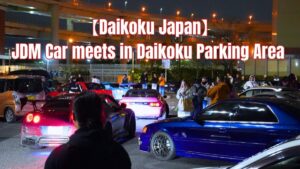
As a general guide, the period around 8:00 p.m. to 9:00 p.m. is often active because many local car enthusiasts arrive after work. However, Daikoku Parking Area is not an official scheduled car-show venue. The number of cars can change according to the day, weather, traffic, temporary closures, and the individual plans of local owners.
For that reason, a successful visit depends on realistic timing, early preparation, and the flexibility to adjust to actual conditions.
What Is the Best Time to Visit Daikoku PA?
The period from approximately 8:00 p.m. to 9:00 p.m. is often considered a useful reference point when planning a visit. On many evenings, local drivers begin arriving after finishing work, and the atmosphere may gradually become busier.
This does not mean that every evening follows the same schedule. Some nights become active earlier, while others remain relatively quiet. There is also no fixed finishing time. Cars may stay later on some evenings but leave early on others.
The best arrival time for Daikoku PA should therefore be treated as a flexible window rather than a guaranteed peak hour.
Why arriving before the peak can be better
Many visitors assume that arriving at the busiest possible time will create the best experience. In reality, reaching Daikoku PA slightly before the expected peak has several advantages:
- Parking may be easier to find.
- Visitors can watch different cars arrive gradually.
- It may be easier to take photographs before the area becomes crowded.
- There is more time to understand the layout and local atmosphere.
- Entering before heavy congestion may reduce the risk of arriving after access restrictions begin.
On a guided experience, arriving before the busiest period can be more enjoyable than entering at the center of the crowd. Visitors can see the atmosphere develop rather than experiencing only the most congested part of the evening.
Later is not always better
A later arrival can sometimes mean more cars, but it can also mean heavier congestion, fewer available parking spaces, or a higher chance of temporary closure.
Daikoku PA may also receive an exit or closure instruction after visitors have already entered. When that happens, drivers must follow the directions of the police and expressway staff.
Waiting until very late does not guarantee a larger gathering. A balanced schedule with enough time for traffic, orientation, and possible route changes is usually a better choice.
Weekdays vs. Fridays and Saturdays
The atmosphere at Daikoku PA often differs between an ordinary weekday and a Friday or Saturday night. However, these are general tendencies rather than fixed rules.
What to expect on weekdays
On weekdays, car enthusiasts may arrive after finishing work. The gathering can be smaller than on a busy weekend, but the parking area may also feel calmer.
Possible advantages include:
- Less congestion in some cases
- Easier parking
- More space to observe cars
- A more relaxed atmosphere for first-time visitors
The number of cars may be lower, and normal evening traffic on the Metropolitan Expressway can still affect arrival times.
What to expect on Fridays and Saturdays
Fridays and Saturdays are more likely to attract additional cars and visitors. These evenings may feel livelier, but larger crowds also create practical disadvantages.
Visitors may encounter:
- Heavier traffic
- Limited parking availability
- More spectators
- A higher possibility of access restrictions
- Temporary closure by the police or road operator
A busier night is not automatically a more convenient night. Foreign travelers should consider whether they prefer a potentially active atmosphere or a calmer and more manageable visit.
Why the Number of Cars Cannot Be Guaranteed
Daikoku PA is a public parking area for expressway users. It is not an official car-meet venue with a published schedule, ticketed entry, or guaranteed attendance.
The situation can change because of:
- The day of the week
- Arrival time
- Rain, snow, or strong winds
- The season and sunset time
- Traffic congestion or accidents
- Road construction
- Traffic restrictions
- Temporary closure by the police or road operator
- The individual plans of vehicle owners
A responsible Daikoku PA tour should explain these variables before the visit. Promising a specific number of cars or a guaranteed gathering would not accurately represent how the location operates.
Do cars gather when it rains?
Cars may still appear during light rain, but attendance can be lower than on a clear evening. Heavy rain, snow, or strong winds may also affect driving safety and require a route change.
Weather should be treated as one factor among several. Even good weather does not guarantee a large gathering.
Can more cars arrive later?
Yes. When only a few cars are present at first, more owners may arrive after work. Watching the parking area gradually become busier can be part of the experience.
However, the opposite can also happen. Cars may leave, or visitors may receive instructions to exit. It is therefore important not to assume that waiting longer will always produce a larger gathering.
JDM TOUR Meeting and Starting Times
JDM TOUR’s self-drive schedule varies according to the day.
Friday, Saturday, and Sunday
- 5:00 p.m. tour
- 8:00 p.m. tour
Weekdays
- 6:00 p.m. tour
- 9:00 p.m. tour
Participants must arrive at the Jiyugaoka office 30 minutes before the scheduled starting time.
| Tour schedule | Office arrival deadline |
|---|---|
| Friday–Sunday, 5:00 p.m. | By 4:30 p.m. |
| Weekday, 6:00 p.m. | By 5:30 p.m. |
| Friday–Sunday, 8:00 p.m. | By 7:30 p.m. |
| Weekday, 9:00 p.m. | By 8:30 p.m. |
The meeting deadline refers to arrival at the office, not arrival at Jiyugaoka Station.

Why Participants Must Arrive 30 Minutes Early
The preparation period is necessary for a safe and organized departure. It is used for:
- Guest check-in
- Driver’s license and document checks
- Vehicle-control explanations
- The day’s route briefing
- Instructions for rejoining the lead car if separated
- Passenger and luggage checks
Late arrival may reduce the time available for essential safety instructions and document confirmation. It may also delay departure and affect the planned arrival time at Daikoku PA.
Foreign visitors who plan to drive in Japan should confirm their license and document requirements before the tour. For additional preparation, see the Driving License in Japan for Tourists – Easy Guide:
When Should You Leave Your Tokyo Hotel?
The correct hotel departure time is not based only on the train ride to Jiyugaoka.
Travelers should also include:
- The walk from the hotel to the station
- Time inside a large station
- Train waiting time
- Transfers between lines
- Evening commuter crowds
- The walk from Jiyugaoka Station to the office
- Extra time for unfamiliar routes
The following estimates are designed for travelers staying reasonably close to a station.
| Hotel area | Approximate train travel to Jiyugaoka | Recommended hotel departure |
|---|---|---|
| Shibuya | About 10 minutes, usually direct | About 60 minutes before the tour |
| Shinjuku or Shinjuku-sanchome | About 25–30 minutes | About 75 minutes before |
| Roppongi | About 20–30 minutes | About 75 minutes before |
| Shinagawa | About 25–30 minutes | About 75 minutes before |
| Ikebukuro | About 25–35 minutes | About 75–90 minutes before |
| Yokohama | About 25–30 minutes | About 75 minutes before |
| Tokyo Station or Marunouchi | About 35–45 minutes | About 90 minutes before |
| Ginza | About 35–45 minutes | About 90 minutes before |
| Ueno | About 40–50 minutes | About 100–105 minutes before |
| Asakusa | About 45–50 minutes | About 105 minutes before |
| Haneda Airport area | About 50–60 minutes | About 120 minutes before |
These times are estimates. The actual journey depends on the hotel location, route, train type, transfers, luggage, and current transport conditions.
Traveling from Shibuya
Jiyugaoka can usually be reached from Shibuya on the Tokyu Toyoko Line without a transfer. The train journey is often approximately 9–10 minutes.
A practical departure guide is:
| Tour starts | Suggested hotel departure |
|---|---|
| 5:00 p.m. | Around 4:00 p.m. |
| 6:00 p.m. | Around 5:00 p.m. |
| 8:00 p.m. | Around 7:00 p.m. |
| 9:00 p.m. | Around 8:00 p.m. |
Shibuya Station is large, and reaching the correct platform can take 10–20 minutes depending on the hotel location. A traveler should not assume that a ten-minute train ride means leaving the hotel only twenty minutes before the meeting.
Traveling from Shinjuku, Roppongi, Shinagawa, or Yokohama
Leaving approximately 75 minutes before the tour is a safer guideline for these areas.
Shinjuku and Shinagawa stations are large, while travel from Roppongi commonly involves a transfer. Some routes from Yokohama may connect efficiently to the Toyoko Line, but travel time varies by train service.
Traveling from Ikebukuro, Tokyo Station, or Ginza
From Ikebukuro, some services continue through the Tokyo Metro Fukutoshin Line toward the Tokyu Toyoko Line. Train stopping patterns and journey times vary, so leaving 75–90 minutes before the tour is recommended.
From Tokyo Station, Marunouchi, or Ginza, approximately 90 minutes provides a more comfortable margin. Tokyo Station is particularly large, and walking from a hotel or Shinkansen platform to the required local line may take longer than expected.
Traveling from Ueno, Asakusa, or Haneda Airport
Travel from Ueno or Asakusa often involves transfers. Leaving approximately 100–105 minutes before the tour helps account for walking and unfamiliar station layouts.
From the Haneda Airport area, the train journey may take around 50–60 minutes. Travelers arriving by plane must also consider baggage collection, airport navigation, and transfers. Beginning the journey about two hours before the tour is a safer plan.
Evening Commuter Traffic Can Add Time
Tours beginning at 5:00 p.m. or 6:00 p.m. may overlap with Tokyo’s evening commuter period.
During this time:
- Stations and platforms can be crowded.
- Transfers may take longer.
- Moving with large luggage can be difficult.
- Taxis may be delayed by road traffic.
Travelers leaving from Shinjuku, Shibuya, Tokyo, Shinagawa, or Ikebukuro should allow extra time, especially when visiting Japan for the first time.
The key rule is simple: plan to be ready at the office 30 minutes before the tour, rather than planning only to reach Jiyugaoka Station by that time.
How a Guided Self-Drive Tour Helps With Timing
Reaching Daikoku PA independently requires drivers to understand the Metropolitan Expressway, including complex junctions, merges, toll-road navigation, and possible access changes.
Before departure, JDM TOUR staff check available information about traffic and Daikoku PA conditions. Support may include:
- Guidance from an English-speaking local team
- Departure from the Jiyugaoka base with a lead car
- Assistance through complex expressway junctions
- Route and departure adjustments based on traffic
- Instructions for safely rejoining the group
- Alternative plans if Daikoku PA cannot be used
- A night-driving route through the Tokyo and Yokohama bay areas
Drivers do not need to speed or make sudden lane changes to stay behind the lead car. If separated, they should avoid risky maneuvers and follow the pre-arranged rejoining procedure.
A related example of Tokyo-to-Daikoku driving culture can be found in this Skyline ER34 night-drive feature:
What Happens If Daikoku PA Is Closed?
Temporary restrictions may begin before arrival or after a group has entered. If police or expressway staff instruct visitors to leave, those instructions must be followed immediately.
Depending on the situation, the route may be changed to:
- Another suitable parking area
- A Tokyo bay night drive
- A Yokohama waterfront route
- Another practical stop available that evening
The purpose of the experience is not to guarantee entry to a particular gathering. Its value comes from experiencing Japanese car culture and an iconic nighttime driving route with local guidance, realistic planning, and respect for public-road rules.
For broader background information about the location, see the complete guide to Daikoku Parking Area:
You can also explore an overview of JDM meetings at Daikoku Parking Area:
Daikoku PA Tourist Tips Before Your Visit
Keep these practical points in mind:
- Treat 8:00–9:00 p.m. as a general guide, not a guaranteed peak.
- Consider arriving before the busiest period.
- Expect weekdays to be calmer in some cases.
- Expect Fridays and Saturdays to have greater congestion and closure risk.
- Check the weather but remember that weather alone does not determine attendance.
- Respect Daikoku PA as a public parking facility.
- Follow instructions from police and expressway staff.
- Never make unsafe maneuvers to keep up with a lead vehicle.
- Arrive at the Jiyugaoka office 30 minutes before the tour.
- Include walking, waiting, transfers, and station navigation in your travel plan.
FAQ
What time do the most cars gather at Daikoku PA?
Around 8:00 p.m. to 9:00 p.m. is often a useful reference, but attendance changes by day, weather, traffic, and other conditions. A large gathering cannot be guaranteed.
Is Friday or Saturday the best night to visit?
Fridays and Saturdays may attract more cars and visitors, but they can also bring heavier congestion, limited parking, and a greater chance of temporary closure. A weekday may offer a calmer experience.
Do cars gather at Daikoku PA when it rains?
Some cars may still gather during light rain, but attendance may be lower. Severe weather can affect driving safety and may require a route change.
What happens if Daikoku PA closes during the tour?
The group follows instructions from police or expressway staff. Depending on conditions, the experience may continue with an alternative parking area or a Tokyo and Yokohama bay night-driving route.
How early should I arrive for the tour?
Arrive at the Jiyugaoka office 30 minutes before the scheduled start. This gives the team time to complete check-in, document checks, vehicle instructions, and the safety briefing.
Conclusion
The best time to visit Daikoku PA is often around 8:00 p.m. to 9:00 p.m., but timing alone cannot guarantee a large gathering. Weekdays can be calmer, while Fridays and Saturdays may be more active but also more crowded and more likely to experience restrictions.
Arriving slightly before the expected peak can make parking, photography, and orientation easier. Foreign visitors should also plan their journey to Jiyugaoka carefully, allowing enough time for walking, transfers, evening crowds, and the required 30-minute pre-tour check-in.
A well-planned Daikoku PA tour is not about chasing a guaranteed car meet. It is about experiencing real Japanese car culture responsibly while enjoying a guided Tokyo and Yokohama night drive.
[The Hottest Experience] Driving Dream Sports Cars in Japan with JDM TOUR
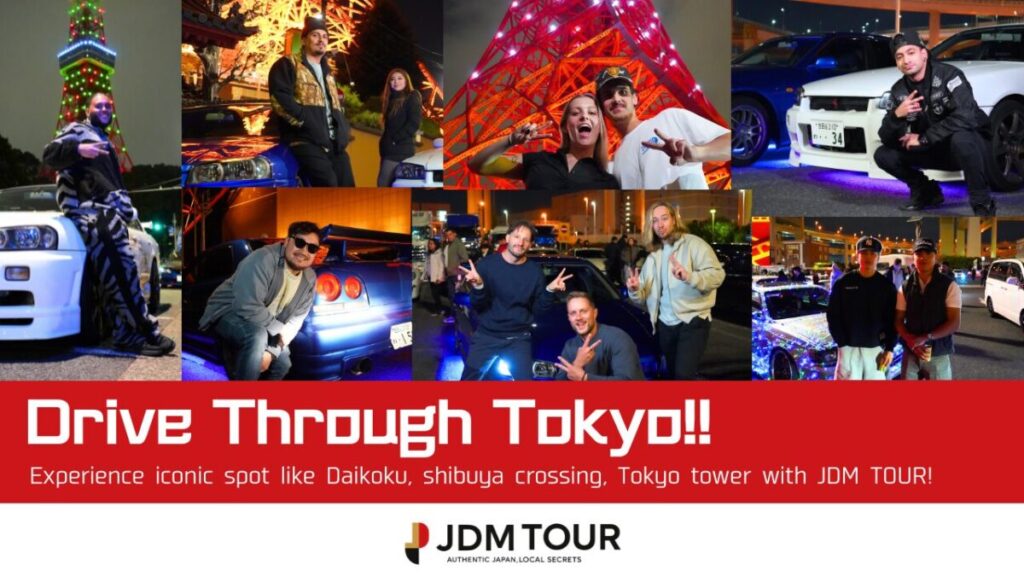
While standard rentals are practical, a new trend has exploded among car enthusiasts visiting Japan: renting “JDM” (Japanese Domestic Market) cars through specialized services like JDM TOUR.
The New Standard of Japan Travel: Public Roads in the Movie
The experience of being able to rent sports car japan is no longer just about driving; it has evolved into an "attraction" that transforms Japan's public roads into a real-life game world. In recent years, an exploding trend among international travelers is enjoying the act of driving through Japanese cities itself as a form of entertainment.
Specifically, commanding JDM machines such as the Nissan GT-R or Toyota Supra against the backdrop of Tokyo’s iconic landmarks is no longer just transportation; it is positioned as a participatory "activity." Just as cosplay driving tours have emerged, this integrated experience of car and city overturns conventional tourism, offering unforgettable, highly shareable memories that light up social media feeds.
This new style of journey, facilitated by exotic car rental tokyo services, has transformed from merely pursuing speed into a means of experiencing unforgettable "play." It allows you to deeply engage with Japan's unique culture and landscapes, creating an adventure that goes beyond traditional sightseeing.
Why is JDM So Popular Right Now?
Legendary sports cars manufactured in Japan during the 1990s and early 2000s—such as the Nissan Skyline (R34), icons for fans worldwide. For many, driving these cars on the actual roads they were designed for is a bucket-list experience that surpasses any standard sightseeing tour.
The Unique Charm of a JDM TOUR
JDM TOUR offers more than just a “car rental”; it provides a deep dive into Japanese car culture.
- The Pilgrimage to Daikoku PA: The highlight of many tours is driving to the Daikoku Parking Area on the Shuto Expressway. At night, this spot transforms into a gathering place for hundreds of beautifully customized cars, creating a vibrant atmosphere that is world-famous.
- Professional Guided Convoys: Driving a right-hand-drive manual car through the complex Shuto Expressway can be daunting. JDM TOUR offers plans where a professional guide leads the way in a lead car, ensuring you stay on the right path safely.
- Photography and Content Creation: The guides know the best “insta-worthy” spots, such as the Shibuya Crossing, Tokyo Tower, and Rainbow Bridge, allowing you to capture professional-quality memories with your dream car.