Introduction
Before booking a Daikoku PA tour, some international visitors worry about seeing police vehicles, possible closures, or videos showing officers asking cars to leave. However, the presence of police does not automatically mean that Daikoku Parking Area is an illegal or dangerous place.
Daikoku PA is a public expressway parking area used by ordinary drivers. Visitors who enter correctly by vehicle, follow local rules, and behave respectfully generally do not need to be excessively concerned.
At the same time, Daikoku PA is not a tourist attraction or an official car-meet venue. Conditions can change, and visitors must be prepared to follow instructions from police, facility staff, and their tour guide.
Is Daikoku PA an Illegal Place to Visit?
No. Daikoku Parking Area is a legitimate public rest area located on the Metropolitan Expressway network.
It serves drivers who need a place to stop, rest, use the facilities, or take a break during their journey. International visitors may sometimes misunderstand the location after seeing police vehicles or online footage of temporary closures.
The presence of police does not mean that everyone at Daikoku PA is doing something illegal. Officers may be present to:
- Manage traffic and congestion
- Respond to excessive noise or disruptive behavior
- Keep vehicle routes clear
- Address unsafe conduct
- Support an orderly closure
- Protect other expressway users
Visitors who enter through the correct expressway route and follow normal parking-area rules should remain calm. There is usually no reason to assume that simply being at Daikoku PA is a problem.
However, all visitors should remember that this is a working public parking area—not a private exhibition space.
Daikoku PA Is Not an Official Tourist Facility or Car-Meet Venue
Daikoku PA is widely known among automotive enthusiasts, but it is not operated as an official tourist destination. It is also not a scheduled event venue where a car gathering is guaranteed.
The number and type of cars present can vary significantly. Conditions depend on the day, time, weather, traffic, police activity, and decisions made by the expressway operator.
A busy gathering may happen, but visitors should never treat it as guaranteed. On some nights, there may be fewer cars than expected. On other occasions, the parking area may become congested or close earlier than visitors anticipated.
A responsible Daikoku PA tour should focus on providing a safe and well-planned introduction to Japanese car culture rather than promising a particular number of vehicles or a guaranteed meet.
Visitors should also respect ordinary drivers who are using the parking area for its original purpose.
How to Enter Daikoku PA Correctly
Daikoku PA must be accessed by vehicle through the expressway.
Visitors cannot legally or safely enter by:
- Walking from a nearby road
- Climbing over a fence
- Crossing restricted land
- Entering from the local-road side
- Stopping on an expressway shoulder and approaching on foot
Although a map may make Daikoku PA appear close to nearby streets, it does not operate like a roadside attraction with a pedestrian entrance.
Attempting to enter on foot or by crossing a fence is dangerous. It may place the visitor near high-speed traffic, restricted infrastructure, or vehicle-only access points.
Foreign visitors driving in Japan should also understand that reaching Daikoku PA can be more complicated than entering its name into a navigation app. Expressway direction, ramps, exits, and route selection all matter. A navigation error may send a driver past the entrance or onto a different route.
This is one reason a guided self-drive experience can be helpful for travelers unfamiliar with Tokyo’s expressway network.
What to Do When Police or Staff Give Instructions
The most important rule is simple: remain calm and listen carefully.
Police officers or facility staff may ask visitors to move their vehicles, stop taking photographs, return to their cars, or leave the parking area. These instructions may be related to congestion, public safety, noise, traffic flow, or a temporary closure.
When instructions are given:
- Stop and listen.
- Do not continue filming or photographing the situation.
- Return to your vehicle when asked.
- Leave promptly if instructed to do so.
- Do not block an exit or vehicle route.
- Do not argue with police or facility staff.
Continuing to film while officers are managing a situation can create unnecessary tension or interfere with their work. Visitors should put cameras and phones away and concentrate on following directions.
Trying to debate the reason for a closure is also inappropriate. Even when the reason is not immediately clear, visitors should comply first and leave safely.
Participants on a guided Daikoku PA tour should follow the instructions of the staff member leading the group. The guide will assess the situation, communicate any route changes, and explain whether the tour will move to another location.
Safety and Etiquette Inside Daikoku Parking Area
Daikoku PA remains an active parking area with moving vehicles. Visitors should never become so focused on the cars or photography that they ignore traffic around them.
Keep vehicle routes clear
Do not stand in driving lanes or block vehicles while taking photographs. Cars may enter, leave, reverse, or turn with limited visibility.
Stay within safe pedestrian areas and pay close attention to your surroundings.
Do not touch other people’s cars
The vehicles at Daikoku PA are privately owned. They are not museum exhibits or display cars provided for tourists.
Do not touch a vehicle, lean against it, open a door, or look closely inside without the owner’s permission.
Respect privacy when taking photographs
Photography is common, but visitors should remain considerate. Avoid placing a camera directly in someone’s face or repeatedly photographing an owner who appears uncomfortable.
Do not interfere with drivers who are preparing to enter or leave a parking space.
Keep children close
Parents and guardians must keep children under direct supervision. A parking area is not a safe place for children to run freely, particularly at night when visibility may be reduced.
Children should remain beside their guardian and away from active vehicle routes.
Avoid disruptive behavior
Visitors should avoid shouting, occupying multiple parking spaces, blocking walkways, or encouraging excessive noise. Respectful behavior helps protect the experience for everyone using the facility.
These are among the most important Daikoku PA tourist tips for first-time visitors: observe, enjoy, and avoid interfering with normal parking-area operations.
Basic Japanese Driving Rules for Self-Drive Participants
Anyone joining a self-drive Daikoku PA tour must follow Japanese traffic laws throughout the experience.
Drive on the left
Vehicles in Japan travel on the left side of the road. Foreign drivers should be especially careful after turning at an intersection or leaving a parking area, as this is when drivers accustomed to right-side traffic may become confused.
Everyone must wear a seat belt
Seat belts should be worn in every seat, including the rear seats. The driver should confirm that all passengers are secured before moving.
Never drink and drive
Do not consume alcohol when you will be driving. Participants should plan responsibly before the tour and avoid any situation that could affect their ability to drive safely.
Do not use a handheld phone while driving
Drivers must not operate a smartphone while the vehicle is moving. Navigation settings, messages, and other phone functions should be handled before departure or after stopping safely.
When possible, a passenger should manage navigation or communication.
Follow posted speed limits
Drivers should follow the posted limit even when surrounding traffic appears to be moving faster. A tour is not a race, and staying with the lead vehicle never justifies speeding.
Maintain a safe following distance
Leave enough space between your car and the vehicle ahead. This gives you time to react to traffic changes, braking, merging vehicles, and expressway exits.
Avoid sudden lane changes
Use mirrors, check the surrounding traffic, signal early, and change lanes only when there is enough space. Missing an exit is safer than making an abrupt or unsafe maneuver to reach it.
Never Break Traffic Rules to Follow the Lead Car
A lead vehicle may guide participants through the route during a self-drive tour. However, following that vehicle is always secondary to safe and legal driving.
For example, the lead car may pass through a traffic signal just before it changes. The participant behind must stop when required rather than attempting to follow through the intersection.
Similarly, drivers must not:
- Exceed the speed limit to catch up
- Drive through a red signal
- Follow another vehicle too closely
- Force their way into another lane
- Make a sudden turn after missing an instruction
- Block another road user to keep the group together
Other traffic may naturally enter between tour vehicles. This is normal and does not mean the participant needs to return to the convoy immediately.
Continue driving safely and wait for the next suitable opportunity to follow the planned route.
What Happens If You Become Separated from the Tour?
Becoming separated from the lead vehicle does not require aggressive or hurried driving.
During the tour, participants can use the provided radio communication system to contact staff. If you lose sight of the lead vehicle or leave the group because of traffic conditions, remain calm and communicate with the team.
Follow these steps:
- Continue driving safely.
- Do not speed up or make a sudden lane change.
- Use the radio to inform staff that you have been separated.
- Follow the instructions of the staff member leading the tour that day.
- Rejoin the group at a safe place or through the route explained by staff.
Depending on the traffic situation, the lead staff may identify a suitable location for the group to reconnect. They may also provide route guidance or adjust the meeting point.
When communicating by radio, safe vehicle operation remains the priority. A passenger should handle the radio whenever possible. The driver should not become distracted while trying to communicate.
JDM TOUR does not expect participants to maintain the convoy through unsafe driving. Safe communication and controlled rejoining are always more important than immediately catching the lead vehicle.
What If Daikoku PA Is Closed?
Daikoku PA may occasionally close or restrict entry because of congestion, safety concerns, facility operations, or other circumstances.
A closure does not necessarily mean that the location itself is permanently inaccessible or illegal. It usually means that visitors must leave or use another route at that particular time.
When a closure occurs:
- Follow police, staff, and guide instructions
- Stop photographing the situation
- Return to the vehicle promptly
- Leave without delaying traffic
- Do not attempt to re-enter through a restricted route
- Be prepared for an alternative itinerary
A responsible guide will prioritize safety rather than trying to remain at the location against instructions.
The value of a guided experience is not based on forcing access under every condition. It comes from helping international visitors navigate the route, understand local etiquette, communicate during the drive, and adapt safely when circumstances change.
Why Visitors Usually Do Not Need to Be Overly Worried
Police presence, online closure videos, and unfamiliar Japanese traffic rules can make a first-time visitor nervous. However, most concerns become easier to manage when travelers understand the basic expectations.
Enter Daikoku PA correctly through the expressway. Treat it as a public rest area. Keep traffic routes clear. Respect privately owned cars. Follow police and staff directions. Drive according to Japanese road rules.
When these principles are followed, visitors generally do not need to be excessively worried.
The goal should not be to test boundaries or treat Daikoku PA as a place without rules. The goal is to enjoy an authentic part of Japanese automotive culture while respecting the people, roads, and facilities that make the experience possible.
[What is the trends in JAPAN: JDM TOUR in Tokyo]
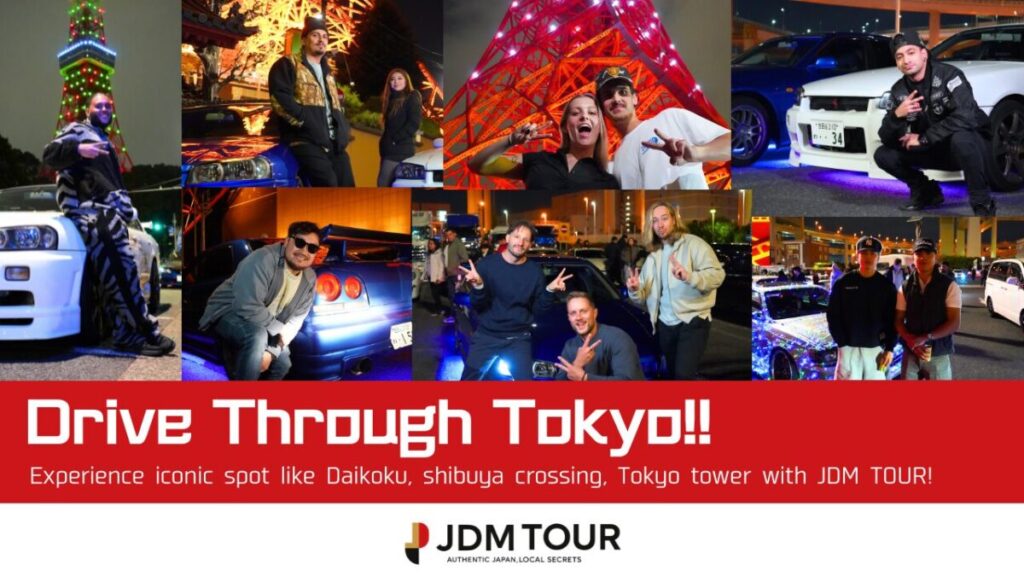
JDM TOUR in Tokyo we offer an experience that sets it apart from typical sightseeing tours, combining iconic Japanese sports cars like the R34 GT-R, R35 GT-R, and custom Skylines with authentic local experiences unique to Tokyo. The JDM Tour is a unique and unforgettable way to explore Japan. Our Daikoku Tour details from here.
FAQ
Is Daikoku PA illegal for tourists to visit?
No. Daikoku PA is a public expressway parking area. Tourists can visit when they access it correctly by vehicle and follow the same rules and expectations as other users.
Why are police sometimes present at Daikoku PA?
Police may manage traffic, congestion, safety, noise complaints, disruptive behavior, or a temporary closure. Their presence does not automatically mean that the entire location is illegal.
Can I walk into Daikoku PA?
No. Visitors must access Daikoku PA by vehicle through the expressway. Walking in, climbing over a fence, or attempting to enter from local roads is unsafe and not an acceptable access method.
What should I do if police ask visitors to leave?
Remain calm, stop filming, return to your vehicle, and leave promptly. Do not argue or block the exit. Tour participants should follow the instructions of the guide leading the group.
What happens if I lose sight of the lead car?
Do not speed, ignore a signal, or make an unsafe lane change. Use the radio to contact staff and follow the lead staff member’s instructions. The group will arrange a safe way to reconnect.
Conclusion
A Daikoku PA tour can be an exciting way to experience Japanese car culture, but visitors should understand that Daikoku PA is a public expressway facility rather than an official tourist attraction or guaranteed car-meet venue.
Police presence is not, by itself, a reason to panic. Enter through the proper expressway route, follow local etiquette, obey Japanese traffic rules, and respond calmly when police, facility staff, or tour guides provide instructions.
For self-drive participants, staying with the lead vehicle must never come before safety. If the group becomes separated, use the radio, continue driving responsibly, and follow the directions of the staff leading the tour.
A respectful and well-prepared approach allows visitors to enjoy the experience without unnecessary worry.