What Happens If Daikoku PA Is Closed During Your Tour
What Happens If Daikoku PA Is Closed During Your Tour
contents
Introduction
What happens if Daikoku PA is closed during your tour?
This is one of the most common questions international travelers ask before booking a Daikoku PA tour. For many guests, experiencing Japanese car culture is a major highlight of a limited trip to Japan. Nobody wants to spend a valuable evening driving toward Daikoku Parking Area only to find the entrance closed and return without experiencing anything.
Daikoku PA is a public parking area, not a reserved tourist attraction or guaranteed car-meet venue. Access, the length of a visit, and the number or type of vehicles present can change without notice.
However, an unexpected closure does not normally mean the entire tour must end. Unless weather or road conditions make the tour unsafe to operate, JDM TOUR reviews the situation and adjusts the route so guests can continue enjoying Tokyo’s roads, night scenery, and Japanese car culture.
A closure at Daikoku PA and the cancellation of the full tour are two different situations.
When Daikoku PA alone is unavailable, JDM TOUR will usually look for a safe and practical way to continue the experience. The revised plan may combine the regular Tokyo night-drive route with another parking area, a Tokyo Bay drive, or a location connected to Japanese automotive culture.
There is no single fixed backup route. The most suitable option depends on the conditions at that moment.
The team considers factors such as:
When the closure becomes known
The reason for the closure
Current traffic and road restrictions
The group’s location and direction of travel
The remaining tour time
The availability of other parking areas
Business hours at possible indoor stops
Weather and overall driving safety
This flexible approach helps guests make the most of their evening without suggesting that another location can reproduce Daikoku PA exactly.
When Can a Daikoku PA Closure Become Known?
The timing of a closure affects which backup route is practical.
Before the Tour Departs
Sometimes, the closure is known before the group begins driving. In this situation, the staff can review the complete itinerary before departure.
There may be more flexibility to change the order of the route, choose an appropriate additional stop, or spend more time on another part of the Tokyo night drive.
While the Tour Is in Progress
A closure may become known after the tour has already started.
Tokyo’s expressway system contains complex junctions, one-way route choices, and exits that may not allow an easy return. The team therefore cannot simply select the closest destination on a map.
The current direction, congestion, road access, remaining time, and the safe movement of all participating vehicles must be considered.
JDM TOUR uses a lead vehicle and radio communication to support guests throughout the drive, including when the route must change unexpectedly.
After Arrival at Daikoku PA
In some cases, guests may arrive at Daikoku PA and later be asked to leave.
Daikoku PA remains a working public parking area, and instructions from staff, police, or road authorities must always be followed. The group will not remain in a restricted area or wait nearby in a way that interferes with local traffic.
The team will assess the remaining time, road conditions, and current location before selecting the next part of the experience.
Tokyo Tower and Shibuya Are Part of the Regular Route
Tokyo Tower and the area around Shibuya Scramble Crossing should not be described simply as emergency replacements for Daikoku PA. They are normally included as highlights of the Tokyo night-drive experience.
Around Shibuya, guests can enjoy the lights, screens, and energy of modern Tokyo from the vehicle. Shibuya Scramble Crossing is a public road, so the tour does not stop in the street for photographs.
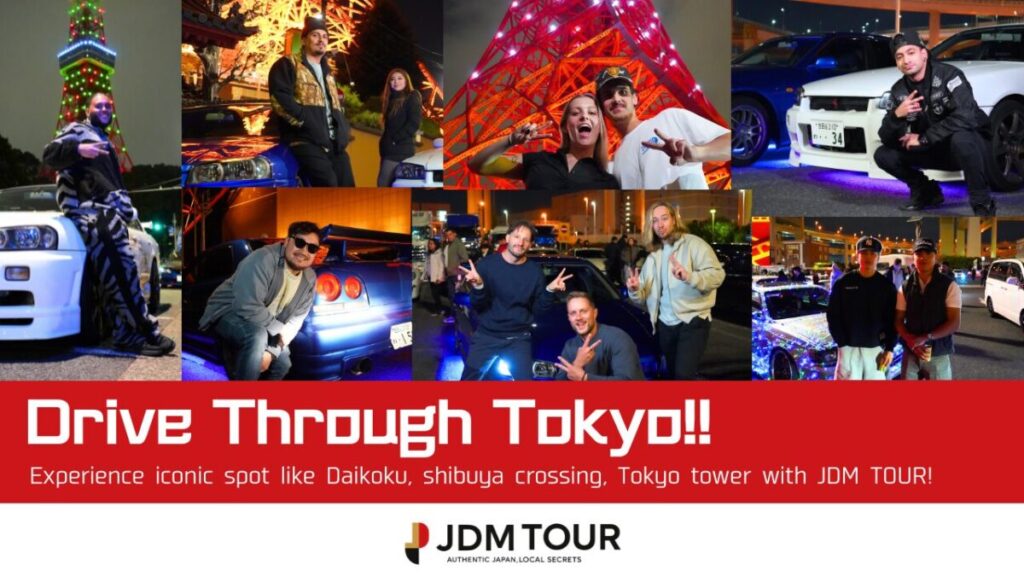
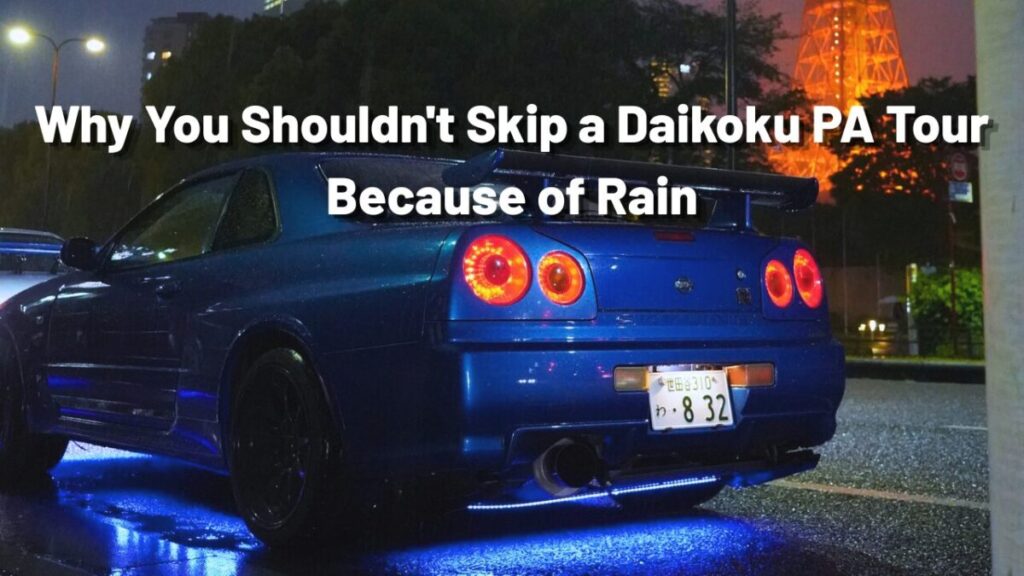
Tokyo Tower offers a different atmosphere and is one of the main photography locations on the tour. When the vehicle can be stopped safely and legally, the team assists guests with photographs featuring the car and the illuminated tower.
Vehicle photography is also normally supported when the group is safely parked at Daikoku PA. If Daikoku PA is closed, photography at that location is naturally unavailable.
A revised route therefore does not usually replace Daikoku PA with Tokyo Tower or Shibuya. Instead, the regular Tokyo night scenery remains part of the tour while the team considers an additional route or stop suitable for the current conditions.
[The Hottest Experience] Driving Dream Sports Cars in Japan with JDM TOUR
JDM TOUR
While standard rentals are practical, a new trend has exploded among car enthusiasts visiting Japan: renting “JDM” (Japanese Domestic Market) cars through specialized services like JDM TOUR.
The New Standard of Japan Travel: Public Roads in the Movie
The experience of being able to rent sports car japan is no longer just about driving; it has evolved into an "attraction" that transforms Japan's public roads into a real-life game world. In recent years, an exploding trend among international travelers is enjoying the act of driving through Japanese cities itself as a form of entertainment.
Specifically, commanding JDM machines such as the Nissan GT-R or Toyota Supra against the backdrop of Tokyo’s iconic landmarks is no longer just transportation; it is positioned as a participatory "activity." Just as cosplay driving tours have emerged, this integrated experience of car and city overturns conventional tourism, offering unforgettable, highly shareable memories that light up social media feeds.
This new style of journey, facilitated by exotic car rental tokyo services, has transformed from merely pursuing speed into a means of experiencing unforgettable "play." It allows you to deeply engage with Japan's unique culture and landscapes, creating an adventure that goes beyond traditional sightseeing.
Why is JDM So Popular Right Now?
Legendary sports cars manufactured in Japan during the 1990s and early 2000s—such as the Nissan Skyline (R34), icons for fans worldwide. For many, driving these cars on the actual roads they were designed for is a bucket-list experience that surpasses any standard sightseeing tour.
The Unique Charm of a JDM TOUR
JDM TOUR offers more than just a “car rental”; it provides a deep dive into Japanese car culture.
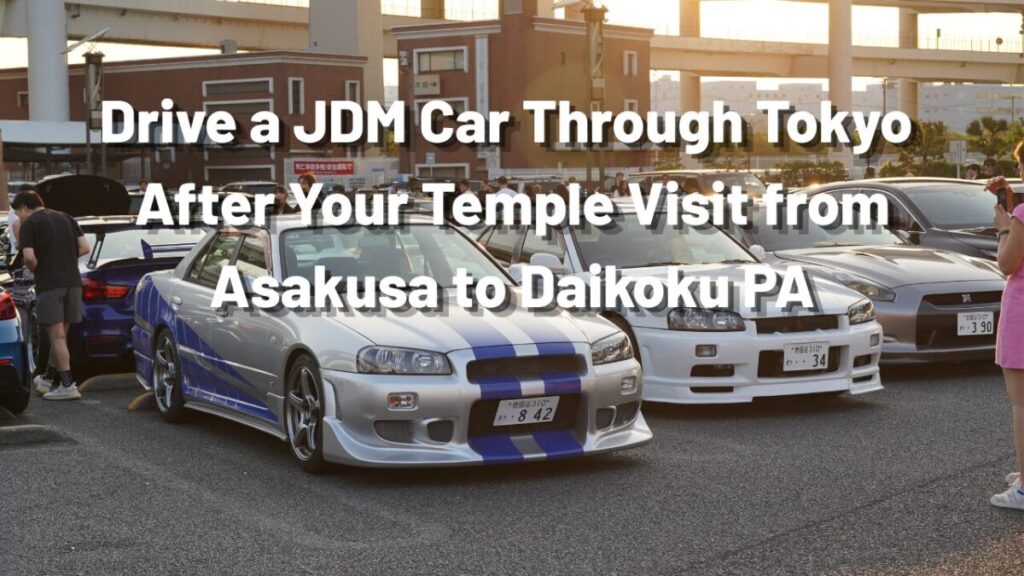
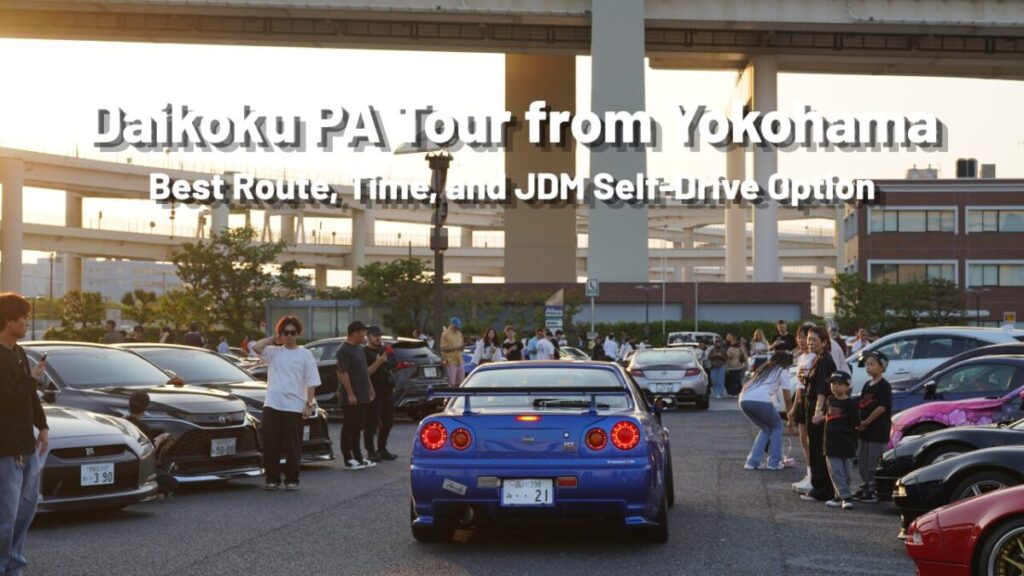
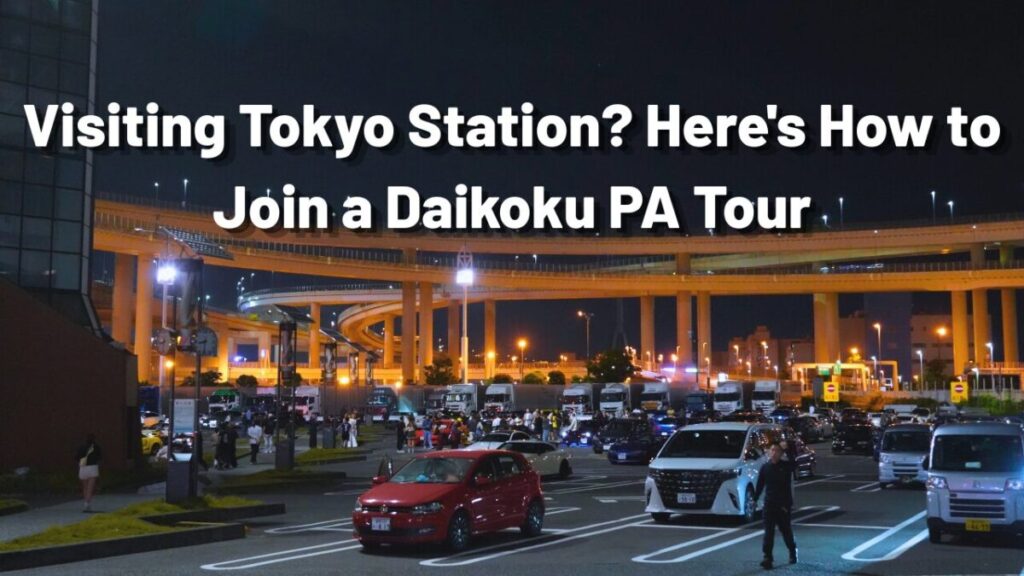
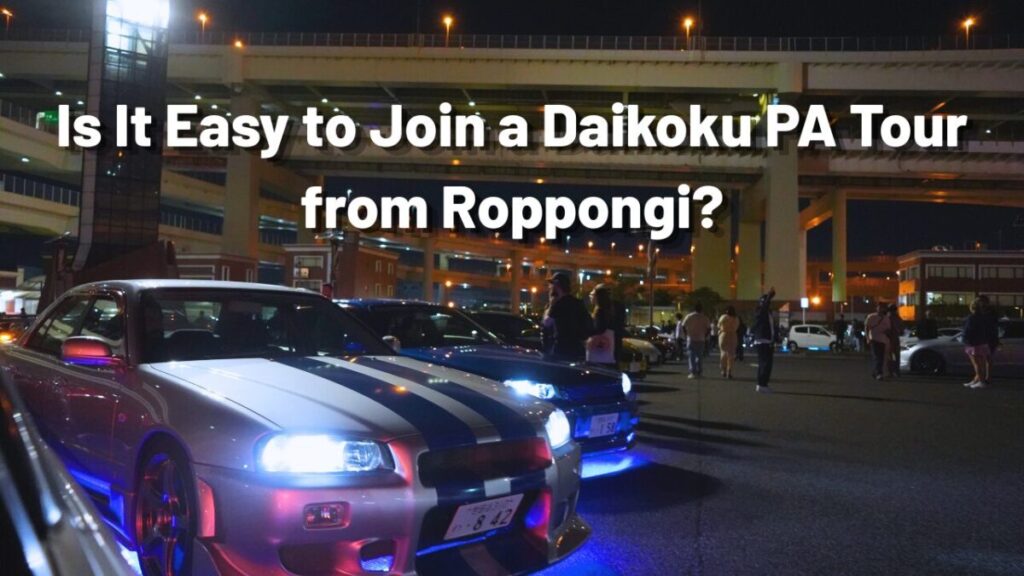
The Pilgrimage to Daikoku PA: The highlight of many tours is driving to the Daikoku Parking Area on the Shuto Expressway. At night, this spot transforms into a gathering place for hundreds of beautifully customized cars, creating a vibrant atmosphere that is world-famous.
Professional Guided Convoys: Driving a right-hand-drive manual car through the complex Shuto Expressway can be daunting. JDM TOUR offers plans where a professional guide leads the way in a lead car, ensuring you stay on the right path safely.
Photography and Content Creation: The guides know the best “insta-worthy” spots, such as the Shibuya Crossing, Tokyo Tower, and Rainbow Bridge, allowing you to capture professional-quality memories with your dream car.
The following locations may be considered during a closure. They are possible options rather than guaranteed stops, and a tour will not necessarily visit all of them.
Umihotaru Parking Area
Umihotaru PA is located on the Tokyo Bay Aqua-Line and can be reached by car from both the Kawasaki and Kisarazu directions.
Its value is very different from Daikoku PA. Umihotaru should not be presented as another guaranteed car-meet location. Instead, it offers a distinctive drive across Tokyo Bay, an offshore setting surrounded by water, and views that may be especially memorable after dark.
Because reaching Umihotaru can add considerable driving time, the decision depends on traffic, the group’s position, and the remaining tour time.
Tatsumi PA
Tatsumi PA may be considered when its location and the direction of travel fit the revised route. It can provide a brief experience of Tokyo’s elevated expressways and waterfront road environment.
However, Tatsumi PA is a public rest area rather than an event venue. Access may also be restricted, and the presence of modified or high-performance vehicles is never guaranteed.
Guests must use marked parking spaces and avoid obstructing roads, walkways, or other visitors.
Shibaura PA
Shibaura PA may be practical on certain central Tokyo routes. Like Tatsumi PA, it is a normal public parking area and cannot be treated as a smaller version of Daikoku.
Whether it can be included depends on access, congestion, closures, the direction of travel, and the remaining tour schedule.
A PIT AUTOBACS SHINONOME
When the tour time and current store hours are compatible, A PIT AUTOBACS SHINONOME may be considered as a place to explore another side of Japanese automotive culture.
Rather than offering a parking-area gathering, it gives visitors an opportunity to see Japanese car accessories, customization products, parts, books, and broader automotive lifestyle displays.
This can be especially interesting for guests who want to understand how JDM culture extends beyond the cars seen on the road.
A visit is only possible when the store is open and when it can be incorporated without creating an impractical route.
Backup Routes Do Not Reproduce Daikoku PA
An important Daikoku PA tourist tip is to understand that no alternative stop can promise the same atmosphere as Daikoku Parking Area.
A visit to Umihotaru is about the Tokyo Bay crossing and offshore night views. Tatsumi or Shibaura may offer a glimpse of the capital’s expressway environment. A PIT AUTOBACS SHINONOME focuses on parts, products, and Japanese customization culture.
Depending on the route, guests may also experience:
Elevated sections of the Shuto Expressway
Views around Rainbow Bridge
Tokyo Bay’s waterfront roads
The illuminated Tokyo Tower
Shibuya’s neon cityscape
Japanese automotive retail culture
These are not attempts to imitate Daikoku PA. They are different ways to experience Tokyo through its roads, urban scenery, and car culture.
The purpose of the backup plan is not to promise an identical car meet somewhere else. It is to create the best realistic experience available under the circumstances.
Photography and Video During the Tour
Photography with the tour vehicle is mainly supported when the car is safely stopped at Tokyo Tower and Daikoku PA.
At Tokyo Tower, the exact stopping position and photography arrangement may change according to traffic, local restrictions, and safety conditions.
At Daikoku PA, photographs are taken only while using an appropriate marked parking space. Guests must not block driving lanes, walkways, facility entrances, or other visitors.
Guests who want to record the scenery while the vehicle is moving can also ask about JDM TOUR’s video recording service. Depending on the route, the footage may include parts of the Tokyo expressway drive, waterfront scenery, Rainbow Bridge, or the lights of central Tokyo.
Drivers must not operate a phone or camera while driving. The video service allows the person behind the wheel to concentrate on safe driving while the experience is recorded separately.
Safety and Photography Etiquette
Whether the group follows the regular route or a revised backup route, safety and respect for public spaces remain essential.
Guests should:
Keep roads, parking lanes, and pedestrian paths clear
Use designated parking spaces
Never touch another person’s car without permission
Be considerate when photographing people or license plates
Follow instructions from staff and road authorities
Avoid stopping on public roads for photography
Never use a smartphone while driving
Daikoku PA and the possible alternative parking areas are shared public facilities. A respectful visit helps protect the experience for residents, travelers, commercial drivers, and other road users.
When Would the Entire Tour Be Canceled?
An unexpected Daikoku PA closure does not normally cause the full tour to be canceled.
Cancellation may become necessary when JDM TOUR determines that the experience cannot be operated safely. Possible reasons include heavy snow, icy roads, severe weather, extensive road closures, or other conditions that make safe driving impractical.
If JDM TOUR determines that the tour cannot be conducted and cancels it, the paid tour fee is refunded, excluding applicable transaction, processing, or booking fees.
This policy should not be confused with a Daikoku PA closure. If the roads remain safe and the tour can continue, the normal response is to adjust the route rather than cancel the entire experience.
What Travelers Should Understand Before Booking
Before booking a Daikoku PA tour, travelers should understand the following:
Entry to Daikoku PA cannot be guaranteed
The duration of a visit may change
A car meet or specific vehicles cannot be guaranteed
Backup routes are not fixed
No particular alternative stop is guaranteed
Tokyo Tower and Shibuya are normally part of the regular night route
Vehicle photography is mainly offered at Tokyo Tower and Daikoku PA when safe stopping is possible
A video recording service is available for guests who want footage of the driving scenery
The team may change the route according to safety, traffic, time, and operating conditions
A flexible itinerary does not mean the tour is unplanned. It is a practical way to respond to the reality of Tokyo’s public roads and parking areas while protecting the guest experience.
FAQ
Will my Daikoku PA tour be canceled if Daikoku PA is closed?
Not usually. When only Daikoku PA is unavailable, JDM TOUR generally reviews the conditions and creates a suitable alternative route. The full tour may be canceled when severe weather, major road closures, or other circumstances make safe operation impractical.
Can I choose a backup stop in advance?
You may share your interests, but a specific stop cannot be guaranteed. The final route depends on traffic, current closures, travel direction, remaining time, opening hours, and safety conditions.
Will I see JDM sports cars at another parking area?
There is no guarantee. Tatsumi PA, Shibaura PA, and Umihotaru PA are public rest areas rather than scheduled car-meet venues. A revised route may focus on Tokyo’s expressways, waterfront scenery, automotive shops, and other parts of Japanese car culture.
Where are photographs taken with the vehicle?
Vehicle photography is mainly supported at Tokyo Tower and Daikoku PA when the vehicle can be parked safely and legally. If Daikoku PA is closed, photographs at that location cannot be provided.
Can I record the scenery while driving?
Drivers must not use a smartphone or camera while the vehicle is moving. JDM TOUR offers a video recording service for guests who want to preserve scenes from the drive while remaining focused on safe driving.
Conclusion
A Daikoku PA closure does not automatically make a Daikoku PA tour a wasted evening.
Daikoku PA cannot be replaced or guaranteed, but the experience can often continue through a route adapted to the real conditions of the night. Depending on traffic, time, access, and opening hours, that may include Tokyo Bay roads, another public parking area, Japanese automotive retail culture, elevated expressways, Rainbow Bridge, Tokyo Tower, and Shibuya’s illuminated streets.
JDM TOUR checks the situation, prioritizes safety, guides participating vehicles with a lead car and radio support, and creates a practical route that allows international visitors to continue enjoying Tokyo’s JDM and night-driving culture.