Daikoku in Japan: Meaning, Ramen, Yokohama, and the Famous Daikoku PA
Daikoku in Japan: Meaning, Ramen, Yokohama, and the Famous Daikoku PA
contents
Introduction
If you have seen the word Daikoku while researching Japan, travel, ramen, or car culture, you may have noticed that it can mean several different things.
In traditional Japanese culture, Daikoku can refer to Daikokuten, one of Japan’s Seven Lucky Gods. In food and restaurant searches, you may find places called Daikoku Ramen or restaurants using the name Daikoku. But for JDM fans around the world, Daikoku most often means Daikoku PA, also known as Daikoku Parking Area, a famous expressway parking area in Yokohama connected to Japan’s car culture.
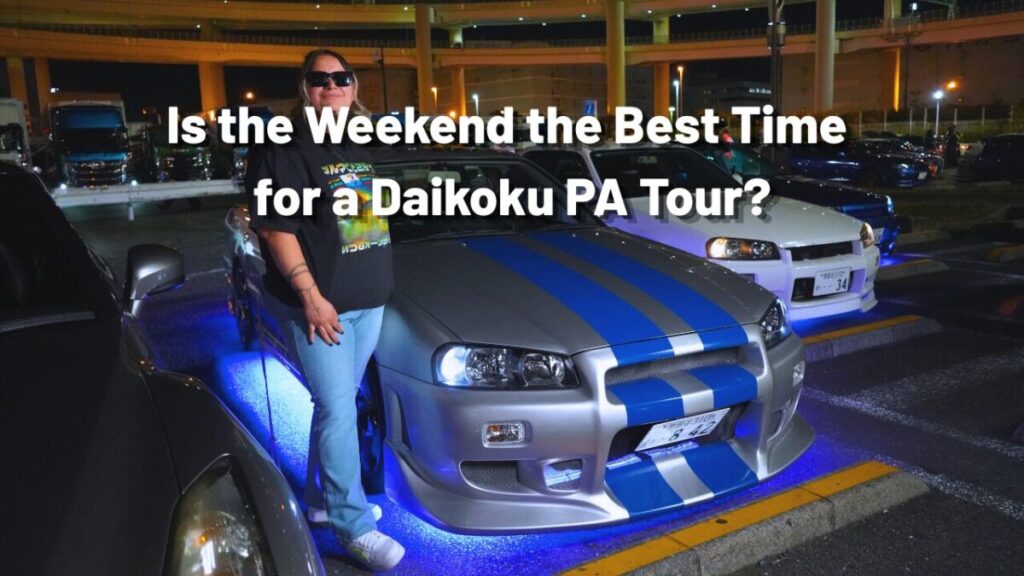
Daikoku PA is known among international car enthusiasts as a place where GT-Rs, Supras, RX-7s, NSXs, custom cars, and supercars may appear, especially during certain nights or weekends. However, Daikoku PA is not a theme park, not a ticketed attraction, and not an official car meet venue. It is a real public parking area on the expressway.
This guide explains what Daikoku means, why the name appears in so many different places, what Daikoku Ramen is, where Daikoku is in Yokohama, why it is called Daikoku PA, and why Daikoku PA became famous in JDM car culture.
What Does “Daikoku” Mean in Japan?
Daikoku comes from the Japanese word 大黒.
In Japan, “Daikoku” can be used in several ways. It may refer to a deity, a place name, a shop name, a company name, a restaurant name, or a car culture destination. That is why searching “Daikoku” in English can show very different results, including mythology, ramen restaurants, Yokohama place names, expressway information, and car meet content.
For travelers from the United States and other English-speaking countries, the confusing part is that the same word can appear in several unrelated contexts.
Common meanings include:
Daikoku / Daikokuten: a traditional Japanese deity
Daikoku Ramen: ramen shops or restaurants using the Daikoku name
Daikoku Futo: the Daikoku pier area in Yokohama
Daikoku PA: Daikoku Parking Area on the Shuto Expressway
Daikoku car meet: the car culture associated with Daikoku PA
This article focuses mainly on Daikoku PA and Daikoku car culture, because that is what many international JDM fans are searching for. But understanding the wider meaning of Daikoku helps explain why the word appears in so many different places in Japan.
Daikoku and Daikokuten: The Traditional Meaning
In traditional Japanese culture, Daikoku is closely related to Daikokuten.
Daikokuten is known as one of Japan’s Seven Lucky Gods. He is often associated with wealth, good fortune, prosperity, food, farming, and household abundance. Because of this, the word Daikoku has a positive and lucky image in Japanese culture.
You may see the name or image of Daikokuten at temples, shrines, shops, restaurants, and local businesses in Japan. This cultural background is one reason why “Daikoku” is commonly used in names.
For many Japanese people, the word Daikoku does not immediately mean cars. It can sound like a lucky, traditional, or prosperous name.
However, when JDM fans, car enthusiasts, or Tokyo night drive travelers talk about Daikoku, they are usually not talking about Daikokuten. They are usually talking about Daikoku PA in Yokohama.
Daikoku as a Name: Places, Shops, and Restaurants
In Japan, the name Daikoku is used for many places and businesses.
You may find it in restaurant names, ramen shops, izakaya, food businesses, local companies, and place names. To Japanese speakers, “Daikoku” is not an unusual word. It carries a traditional and positive feeling, which makes it a natural choice for names.
This is why Google USA search results for “Daikoku” may show pages that have nothing to do with cars.
That does not mean the results are wrong. It simply shows that Daikoku is a broad Japanese word with multiple meanings.
For travelers interested in Tokyo, Yokohama, JDM culture, and Japanese car meets, however, the most important meaning is usually Daikoku PA.
What Is Daikoku Ramen?
Daikoku Ramen usually refers to ramen shops or restaurants that use the name Daikoku.
There are ramen shops and restaurants in Japan that use names such as Daikoku, Daikoku Ramen, or similar Japanese spellings. There are also Japanese restaurants overseas that use the Daikoku name.
The important point is this:
Daikoku Ramen and Daikoku PA are not the same thing.
Daikoku Ramen is a restaurant or food-related use of the name Daikoku. Daikoku PA, on the other hand, is an expressway parking area in Yokohama that became famous among JDM fans.
They are connected only by the word “Daikoku,” not by function or location.
For example, someone searching “Daikoku Japan” may be looking for ramen, Japanese mythology, a restaurant, a place name, or a car culture destination. A car enthusiast searching the same word is more likely looking for Daikoku PA, Daikoku Parking Area, or the Daikoku car meet.
In this article, Daikoku Ramen is included as part of the wider meaning of Daikoku, but the main focus is Daikoku PA and JDM car culture in Japan.
Where Is Daikoku in Yokohama?
When car enthusiasts talk about Daikoku, they are usually referring to the Daikoku area in Yokohama, Kanagawa Prefecture.
The most important location is Daikoku Futo, or Daikoku Pier. Daikoku Futo is a waterfront and port area in Yokohama connected to logistics, port facilities, industrial roads, expressways, and the Tokyo Bay area.
According to the City of Yokohama, Daikoku Futo was developed through land reclamation between 1971 and 1990 and became Yokohama Port’s first full-scale island-style pier. It remains an important logistics and port area today.
Daikoku PA is located in this Daikoku Futo area. The official Shuto Expressway parking area information lists Daikoku PA’s address as 15 Daikoku Futo, Tsurumi Ward, Yokohama, Kanagawa.
From Tokyo, Daikoku is toward Yokohama and Tokyo Bay. It is very different from tourist neighborhoods such as Shibuya, Shinjuku, Asakusa, or Ginza.
Daikoku is not a place where most travelers walk around like a normal sightseeing district. It is strongly connected to cars, expressways, port roads, and night drives. That is part of why it has become so special for overseas travelers interested in JDM culture.
Why Is It Called Daikoku PA?
So why is Daikoku Parking Area called “Daikoku”?
The direct reason is simple: Daikoku PA is located in the Daikoku Futo area of Yokohama. Since the parking area is located in Daikoku Futo, it is called Daikoku Parking Area. The official Shuto Expressway information identifies the location as Daikoku Futo in Tsurumi Ward, Yokohama.
But there is a deeper layer to the name.
The place name Daikoku is also connected to nearby Daikoku-cho. In Yokohama’s waterfront and industrial areas, several place names have lucky or auspicious meanings, including names related to the Seven Lucky Gods. Local Yokohama references describe Daikoku-cho as a place name connected to Daikokuten, one of the Seven Lucky Gods.
In simple terms, the name developed like this:
Daikokuten, a lucky traditional name → Daikoku-cho and Daikoku Futo as Yokohama place names → Daikoku PA, located in Daikoku Futo → “Daikoku,” known worldwide among JDM fans
What makes this interesting is that the name Daikoku did not originally come from car culture.
Today, Daikoku PA is known globally among car enthusiasts. But the word itself has a much older and broader cultural background. It connects traditional Japanese beliefs, lucky place names, Yokohama’s port development, expressway infrastructure, and modern JDM car culture.
That is why “Daikoku” can appear in search results for mythology, ramen, Yokohama geography, expressways, and car meets at the same time.
What Is Daikoku PA?
Daikoku PA stands for Daikoku Parking Area.
It is a parking area on the Shuto Expressway in Yokohama. Drivers use it to rest, eat, use the restroom, and take a break while traveling on the expressway. According to official Shuto Expressway information, Daikoku PA is located at Daikoku Junction, where the Kanagawa Route No. 5 Daikoku Line and the Bayshore Route connect.
The most important thing to understand is this:
Daikoku PA is not a tourist theme park.
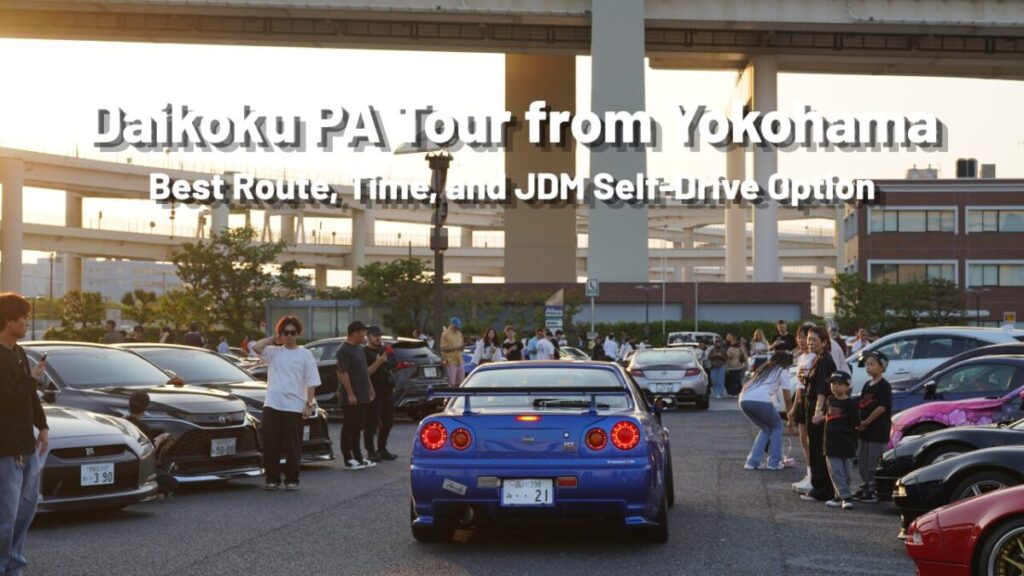
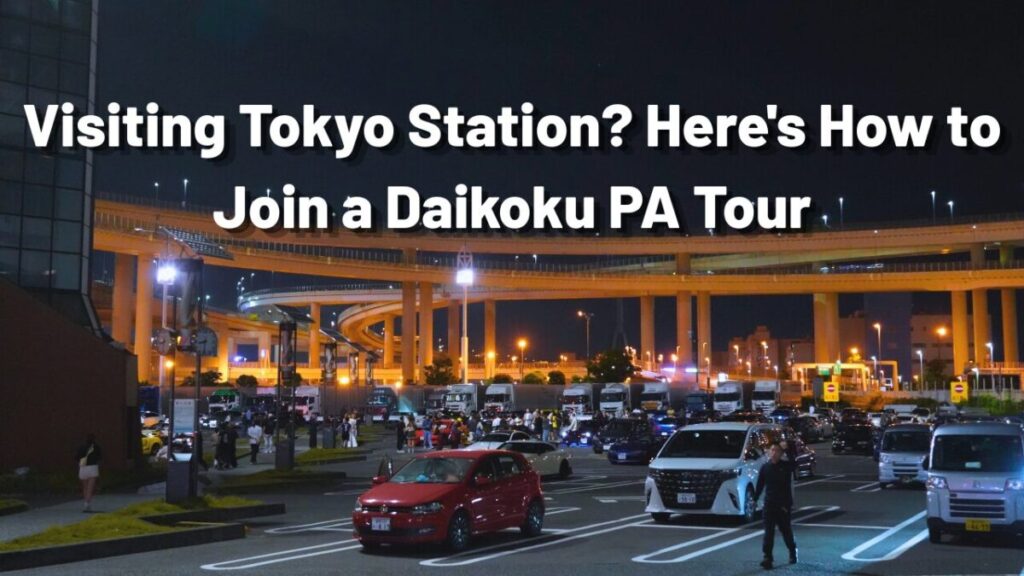
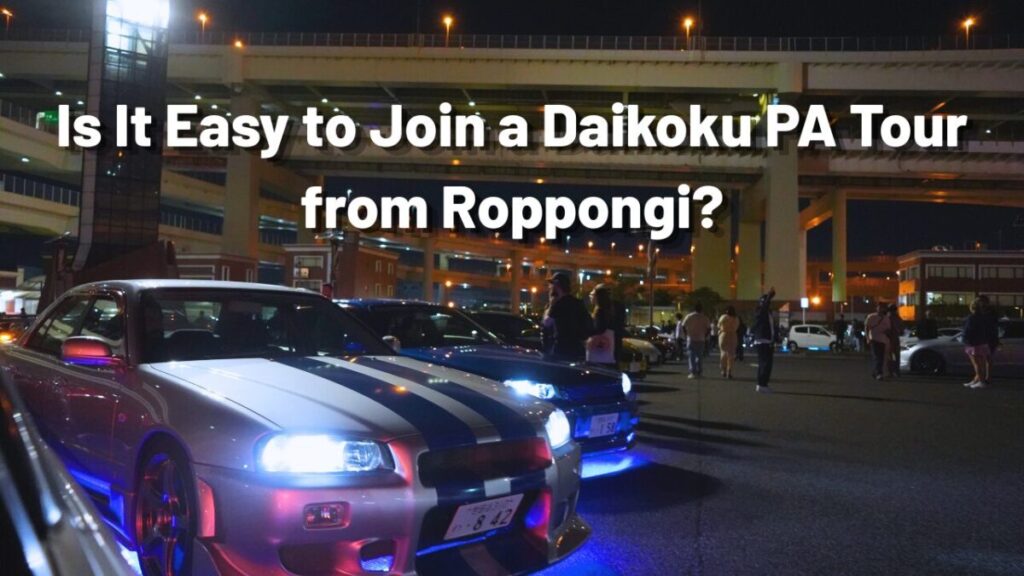
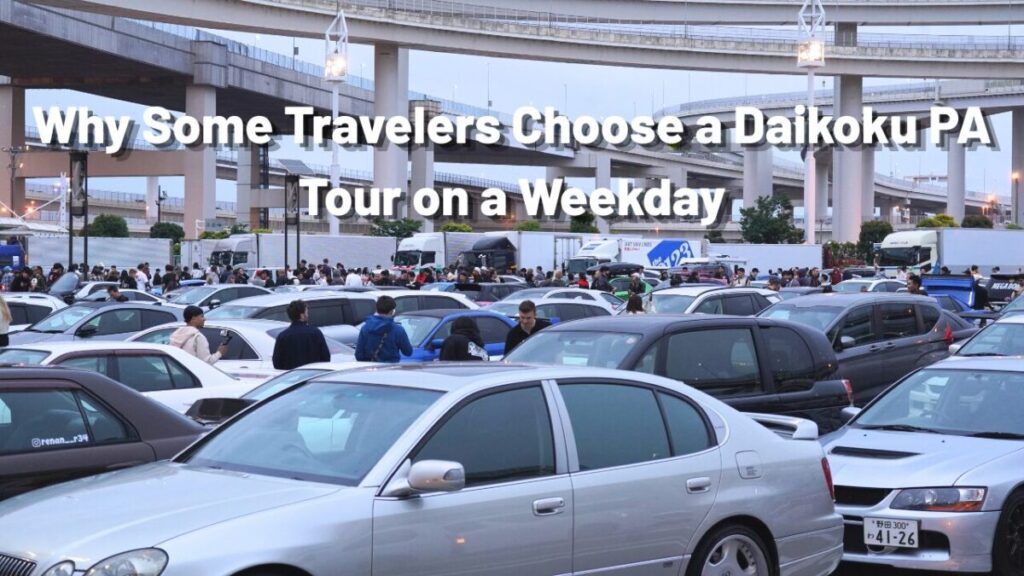
It is not a ticketed attraction. It is not an official car meet venue. It is not a place where a car show is guaranteed every night. Daikoku PA is a real public parking area for expressway users. However, over the years, it has become known as a place where car enthusiasts may gather. On some nights, especially certain weekends or busy car culture periods, visitors may see sports cars, custom cars, JDM cars, supercars, and unique builds. This atmosphere is what made Daikoku PA famous among international JDM fans.
Daikoku PA is not only about seeing cars. It is also about experiencing the feeling of Japanese car culture: the route, the night drive, the expressway atmosphere, the respect for cars, and the unique energy of Yokohama’s bay area.
Why Is Daikoku PA Famous Among JDM Fans?
Daikoku PA became famous among JDM fans for several reasons.
First, it is known as a place where iconic Japanese cars may appear.
Depending on the day, visitors may see cars such as the Nissan GT-R, Toyota Supra, Mazda RX-7, Honda NSX, Honda S2000, Nissan Silvia, Mitsubishi Lancer Evolution, Subaru WRX, and many other Japanese performance cars.
It is also possible to see custom cars, classic builds, supercars, rare imports, and unusual personal projects. The variety changes from day to day.
Second, Daikoku PA is strongly connected to the feeling of a Tokyo and Yokohama night drive.
Expressways, tunnels, bridges, bay routes, city lights, parking areas, and Japanese cars all come together in one experience. For many overseas visitors, this matches the image of Japanese car culture they have seen online.
Third, Daikoku PA became globally known through YouTube, Instagram, TikTok, photography, and JDM media. For many car enthusiasts, Daikoku has become one of the places they dream of visiting during a trip to Japan.
However, it is important to be honest:
Special cars are not guaranteed at Daikoku PA.
The atmosphere can change depending on weather, day of the week, time, traffic, police or management decisions, temporary closures, and local conditions.
That honesty is important. Daikoku PA is special, but it is not a controlled event.
Is Daikoku PA an Official Car Meet?
No. Daikoku PA is not an official car meet venue.
This is one of the most important things international travelers should understand.
On social media, Daikoku PA can look like a scheduled event that happens every night. In reality, Daikoku PA is a public expressway parking area. Car enthusiasts may gather there, but it is not a ticketed show, not an official meet, and not an event with a fixed organizer.
Because of that, travelers should avoid thinking of Daikoku PA as a guaranteed car show.
It is not accurate to say:
A car meet is guaranteed
There is an event every night
Rare cars will definitely appear
Street racing is part of the experience
Visitors can behave however they want
The real appeal of Daikoku PA is not dangerous driving or illegal activity.
Its value comes from Japanese car passion, detailed custom builds, night drive culture, owner pride, photography, and the atmosphere of a place where car people may naturally gather.
Daikoku should be experienced with respect.
Can Tourists Visit Daikoku PA?
Yes, tourists can visit Daikoku PA, but it is not as simple as visiting a normal sightseeing spot.
Daikoku PA is located on the expressway, so it is not a place most travelers can easily reach by train and then walk into. In most cases, access requires a car.
For international travelers, that can be challenging.
Driving in Japan may involve left-side traffic, expressway tolls, complex junctions, Japanese navigation systems, unfamiliar parking behavior, and night driving. If you are visiting Japan for the first time, Daikoku PA can feel intimidating without local support.
Important things to understand include:
Japan drives on the left side of the road
Expressway routes and junctions can be confusing
Missing the correct entrance or exit can make the route difficult
Night driving may feel stressful for first-time visitors
Daikoku PA can become crowded
Temporary closures or restrictions may happen
The size and quality of the car gathering cannot be guaranteed
Renting a car is possible for some travelers, but it is not always the easiest choice.
For many first-time visitors, a guided Daikoku PA tour is a more comfortable option because it reduces stress around routes, timing, etiquette, and local conditions.
[The Hottest Experience] Driving Dream Sports Cars in Japan with JDM TOUR
JDM TOUR
While standard rentals are practical, a new trend has exploded among car enthusiasts visiting Japan: renting “JDM” (Japanese Domestic Market) cars through specialized services like JDM TOUR.
The New Standard of Japan Travel: Public Roads in the Movie
The experience of being able to rent sports car japan is no longer just about driving; it has evolved into an "attraction" that transforms Japan's public roads into a real-life game world. In recent years, an exploding trend among international travelers is enjoying the act of driving through Japanese cities itself as a form of entertainment.
Specifically, commanding JDM machines such as the Nissan GT-R or Toyota Supra against the backdrop of Tokyo’s iconic landmarks is no longer just transportation; it is positioned as a participatory "activity." Just as cosplay driving tours have emerged, this integrated experience of car and city overturns conventional tourism, offering unforgettable, highly shareable memories that light up social media feeds.
This new style of journey, facilitated by exotic car rental tokyo services, has transformed from merely pursuing speed into a means of experiencing unforgettable "play." It allows you to deeply engage with Japan's unique culture and landscapes, creating an adventure that goes beyond traditional sightseeing.
Why is JDM So Popular Right Now?
Legendary sports cars manufactured in Japan during the 1990s and early 2000s—such as the Nissan Skyline (R34), icons for fans worldwide. For many, driving these cars on the actual roads they were designed for is a bucket-list experience that surpasses any standard sightseeing tour.
The Unique Charm of a JDM TOUR
JDM TOUR offers more than just a “car rental”; it provides a deep dive into Japanese car culture.
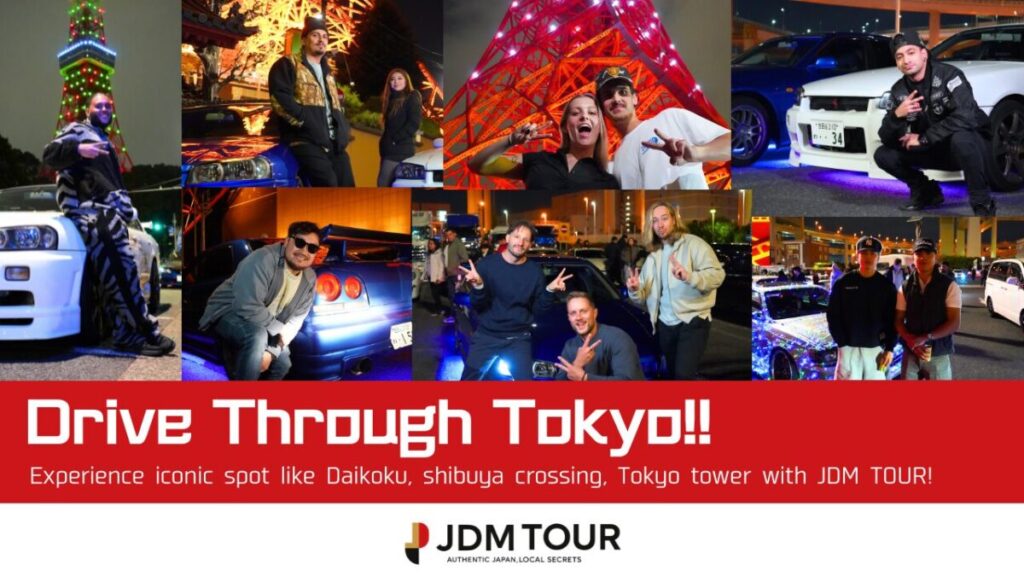
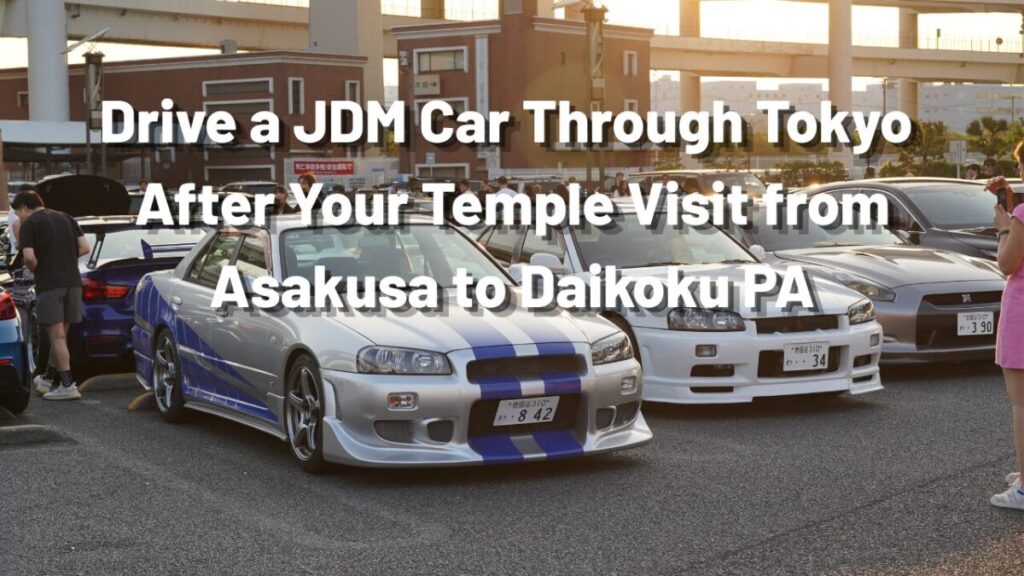
The Pilgrimage to Daikoku PA: The highlight of many tours is driving to the Daikoku Parking Area on the Shuto Expressway. At night, this spot transforms into a gathering place for hundreds of beautifully customized cars, creating a vibrant atmosphere that is world-famous.
Professional Guided Convoys: Driving a right-hand-drive manual car through the complex Shuto Expressway can be daunting. JDM TOUR offers plans where a professional guide leads the way in a lead car, ensuring you stay on the right path safely.
Photography and Content Creation: The guides know the best “insta-worthy” spots, such as the Shibuya Crossing, Tokyo Tower, and Rainbow Bridge, allowing you to capture professional-quality memories with your dream car.
The most important part of visiting Daikoku PA is respecting the rules and local etiquette.
Daikoku PA is a public parking area. It is not only for tourists or car fans. It is also used by regular drivers, workers, families, and people taking breaks during expressway travel.
Visitors should behave with that in mind.
Respect Daikoku PA as a Public Parking Area
Daikoku PA should not be treated like a private event space, tourist attraction, or official car meet venue.
It is a real expressway parking area used by many types of drivers. Some people are there to enjoy cars, but others are simply resting during travel or work. Keeping this balance in mind is the foundation of good etiquette at Daikoku PA.
Keep Noise to a Minimum
Do not make excessive noise.
Avoid loud behavior, shouting, unnecessary engine revving, or anything that may disturb other users. A respectful atmosphere helps protect Daikoku PA as a place where car culture can be enjoyed without causing problems for regular drivers or local authorities.
Give Cars and Owners Enough Space
Do not touch cars without permission.
Even if you see a rare or beautiful build, it is not acceptable to touch the car, lean on it, look inside too closely, or get too close without the owner’s permission. Many of the cars at Daikoku PA are personal vehicles, not display cars at a show.
Be Careful with Photography
Taking photos of cars is common, but visitors should be respectful when people, license plates, or private conversations are involved.
Avoid blocking traffic or standing in unsafe areas just to take a photo. When taking close-up shots, especially of people or interiors, ask for permission whenever possible.
Avoid Dangerous or Disrespectful Behavior
Daikoku PA should never be treated as a place for reckless behavior, illegal racing, or showing off on public roads.
The value of Daikoku PA is not speed. It is the chance to experience Japanese car culture with respect, safety, and awareness.
Do Not Encourage Dangerous Driving
Do not encourage dangerous driving, street racing, burnouts, reckless acceleration, or any behavior that could disturb other users or create safety risks.
Daikoku PA’s appeal comes from the cars, the atmosphere, and the culture — not from unsafe driving.
Follow Local Instructions and Conditions
If police, parking area staff, or expressway authorities give instructions, visitors should follow them immediately.
Daikoku PA may become crowded, restricted, or temporarily closed depending on the situation. These conditions are part of the reality of visiting a public expressway parking area.
Enjoy Daikoku PA with Respect
For JDM TOUR, this is a key message: visitors should enjoy Daikoku by observing, learning, appreciating, and respecting the local culture.
A good Daikoku PA experience is not about treating the location like a guaranteed car show. It is about understanding the place, respecting the people who use it, and experiencing Japanese car culture in a safe and responsible way.
The Best Way to Experience Daikoku PA from Tokyo
If you want to experience Daikoku PA from Tokyo, the most important question is not only “How do I get there?”
It is also:
What time should you go?
What should you expect on that day?
What if the weather is bad?
What if the parking area is crowded?
What if there is a temporary closure?
How should you behave once you arrive?
What route gives the best Tokyo night drive experience?
Daikoku PA is not just a destination. The experience includes the drive itself: Tokyo at night, Yokohama’s bay area, the expressway route, the atmosphere of the road, and the way Japanese car culture feels in real life.
That is why a guided Daikoku PA tour can be valuable for international visitors.
With a guided experience, travelers do not have to worry as much about Japanese traffic rules, expressway navigation, timing, parking area etiquette, or backup plans. A guide can help explain what is appropriate, what to expect, and how to enjoy the experience respectfully.
If conditions at Daikoku PA change on the day, a guided tour may also help adjust the experience with alternative Tokyo night drive routes or other car culture-related stops.
The value of JDM TOUR is not to promise a guaranteed car meet.
The real value is helping overseas travelers experience Japanese car culture safely, smoothly, and respectfully.
Related Daikoku Terms You May See Online
When researching Daikoku, you may see several related terms. Here is what they usually mean.
Daikoku A broad Japanese word connected to the characters 大黒. It can refer to a deity, a place name, a shop name, or car culture.
Daikokuten A traditional Japanese deity and one of the Seven Lucky Gods.
Daikoku Ramen A restaurant or ramen-related use of the Daikoku name. It is not the same as Daikoku PA.
Daikoku Futo The Daikoku pier area in Yokohama, connected to the port, logistics, expressways, and waterfront roads.
Daikoku PA Daikoku Parking Area, a public parking area on the Shuto Expressway in Yokohama.
Daikoku Parking Area The full English name of Daikoku PA.
Daikoku car meet A common phrase used online to describe the car culture associated with Daikoku PA. It is not an official event.
Daikoku PA tour A guided experience for travelers who want to visit Daikoku PA and enjoy Tokyo or Yokohama car culture with local support.
Daikoku Yokohama A phrase that may refer to the Daikoku area, Daikoku Futo, or Daikoku PA in Yokohama.
Daikoku JDM A search phrase connecting Daikoku PA with Japanese domestic market car culture.
FAQ
What is Daikoku?
Daikoku is a Japanese word that can refer to several things. It may refer to Daikokuten, a traditional Japanese deity, or it may appear in place names, restaurant names, ramen shops, and car culture. Among JDM fans, Daikoku usually means Daikoku PA in Yokohama.
Is Daikoku the same as Daikoku PA?
Not exactly. Daikoku is a broad word with several meanings. Daikoku PA is one specific place: Daikoku Parking Area on the Shuto Expressway in Yokohama. When car enthusiasts say “Daikoku,” they often mean Daikoku PA.
Why is it called Daikoku PA?
Daikoku PA is called Daikoku because it is located in the Daikoku Futo area of Yokohama. The name Daikoku is connected to local place names such as Daikoku-cho, which are associated with lucky or auspicious naming and Daikokuten, one of Japan’s Seven Lucky Gods.
Is Daikoku Ramen related to Daikoku PA?
No. Daikoku Ramen and Daikoku PA are not directly related. Daikoku Ramen refers to ramen shops or restaurants using the Daikoku name. Daikoku PA is an expressway parking area in Yokohama known among car enthusiasts.
Why is Daikoku PA famous among car enthusiasts?
Daikoku PA is famous because JDM cars, sports cars, custom builds, supercars, and rare vehicles may gather there. It is also connected to Tokyo and Yokohama night drive culture, making it a popular dream destination for international JDM fans.
Is a Daikoku car meet guaranteed?
No. Daikoku PA is not an official car meet venue, and car gatherings are not guaranteed. The atmosphere depends on the day, time, weather, traffic, closures, local conditions, and police or management decisions.
Can I visit Daikoku PA by train?
Daikoku PA is located on the expressway, so it is not a normal train-and-walk sightseeing spot. In most cases, visitors need car access to reach it properly.
Is a Daikoku PA tour worth it for foreign travelers?
For many first-time visitors to Japan, a Daikoku PA tour is a helpful option. It can reduce stress around driving, routes, timing, etiquette, closures, and local rules while helping travelers experience Japanese car culture more safely and respectfully.
Conclusion
The word Daikoku has many meanings in Japan.
In traditional culture, it connects to Daikokuten, one of the Seven Lucky Gods. In food searches, it may appear as Daikoku Ramen or a restaurant name. In Yokohama geography, it appears in place names such as Daikoku-cho and Daikoku Futo. And for car enthusiasts around the world, Daikoku most often means Daikoku PA, the famous parking area connected to Japan’s JDM car culture.
The name Daikoku PA is now known globally among JDM fans, but its background is not only about cars. It comes from Yokohama’s Daikoku Futo area, which itself connects to older lucky place-name traditions and the broader cultural meaning of Daikoku.
For travelers searching Google USA for “Daikoku,” the results can feel confusing at first. But if your interest is Japanese cars, Tokyo night drives, and real JDM culture, Daikoku will likely lead you to Daikoku PA.
Daikoku PA is a special place, but it is not a theme park or official event venue. It is a public expressway parking area, and visiting it requires respect for local rules, safety, etiquette, and changing conditions.
That is why the best Daikoku experience is not just about arriving at the parking area. It is about understanding the background, respecting the place, and enjoying Japanese car culture in a safe and responsible way.