

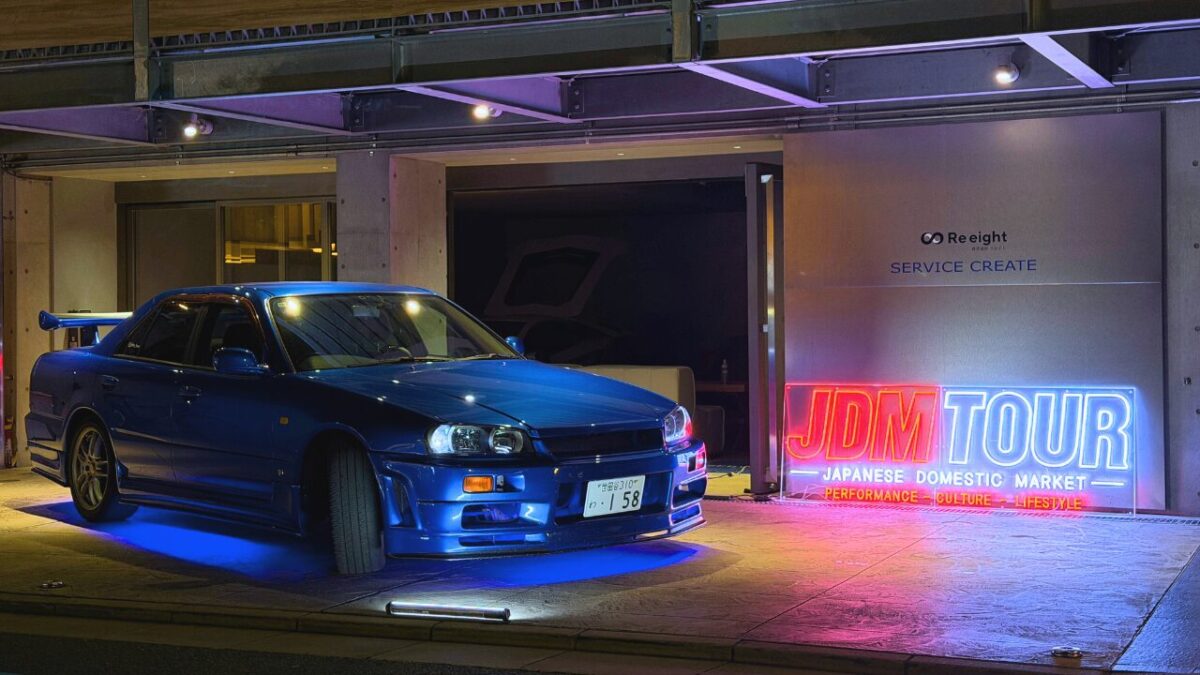
The tour begins Setagaya near Shibuya, the epicenter of neon chaos and energy. We will wait for our customers.

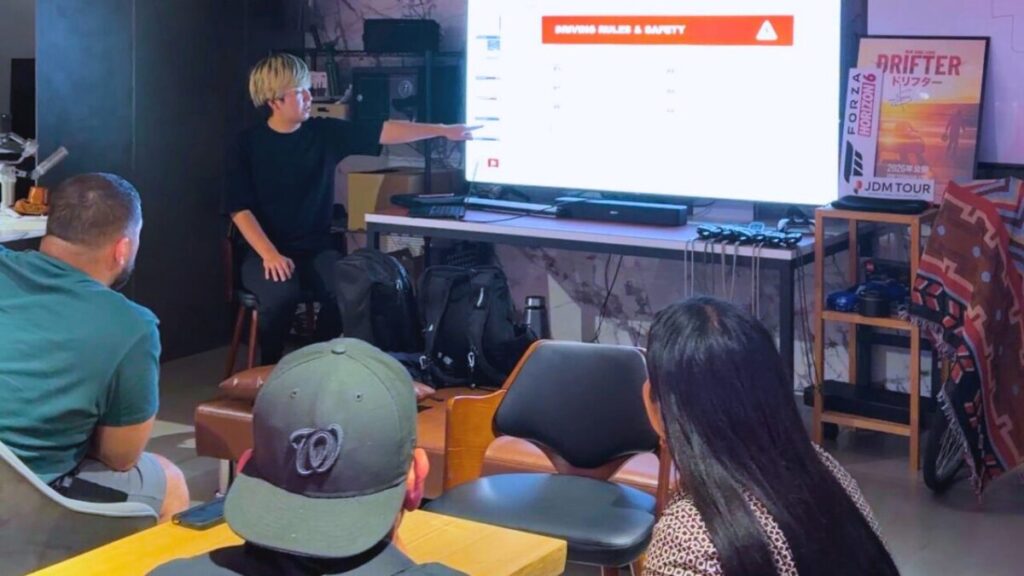
We will explain about the contract and Japanese drive regulation for rental.After the safety checks are complete, you will step into your customized machine and start the engine.

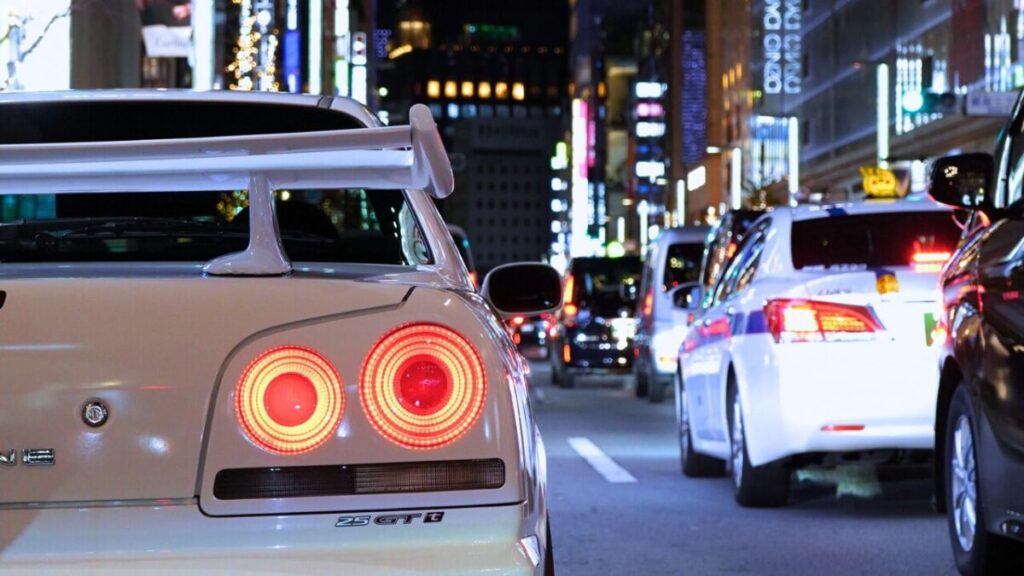
Leaving the hustle and bustle of Shibuya behind, we drive out into the neon lights, heading towards the tour's highlights. The Tokyo nightscape transforms into the ultimate driving stage.

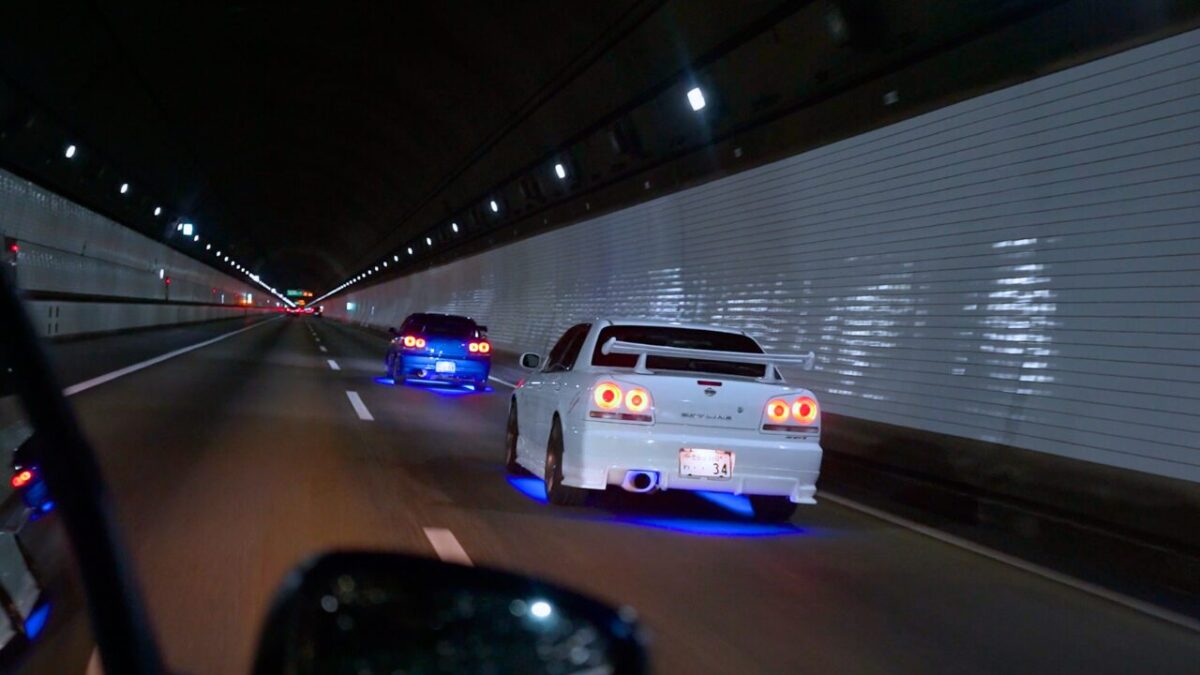
As an eye-catching JDM crew, we're about to own the Tokyo night. Follow the lead car on our way to Daikoku PA, and become an official member of this hot JDM squad.

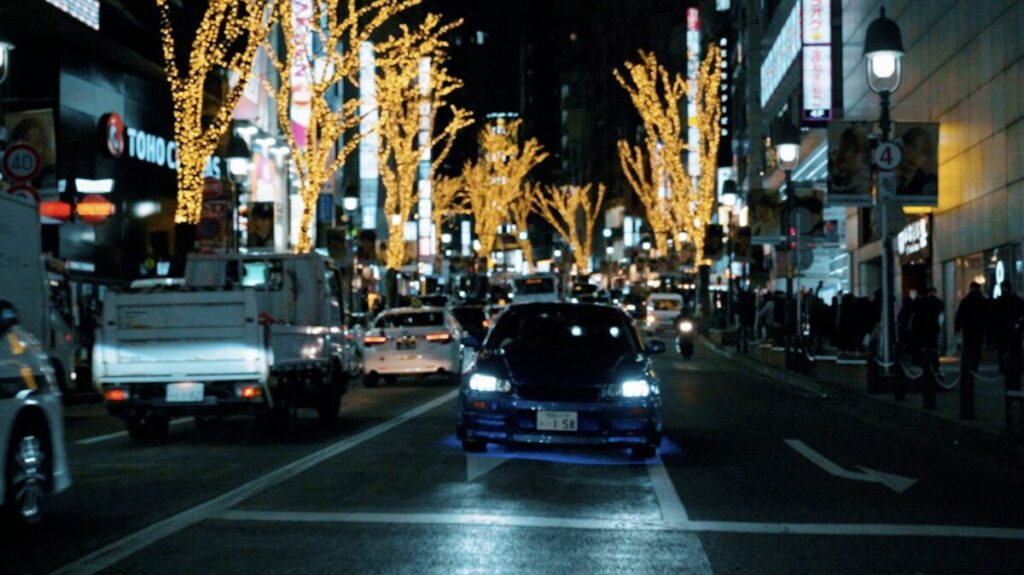
Hold the line as the JDM squad storms the iconic Scramble Crossing. Capture countless eyes and dominate the ultimate Tokyo icon.

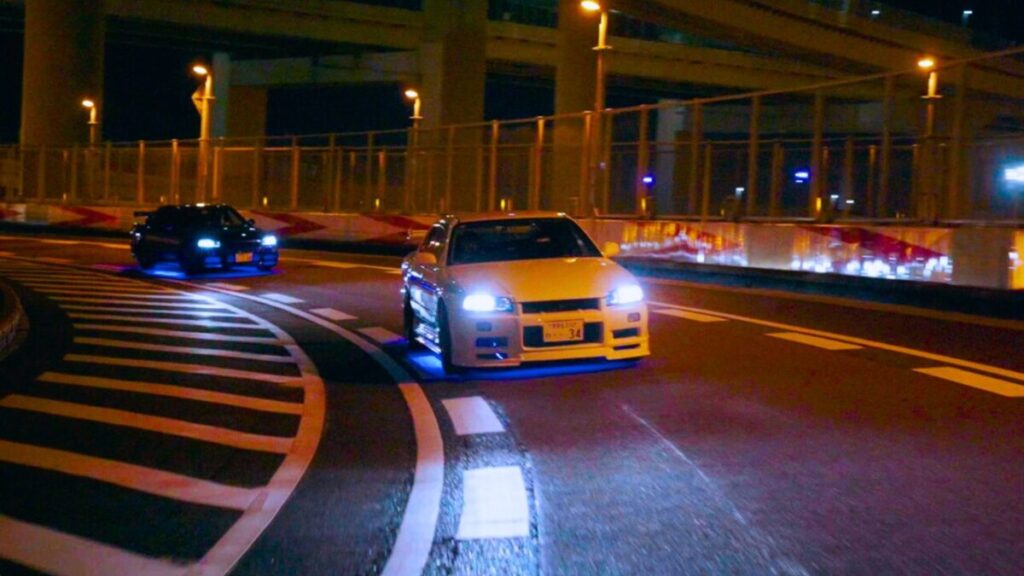
Run the C1 route accelerating your machine. We can’t explain this feeling. You should try it and feel.

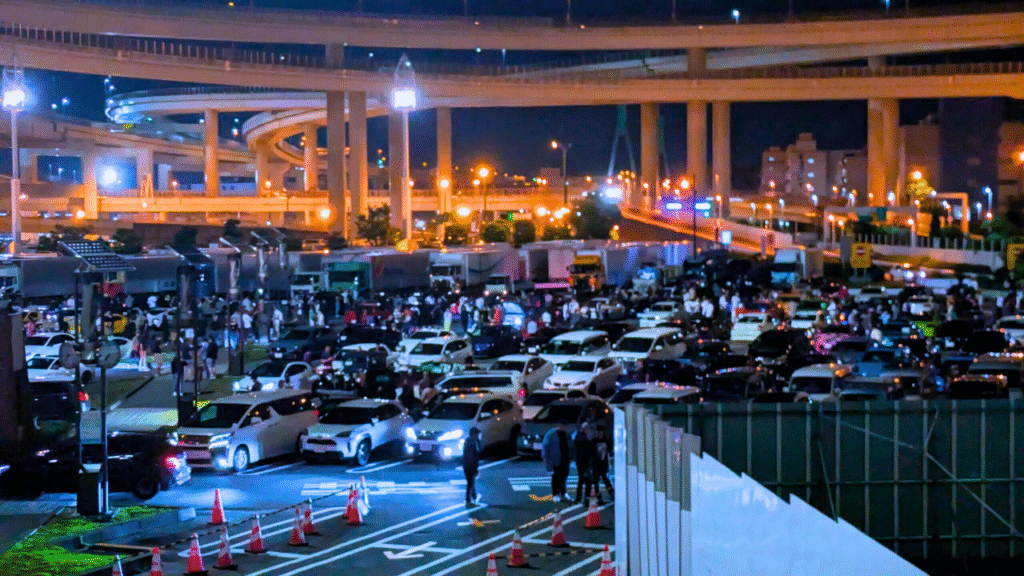
Feel the night car meet vibes and having a conversation with JDM lovers.
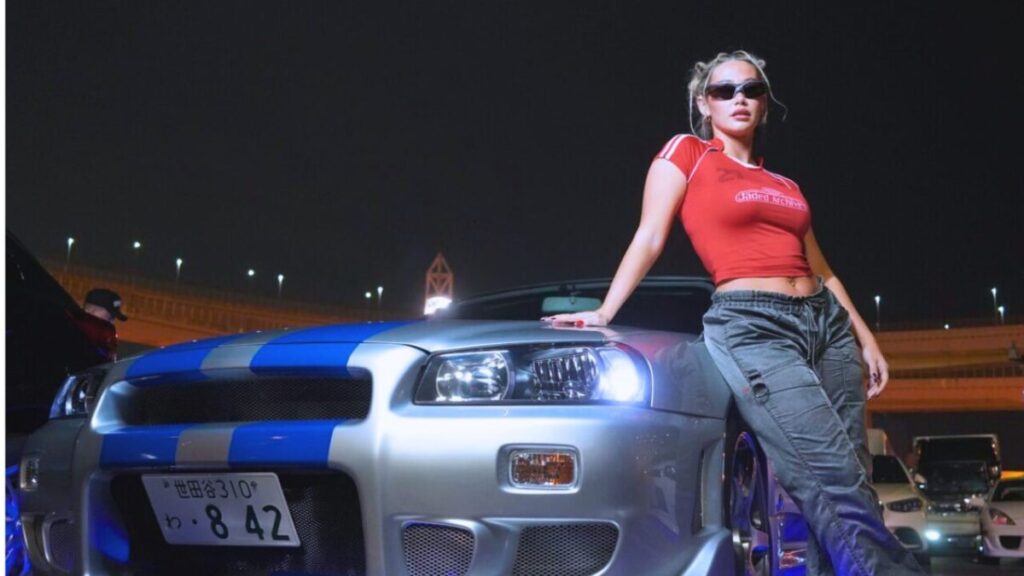

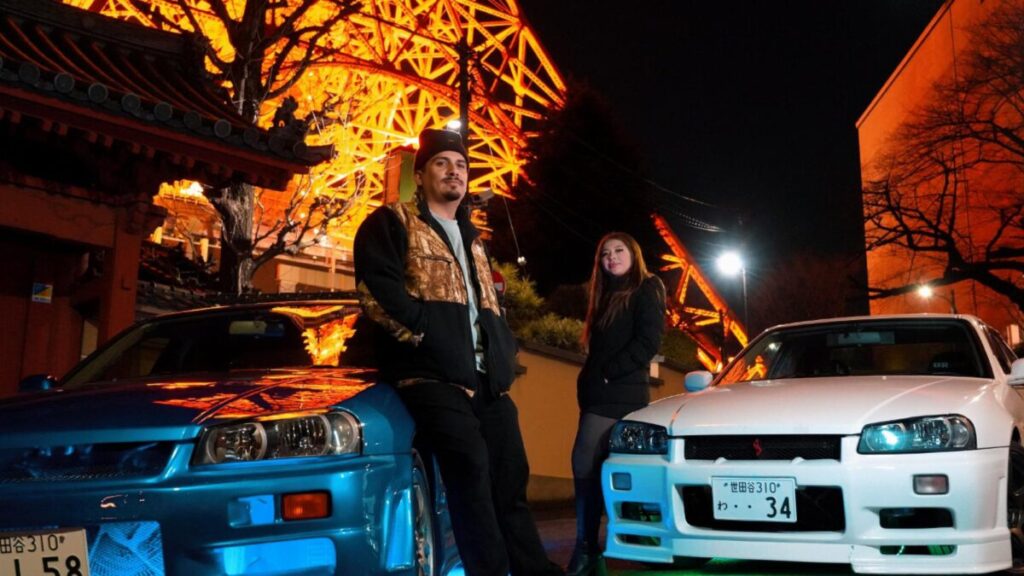
Taking photos in famous photo spot with Tokyo tower.
Are you ready for booking?
About Mazda Rx7 [Custom]
The Mazda RX-7 [White] 380HP model is a legendary Japanese sports car reborn through modern tuning, carrying the spirit of pure driving excitement. Its sleek, flowing white body captures both elegance and speed, reflecting the aerodynamic beauty that made the RX-7 an icon. At its heart lies Mazda’s unique 13B-REW rotary engine, enhanced with twin turbochargers and upgraded intake and exhaust systems to deliver an impressive 380 horsepower. Combined with a lightweight 1,300 kg chassis, this setup offers explosive acceleration and the signature high-revving rotary sound that thrills every enthusiast.
The RX-7’s hallmark lies in its seamless engine response and precise handling — the feeling of being completely connected to the car. The sport-tuned suspension and reinforced brakes provide a perfect balance of stability and agility, giving drivers total confidence even at high speeds. Inside, the black cockpit is minimalist yet driver-focused, with a sporty layout that immerses you fully in the driving experience.
The pure white body highlights its graceful shape while maintaining a commanding presence both on city streets and at the circuit. Through JDM TOUR, you can rent this Mazda RX-7 [White] 380HP model and experience the heart of Japan’s JDM culture — from spirited night drives on the Tokyo expressways to the legendary Daikoku Parking Area. It’s a one-of-a-kind opportunity to feel the heartbeat of the rotary engine and the essence of Japanese performance engineering.
Overview
Drive your own Mazda Rx7 [White] through the streets and highways of Tokyo and Yokohama.
Led by a guide vehicle, you’ll visit notable sights like Shibuya Scramble Crossing, the scenic Rainbow Bridge along the Bayshore Expressway, the world-famous Daikoku Parking Area, and Tokyo Tower, perfect for photo ops.
This vehicle is a wide-body specification. Please refrain from booking if you have no experience driving a right-hand drive vehicle.
Drivers must hold an international driving license (issued under the 1949 Geneva Convention) (a foreign license with a Japanese translation is acceptable), as well as submit a passport and credit card. Digital copies and photographs are not accepted; only originals will be accepted.
・Drivers must be 23 years of age or older.
・If multiple drivers wish to drive, all drivers must meet the driving requirements.
・You must always follow the lead vehicle and only drive on the designated route. The route may change due to traffic, weather, regulations, etc.
Equipment/Conditions
Vehicle Style: Coupe
Transmission: MT
Seating Capacity: 4
Fuel: Included
Toll Fees: Included
Basic Insurance: Included
CDW (Collision Damage Waiver): Included
Multilingual Accident Response Support: Included
NOC (Non-Operation Charge, Charge for Incapacity of Operation): Not Included
Price
Flat rate (tax included): Starting at ¥120,000 per vehicle. Same price for up to four people. No additional passenger fees.
Prices are subject to change without notice.
Tour Hours
Monday – Wednesday: 6:00 PM – 9:00 PM
Thursday – Sunday: 5:00 PM – 10:00 PM
Please check in at least 15 minutes before the tour start time.
meeting place
Shibuya MIYASHITA PARK north
Tour Details
Duration: Approximately 3.5 to 4 hours
Route (Passing Through / Stopping)
Shibuya Scramble Crossing / Passing through (no stop)
Rainbow Bridge / Passing through (no stop)
Metropolitan Expressway Wangan Line / Passing through (no stop)
Daikoku Parking Area / 1-hour stop
Tokyo Tower / 5–10 min stop
Important Notes: Check-in must be completed at least 15 minutes before departure. If you are more than 10 minutes late, your reservation may be canceled without refund. The route, stops, and duration are subject to change due to weather, traffic restrictions, etc.
Cancellation Policy
14 days or more prior to scheduled departure date: Free of charge
4 to 13 days prior: 30% of rental fee
2 to 3 days prior: 50% of rental fee
Day before or on the day: 100% of rental fee (non-refundable)
*Applications received after 6:00 PM Japan Standard Time will be processed as the following day.
Other Important Notes
No refunds will be issued for late arrivals or failure to present a valid driver’s license (including International Driving Permits or official translations). Digital copies or photocopies are invalid.
Changes cannot be made within 24 hours of departure.
If the tour is canceled due to weather or other circumstances, a rescheduling to another date or a full refund will be provided. However, travel disruptions in other regions are not covered.
Participants must be experienced drivers. Supercars, classic cars, modified vehicles, etc., incur extremely high repair costs. Participants must be able to cover the cost of any damage or breakage.
Engine RPM (rev) must not exceed 3,000 RPM. Failure to follow the lead vehicle’s instructions may result in tour termination.
NOC (Non-Operation Charge) Amount
Scratches/Dents on Body/Rims: ¥150,000
Wheel Replacement due to Deep Scratches/Bends: ¥300,000
Damage to Mechanical Parts/Components Causing Immobilization: ¥1,000,000
Check availability
Even if the system indicates availability, reservations may be full due to system limitations, so please inquire as soon as possible.
【MAZDA RX-7 FD3S】
The Rotary Engine’s Secret
Why the RX-7 FD3S Remains the Ultimate JDM Icon
Introduction
Since its debut in 1978, the Mazda RX-7 has captivated driving enthusiasts across generations as a symbol of the ideal Japanese sports car. The lightweight and compact rotary engine, the low center of gravity, the exceptional dynamic performance, and the beautifully refined design that evolved with each generation—everything about the RX-7 gave it a presence far beyond that of an ordinary car. For many, it is rightly remembered as the rotary icon and a cornerstone of Japanese sports car culture.
At the same time, the RX-7 lived through a turbulent automotive era—oil crises, emission regulations, shifts in car-buying behavior, and changing values in performance cars. Looking back on the RX-7 today allows us not only to revisit a beloved classic but also to rediscover what made it special: its engineering philosophy, the cultural environment surrounding it, and its lasting influence.
This article reviews all three generations of the Mazda RX-7, exploring their engineering, design, performance, development history, and the unique philosophy behind rotary-powered sports cars. We also examine the RX-7’s impact on Japanese automotive culture, motorsports, and its lasting presence in popular media. Through this retrospective, we hope to understand why the RX-7 remains a timeless icon, still admired decades after production ended.
First Generation RX-7 (SA22C/FB, 1978–1985) — The Debut of a Lightweight Rotary Dream
Background and Market Conditions
The first-generation Mazda Savanna RX-7 (SA22C/FB), introduced in 1978, followed the earlier Savanna RX-3. During this period, the automotive industry was facing headwinds—oil crises, stricter emission standards, and declining consumer interest in sports cars. Yet Mazda pushed ahead, leveraging its proprietary rotary engine technology to create a compact, lightweight sports car that revived excitement among enthusiasts.
(Source: Mazda official site; Car-Me Japan auto media)
The RX-7 was also notable for being one of Japan’s earliest mass-production cars equipped with retractable headlights, contributing not only to improved aerodynamics but also to a distinctly sporty aesthetic.
Rotary Engine and Engineering Concept
The 12A two-rotor engine used in the first RX-7 was compact and lightweight—fundamental advantages of the rotary layout. With a high-revving nature and respectable output (approx. 130PS), it delivered impressive agility for a car of its size.
This allowed Mazda to place the engine further back, creating a front-midship-like layout with balanced weight distribution—an unusual and forward-thinking concept for Japanese cars at the time.
In 1982, a turbocharged version producing around 165PS was introduced, elevating the RX-7’s performance and solidifying its reputation as a true sports machine accessible to everyday drivers.
Why It Was Loved — Accessible Yet Aspirational
Many sports cars in the late 1970s were expensive to buy and maintain. The RX-7 offered something different: a stylish, lightweight, and responsive car with a unique rotary character—yet at a relatively attainable price. This made “sports car ownership” a realistic dream for younger drivers, helping fuel the boom in Japanese car enthusiasm in the 1980s.
Second Generation RX-7 (FC3S, 1985–1991) — Refinement, Maturity, and Greater Diversity
A More Refined and GT-Oriented Design
The second-generation Mazda Savanna RX-7 (FC3S) debuted in 1985 with a dramatic shift in styling and performance philosophy. While the first-generation emphasized lightweight agility, the FC adopted a more elegant and grand-touring (GT) aesthetic.
Smoother body lines, blister fenders large enough to house wide tires, and an aerodynamic drag coefficient of Cd 0.32 showcased Mazda’s commitment to both form and function.
(Source: GAZOO automobile history articles)
Engine Upgrade and Expanded Model Variants
The 13B rotary engine replaced the earlier 12A, bringing more displacement, better torque, and improved tuning potential. With a twin-scroll turbocharger and intercooler, the FC produced about 185PS, delivering a higher baseline of performance suitable for both spirited driving and everyday use.
This generation introduced multiple variants, including:
- ∞ (Infini) — a limited-edition, lighter, two-seat performance model
- Convertible/Cabriolet — offering open-air enjoyment with rotary power
(Source: Goo-net Japanese car archive)
These variations broadened the RX-7’s appeal beyond pure sports car fans to a wider range of drivers.
Better Ride Quality and Handling
With redesigned rear suspension (switching from a rigid axle to a semi-trailing arm independent layout) and a “toe-control hub” rear steering mechanism, the FC improved both comfort and cornering stability.
This made the second-generation RX-7 a more refined and versatile car suited for daily use, long-distance touring, and spirited mountain driving alike.
Third Generation RX-7 (FD3S, 1991–2002) — The Final Evolution of the Pure Rotary Sports Machine
A New Chapter — The “Efini RX-7”
The 1991 debut of the third-generation RX-7 introduced the legendary FD3S platform. Initially sold under Mazda’s upscale “Efini” sales channel as the Efini RX-7, it returned to the “Mazda RX-7” name in 1997.
(Source: Mazda official historical archives)
With this generation, Mazda fully committed to building a pure sports car. The FD3S featured a dedicated chassis, extensive weight reduction, aluminum components, and double-wishbone suspension at all four corners—an uncompromising approach to performance.
Performance — The 13B-REW Twin Turbo
The FD introduced the world’s first mass-produced sequential twin-turbo rotary system, the 13B-REW. Performance evolved through its lifespan:
- 255PS at launch
- 265PS with the 1996 update
- 280PS by 1999
(Source: Car-Me Japan)
Combined with the lightweight rotary engine placed deeply in the chassis, the FD achieved an ideal near-50:50 weight distribution. This made for razor-sharp handling, precise steering response, and a driving feel often considered unmatched among Japanese sports cars.
Why the FD Became a Legend
The FD3S didn’t just look beautiful with its flowing lines and aggressive stance—it drove beautifully. Its responsiveness, agility, and “oneness” with the driver gave it a reputation as one of the most engaging sports cars ever built in Japan.
Owners and enthusiasts consistently rank it among the purest driver’s cars of the 1990s and early 2000s.
(Source: Japanese owner reviews and automotive media)
The RX-7’s Shared Philosophy — Rotary Power, Lightweight Design, and Driving Pleasure
The Rotary Engine as a Deliberate Choice
For Mazda, the rotary engine was never just an alternative—it was a statement. Lightweight, compact, capable of high-revving operation, and uniquely smooth, the rotary engine allowed Mazda to pursue engineering concepts not feasible with piston engines.
This foundation explains why every RX-7, regardless of generation, feels nimble, responsive, and mechanically distinct from rivals.
Consistency Across Generations
Although the RX-7 evolved across three generations—lightweight purity (SA22C), mature GT refinement (FC3S), and ultimate sports precision (FD3S)—a single philosophy runs through them all:
Driving pleasure above all.
Mazda’s unwavering dedication to making a car that feels alive, intuitive, and rewarding created a timeless legacy.
The RX-7’s Influence — Motorsport, Car Culture, and Popular Media
A Benchmark of Japanese Sports Cars
The RX-7’s engineering influenced:
- Mazda’s future rotary vehicles (such as the RX-8)
- Japanese performance tuning culture
- Global perceptions of compact, lightweight sports cars
(Source: Mazda official rotary history)
Beloved in Motorsports and Tuning Communities
Especially the FD3S became a favorite among:
- Circuit racers
- Drifters
- Tuners
- Car collectors
Its balance and rotary character made it ideal for motorsport use and customization.
(Japanese tuning magazines & owners’ communities)
Pop Culture and Film — The RX-7 in “Fast & Furious”
The RX-7 became globally recognizable thanks to its appearances in the Fast & Furious series:
- Dom Toretto’s red FD in The Fast and the Furious (2001)
- Reappearance in 2 Fast 2 Furious
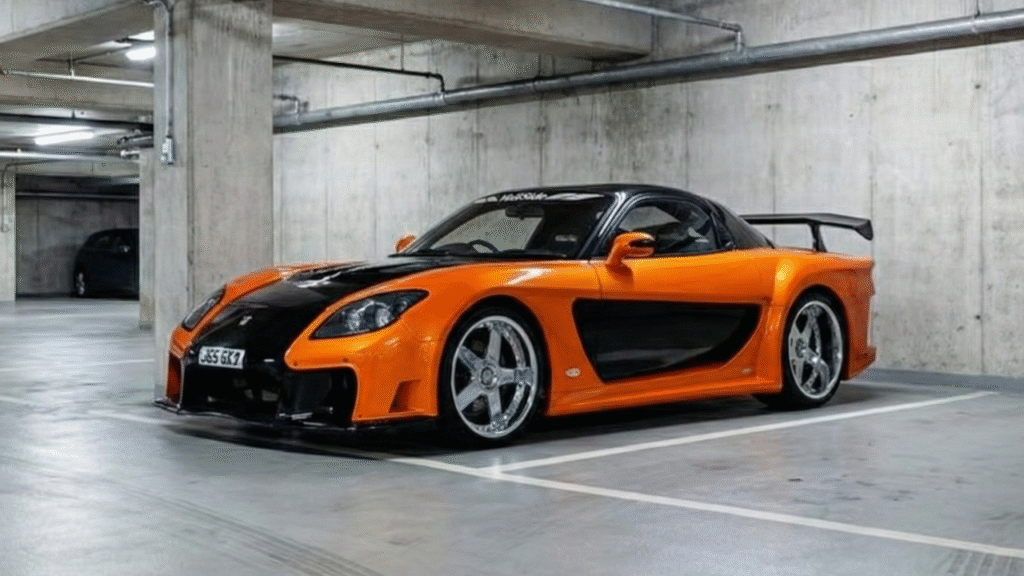
- Han’s VeilSide-widebody orange FD in Tokyo Drift
Japanese articles often reference the RX-7’s cultural impact from these films, cementing its status as a global icon in street-car culture.
The RX-7 Today — Classic Value, Maintenance Reality, and Future Legacy
A Highly Valued Classic Car
Now decades since production ceased, the RX-7—particularly clean FD3S units—has seen significant appreciation in value. Japanese used-car market reports show sustained demand, with prices climbing steadily.
Maintenance Considerations
Owning an RX-7 today requires commitment:
- Rotary engines need attentive maintenance
- Some parts are becoming harder to source
- Specialized knowledge is increasingly valuable
Yet many owners proudly state they’ll “keep it for life,” a testament to the RX-7’s emotional appeal.
A Legacy That Continues
Even as Mazda experiments with new rotary-based technologies (such as rotary range extenders), the spirit of the RX-7 remains a guiding beacon:
- lightweight engineering
- driver-centric design
- rotary innovation
These principles continue to inspire fans and engineers alike.
Conclusion
The Mazda RX-7—across its three generations—remains one of the most iconic Japanese sports cars ever created. From its debut in 1978 to its final production in 2002, it consistently embodied Mazda’s passion for rotary engines, lightweight performance, and the pursuit of pure driving enjoyment.
Each generation contributed something unique:
- SA22C: Accessible lightness and agility
- FC3S: GT refinement with rotary performance
- FD3S: The pinnacle of Japanese pure sports engineering
Yet their shared DNA—rotary power, exceptional balance, and driving pleasure—created a lineage that stands unmatched in the automotive world.
Today, the RX-7 is not just a car but a cultural symbol, cherished by enthusiasts worldwide and remembered as a masterpiece of Japanese engineering.
If you love cars, understanding the RX-7 is more than nostalgia—it’s a window into what makes a sports car truly great.