Daikoku PA Tour Weather Guide What to Expect in Rain, Heat, and Cold
Daikoku PA Tour Weather Guide What to Expect in Rain, Heat, and Cold
contents
Introduction
A Daikoku PA tour can be enjoyable in many different weather conditions, but proper preparation makes a major difference. Tokyo may feel warm when the tour begins, while Daikoku Parking Area may feel cooler later at night, especially after rain or when the wind is strong.
Weather can also affect photography, road conditions, clothing choices, battery life, and the planned route. Rain does not always mean the tour cannot operate, and wet streets can create impressive reflections across Tokyo’s neon-lit roads. However, safety must always come first.
This guide explains what foreign visitors should expect during rain, heat, cold, strong wind, typhoons, and snow, including practical advice for guests joining a self-drive experience.
Does Weather Affect a Daikoku PA Tour?
Yes, weather can affect a Daikoku PA tour, but the level of impact depends on the conditions.
Light or ordinary rain does not automatically mean that the tour will be cancelled. In many cases, the experience may still proceed with appropriate adjustments. However, heavy rain, strong winds, snow, road restrictions, or other severe conditions may require changes to the route, schedule, or meeting points.
Daikoku PA is also an outdoor location. Guests usually spend time outside the vehicle looking at parked cars, taking photographs, and enjoying the atmosphere. Clothing that feels comfortable inside an air-conditioned or heated car may not be suitable once you step outside.
Conditions that may feel colder than expected include:
Spring and autumn evenings
Winter nights
Strong wind
The period after rainfall
Exposure in open bayside areas
Moving from a warm or air-conditioned vehicle into the night air
Bringing one compact extra layer is useful throughout the year. Even in summer, a light jacket can help if the car’s air conditioning feels strong or if rain and wind arrive together.
What to Expect on a Daikoku PA Tour in the Rain
Rain can change the atmosphere of a Tokyo night drive, but not always in a negative way.
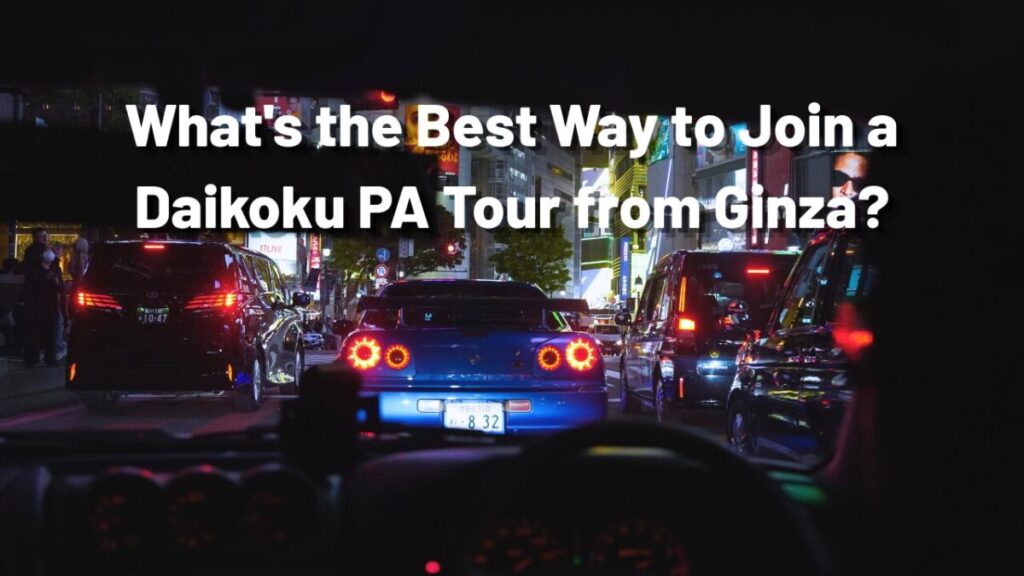
Wet roads reflect neon signs, streetlights, digital billboards, tower lights, and the illuminated skyline. Water droplets on car bodies can also reflect the surrounding lights, creating a dramatic appearance in photographs and videos.
Guests may be able to enjoy:
Neon reflections on wet roads
Reflections from Shibuya’s large screens
Tokyo skyline views through a rain-covered window
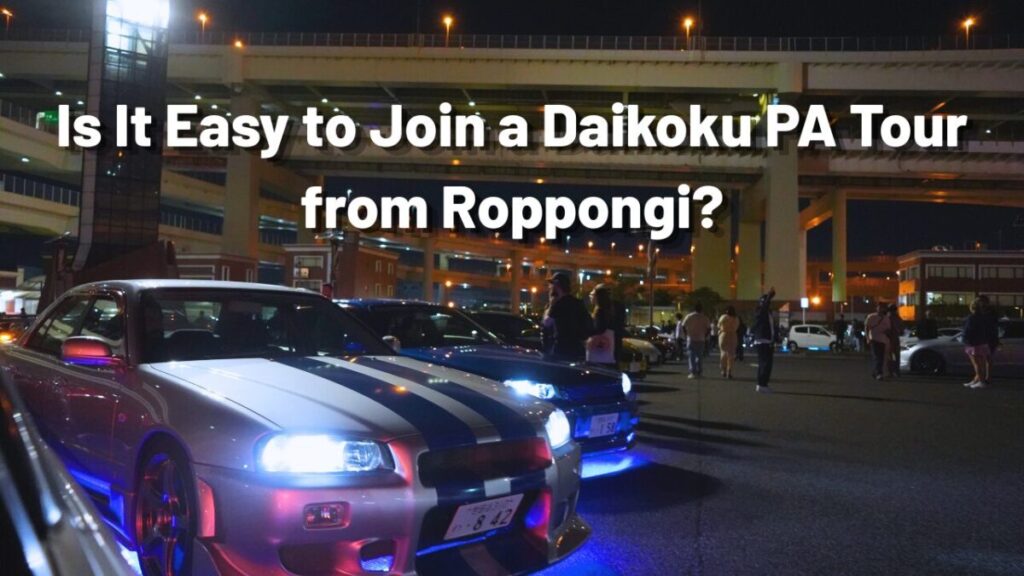
Light reflecting across JDM car bodywork
A more cinematic atmosphere along the bayside routes
Rainy weather can therefore offer a different visual experience from a clear night.
However, photography should never take priority over safety. Parking areas, painted surfaces, and areas close to vehicles may become slippery. Guests should avoid running, standing in vehicle lanes, or concentrating on a camera while ignoring surrounding traffic.
A large umbrella may be inconvenient inside a sports car or compact luggage area. It may also touch the interior or nearby vehicles when entering and exiting. A compact umbrella or lightweight rain jacket is generally easier to manage.
Safe Driving Tips for a Rainy Self-Drive Tour
Rain reduces grip and increases the risk of losing traction. Guests joining a self-drive Daikoku PA tour should use smoother inputs and allow more time for every action.
Avoid sudden acceleration, braking, and steering
Sudden acceleration, hard braking, and sharp steering can make the vehicle more likely to slide on a wet road.
Extra caution is needed when:
Entering a curve
Merging onto an expressway
Changing lanes
Driving downhill
Following another vehicle
Approaching congestion
Begin braking earlier than usual and apply the brakes progressively. Steering movements should be smooth, and acceleration should be gradual.
Leave a longer distance between your vehicle and the vehicle ahead. This gives you more time to react without making abrupt inputs.
Be careful on white lines, metal surfaces, and manholes
Some surfaces become especially slippery when wet.
These include:
Painted white lines and road arrows
Manhole covers
Metal drainage grates
Bridge expansion joints
Metal plates near roadwork
Areas where water has collected
Avoid braking heavily or turning sharply while crossing these surfaces. Keep the vehicle stable and use gentle steering, braking, and acceleration.
Do not enter puddles at speed
Driving into standing water at speed can cause the tires to lose contact with the road surface. When this happens, steering and braking may become less effective.
Slow down safely before reaching a puddle. Do not wait until the vehicle is already in the water before braking suddenly.
Never enter standing water when its depth is unknown. A vehicle that passes through safely may have a different ride height, tire condition, or water resistance. Many sports cars have lower ground clearance, which can increase the risk of damage.
Avoiding deep or unknown water protects both the driver and the vehicle.
Maintain visibility and following distance
Rain can reduce visibility through the windshield and create spray from other vehicles. At night, lights reflecting from the wet road can make lane markings and road edges harder to see.
Guests should:
Use the wipers and lights appropriately
Increase the following distance
Watch for spray from buses and trucks
Reduce speed when visibility becomes poor
Check mirrors and blind spots before changing lanes
Avoid maintaining speed when conditions are unsafe
The correct speed depends on visibility, traffic, and road conditions, not only the posted limit.
Follow the lead vehicle and ask questions
A lead driver accompanies the tour, so guests should ask questions whenever they are unsure about the route, merging, lane changes, following distance, or road conditions.
The group may drive more slowly in rain or use a different route when necessary. Do not accelerate aggressively or make a sudden lane change simply to catch the lead vehicle.
Before departure, guests should understand what to do if they become separated from the group and how to contact the tour team.
Rainy Season and Camera Protection
Japan’s rainy season is not only about rainfall. High humidity can affect cameras, lenses, smartphones, action cameras, and bags even when the rain has temporarily stopped.
Possible problems include:
Lens fogging
Condensation on camera surfaces
Moisture inside bags
Water droplets on lenses
Humidity around charging ports
Moisture entering lens mounts or card slots
Visitors may assume that camera protection is unnecessary when it is not actively raining. In reality, humidity and temperature changes can still create condensation.
Useful items include:
Lens cloths
A small towel
A water-resistant camera bag
Zipper bags
A camera rain cover
Silica gel or another drying agent
A spare dry cloth
A separate bag for wet items
A weather-resistant camera is not necessarily fully waterproof. Charging ports, memory card slots, lens mounts, and battery compartments may remain vulnerable.
Avoid changing lenses outdoors in the rain. If a lens change is necessary, do it inside the vehicle or under cover in a dry and safe location.
How to Reduce Lens Fogging
Condensation may form when a cold camera is moved into warm, humid air. It may also occur when equipment is moved from a cold outdoor environment into a warm vehicle.
To reduce the risk:
Place the camera in its bag before changing environments
Allow the equipment to adjust gradually
Do not remove the lens cap immediately
Avoid forcing the camera to operate while fogged
Wipe gently with a dry lens cloth
Do not store equipment while it is still wet
Do not rub a wet lens aggressively. Give the equipment time to adjust to the new temperature.
These precautions also apply to GoPro cameras, Osmo Pocket devices, and smartphones.
How to Prepare for Summer Heat and Humidity
Japanese summers are often both hot and humid. Even at night, guests may feel uncomfortable while standing outside at Daikoku PA.
Bring:
Water or a sports drink
A towel
Breathable clothing
A small handheld fan
A mobile battery
A light layer for air-conditioned vehicles
A plan for managing device heat
Smartphones and cameras may overheat during summer, especially when used for:
Long high-resolution video recording
Livestreaming
Recording while charging
Continuous use inside a case
Storage inside a hot parked vehicle
If a device becomes hot, stop using it temporarily and move it away from direct sunlight or excessive heat.
Do not cool it suddenly with ice or a very cold object. Rapid cooling may create condensation inside or around the device.
How to Prepare for Cold Weather
Winter night tours require proper cold-weather preparation.
Tokyo city center may not feel extremely cold when the tour begins, but Daikoku PA can feel colder when guests stand outside in the wind. Open bayside conditions can reduce the apparent temperature.
Useful winter items include:
A warm jacket
Gloves
A neck warmer or compact scarf
Warm socks
Disposable hand warmers
Spare camera or phone batteries
Very bulky coats and long scarves may make it harder to enter or exit a sports car. Compact layers that are easy to remove and store are usually more practical.
Battery performance may also decline in cold conditions. Keep spare batteries inside a bag or close to the body instead of leaving them exposed to the cold for long periods.
Strong Wind Precautions at Daikoku PA
Daikoku PA is located in a bayside area near Tokyo Bay. This does not mean that it is always windy, but exposed conditions can make the wind feel stronger on certain nights.
Strong wind may cause:
Hats or small items to blow away
Umbrellas to become difficult to control
Lightweight tripods to fall
Camera straps to move
Wind noise in video recordings
Vehicle doors to open suddenly
Lower apparent temperatures
More rain reaching cameras and clothing
Recommended precautions include:
Secure hats and loose belongings
Use a camera strap
Use a wrist or safety strap for smartphones
Never leave a tripod unattended
Avoid using an unstable lightweight tripod
Use a rain jacket instead of a large umbrella
Avoid changing lenses outdoors
Never place equipment on a car roof or hood
Hold the vehicle door firmly
Avoid taking photographs in vehicle lanes
When the wind is too strong for stable tripod use, switch to handheld photography.
Vehicle doors require particular care. A strong gust may pull a door open and cause contact with another vehicle. Open the door slowly, keep one hand on it, and check the distance to nearby cars.
This is both a safety measure and an important part of respecting other vehicles in a public parking area.
Typhoons, Heavy Rain, Snow, and Tour Changes
Ordinary rain should be distinguished from typhoons, severe storms, heavy snow, and unsafe road conditions.
Severe weather may result in:
A change to the tour start time
A different driving route
Inability to enter Daikoku PA
Removal of certain photography stops
Postponement
Cancellation
If heavy rain or heavy snow makes the tour difficult or unsafe to operate, JDM TOUR may cancel the experience.
In that situation, the tour price will be refunded in full, excluding payment processing fees or other applicable fees, which remain the customer’s responsibility.
Snow is not common in Tokyo and Yokohama, but it can occur during winter. Snow and ice may cause expressway restrictions, slower travel, route changes, and slippery walking surfaces.
On snowy days, prioritize:
Warm clothing
Shoes with good grip
Care when entering and exiting vehicles
Following staff instructions
Checking road and weather updates
Guests should check WhatsApp and the contact details used for the booking on the day of the tour. Route, schedule, or operating decisions may change for safety reasons.
Season-by-Season Daikoku PA Tour Packing Guide
Season
Common Conditions
Recommended Preparation
Spring
Day-to-night temperature changes, rain, pollen
Light jacket, folding umbrella, mask, lens cloth
Rainy season
Rain, high humidity, condensation
Rain jacket, drying agent, lens cloth, water-resistant bag
Summer
Heat, humidity, strong air conditioning, device overheating
A compact extra layer is useful throughout the year because it can help with evening temperatures, wind, rain, and air conditioning.
When to Check the Weather Forecast
Weather planning for Daikoku PA should not be based on a single forecast.
Check conditions at several stages:
Before traveling to Japan Review the general seasonal climate and decide what clothing to pack.
Three days before the tour Check the developing trend for rain, temperature, wind, typhoons, or snow.
The day before Choose your final clothing and equipment.
On the tour date Check the hourly forecast for the evening rather than only the daytime high temperature.
Before meeting the tour team Review the latest WhatsApp or booking message from JDM TOUR.
Important information includes:
Evening temperature
Chance of rain
Wind speed
Feels-like temperature
Weather warnings
Road restrictions
Messages from JDM TOUR
Final Weather Checklist
Before leaving for your Daikoku PA tour, confirm that you have:
Checked the evening temperature
Prepared rain protection
Packed a light or warm layer
Chosen shoes with suitable grip
Packed camera cloths or a water-resistant bag
Charged your smartphone and spare batteries
Planned to avoid sudden acceleration, braking, and steering
Understood that white lines and metal surfaces may be slippery
Planned to slow down before puddles
Agreed not to enter water of unknown depth
Planned to maintain a longer following distance
Read the latest message from JDM TOUR
Prepared to ask the lead driver questions when unsure
Good preparation makes it easier to enjoy Tokyo’s night scenery and Japanese car culture in a wide range of conditions.
Daikoku PA is a public parking area, and access, road conditions, closures, congestion, and the number of cars present cannot be guaranteed. Guests should always prioritize local traffic laws, public-area etiquette, staff instructions, and safety.
A tour may still operate during ordinary rain. However, the route, timing, stops, or operating decision may change when heavy rain, strong wind, road restrictions, or other safety concerns are present.
What should I know before driving in the rain?
Avoid sudden acceleration, hard braking, and sharp steering. Increase your following distance and use extra caution on painted lines, manhole covers, metal surfaces, bridge joints, and standing water.
Is it safe to drive through a puddle?
Do not enter a puddle when the depth is unknown. Entering standing water at speed may reduce tire contact with the road and make steering or braking less effective.
Is Daikoku PA cold at night?
It can feel colder than central Tokyo, especially during winter, after rain, or when the wind is strong. Bring a compact extra layer because guests may spend time outside the vehicle.
How should I protect my camera during Japan’s rainy season?
Use a water-resistant bag, lens cloths, a rain cover, and drying agents. Avoid changing lenses outdoors and allow equipment to adjust gradually when moving between different temperatures.
What happens if heavy rain or snow causes cancellation?
If JDM TOUR determines that heavy rain or heavy snow makes safe operation difficult, the tour may be cancelled. The tour price will be refunded in full, excluding applicable payment processing fees or other fees paid by the customer.
Can a rainy Tokyo night still be enjoyable?
Yes. Wet streets and car bodywork can reflect neon lights, digital billboards, streetlights, and the Tokyo skyline. Rain can create a distinctive visual atmosphere, although safety must always come before photography.
[The Hottest Experience] Driving Dream Sports Cars in Japan with JDM TOUR
JDM TOUR
While standard rentals are practical, a new trend has exploded among car enthusiasts visiting Japan: renting “JDM” (Japanese Domestic Market) cars through specialized services like JDM TOUR.
The New Standard of Japan Travel: Public Roads in the Movie
The experience of being able to rent sports car japan is no longer just about driving; it has evolved into an "attraction" that transforms Japan's public roads into a real-life game world. In recent years, an exploding trend among international travelers is enjoying the act of driving through Japanese cities itself as a form of entertainment.
Specifically, commanding JDM machines such as the Nissan GT-R or Toyota Supra against the backdrop of Tokyo’s iconic landmarks is no longer just transportation; it is positioned as a participatory "activity." Just as cosplay driving tours have emerged, this integrated experience of car and city overturns conventional tourism, offering unforgettable, highly shareable memories that light up social media feeds.
This new style of journey, facilitated by exotic car rental tokyo services, has transformed from merely pursuing speed into a means of experiencing unforgettable "play." It allows you to deeply engage with Japan's unique culture and landscapes, creating an adventure that goes beyond traditional sightseeing.
Why is JDM So Popular Right Now?
Legendary sports cars manufactured in Japan during the 1990s and early 2000s—such as the Nissan Skyline (R34), icons for fans worldwide. For many, driving these cars on the actual roads they were designed for is a bucket-list experience that surpasses any standard sightseeing tour.
The Unique Charm of a JDM TOUR
JDM TOUR offers more than just a “car rental”; it provides a deep dive into Japanese car culture.
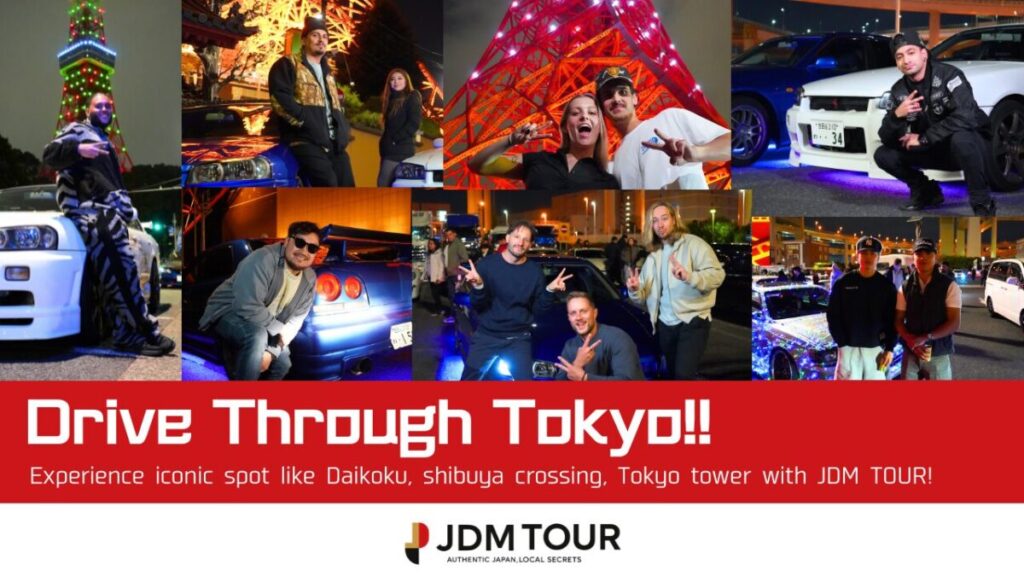
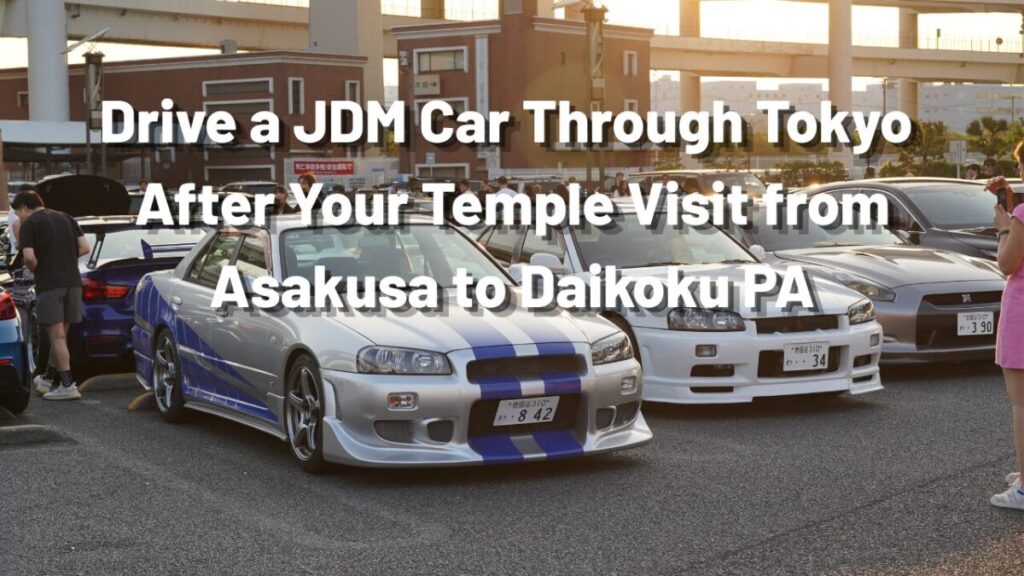
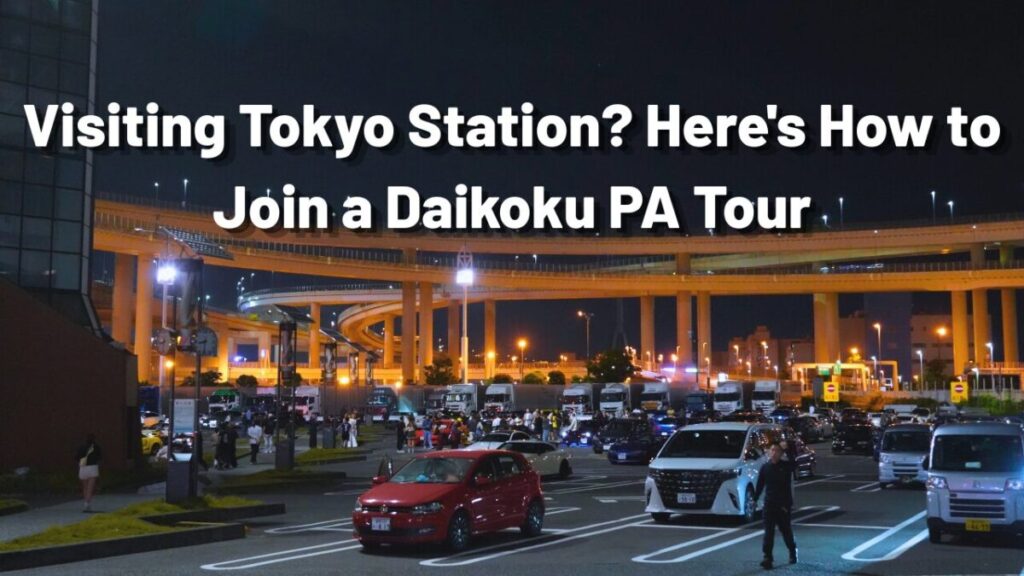
The Pilgrimage to Daikoku PA: The highlight of many tours is driving to the Daikoku Parking Area on the Shuto Expressway. At night, this spot transforms into a gathering place for hundreds of beautifully customized cars, creating a vibrant atmosphere that is world-famous.
Professional Guided Convoys: Driving a right-hand-drive manual car through the complex Shuto Expressway can be daunting. JDM TOUR offers plans where a professional guide leads the way in a lead car, ensuring you stay on the right path safely.
Photography and Content Creation: The guides know the best “insta-worthy” spots, such as the Shibuya Crossing, Tokyo Tower, and Rainbow Bridge, allowing you to capture professional-quality memories with your dream car.
A Daikoku PA tour does not require perfect weather, but it does require sensible preparation.
Rain can create dramatic reflections across Tokyo’s streets and JDM cars. Summer brings heat, humidity, and device overheating risks. Winter requires warm layers and spare batteries. Strong wind, heavy rain, snow, or road restrictions may also affect the route or tour operation.
For self-drive guests, smooth control is essential. Avoid sudden inputs, leave additional stopping distance, take care on slippery markings and metal surfaces, and never enter standing water when the depth is unknown.
By checking the evening forecast, preparing suitable clothing, protecting your camera equipment, and following the lead driver’s instructions, you can enjoy a safer and more comfortable experience.